
2026 Sep 2nd
A Food-Waste Control Supply Map for Foodservice Kitchens
Cutting food waste in a commercial kitchen is mostly about controlling four points: storage (keep food usable longer), prep (portion accurately, use trim), service (serve consistent amounts), and disposal (separate waste for organics and recycling). Each point has supplies that make control easy — airtight storage, date labels, portion tools, and clearly separated waste bins. Map your waste to these points and supply each one deliberately.
A Food-Waste Control Supply Map for Foodservice Kitchens
Most kitchen food waste is preventable, and a lot of it comes down to supplies: how food is stored, labelled, portioned, and separated. This is a supply map that follows waste to where it actually happens and gives you the products to control it at each point.
Key Takeaways
Where kitchen food waste comes from and how supplies control each source.
Storage waste is spoilage
Food that spoils before use is lost money. Airtight storage and rotation labelling extend usable life.
Prep waste is portioning and trim
Inconsistent prep and discarded trim add up. Portion tools and good storage recover both.
Service waste is over-portioning
Serving more than needed lands in the bin. Standardized serving keeps portions even.
Disposal is separation, not just bins
Separating organics and recyclables at source diverts waste and can cut disposal cost.
Labelling is the cheapest win
Date and rotation labels are inexpensive and prevent the most common cause of storage waste.
Measure before you buy
Watch where your bins fill up first. That tells you which waste point to supply first.
Why food waste is a supply problem, not just a habit
Reframing waste as something you can control at the point of purchase.
Kitchens often treat food waste as a staff-behaviour problem, and training matters — but a large share of preventable waste traces back to whether the right supplies are in place. Food with no airtight storage spoils faster. Stock with no date label gets used out of order. Sides served without a portion tool vary wildly. Waste with nowhere to separate all goes to landfill.
Reframed that way, waste becomes something you can design out at the point of purchase. High-volume catering and busy kitchens in particular ask how to manage waste at scale, and the answer is rarely a single product — it is supplying each point where waste happens.
There is a cost angle too. Reducing spoilage protects food cost, and separating organics from general waste can reduce disposal charges depending on your municipality's system. Check your local waste and organics rules for how separation is handled where you operate.
Point one: cutting storage and spoilage waste
Keeping food usable for its full life with the right containers and labels.
The biggest single source of preventable waste in many kitchens is stock that spoils before it is used. Two supply decisions fix most of it: airtight storage that extends usable life, and a labelling system that enforces first-in-first-out so older stock is always used first.
Sealed, clear storage containers keep prepped and opened ingredients fresh longer and let staff see what is inside without opening them. Date and rotation labels — marking what it is and when it was prepped or opened — are the cheapest waste-control tool in the kitchen and prevent the classic mistake of reaching for the newer item and letting the older one spoil.
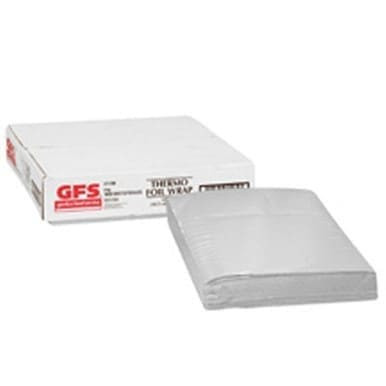
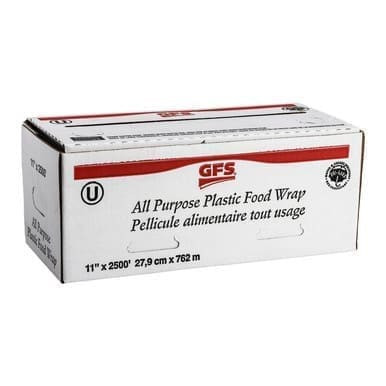
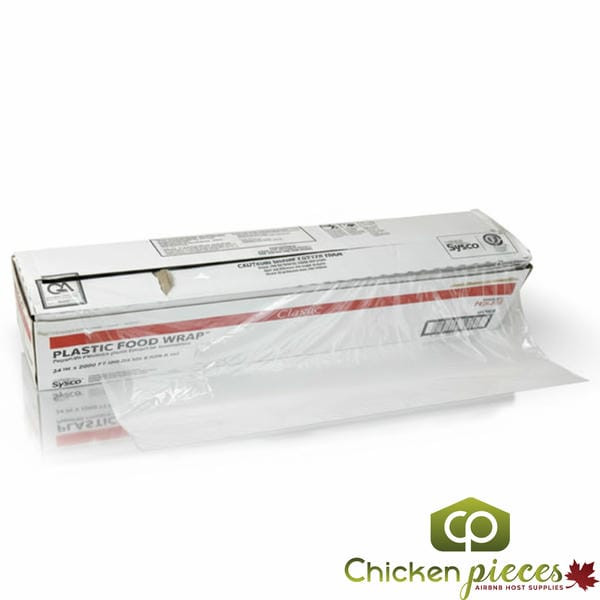
Cling film and foil for short-term covering round out the storage layer. Together these extend the window in which food is usable, which is the whole game at this point.
Points two and three: prep trim and service portions
Recovering trim and serving consistent amounts to keep waste off the plate.
Prep waste comes from two places: usable trim that gets discarded, and inconsistent portioning that leaves cut components to spoil. Good storage recovers the first — trim and offcuts kept in labelled, sealed containers get used in stocks, specials, and prep instead of binned. Portion tools address the second by making prep amounts consistent and predictable.
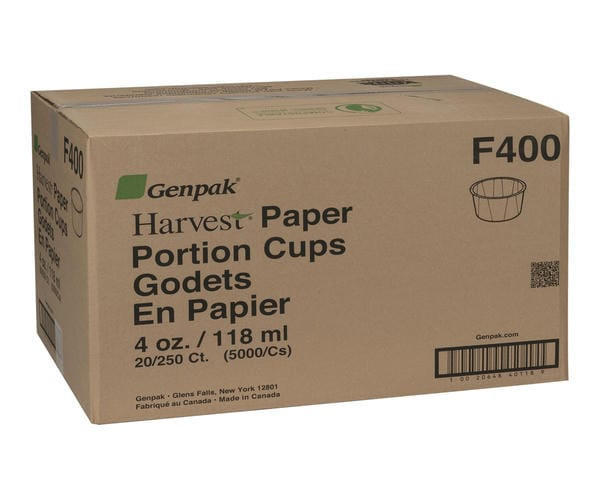
Service waste is largely over-portioning: serving more than a customer or resident will eat sends the difference straight to the bin. Standardized serving utensils and portion cups keep servings even, which controls both cost and plate waste at once.
These two points share the same supplies as portion control generally, which is why a kitchen that standardizes portioning tends to cut waste and control cost in the same move.
Point four: separating waste at the source
Turning disposal from one landfill stream into diverted organics and recycling.
Whatever waste remains is where separation earns its keep. Sending everything to one general-waste stream is both an environmental miss and, in many places, a costlier option than diverting organics and recyclables. The supply fix is clearly separated, clearly labelled bins at the points where each waste type is generated.
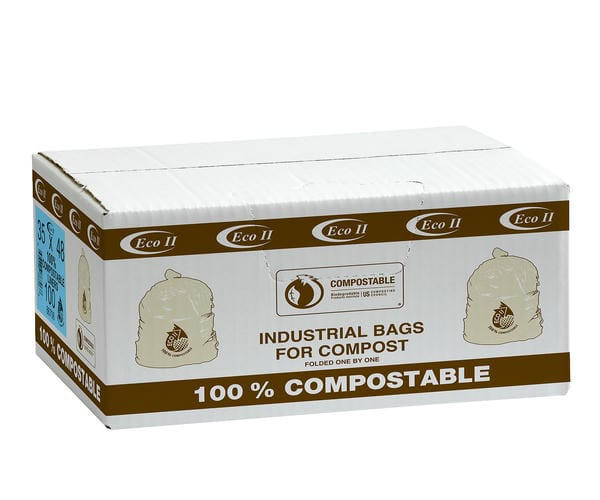
Organics separation for food scraps, recycling for suitable packaging, and general waste for the rest — each with the right liners — makes it easy for staff to sort correctly under pressure. Compostable service and packaging items, where you use them, feed the organics stream rather than landfill.
How organics and recycling are handled varies by municipality, so check your local commercial waste and organics program for what your kitchen is expected to separate and how. Supplying to match that system is what turns good intentions into actual diversion.
Supplying every waste point from one place
Bringing the whole waste-control supply map into a single order.
The tidy thing about a waste-control supply map is that it draws on a small, related set of products: storage containers, labels, film and foil, portion tools, bin liners, and compostable options. Sourcing them together makes it easy to supply every point at once rather than patching one leak at a time.
We stock the full map and ship Canada-wide from Calgary with no minimum order, so you can start at whichever waste point is costing you most and build out from there. The products below cover storage, portioning, and disposal — the three points where supplies do the most work.
Pair the supplies with a week of watching where your waste actually comes from, and you will spend the budget where it pays back fastest.
Waste points and their supplies
Where kitchen waste happens and what controls it at each point.
| Waste point | Main cause | Supply fix | Payback |
|---|---|---|---|
| Storage | Spoilage before use | Airtight containers + date labels | Lower food cost |
| Storage | Using stock out of order | Rotation labelling (FIFO) | Less spoilage |
| Prep | Discarded usable trim | Labelled sealed containers | Trim reused in prep |
| Prep | Inconsistent portioning | Portion tools, scoops | Predictable prep |
| Service | Over-portioning | Standardized serving + cups | Less plate waste |
| Disposal | Everything to landfill | Separated labelled bins + liners | Possible lower disposal cost |
| Disposal | Non-divertible packaging | Compostable service items | More organics diversion |
Food-waste control supplies
Storage, portioning, and disposal supplies stocked in Calgary and shipped Canada-wide.


What Canadian Canadian foodservice operators say
Feedback from operators who mapped their waste to supplies.
Date labels and sealed containers alone cut our spoilage right down. It was the cheapest fix we made and the most effective.
Watching which bin filled first was the tip that changed everything — ours was prep trim, so we bought storage and started reusing offcuts.
Separating organics at the source dropped what we send to general waste. Staff sort it correctly because the bins are right where they work.
Food-waste control questions, answered: Frequently Asked Questions
The following operator questions are answered with cited sources. Every FAQ links to Health Canada, CFIA, Canada.ca, or another authoritative regulator.
How do you reduce food waste in a commercial kitchen?
Products referenced:
- Sysco Classic Dissolvable Food Labels 1in x 2in (500/Case)
- Sysco Label Roll Day-of-Week Dissolvable (500/Case)
- OXO Countertop Food Dispenser 5.5L Airtight
Source: How do you reduce food waste in the kitchen? - r/Chefit
How do you track and measure food waste in a restaurant?
Products referenced:
- Sysco Classic Dissolvable Food Labels 1in x 2in (500/Case)
- National Label Roll Date Code Genie 2x1in Blank Removable (1000/Case)
- Sysco Bag Garbage OXO-Biodegradable Strong 42x48 (125/Case)
Source: How do you guys currently measure food waste? - r/restaurantowners
How much food waste does the average restaurant produce?
Products referenced:
- Sysco Bag Garbage OXO-Biodegradable Strong 42x48 (125/Case)
- Sysco Earth Plus Container Compostable 8.75x5.5x3 (200/Case)
- Earth Plus Bowl Compostable With Lid 8 oz Paper (300/Case)
Source: We average 80lbs of waste a night - r/KitchenConfidential
What are the best tips for managing food costs and reducing waste in a restaurant?
Products referenced:
- OXO Countertop Food Dispenser 5.5L Airtight Portion Control
- Sysco Classic Dissolvable Food Labels 1in x 2in (500/Case)
- Weston External Vacuum 11.5in Seal Bar Packaging Machine
Source: Tips for managing food costs - r/KitchenConfidential
How do restaurants manage surplus food and leftovers?
Products referenced:
- Sysco Classic Film PVC 2000 ft Roll 18in
- Sysco Earth Plus Container Compostable 8.75x5.5x3 (200/Case)
- Weston External Vacuum 11.5in Seal Bar Packaging Machine
Source: How do restaurants manage surplus food? - r/AskCulinary
How come some restaurants are super strict on day dots and food labeling?
Products referenced:
- Sysco Label Roll Day-of-Week Dissolvable 1in (500/Case)
- Sysco Classic Dissolvable Food Labels 1in x 2in (500/Case)
- National Label Roll Date Code Genie 2x1in Blank Removable (1000/Case)
Source: How come some restaurants are super strict on day dots and... - r/KitchenConfidential
How much food is wasted in Canada and what is the cost to restaurants?
Products referenced:
- Sysco Classic Dissolvable Food Labels 1in x 2in (500/Case)
- Sysco Bag Garbage OXO-Biodegradable Strong 42x48 (125/Case)
- Sysco Earth Plus Container Compostable 8.75x5.5x3 (200/Case)
Source: Taking stock: Reducing food loss and waste in Canada - Canada.ca
Are Canadian restaurants required to compost or separate organic waste?
Products referenced:
- Sysco Earth Plus Container Compostable 8.75x5.5x3 (200/Case)
- Earth Plus Bowl Compostable With Lid 8 oz Paper (300/Case)
- Sysco Bag Garbage OXO-Biodegradable Strong 42x48 (125/Case)
- Sysco Plate Biodegradable 10in Deep Well Earth Plus (500/Case)
What is the cheapest way to start cutting food waste?
How do you calculate shipping on bulk orders?
Related guides from ChickenPieces
Why source waste-control supply with ChickenPieces
Cutting waste means supplying every point where it happens, from one place. We stock the whole map and ship it without a minimum order.
The whole map, one order
Storage, portioning, and disposal supplies together, so you fix every waste point at once.
Start where it costs most
No minimum order means you can supply your worst waste point first and build out.
Compostable options
Service and packaging items that feed an organics stream where your municipality supports it.
Canadian-owned, shipped nationwide
Stocked in Calgary and shipped Canada-wide, with transparent live-rate shipping at checkout.
Map your waste, then supply it
Tell us where your kitchen loses the most — spoilage, prep, service, or disposal — and we will help you supply that point first. No minimum order, shipped across Canada.
Request a Quote