
2026 Jul 25th
Bulk Floor Cleaners for Canadian Properties: Pack Sizes and
Buying floor cleaner concentrate in bulk lowers your cost-per-use because you dilute each bottle across hundreds of applications. Pack sizes range from 946 mL AccuMix bottles to 4L jugs, with most cases holding two to four units.
Bulk Floor Cleaners for Canadian Properties: Pack Sizes and Cost-per-Use
Airbnb hosts, property managers and facility operators across Canada need reliable floor cleaner concentrates that stretch further per bottle.
Key Takeaways
What to know before stocking up on floor cleaner for your property.
Concentrate beats ready-to-use
A single jug of concentrate replaces dozens of spray bottles when diluted properly, cutting storage needs and reorder frequency.
Check your floor type first
Neutral pH cleaners protect finished floors and coatings. Heavy-duty formulas suit deep cleaning but may strip wax if misapplied.
Match pack size to staff count
Large properties with dedicated crews handle 4L jugs efficiently. Smaller teams may prefer AccuMix or J-Fill systems for controlled dispensing.
Closed-loop means less waste
Closed-loop concentrate bottles lock into specific dispensers, preventing over-pour and reducing chemical contact for housekeeping staff.
Citrus fragrance signals clean
Mild citrus scents reassure guests without overwhelming small spaces or triggering sensitivities like stronger perfumes can.
Case quantities affect storage
Most concentrates ship as two or four per case. Plan shelf space accordingly and rotate stock by date code.
Finding Floor Cleaner Suppliers in Canada
Not all wholesale chemical suppliers serve every province equally.
Canadian property operators have three main sourcing paths: national distributors with regional warehouses, manufacturer-direct programs, and independent wholesalers serving specific provinces. Each carries different minimum orders, account setup requirements and product ranges. National distributors often stock the broadest selection but may route you through call centres for support.
Manufacturer-direct programs from Diversey or P&G Pro Line guarantee authentic product and proper dispensing compatibility. These programs typically require business verification and may involve annual commitments. The trade-off is consistent availability and access to training materials for your staff.
Independent wholesalers like ChickenPieces.com bridge the gap by offering multiple brands without program lock-in. This matters when you manage mixed properties with different flooring types or when you want to trial a product before standardizing. Calgary-based operations can reach most Canadian provinces through standard freight networks, with live carrier rates calculated at checkout rather than flat promises.
Understanding Concentrate Pack Sizes
Jug volume and case count determine how long your supply lasts.
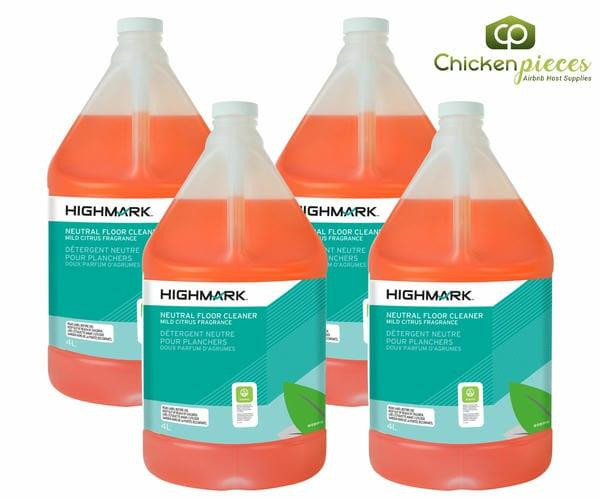
Floor cleaner concentrates come in two main jug sizes: 3.78L or 4L standard, and smaller 2.5L or 946 mL formats for controlled-use systems. Standard jugs suit properties with dedicated mop buckets or auto-scrubbers where staff pour measured amounts. These typically ship four per case, giving you 15-16 litres of concentrate total.
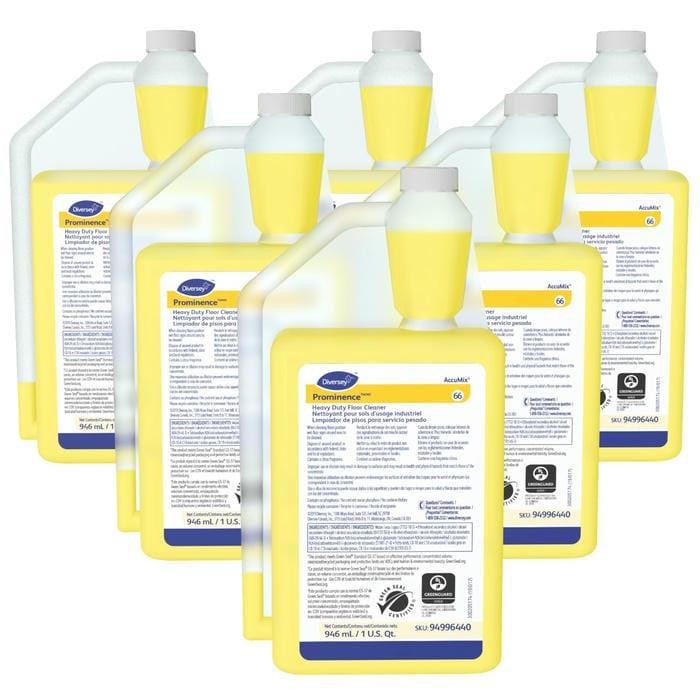
Smaller formats serve different operational needs. The 2.5L J-Fill and AccuMix 946 mL bottles connect to wall-mounted dispensers that automatically dilute concentrate into spray bottles or mop buckets. These systems reduce training burden because staff cannot over-concentrate by mistake. Cases of six 946 mL bottles suit properties with multiple filling stations.
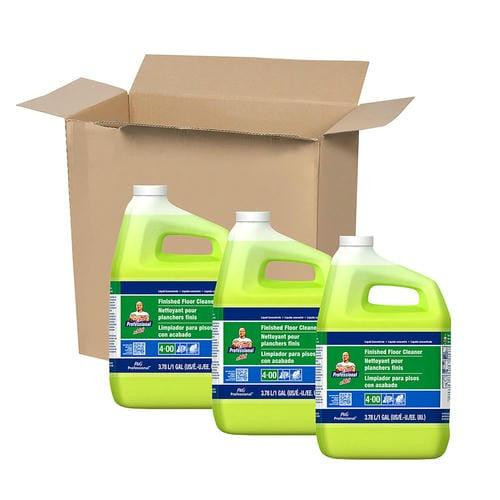
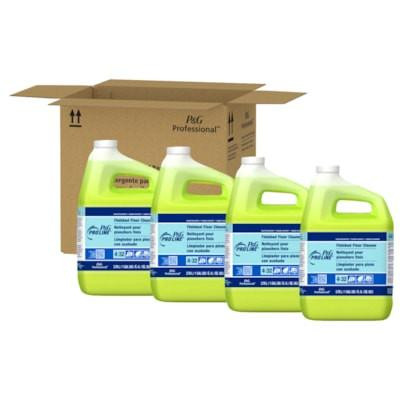
The Mr. Clean Professional and P&G Pro Line closed-loop systems use proprietary bottle designs that only release concentrate when locked into matched dispensers. This prevents theft, misuse and incompatible mixing. If your property already has these dispensers, you must buy the matching closed-loop bottles or replace the hardware entirely.
Calculating Real Cost-Per-Use
Sticker price means less than how much solution each case produces.
Cost-per-use starts with the dilution ratio printed on each concentrate label. A neutral floor cleaner rated at 128:1 means one litre of concentrate makes 129 litres of usable solution. Divide your case cost by total diluted litres to compare across brands fairly. Higher dilution ratios do not always mean better value if the formula performs poorly at weaker concentrations.
Pack size affects this math directly. Four 3.78L jugs at 128:1 yield roughly 1,940 litres of solution. Two 2.5L jugs at the same ratio yield about 645 litres. The per-litre concentrate cost might favour the smaller pack until you factor in case pricing, shipping and how quickly you consume the supply before expiry.
Operational costs also matter. AccuMix and closed-loop systems reduce waste from over-pouring, which staff often do with free-pour jugs. If your team routinely doubles the recommended concentration, your effective cost-per-use doubles too. Dispensing systems pay back through consistency, not just convenience.
Neutral vs Heavy-Duty Floor Formulas
Different floors and cleaning schedules need different chemistry.
Neutral floor cleaners maintain pH near 7, safe for daily use on finished floors, vinyl, laminate and sealed hardwood. The Diversey Floor Science, Highmark and Mr. Clean Professional products in this range all fall into this category. They remove tracked dirt and light scuffs without dulling floor finish or requiring rinsing. Properties with high guest turnover rely on neutral formulas for consistent results without frequent recoating.
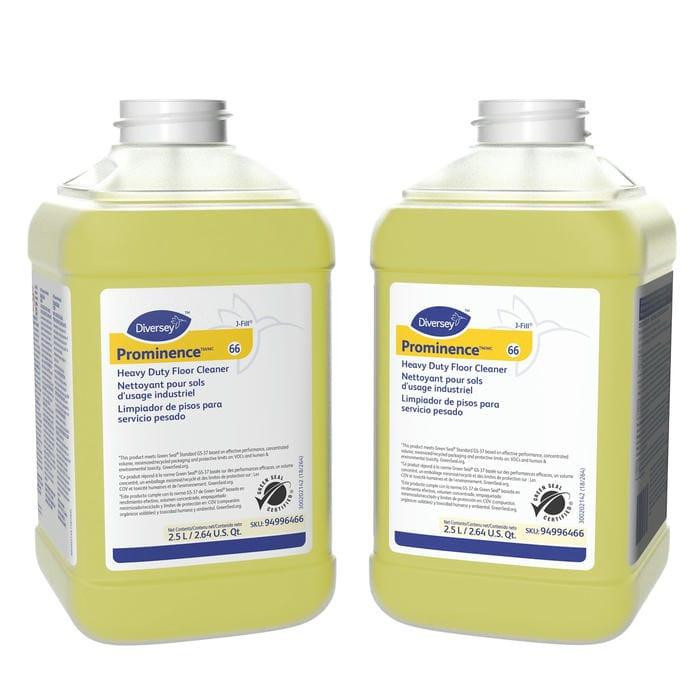
Heavy-duty alkaline cleaners tackle built-up grime, grease and neglected floors. The Diversey Heavy Duty and Prominence lines sit here. These strip old finish more aggressively and require proper ventilation, longer dwell time and often a rinse step. Reserve them for periodic deep cleaning or kitchens and entryways with heavy soiling. Using heavy-duty formulas daily accelerates floor degradation and increases labour.
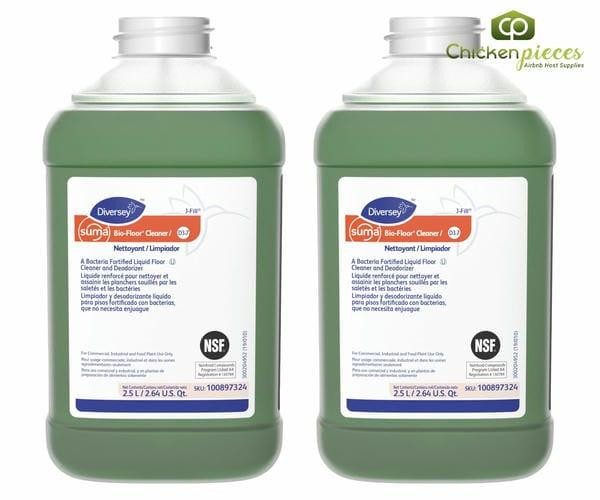
The Diversey Suma Bio-Floor Cleaner occupies a middle position with bio-enzymatic action that continues working after application. This suits properties with organic soiling from food service areas or pet-friendly accommodations. Enzymatic cleaners need longer contact time to perform, so they work best in low-traffic periods or overnight applications.
Matching Concentrates to Dispensing Hardware
Your existing equipment may limit which concentrates you can buy.
Diversey's J-Fill system uses 2.5L bottles that insert neck-down into wall-mounted dispensers. A twist mechanism releases concentrate into a measured stream while diluting with water at the set ratio. The Suma Bio-Floor and Prominence Heavy Duty J-Fill bottles require this specific hardware. If your property has J-Fill dispensers already, you cannot substitute standard screw-cap jugs.
AccuMix bottles are smaller at 946 mL and use a different twist-lock mechanism with finer ratio control. The Prominence Heavy Duty AccuMix format suits properties with limited wall space or lower-volume needs. These six-bottle cases let you place multiple dispensing points without large reservoir commitments. Staff training differs slightly from J-Fill because the bottle orientation and lock engagement differ.
Closed-loop systems from Mr. Clean Professional and P&G Pro Line use entirely proprietary bottle shapes that only fit their matched dispensers. The bottles cannot be opened manually, preventing refilling or misuse. This security comes with vendor dependence, you cannot switch to a generic concentrate later without replacing dispensers. Audit your current hardware before ordering to avoid stranded inventory.
Building a Reliable Floor Care Supply
Smart inventory prevents the rush orders that disrupt operations.
Start your stocking plan with an equipment audit. Walk each property, photograph dispenser models and count active units. Note which concentrate formats each accepts. This single step prevents the common error of ordering cases that cannot interface with existing hardware. Keep a master list updated when you add properties or renovate spaces.
Set par levels based on consumption tracking, not guesswork. Log how many litres of ready solution your crews use weekly, then back-calculate concentrate consumption at your actual dilution ratios. Add a buffer for seasonal spikes, spring move-outs and turnover periods. Most operators find a two-month supply balances carrying cost against stockout risk.
Consolidate where possible. Running three different dispensing systems across one property portfolio multiplies training, maintenance and spare parts needs. When equipment reaches end of life, standardize on one system that supports the concentrate range your floors need. This simplification pays off in fewer errors, easier ordering and interchangeable inventory between sites.
Concentrate Options Compared
Match your floor type and dispensing setup to the right format.
| Product | Size & Case | Floor Type | Dispensing |
|---|---|---|---|
| Diversey Floor Science Neutral | 3.78L, 4/case | Finished floors daily | Free-pour or pump |
| Highmark Neutral Concentrate | 4L, 4/case | Finished floors daily | Free-pour or pump |
| Mr. Clean Professional Finished | 3.78L, 3/case | Finished floors daily | Closed-loop only |
| P&G Pro Line Finished | 3.78L, 4/case | Finished floors daily | Closed-loop only |
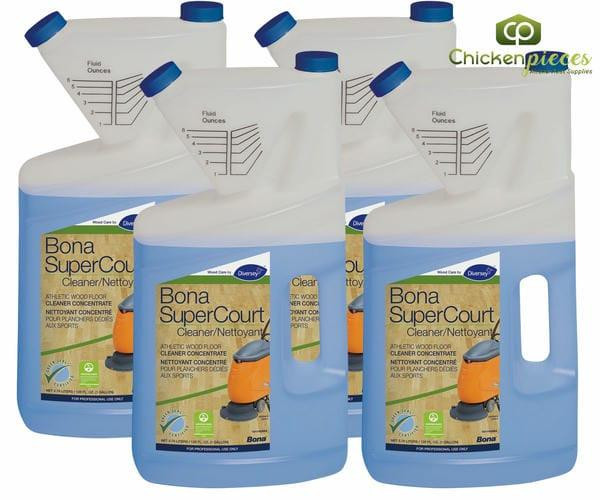
| Diversey Bona SuperCourt | 3.78L, 4/case | Sports/gym floors | Free-pour or pump |
| Diversey Heavy Duty Liquid | 2.5L, 2/case | Deep cleaning/renovation | Free-pour |
| Diversey Prominence Heavy Duty | 2.5L, 2/case | Deep cleaning/renovation | J-Fill system |
Floor Cleaner Concentrates in Stock
Neutral, heavy-duty and bio-enzymatic concentrates for properties of every size.


People Also Ask
Real questions buyers search before they order — answered straight.
What are the main types of janitorial cleaning chemicals?
Janitorial supplies generally break down into a few core groups: detergents and all-purpose cleaners, degreasers for baked-on grease, sanitizers and disinfectants that kill germs, and specialty products like floor strippers or descalers. Knowing which group a job needs stops you reaching for the wrong bottle. A well-stocked supply cupboard usually carries at least one reliable product from each category.
What cleaning chemicals do commercial kitchens use?
Most commercial kitchens rely on a heavy-duty degreaser for hoods and ranges, a food-safe sanitizer for prep surfaces, a dish detergent, and a floor cleaner built to cut grease. Many also keep a delimer or descaler for dish machines and steam equipment. Buying these as concentrates and diluting on site stretches each container much further.
How do you choose the right janitorial chemicals?
Start with the surfaces and soils you actually deal with, then match products to those jobs rather than buying one of everything. Check that food-contact sanitizers are approved for that use, and note the required dwell time and dilution. Concentrates usually work out cheaper per use and cut down on storage, as long as staff are trained to mix them correctly.
How should you store janitorial chemicals safely?
Keep chemicals in their original labelled containers, well away from food, and never mix products such as bleach and ammonia, which can create dangerous fumes. Store them in a cool, ventilated spot and keep the safety data sheets on hand for staff. Following WHMIS labelling and your provincial rules keeps both your team and any inspection on the right side of safe.
Where can you buy bulk janitorial chemicals in Canada?
You can order janitorial concentrates, sanitizers, and degreasers by the case or drum online and have them shipped to your facility, which beats hunting for stock across local shops. Look for a Canadian supplier that lists dilution rates and food-safe approvals so you can match each product to the job. We ship bulk janitorial chemicals across Canada.
What Canadian property operators say
What Canadian property operators say about switching to bulk concentrates.
We switched from ready-to-use spray bottles to the Highmark concentrate in our Calgary Airbnb portfolio. One case lasts three months now, and the mild citrus scent gets consistent guest compliments.
The J-Fill system eliminated my staff guessing on dilution ratios. We mounted dispensers at three filling stations and saw immediate improvement in floor finish longevity across our Hamilton properties.
I was sceptical about closed-loop until a guest tried to refill a spray bottle from a concentrate jug. The P&G system prevents that entirely. Worth it for the liability protection alone in our Vancouver buildings.
Bulk concentrate buying: Frequently Asked Questions
The following operator questions are answered with cited sources. Every FAQ links to the community thread, buyer guide, or regulator page it was researched from.
What condiment portion packets should a restaurant stock?
Source: Source
How much do condiment portion packets cost in bulk?
Source: Source
What's the shelf life of condiment portion packets?
Source: Source
How many condiment packets should I order per month?
Source: Source
Are condiment packets cheaper than bulk bottles?
Source: Source
What condiment packet brands are available for Canadian foodservice?
Source: Source
How should condiment packets be stored and organized?
Source: Source
What's the minimum order for bulk condiment packets in Canada?
Source: Source
Related guides from ChickenPieces
Why Property Operators Choose ChickenPieces.com
Calgary-based wholesale supply for Canadian properties with straightforward service and no hidden programs.
Multiple brands, one order
Order Diversey, Highmark, Mr. Clean Professional and P&G Pro Line concentrates together instead of managing separate supplier accounts for each property.
Format matching support
Unsure whether your dispensers need J-Fill, AccuMix or closed-loop bottles? Our team helps verify compatibility before you buy.
Straight case pricing
See unit counts and pack sizes clearly with live carrier rates at checkout. No program commitments or volume tiers to decode.
Canadian compliance covered
All stocked concentrates meet Health Canada and CFIA labelling requirements for workplace chemicals, with bilingual SDS sheets available on request.
Sources & further reading
Request Your Concentrate Quote
Tell us your property count, floor types and current dispensing setup. We will recommend pack sizes and quantities that fit your actual operations, with carrier rates calculated at checkout.
Request a Quote