

2025 Dec 13th
Choosing the Best Garbage Bag Holders for Business
Choosing the Best Garbage Bag Holders for Business
In a busy commercial operation, the humble garbage bag holder is more than just a place to hang a bin liner. It's a critical piece of gear for keeping things sanitary and running smoothly. These specialized frames are designed to hold open large, heavy-duty garbage bags, making waste disposal faster, safer, and way more hygienic.
Beyond the Bin: How Smart Waste Management Starts Here
Let's be honest—a garbage bag holder seems pretty basic. But in a commercial kitchen, janitorial closet, or warehouse, it's a non-negotiable tool for efficiency and cleanliness. This guide looks past the simple bin to show you how the right holder can streamline your workflow. It's the first step in turning a simple necessity into a real productivity asset.
Managing waste effectively is a massive challenge for any business. The sheer volume of trash, scraps, and disposables generated every single day requires a systematic approach, not just an afterthought. For instance, businesses across California are dealing with massive amounts of refuse daily, underscoring the need for reliable containment systems.
The Foundation of Cleanliness and Efficiency
A well-chosen garbage bag holder does a lot more than just hold a bag open. It plays several key roles that contribute to a cleaner, more organised workspace:
- Prevents Contamination: By keeping bags wide open and accessible, they minimize contact with waste. This is huge for reducing the risk of cross-contamination, especially in foodservice environments.
- Improves Workflow: When you place holders strategically, staff can toss waste without breaking their stride. It saves valuable time and energy, which really adds up over a shift.
- Ensures Compliance: In many industries, proper waste management isn't just a good idea—it's a matter of health code compliance. A sturdy, reliable holder helps you maintain the standards required by local regulations.
The scale of commercial waste is immense. In 2022 alone, California's businesses and residents produced approximately 76 million tons of waste, with over half ending up in landfills. This highlights the vital role that effective containment solutions, like garbage bag holders, play in managing such large volumes cleanly and efficiently. You can discover more insights about California's waste management efforts from BioCycle.
Choosing the right system is key. It could be a space-saving wall mount for a cramped kitchen or a heavy-duty mobile frame for a large facility. This guide will walk you through the core types, helping you pick a solution that perfectly matches your business's unique demands for waste volume, available space, and the specific kind of debris you handle.
Finding the Right Holder for Your Workspace
Not every garbage bag holder is created equal, and believe it or not, picking the right one for your business can make a huge difference in your day-to-day operations.
The best holder is one that fits your space, matches the amount of waste you generate, and works seamlessly with your team's workflow. Thinking about these things upfront saves you from headaches like overflowing bags and clumsy disposal routines down the road.
To make it simple, let's start with the biggest factor for most businesses: space. This one constraint can quickly narrow down your choices.
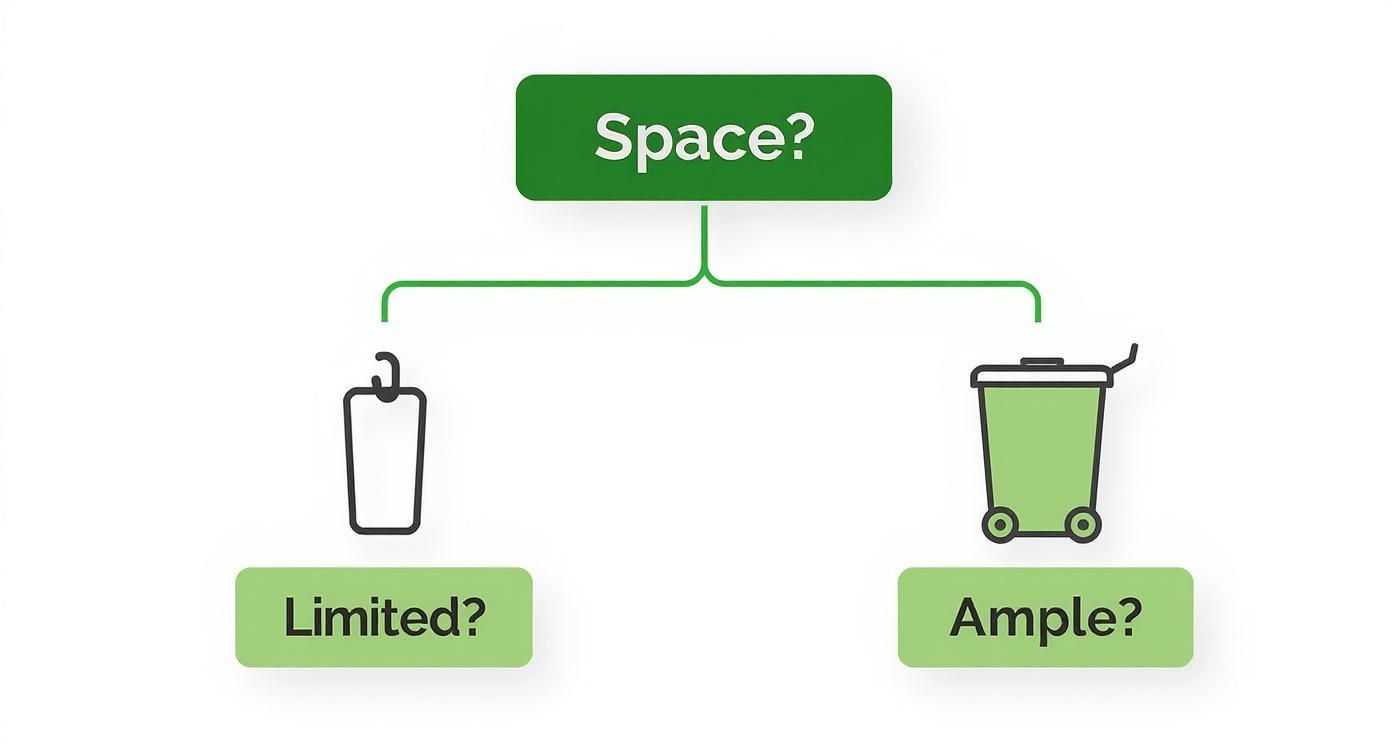
As the flowchart shows, how much physical room you have is often the perfect starting point for finding the right type of garbage bag holder.
Which Garbage Bag Holder Fits Your Business Needs?
To help you visualize the options, this table breaks down the most popular commercial styles. Each one is designed for a specific job, whether it's for a busy restaurant kitchen or a sprawling warehouse floor.
| Holder Type | Primary Benefit | Ideal Environment | Key Feature |
|---|---|---|---|
| Wall-Mounted | Space-Saving | Tight kitchens, janitorial closets, food trucks | Keeps floors completely clear for traffic and cleaning. |
| Freestanding Frame | Durability & Capacity | Warehouses, event venues, manufacturing floors | Heavy-duty construction holds large, heavy bags securely. |
| Pedal-Operated | Sanitation | Foodservice kitchens, healthcare facilities, labs | Hands-free operation minimizes cross-contamination. |
| Mobile Cart | Flexibility & Mobility | Hotels, schools, large office buildings, hospitals | Allows staff to collect waste efficiently over large areas. |
| Clip-On/Over-the-Door | Convenience | Prep stations, janitorial carts, temporary setups | Adds a waste point exactly where you need it, instantly. |
By matching the primary benefit to your environment, you can quickly identify the best tool for the job.
Holders for Every Commercial Need
Let's dig a little deeper into the most common types and see where they really shine. Each design offers unique advantages for specific settings, from a tiny café kitchen to a massive industrial site.
Wall-Mounted Holders
These are the ultimate space-savers. By mounting the holder directly to a wall, you keep your floors clear for foot traffic and cleaning equipment. They are a perfect match for tight spaces like food truck commissaries, small restaurant kitchens, or janitorial closets where every square inch is precious.
Freestanding Frames
When you need a sturdy, stationary waste point that can take a beating, a freestanding holder is your go-to. Often built from heavy-gauge steel, these units can handle significant weight and are ideal for high-traffic zones in warehouses, manufacturing floors, and busy event venues. Their simple, open design also makes swapping out full bags a breeze.
In busy foodservice or healthcare settings, sanitation is paramount. That's why hands-free pedal-operated holders are often considered the gold standard. Minimising hand contact with the receptacle is a critical step in preventing cross-contamination and upholding hygiene protocols.
Mobile and Specialized Solutions
Sometimes, you need your waste station to come to you. That's where mobile units shine, offering a level of flexibility that stationary models just can't match.
Mobile Carts
Picture a hotel's housekeeping staff navigating long hallways. A garbage bag holder on wheels, often built into a larger janitorial cart, lets them collect waste from dozens of rooms without making endless trips back to a central disposal area. This mobility is invaluable for maintenance crews in large facilities like schools, hospitals, and office buildings.
For businesses that need reliable, commercial-grade equipment, exploring options like the durable sanitation supplies from Chicken Pieces ensures you find a holder built to withstand professional demands. Whether you need a simple frame or a complete mobile system, matching the equipment to the task is key to a cleaner, more efficient workspace. These specialized tools are designed to support your operations, not slow them down.
Selecting the Best Materials and Capacity
Choosing the right material for a garbage bag holder is a lot like picking the right tool for the job. What works perfectly in one spot might completely fail in another. The material is what dictates a holder's durability, how easy it is to sanitise, and ultimately, its lifespan—especially in demanding commercial settings.
Getting the capacity right is just as important. A holder that's too small is a recipe for constant, messy overflows. But one that's too large just wastes space and can even encourage staff to leave bags in too long, which is how you get nasty odours. The goal is to find that sweet spot where the holder can handle your daily waste volume without slowing down your workflow.
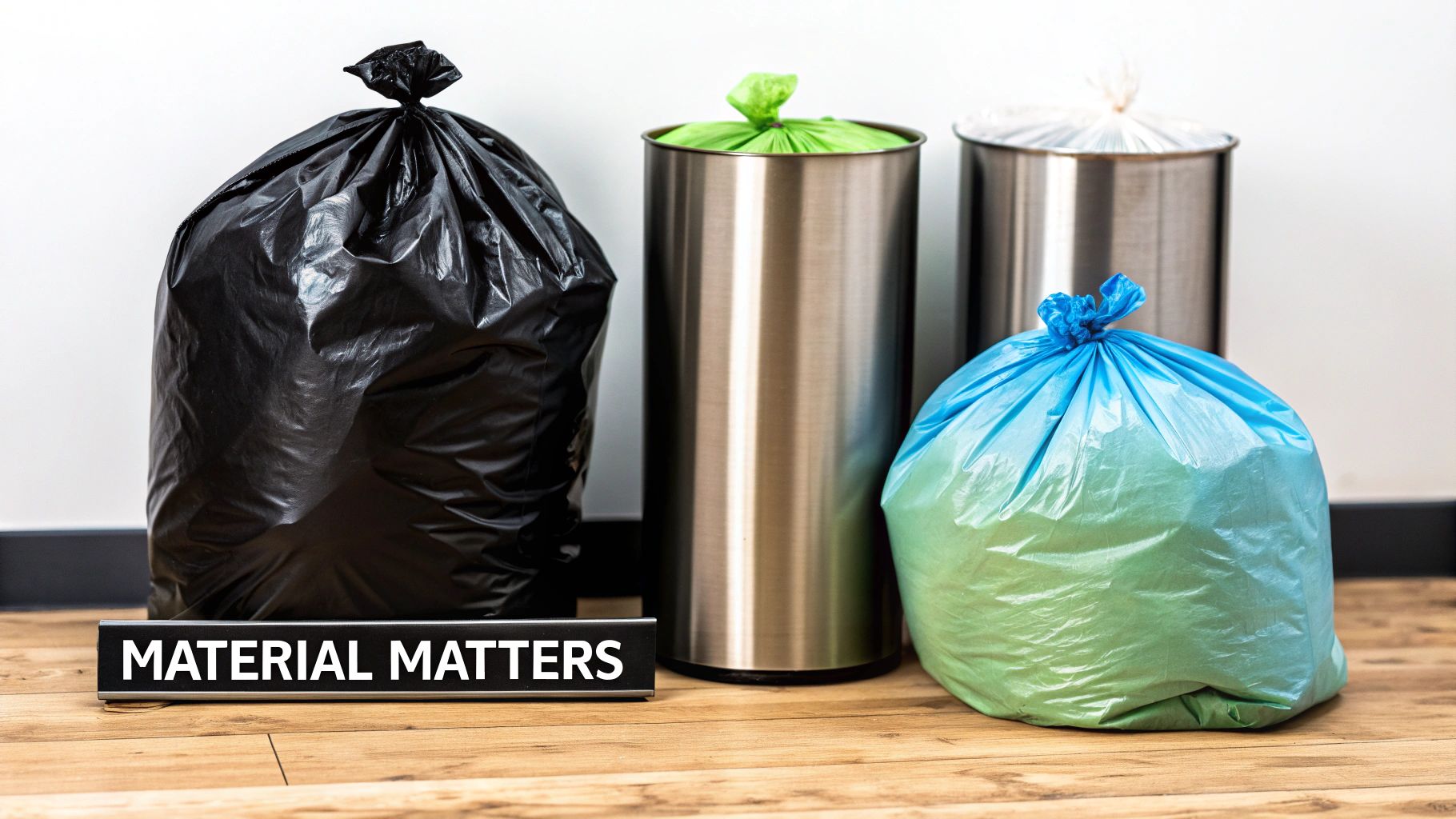
Comparing Common Holder Materials
In the world of commercial waste management, three materials really dominate because of their strength and resilience. Each one offers a unique set of pros and cons, depending on where and how you plan to use it.
- Stainless Steel: This is the undisputed champion for wet environments like commercial kitchens or medical facilities. Its non-porous surface stands up to rust and corrosion, making it incredibly easy to clean and sanitise. Think of it as a long-term investment in hygiene.
- Powder-Coated Steel: Here's your versatile workhorse. It offers a fantastic balance of durability and cost-effectiveness. The protective coating resists scratches and can handle mild moisture, making it a great all-around choice for warehouses, break rooms, and workshops.
- Industrial-Grade Plastic: Don't confuse this with the flimsy plastic you have at home. These heavy-duty plastic holders are surprisingly lightweight, they won't dent, and they'll never rust. This makes them an excellent option for dry storage areas, janitorial carts, or even for use at outdoor events.
For businesses that deal with specific kinds of waste, the material you choose is becoming more critical than ever. New regulations, like California's 2025 Hazardous Waste Management Plan, are putting a bigger emphasis on durability and leak prevention in commercial waste products. You can learn more about how California is improving its hazardous waste management framework.
How to Calculate the Right Capacity
Figuring out your waste volume doesn't have to be a guessing game. Start by just observing your peak times and thinking about your pickup schedule. A busy restaurant kitchen, for instance, is going to generate way more trash during a dinner rush than an office breakroom will all day.
A simple rule of thumb is to match the holder's dimensions to standard commercial bag sizes. The bag should always be a little taller than the holder itself—this gives you enough overhang for tying it off easily. It also ensures a snug fit that prevents that frustrating bag slippage, where the liner just collapses into the container.
Finding the right combo of holder material and capacity will create a more efficient, cleaner, and safer workspace for everyone. For reliable, commercial-grade bags and other janitorial supplies, check out the selection at Chicken Pieces.
Getting Installation and Maintenance Right
A good garbage bag holder is more than just a piece of equipment; it's a workhorse for cleanliness and efficiency in your business. But to get the most out of that investment, you need to nail the installation and stick to a simple upkeep routine. It's these small habits that not only make your gear last longer but are also the difference between a space that just looks clean and one that's genuinely hygienic.
Think of the initial setup as the foundation. For a wall-mounted unit, this step is absolutely critical. It needs to handle the daily strain of heavy, often wet, waste without breaking a sweat.
Secure Installation for Lasting Stability
When you install a wall-mounted garbage bag holder, the goal is to make it a permanent, unshakeable part of your workspace. A proper installation prevents sagging, stops damage to your walls, and heads off potential safety hazards before they can even start.
A wobbly or loose holder isn't just an annoyance; it's an accident waiting to happen. Taking a few extra minutes to do it right from the get-go ensures it can handle the load, day in and day out, without fail.
Here's a no-nonsense guide to getting it right the first time:
- Find the Studs: Don't even think about mounting it directly to drywall. Grab a stud finder and locate the wooden studs. Drywall alone will never be strong enough to support a holder filled with commercial waste.
- Mark Your Points: Position the holder at a comfortable, ergonomic height—nobody should have to bend over backwards just to throw something away. Use a level to mark your drill points directly on the studs.
- Use the Right Hardware: The small screws that sometimes come in the box? Toss them. You need heavy-duty lag bolts that will anchor the holder deep into the studs.
- Test for Strength: Once it's mounted, give it a firm tug. It shouldn't budge at all. If there's any movement, you'll want to reinforce it.
"A common mistake we see is underestimating the leverage a full, heavy garbage bag can exert on a wall mount. Anchoring directly into studs isn't just a best practice; it's essential for long-term safety and equipment durability."
Creating a Cleaning and Maintenance Routine
Once your holder is solidly in place, a simple but consistent cleaning schedule is your best defence against bacteria buildup and nasty odours. Different materials need slightly different care, but it's all pretty straightforward.
For stainless steel units, especially in kitchens, a daily wipe-down with a food-safe sanitiser is the way to go. This stops grime from building up and keeps the surface hygienic and non-porous. Powder-coated steel can be cleaned with just mild soap and water, but stay away from abrasive scrubbers that could scratch the finish. For those tough plastic holders, most all-purpose cleaners will do the trick perfectly.
Beyond the daily wipe-down, get into the habit of doing quick weekly checks. If you have a mobile garbage bag holder, make sure the casters are rolling smoothly and aren't clogged with debris. On metal frames, just give the welds a quick look-over for any signs of rust or stress, particularly if you're in a damp environment. These quick inspections catch small issues before they become big problems, making sure your sanitation supplies from Chicken Pieces serve you well for years to come.
Boosting Workflow with Strategic Placement
Let's be honest, where you put your garbage bag holder seems like a small detail. But in a busy commercial space, it can be just as important as the type of holder you choose. Getting the placement right is a simple, almost effortless way to supercharge your team's workflow, boost safety, and keep the whole place cleaner. It turns a humble piece of equipment into a genuine strategic asset.
Think about the classic "work triangle" in a professional kitchen, where the sink, stove, and refrigerator are positioned for pure efficiency. The same logic applies directly to waste management. By placing your garbage bag holders in the right spots, you can shave off countless unnecessary steps and disruptions throughout the day.
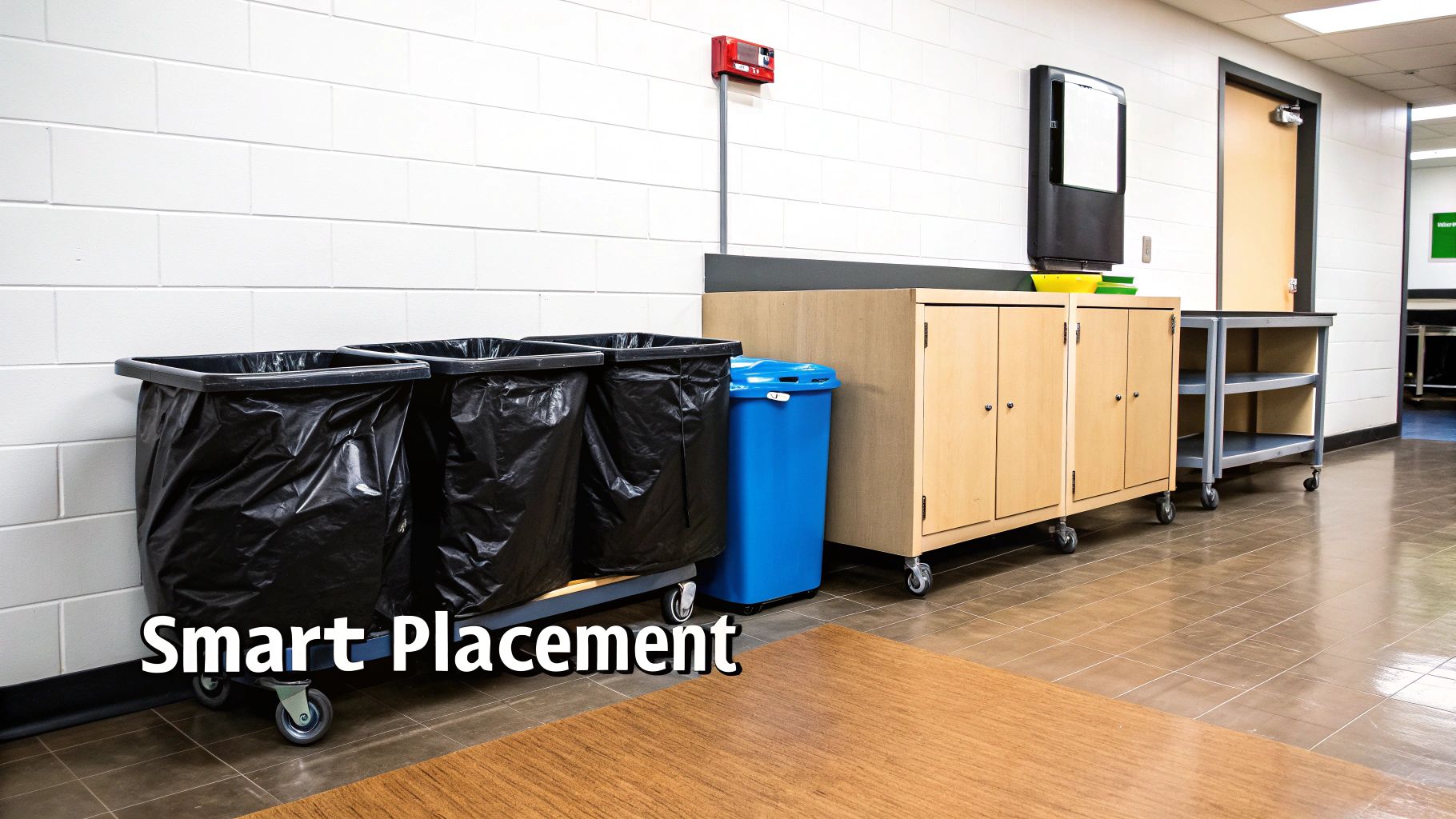
Optimizing Placement in Key Areas
Strategic placement simply means putting the holder right where the trash happens. This simple act drastically cuts down on the time your staff spends walking back and forth, and it nearly eliminates the risk of spills or drips on the floor between a workstation and the bin.
Here are a few real-world examples of smart placement in action:
- In Food Prep Zones: Stick a pedal-operated holder right beside the cutting boards or prep tables. This lets chefs toss scraps and offcuts instantly without breaking their rhythm or risking cross-contamination.
- Near Janitorial Closets: Parking a mobile cart or a large freestanding frame just outside the supply closet is a game-changer. Staff can offload collected trash and restock their carts in one smooth, efficient motion.
- In High-Traffic Public Zones: Placing holders near entrances, exits, and restrooms is key to keeping your public-facing areas looking tidy and welcoming for every customer who walks through the door.
Don't forget about ergonomics. Installing wall-mounted garbage bag holders at a comfortable, waist-level height makes a huge difference in preventing back strain. When your staff can dispose of waste without awkward bending or reaching, you're actively preventing long-term workplace injuries.
Connecting Placement to Holder Type
This is where your earlier choices start to really pay off. That mobile garbage bag holder is the perfect partner for janitorial teams cleaning large floors, while a compact wall-mounted unit is a lifesaver in a cramped coffee station. The whole point is to make every single act of disposal quicker, safer, and more intuitive for your crew.
By thinking critically about placement, you create a seamless system that works with your staff's natural movements, not against them. This careful planning, combined with quality janitorial supplies from Chicken Pieces, is what ensures your entire operation runs like a well-oiled machine.
How Holders Support Your Sustainability Goals
In today's world, being environmentally responsible isn't just a nice-to-have—it's something customers and regulators expect. Your waste management system is one of the most visible signs of your commitment, and the humble garbage bag holder can play a surprisingly big part in that story.
Think beyond a single, catch-all bin. When you set up a clear and effective system for waste separation, you transform a simple receptacle into a powerful tool for hitting your sustainability goals. Multiple, distinct garbage bag holders are the secret weapon for any serious recycling or composting program.
Implementing an Effective Waste Sorting System
The biggest enemy of a good recycling program is cross-contamination. When recyclables get tossed in with general trash or food scraps, the whole batch can get rejected and sent to a landfill. Using separate garbage bag holders creates a simple physical barrier that makes sorting intuitive for both your staff and your customers.
Picture a busy commercial kitchen. A small, pedal-operated holder can be set aside just for organic kitchen scraps destined for compost. Meanwhile, a larger, freestanding frame can handle all the mixed recyclables like cans and bottles. This kind of setup doesn't just support your green initiatives; it also helps you comply with local environmental rules.
For instance, California's ambitious organic waste reduction program has completely changed how businesses handle their trash. The state is pushing to cut landfill disposal of organic materials by 75% by 2025. This has led to widespread adoption of separate collection programs, forcing businesses to use dedicated containers for food waste. You can read more about California's food waste program and see how it's affecting commercial operations.
A simple yet incredibly effective strategy is to use colour-coded bags and holders. A green bag in a green-lidded holder for compost, a blue one for recycling, and a black one for landfill waste provide instant visual cues, minimizing errors and making participation effortless for everyone.
This visual system takes the guesswork out of sorting and helps build good habits over time. When you combine this approach with quality sanitation supplies from Chicken Pieces, your waste management setup becomes a proactive part of your company's commitment to the planet. It's a clear signal to customers that you take sustainability seriously, turning a basic operational need into a powerful statement about your values.
Common Questions About Commercial Holders
The following operator questions are answered with cited sources. Every FAQ links to Reddit, Quora, PAA, or a public regulator.
What should a Canadian operator compare first when choosing a commercial garbage bag holder?
Source: r/lifehacks: The janitor in our company stores the cleaning supplies
How does a buyer decide between a wall-mounted and a freestanding garbage bag holder?
Source: r/functionalprint: Kirkland Costco garbage bag holder print
Which garbage bag holder materials hold up best in a busy commercial kitchen?
How should a buyer size a commercial garbage bag holder for a high-volume foodservice prep area?
Source: r/functionalprint: Trash can bag holder for reusing plastic grocery bags
What features actually matter on a stainless steel garbage bag holder?
Source: r/CleaningTips: My cleaning tips as a residential cleaner
How can a buyer keep a garbage bag holder area sanitary and easy to swap during service?
Source: r/chemistry: Can these be soaked in isopropyl alcohol for a clean
Which commercial garbage bag holders are easy to clean in a Canadian foodservice kitchen?
Source: r/restaurantowners: I tracked down the company ruining restaurants
How should a Canadian operator plan the layout of garbage bag holders around a prep line?
Authoritative Sources
The following government and public-health sources informed the operator guidance above. Citations to Reddit, Quora, and operator forums appear in the FAQ block above.