
2026 Jan 9th
How to Reduce Food Waste: Practical Ways to Save Money in
How to Reduce Food Waste: Practical Ways to Save Money in Your Kitchen
If you want to get serious about reducing food waste, you first need to know exactly what you're throwing away. The most effective strategies don't start with buying less or changing recipes—they start with a simple kitchen waste audit. This gives you a clear baseline by showing what, why, and when food is being tossed out. Think of it as the foundation for making any real, impactful changes.
Conduct a Kitchen Waste Audit to Find Your Starting Point
You can't fix a problem you can't see. Before you start changing your purchasing habits or kitchen routines, you need a clear picture of what's actually ending up in the bin.
A kitchen waste audit might sound technical, but it's really just a straightforward process of tracking discarded food to find patterns. It's the single most important first step for both a busy restaurant kitchen and a family at home.
This process shines a light on the true cost of food waste. It's not just the price of the spoiled lettuce or the uneaten pasta; it's also the wasted hydro for cooking, the labour that went into prep, and the fees you pay for disposal. Seeing these hidden costs stack up creates a powerful incentive to change.
Why Measurement Is Your Most Powerful Tool
Guessing where your waste comes from almost always leads to wasted effort. You might think plate leftovers are the main issue, but an audit could reveal that over-purchased produce spoiling in the walk-in is the real culprit. Without data, your solutions are just based on assumptions, not facts.
Here in Canada, tackling food waste starts with understanding just how big the problem is. The National Zero Waste Council estimates that nearly 63% of the food Canadians throw out could have been eaten. For the average household, that's about 140 kg of perfectly good food per year—worth more than CAD CA 1,300.
Nationally, this adds up to about 2.2 million tonnes of avoidable food waste, generating emissions equivalent to over 2 million cars. Restaurants also play a massive role, with organic materials making up 50–60% of their waste stream, much of it edible. You can read more about the business case for waste reduction to see the full financial picture.
A waste audit turns an abstract problem like "food waste" into a concrete action plan. It replaces the vague goal of "wasting less" with specific targets like "reduce bread waste by 20%" or "use all vegetable trimmings on Wednesdays."
Setting Up Your First Waste Audit
Getting started is a lot simpler than you might think. All you're really doing is separating, tracking, and analyzing what you discard over a set period. One week is an excellent starting point to get a snapshot of your typical habits.
Here's how you can organize a basic audit:
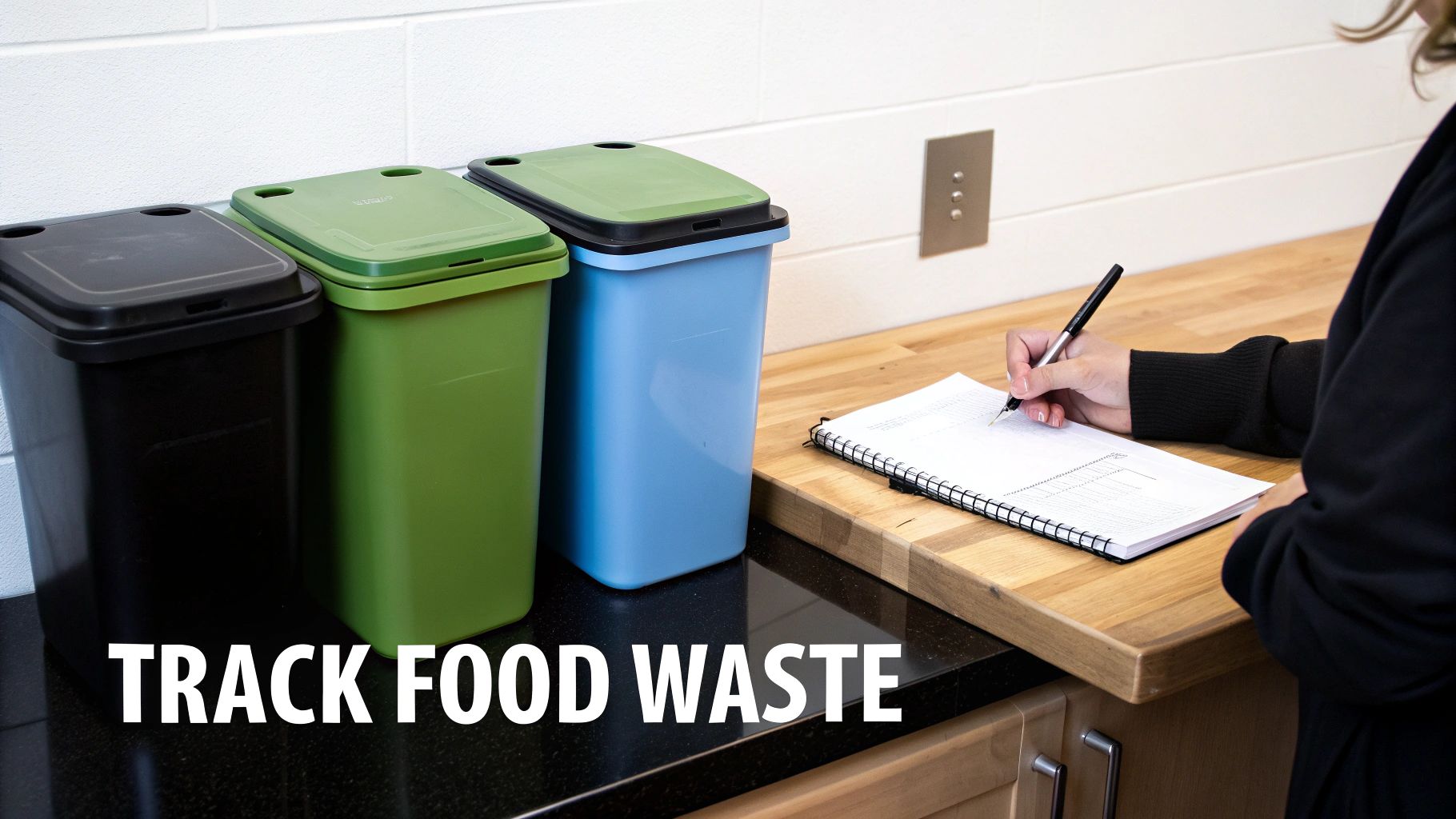
- Establish Separate Bins: Designate specific, clearly labelled containers for different types of waste. In a professional kitchen, this could mean bins for spoilage, prep waste (peels, trimmings), and plate leftovers. At home, you can just use a few smaller containers on your counter.
- Create a Simple Tracking Log: You don't need anything fancy. A basic notebook or a simple spreadsheet will do the trick. Create columns for the date, the food item, the reason for disposal (e.g., spoiled, expired, leftover), and an estimated weight or volume.
- Get Everyone on Board: For the audit to work, everyone in the kitchen—whether it's your family or your staff—needs to participate. A quick meeting to explain why you're doing it and how to log the waste is crucial for gathering accurate data.
To make this even easier, here's a simple checklist you can use to guide your first audit.
Your Simple Food Waste Audit Checklist
Use this checklist to conduct a basic food waste audit in your kitchen and pinpoint your primary sources of waste.
| Audit Step | Action to Take | Why It Matters |
|---|---|---|
| 1. Preparation | Set up labelled bins for Spoilage, Prep Waste, and Plate Leftovers. Create a simple log sheet next to the bins. | Clear separation is key to identifying where waste is happening in the workflow. |
| 2. Brief Your Team | Hold a quick 5-minute meeting with staff or family. Explain the goal and how to record discarded items. | Consistency is everything. If only half the people participate, your data will be skewed. |
| 3. Track for One Week | For 7 consecutive days, have everyone log every piece of food waste before it goes into the main bin or compost. | A full week provides a realistic snapshot that accounts for daily variations, like a slow Monday or a busy Saturday. |
| 4. Weigh or Estimate | At the end of each day, weigh each category's bin. If you don't have a scale, use a consistent volume measure (e.g., "one 5-litre bucket"). | Weight provides the most accurate data for tracking progress later on. Volume is a good second-best option. |
| 5. Review and Analyze | At the end of the week, total your numbers. Look for patterns. Is prep waste the biggest category? Is one specific ingredient being thrown out often? | This is where you find your "low-hanging fruit"—the easiest and most impactful changes you can make first. |
By following these steps, you'll have a clear, data-backed starting point to build your reduction strategy.
By the end of the week, you'll have a surprisingly clear record of your kitchen's waste streams. This baseline is invaluable because it allows you to actually measure the success of any changes you make. Seeing those numbers drop over time is a powerful motivator to keep your food waste reduction efforts going strong.
Master Your Inventory with Smarter Purchasing and Storage
Once you've done an audit and figured out what you're wasting, the next move is to cut it off at the source. The single most effective way to slash food waste is to stop surplus ingredients from ever coming through your door in the first place. This means shifting from a reactive "clean-up" mindset to proactive management, starting with smarter buying and better storage.
This isn't just about the money you save on food you don't throw out; it's about respecting the resources that went into producing every single ingredient. When you get your inventory under control, your kitchen transforms from a potential source of waste into a model of pure efficiency.
Adopt Data-Driven Purchasing Habits
Whether you're running a slammed café or just your household kitchen, the trap of over-ordering is a killer. The trick is to let hard data, not guesswork, write your shopping list.
For a restaurant, this means digging into your sales data. A quick look at your point-of-sale (POS) reports will show you which dishes fly out the door on which days of the week, helping you forecast your ingredient needs with shocking accuracy. Instead of ordering a full case of avocados "just in case," you can order exactly what you'll realistically use before they turn brown.
At home, the process is simpler but just as powerful: make a meal plan. Before you even think about going to the grocery store, map out your meals for the week and build a shopping list based only on those recipes. It's a simple habit that stops you from impulse-buying that bunch of kale that will inevitably wilt in the back of the crisper.
Key Takeaway: The goal is to move from a "just-in-case" inventory model to a "just-in-time" one. This minimizes how much perishable food is sitting on your shelves, which drastically cuts the risk of spoilage.
A smart move for businesses is to focus bulk purchasing on items with a long shelf life. For example, it makes perfect financial sense to stock up on commercial-grade staples like Frostline soft serve mixes or premium Tonino Lamborghini coffee beans. These products are non-perishable, so you can lock in bulk pricing without the risk of them going bad, freeing up cash for smaller, more frequent orders of fresh produce and proteins.
Implement a First-In, First-Out System
Once the ingredients are in your kitchen, organization is your best defense against waste. The single most important rule for food storage is First-In, First-Out (FIFO). It's a simple system that ensures you always use up older stock before touching the new stuff.
And you don't need fancy tech to do it. FIFO is all about discipline.
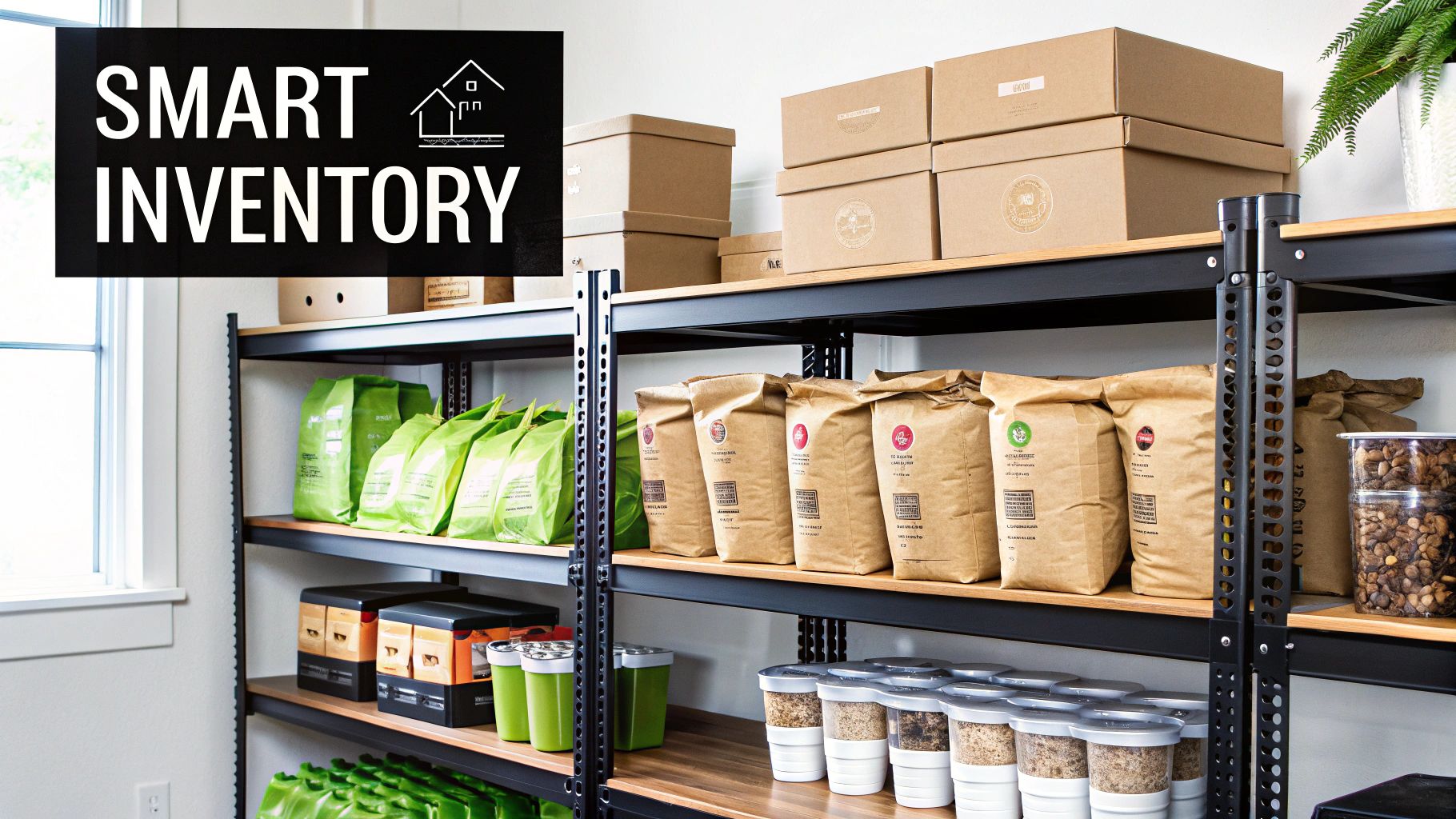
- When stocking shelves: New items always go to the back or underneath the older items. No exceptions.
- Use clear date labels: Slap a label with the delivery date or "use by" date on everything. This removes any ambiguity for your staff or family members.
- Organize logically: Keep your pantry, fridge, and walk-in organized so that older items are right there in plain sight, easy to grab.
This approach stops those all-too-familiar moments of finding a container of cream or a bag of spinach that expired at the back of the cooler, buried behind a newer delivery.
Optimize Your Storage Environment
How you store your food is just as critical as the order you use it in. Different ingredients have different needs, and giving them the right environment can stretch their lifespan dramatically.
- Temperature Control: Keeping your temperatures precise and consistent is non-negotiable. Check your fridges and freezers regularly to make sure they're in the safe zone. Even a few degrees can be the difference between fresh and spoiled for dairy, meat, and produce.
- Proper Containers: Don't cheap out here. Invest in good quality, commercial-grade food containers. Airtight containers keep out moisture and contaminants, preventing wilting and spoilage while letting you stack and organize everything neatly. This makes your whole FIFO system much easier to manage.
- Separation is Key: Certain foods need to be stored apart. Ethylene-producing fruits like apples and bananas will cause ethylene-sensitive veggies like lettuce and broccoli to ripen and spoil way too fast. In the fridge, always store ready-to-eat foods on the top shelves, above raw meats, to prevent any risk of cross-contamination.
By mastering these purchasing and storage techniques, you're building a powerful framework for prevention. You won't just be reducing waste and saving money—you'll be creating a more organized, efficient, and safer kitchen for everyone.
Give Every Ingredient a Second Life
Smart purchasing is your first line of defence against food waste, but let's be realistic—scraps and leftovers are part of any busy kitchen. The real game-changer is learning to see potential where others see trash. When you start thinking of "scraps" as "culinary assets," you unlock a new level of creativity, save a surprising amount of money, and seriously shrink your kitchen's waste footprint.
This is where the true craft of an efficient kitchen comes into play. It's not just about reheating last night's dinner; it's about transforming ingredients into something entirely new and genuinely exciting. It's an approach that respects the food and pushes your skills at the same time.
Embrace Whole-Ingredient Cooking
The "root-to-stem" or "nose-to-tail" philosophy isn't just a trendy phrase; it's a powerful mindset for cutting waste. It challenges you to find a purpose for every single part of an ingredient, from the vegetable peels you'd normally toss to the trimmings from meat and fish.
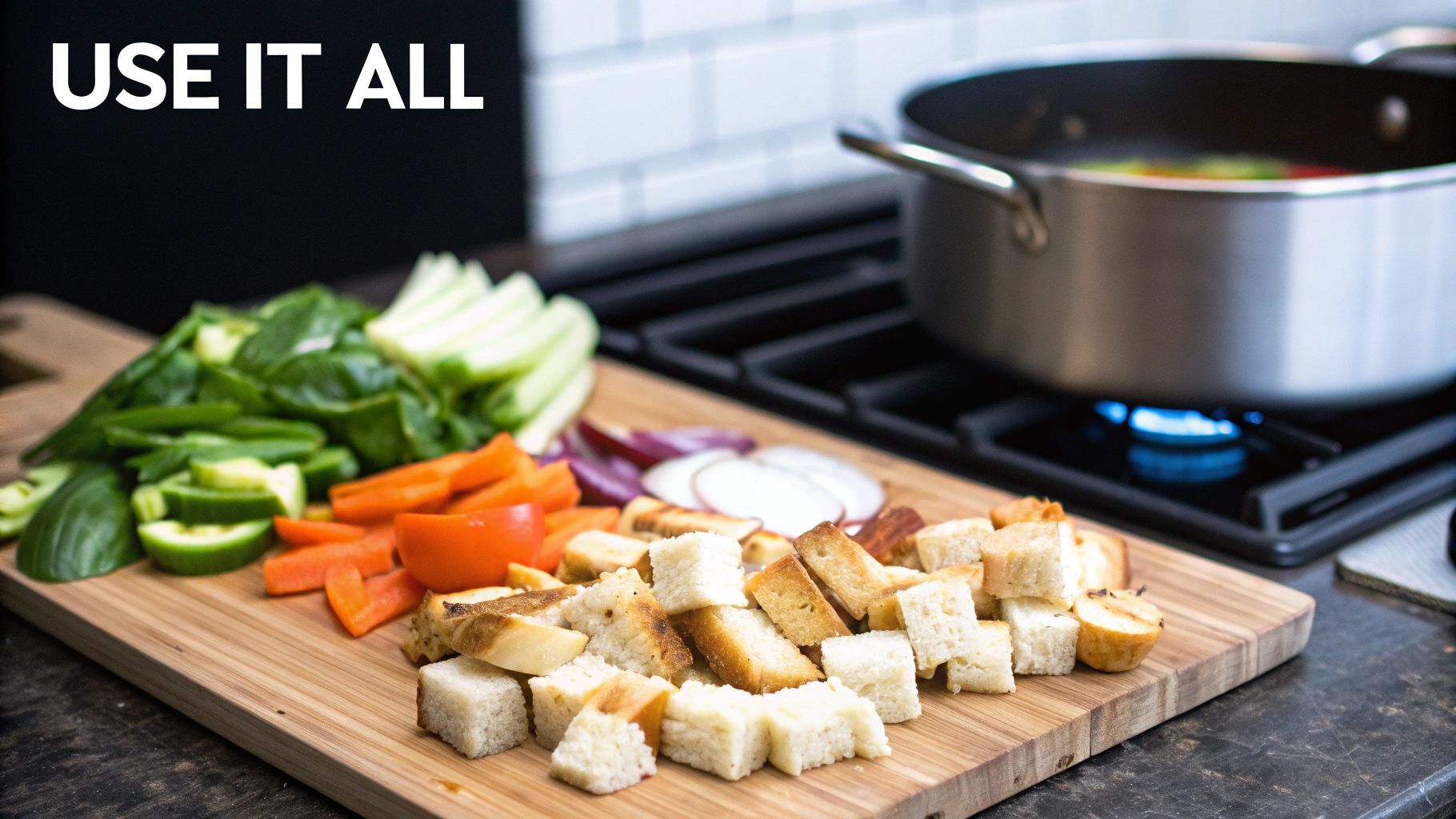
Think about it: those tough outer leaves of cabbage, cauliflower stems, and carrot peels are packed with flavour. Instead of heading straight for the compost bin, they can be collected in a freezer bag. Once you have enough, simmer them with some onion ends and herb stems, and you've got a deeply flavourful vegetable stock for free.
The same idea works wonders with proteins. Those trimmings from chicken, beef, or fish can be simmered down into rich, nutrient-dense broths that become the backbone of countless recipes. This one simple habit turns a waste product into a foundational kitchen staple.
By finding a use for every part of your ingredients, you're not just cutting waste—you're capturing flavour and nutrition that would have otherwise been lost. This practice improves both your kitchen's economy and the quality of your dishes.
Transform Surplus into New Creations
Leftovers don't have to be boring. With a little imagination and a well-stocked pantry, surplus ingredients can become the star of an entirely new meal. This is where having a few versatile sauces, marinades, and dressings on hand becomes your secret weapon.
Take surplus roasted chicken, for instance. A day later, it might not seem that exciting on its own. But shred that chicken, toss it with a flavourful sauce, and you've suddenly got the building blocks for brand-new dishes.
- For a quick and delicious filling: Combine shredded chicken with a bold BBQ sauce for amazing pulled chicken sandwiches.
- For a vibrant salad: Mix it with mayonnaise, celery, and herbs for a classic chicken salad that feels fresh, not repurposed.
- For a comforting soup: Add it to that homemade vegetable stock you made, along with some noodles and fresh vegetables.
Having high-quality, shelf-stable sauces on hand makes these transformations almost effortless. A simple marinade can turn leftover roasted vegetables into a zesty side dish, while a good dressing can bring a bowl of mismatched ingredients together into a cohesive, delicious meal.
From Trash to Treasure: Creative Uses for Common Scraps
So many things we throw away can be easily transformed with just a little know-how. Here are a few practical ideas to get you started on turning common kitchen scraps from trash into treasure.
| Common Food Scrap | Creative Repurposing Idea | Helpful Product |
|---|---|---|
| Stale Bread | Process into breadcrumbs for toppings, cube and toast for artisan croutons, or use in recipes like bread pudding or panzanella salad. | A good quality olive oil for making perfect, crispy croutons. |
| Citrus Peels | Infuse into simple syrups for drinks, candy them for a sweet treat, or dry them to add to tea blends or seasoning mixes. | A reliable zester or peeler to remove the peel without the bitter white pith. |
| Wilted Herbs | Blend with oil, nuts, and cheese to make pesto, or chop finely and mix into butter to create a compound butter for steaks or bread. | Airtight containers to store your finished pesto or herb butter in the fridge or freezer. |
| Coffee Grounds | Use as a natural deodorizer in your fridge, add to compost to enrich the soil, or incorporate into marinades for red meat to add depth. | Quality coffee beans will leave you with flavourful grounds perfect for culinary use. |
Adopting these simple, creative habits does more than just reduce the amount of food heading for the bin. It's a practical and tasty way to make your kitchen more sustainable, more creative, and a whole lot more resourceful.
Set Up an Effective Waste Diversion Program
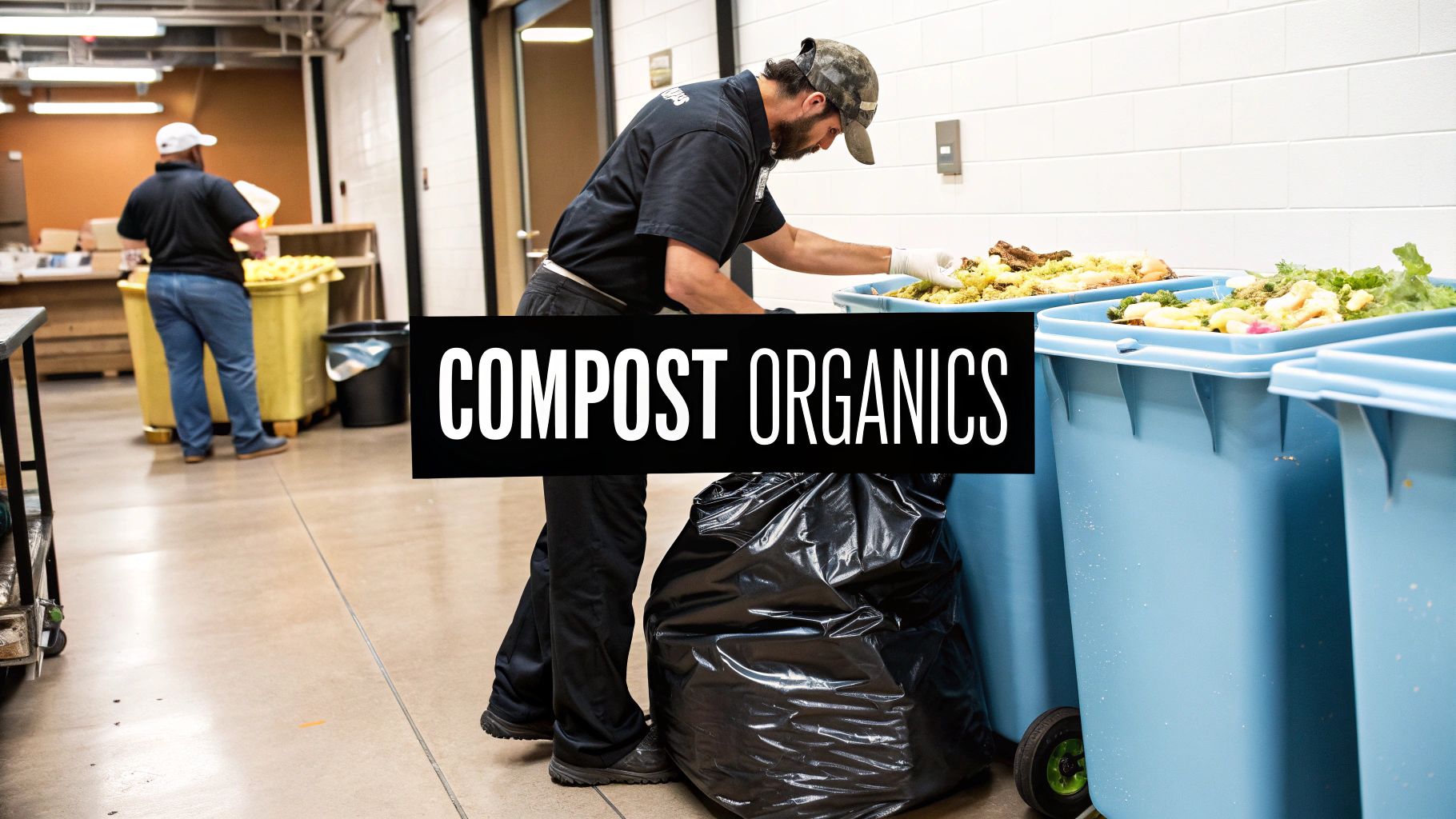
Even with the best prep plans and creative repurposing, some food waste is just part of the game. Vegetable peels, eggshells, coffee grounds—once you've gotten all the use you can out of them, the goal is to keep them out of the landfill. This is where a smart waste diversion program comes in. It's the final, crucial step that turns unavoidable scraps into a valuable resource instead of an environmental problem.
This is about more than just sticking a green bin in the corner. It's about designing a simple, clean, and efficient system that makes it second nature for your staff or family to sort waste correctly. Every single time.
Making Sorting Second Nature in Your Kitchen
The secret to a diversion program that actually works? Convenience. If separating organic waste feels like a hassle, people just won't do it consistently.
In a professional kitchen, this means placing clearly labelled organics bins at every single prep station, right next to the regular garbage. It sounds simple, but this one move makes it just as easy to compost a carrot peel as it is to toss it. No extra steps, no excuses.
The same logic applies at home. A small countertop compost pail is a game-changer, letting you collect scraps during meal prep without running to a larger bin outside every five minutes. When the right choice is the easy choice, compliance goes way up.
Thankfully, policy and infrastructure in Canada are catching up. In 2022, about 72% of Canadian households had access to some form of organics diversion, a nice jump from 61% in 2013. For restaurants in cities like Toronto and Vancouver, separating organics isn't just a good idea—it's often mandatory. We've seen waste audits show that when kitchens put separate bins at each station, they slash their landfill-bound food waste by 30–50% in just a few months.
The Right Tools for a Clean and Efficient System
Let's be honest: no one wants to deal with a smelly, leaky, gross bin. A clean sorting station is a functional one, and investing in the right supplies is key to maintaining a system people will actually use.
High-quality, durable bin liners are non-negotiable. They stop leaks, control odours, and make emptying the bins a much faster and cleaner job. In a commercial kitchen, this small investment pays for itself almost immediately in saved labour time and better sanitation.
A well-organised and sanitary waste diversion station is a sign of a well-run kitchen. It shows a commitment to both sustainability and operational excellence, sending a clear message to staff and customers about your values.
Beyond good liners, you need a solid cleaning routine. Regularly washing all waste bins—organics, recycling, and landfill—is essential to prevent pests and foul smells. Using effective, commercial-grade sanitation supplies from trusted brands like Ecolab ensures your waste area stays clean and up to health code standards. Keeping cleaning sprays and paper towels nearby encourages staff to clean up spills the moment they happen.
Partnering with Commercial Composting Services
For most restaurants and foodservice businesses, teaming up with a commercial composting service is the most practical move. These companies provide large, durable bins and handle all the logistics of pickup and processing. They ensure your organic waste gets turned into valuable compost for farms or landscaping projects, closing the loop properly.
When you're vetting a service, ask a few key questions:
- Pickup Frequency: Does their schedule fit the amount of waste your kitchen produces? You don't want bins overflowing by pickup day.
- Accepted Materials: What exactly can and can't go in their bins? Get a clear list to post for your team to avoid contaminating a whole load.
- Reporting: Can they provide data on how much waste you're diverting? This info is gold for tracking sustainability goals and sharing your progress with customers.
By creating a structured diversion program, you complete your food waste strategy. You've prevented what you could, repurposed what was possible, and are now responsibly managing everything that's left over.
Build Community Partnerships Through Food Donation
Watch: cook 9 days of food in 2 hours with the one-pot rule
After you've done everything you can to prevent, repurpose, and compost, one final, powerful opportunity remains for surplus food. When you have perfectly good, edible food you just can't use, donation is the key to turning a potential loss into a vital community resource.
For any food business—restaurants, caterers, you name it—partnering with local food rescue organizations is one of the most meaningful actions you can take. It doesn't just keep good food out of the landfill; it directly tackles food insecurity right in your own neighbourhood.
This strategy really completes the food waste reduction cycle. It transforms what would be disposal costs into a positive outcome that builds real community goodwill and cements your reputation as a business that genuinely cares.
Understanding the Donation Landscape
The idea of donating prepared or surplus food can seem complicated, but organizations across Canada have worked hard to make it as simple as possible. Many businesses get hung up on liability, but it's important to know that legal protections are firmly in place to encourage this exact practice.
Most provinces in Canada have Good Samaritan Acts. These laws are specifically designed to protect businesses and individuals from liability when they donate food in good faith to non-profit organizations. This legal framework is there to remove the fear of legal trouble, as long as you handled the food safely and it was considered fit to eat at the time you donated it.
Donating surplus food isn't just charity; it's a smart business decision. It cuts down your disposal fees, can offer tax benefits, and builds an authentic connection with your community that resonates far more than a typical marketing campaign ever could.
The scale of this opportunity in Canada is staggering. Helping move food from surplus to service is one of the most powerful ways to cut down on waste. Second Harvest estimates that of the 11.2 million tonnes of surplus edible food generated each year in Canada, a massive 4.82 million tonnes—about 43%—could be redirected to people who need it.
In 2022–2023, Canada's network of food banks and agencies served over 1.9 million people every month, which just goes to show the immense need. You can discover more insights about Canada's food rescue potential and see how these programs are making a real difference.
How to Start Donating Safely and Effectively
Getting started with food donation is surprisingly straightforward once you connect with the right partners. Organizations like Second Harvest or your local food bank have established systems designed to make it as easy as possible for businesses like yours.
First, you need to identify what you can actually donate. While the rules can vary a bit between organizations, most of them accept a wide range of surplus food.
- Non-Perishable Staples: Canned goods, dry pasta, rice, and sealed shelf-stable items are always in high demand. If you've got cases of cooking oil or other pantry essentials nearing their best-before date, these are perfect for donation.
- Fresh Produce and Dairy: Many food banks are well-equipped to handle fresh items like fruits, vegetables, milk, and cheese. These are crucial for providing nutritious meals and are always deeply appreciated.
- Prepared Foods: This is a huge area of opportunity for restaurants and caterers. Unserved portions of catered meals, surplus soups, or day-old baked goods can often be donated, as long as they have been stored at safe temperatures.
Once you know what you have, just reach out to a local food rescue organization. They'll walk you through their specific requirements for food safety, packaging, and transport. Their main priority, and yours, is to ensure the food remains safe from your kitchen all the way to the recipient's plate.
This usually means packaging food in clean, durable, commercial-grade containers to prevent any spills or contamination. It's also vital to clearly label everything with what it is and the date it was prepared. This simple step helps the receiving organization sort and distribute the food safely and efficiently. By turning your surplus into support, you're taking the final, and perhaps most meaningful, step in your journey to reduce food waste.
Your Questions on Reducing Food Waste Answered
Even with the best intentions, questions always pop up when you start getting serious about cutting down on food waste. Changing habits and rethinking how a kitchen runs is a process, and it takes time. To help you move forward with confidence, we've gathered some of the most common questions we hear from both home cooks and professional kitchens.
What Is the Single Most Effective Thing I Can Do to Reduce Food Waste Immediately?
The most powerful first step you can take is a simple, focused waste audit. Honestly. Before you change a single thing, just track what you throw away for one full week.
Keep a small notebook by the bin or a sheet on your fridge. Every time you toss out food, jot down what it was, roughly how much, and why it ended up there. Was it spoiled produce? Plate leftovers from a customer? Prep scraps?
This simple act of paying attention makes you incredibly aware of your own waste patterns. It takes the problem from a vague idea to a concrete, actionable list. You'll quickly see that just a few key items—maybe that half-used bag of salad greens or those unsold pastries at the end of the day—are causing the biggest issue. Once you know your main culprits, you can focus all your energy there for the fastest, most significant impact.
I Run a Small Café. How Can I Reduce Waste Without a Big Budget?
For small businesses, tackling food waste doesn't require a huge investment. In fact, the best strategies are often low-cost tweaks to your daily operations.
Start by getting religious about a 'First-In, First-Out' (FIFO) system. This costs nothing but discipline. Use simple date labels on everything to make sure older stock gets used before new stock, every single time. No exceptions.
Next, train your team to use ingredients more completely. Are they tossing broccoli stems that could be used in a soup? Are vegetable trimmings being saved for stock? These small habit changes add up to big savings. It's also a great practice to review your sales data at the end of each week to fine-tune your purchasing of highly perishable items for the week ahead.
A powerful, budget-friendly strategy is creating daily specials specifically designed to use ingredients that are nearing their best-before date. This transforms potential waste into a profitable menu item.
Partnering with a bulk supplier for your non-perishable staples is another smart move. You can order shelf-stable items like quality coffee beans or dry mixes in larger quantities to save money, which frees up cash for smaller, more frequent orders of fresh produce.
Is It Safe to Donate Surplus Prepared Food From My Restaurant?
Yes, donating surplus food from your restaurant is generally very safe, and it's legally protected across Canada. Most provinces have Good Samaritan Acts that shield businesses from liability when they donate food in good faith to registered non-profit organizations.
The key is to always follow proper food safety procedures. Donated food must have been stored at safe temperatures, packaged hygienically in clean containers, and be clearly labelled with the contents and the date it was prepared.
The best way to get started is to connect with a local food rescue organization. They have the expertise and infrastructure to guide you through the whole process. They'll tell you exactly what they can accept and provide clear instructions for handling and transporting prepared foods to ensure they remain safe for the people receiving them.
How Can Technology Help My Business Reduce Food Waste?
Technology offers some fantastic tools that can make your waste reduction efforts much more efficient and data-driven. Inventory management software is a great place to start. It can automate your stock tracking, help forecast demand based on past sales, and simplify ordering to prevent you from buying too much. Some of the more advanced systems can even track expiration dates and send you alerts.
For larger operations, tools like smart scales and automated waste tracking systems can precisely log what's being thrown out, when, and from which station in the kitchen. These systems give you incredibly detailed data without anyone having to manually write it all down, offering a clear picture of your waste hotspots. By providing these deep insights, technology helps you make smarter menu decisions, optimize your purchasing, and ultimately cut the costs tied to food waste right off your bottom line.
At Chicken Pieces, we believe that a well-stocked kitchen is an efficient one. From bulk pantry staples that reduce spoilage risk to the high-quality sanitation supplies needed for a clean operation, we have everything you need to support your food waste reduction journey. Explore our wide selection of commercial-grade products at https://www.chickenpieces.com.
Frequently Asked Questions
The following operator questions are answered with cited sources. Every FAQ links to Health Canada, CFIA, Canada.ca, or another authoritative regulator.
How much money can a Canadian restaurant save by reducing food waste?
Source: Source
What are the most effective ways to reduce food waste in a commercial kitchen?
Source: Source
How do I track food waste in my restaurant kitchen?
Source: Source
What inventory management system is best for reducing food waste in Canadian restaurants?
Source: Source
How can I use vegetable trimmings and food scraps in my commercial kitchen?
Source: Source
What is the FIFO method and how do I implement it in my restaurant?
Source: Source
How much food does the average Canadian restaurant waste?
Source: Source
What equipment helps reduce food waste in commercial kitchens?
Source: Source
Can Canadian restaurants donate food waste and get tax benefits?
Source: Source
How do I train my kitchen staff to reduce food waste?
Source: Source
Authoritative Sources
The following government and public-health sources informed the operator guidance above. Citations to Reddit, Quora, and operator forums appear in the FAQ block above.