
2026 Mar 1st
A Guide to the Best Coffee Creamer Flavors for Your Business
A Guide to the Best Coffee Creamer Flavors for Your Business
In the world of coffee service, it's the small details that often make the biggest difference. When it comes to elevating a simple cup of coffee, the variety of coffee creamer flavours you offer can turn a routine purchase into a memorable experience — and that directly impacts customer loyalty and your bottom line.
Beyond Black Coffee: How Creamer Flavours Boost Your Menu
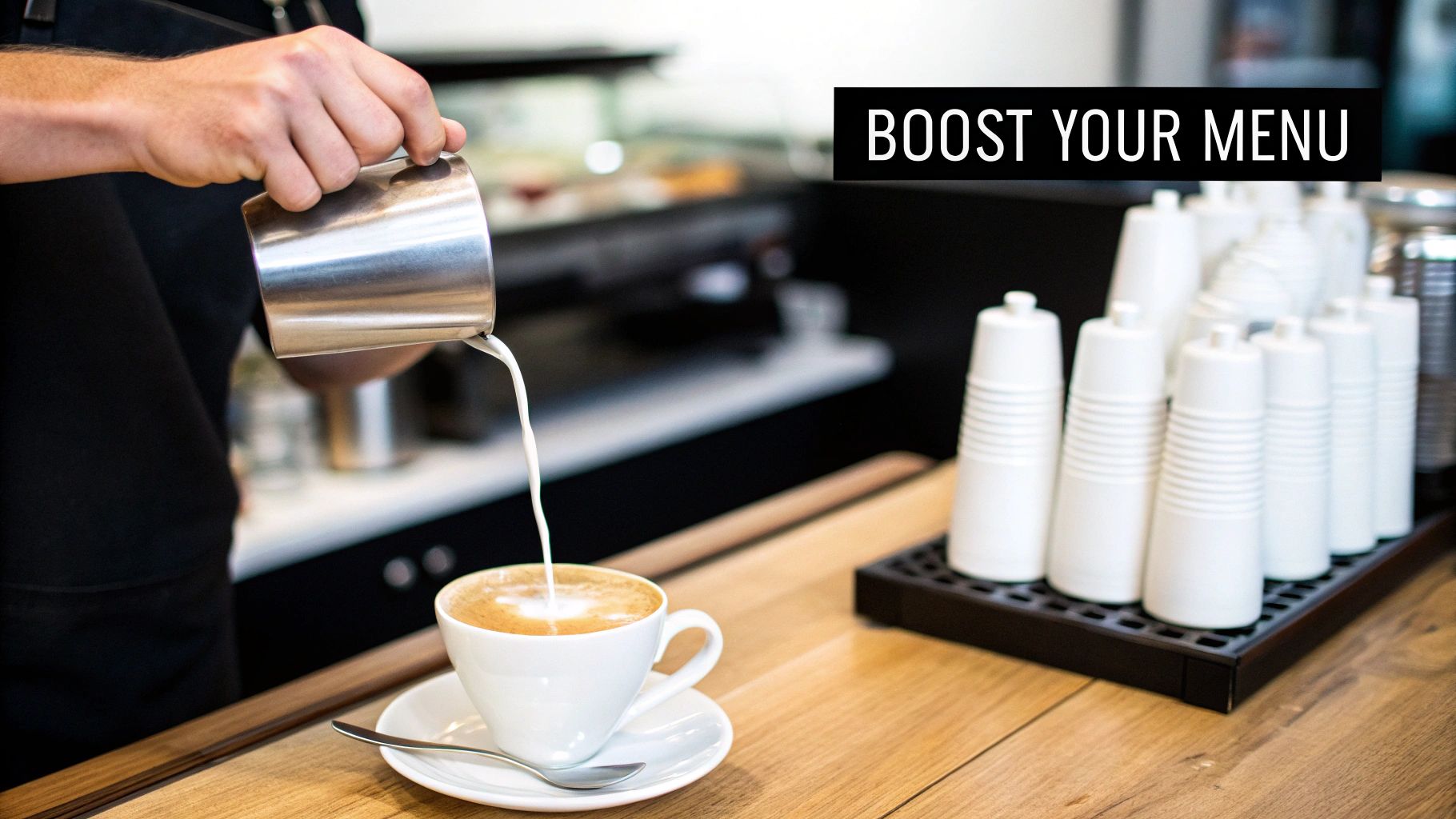
For cafés, restaurants, and anyone in foodservice, a smart selection of coffee creamer flavours isn't just a condiment; it's a strategic tool for growth. Think of it as the simplest form of menu customization you can offer. By providing options beyond basic milk and sugar, you empower customers to craft their perfect cup, creating a small moment of delight that builds lasting loyalty.
This move toward personalization isn't just a fleeting trend — it's a massive market opportunity waiting to be tapped. In Canada, the popularity of flavoured coffee creamers is directly tied to our strong coffee culture and the growing demand for customized experiences. With coffee being a daily ritual for most Canadian adults, the customer base for add-ons like creamers is enormous.
The Business Case for Flavour Variety
Offering a diverse range of coffee creamer flavours brings several direct benefits to your business. It's an easy, low-cost way to add perceived value to every coffee you sell, encouraging repeat visits and boosting the average ticket size.
- Increased Customer Satisfaction: Simple choices like French Vanilla or Hazelnut cater to classic tastes, making customers feel understood and cared for.
- Upsell Opportunities: Premium or seasonal flavours can justify a higher price point, effortlessly turning a standard coffee into a specialty beverage.
- Menu Differentiation: A unique flavour offering helps your business stand out from competitors who only stick to the basics.
By mastering the art of the coffee menu — from classic dairy options to trendy plant-based alternatives — you can turn a simple add-on into your secret ingredient for success. This guide is your roadmap to navigating the world of coffee creamer flavours.
Choosing Between Dairy and Plant-Based Creamer Flavours
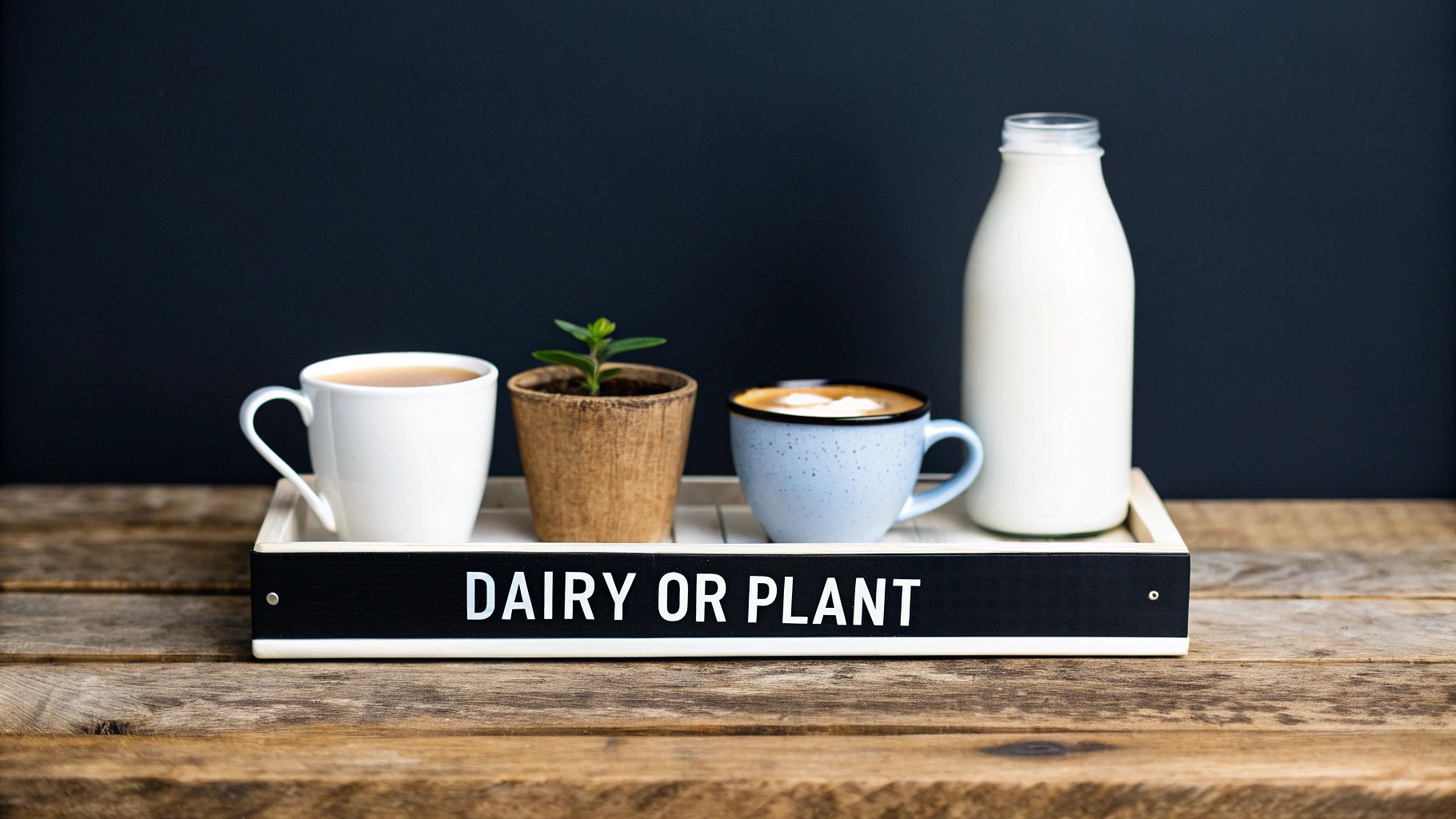
Picking the right coffee creamer flavours isn't just about taste anymore. It's about understanding two completely different, yet equally vital, worlds: the classic dairy creamers and the booming universe of plant-based alternatives. Each brings something unique to the table — different textures, distinct flavour profiles, and a pull for different types of customers. A truly smart menu doesn't pick a side; it masters both.
Dairy creamers are the classic choice for a reason. They offer that rich, familiar creaminess that most coffee drinkers grew up with and still expect. Flavours like French Vanilla and Caramel Macchiato are perennial bestsellers because they deliver a full-bodied, almost decadent mouthfeel that cuts through the bitterness of coffee perfectly.
The Enduring Appeal of Traditional Dairy Creamers
At their core, dairy-based creamers — made from milk, cream, or half-and-half — are prized for their ability to blend into hot coffee without a fight. They just melt right in, no separation, no fuss. Their natural fat content creates a velvety smooth texture that plant-based options are constantly trying to imitate.
For many people, the rich and satisfying texture of a dairy creamer is non-negotiable. It's the gold standard for what a creamy coffee should feel like, making it an indispensable part of your core offering.
At Chicken Pieces, we get how important these staples are. Our selection includes timeless foodservice favourites like rich French Vanilla and indulgent Caramel Macchiato, so you always have the crowd-pleasers ready to go.
The Rise of Plant-Based Creamer Alternatives
While dairy holds its ground, the demand for plant-based coffee creamer flavours has absolutely exploded. This isn't just a niche trend — it's driven by a massive wave of customers who are lactose intolerant, vegan, or looking for options they feel are healthier or more sustainable. Ignoring this group means leaving money on the table.
Canada's non-dairy creamer market hit about USD 88.86 million in 2024 and is set to grow at a healthy 6.3% CAGR — a growth rate outpacing many traditional dairy products. You can find more insights on non-dairy market growth on Cognitive Market Research.
Each plant-based option has its own personality when it comes to flavour and texture:
- Oat Milk Creamers: The darling of the barista world. Exceptionally creamy with a neutral profile that lets the coffee shine. Flavours like Oat Milk Brown Sugar have quickly become modern classics.
- Almond Milk Creamers: A lighter, lower-calorie option with a subtle nutty hint that appeals to the health-conscious crowd. Fantastic with coffees that already have chocolatey or nutty notes.
- Soy Milk Creamers: One of the originals — balanced, slightly sweet, and with a consistency quite similar to dairy milk, plus it's packed with protein.
By offering a well-chosen lineup of plant-based coffee creamer flavours, you're sending a powerful message: your business is modern, inclusive, and pays attention to what customers want.
Creating Signature Drinks with Flavour Pairing
Having a solid lineup of coffee creamer flavours is a great start, but the real magic begins when you stop thinking of them as simple add-ons. The next level is using them as core ingredients, transforming a regular cup of coffee into a signature drink that justifies a higher price and keeps customers coming back. This is where flavour pairing becomes your most powerful tool for menu innovation.
Matching Creamers to Coffee Roasts
Knowing how different creamer flavours play with various roasts is key to crafting truly exceptional drinks. Each pairing can either amplify or soften certain notes in the coffee.
- Light Roasts: These coffees have delicate floral or citrus notes easily overpowered. A simple Sweet Cream adds body without masking them. A touch of Vanilla can also work beautifully, playing up the coffee's natural brightness.
- Medium Roasts: Famous for their balanced, nutty or caramel undertones, medium roasts are incredibly versatile. A Hazelnut creamer is a no-brainer here, amplifying that nutty profile into a smooth, perfectly integrated drink.
- Dark Roasts: With their deep, robust, and sometimes bitter notes, dark roasts can handle richer flavours. A Caramel Macchiato creamer is a perfect match, adding a buttery sweetness that cuts through the bitterness and balances the intensity.
By intentionally pairing your creamer selection with your coffee offerings, you're not just serving coffee — you're curating an experience. This level of detail is what sets a memorable café apart from the competition.
Building Your Signature Drink Menu
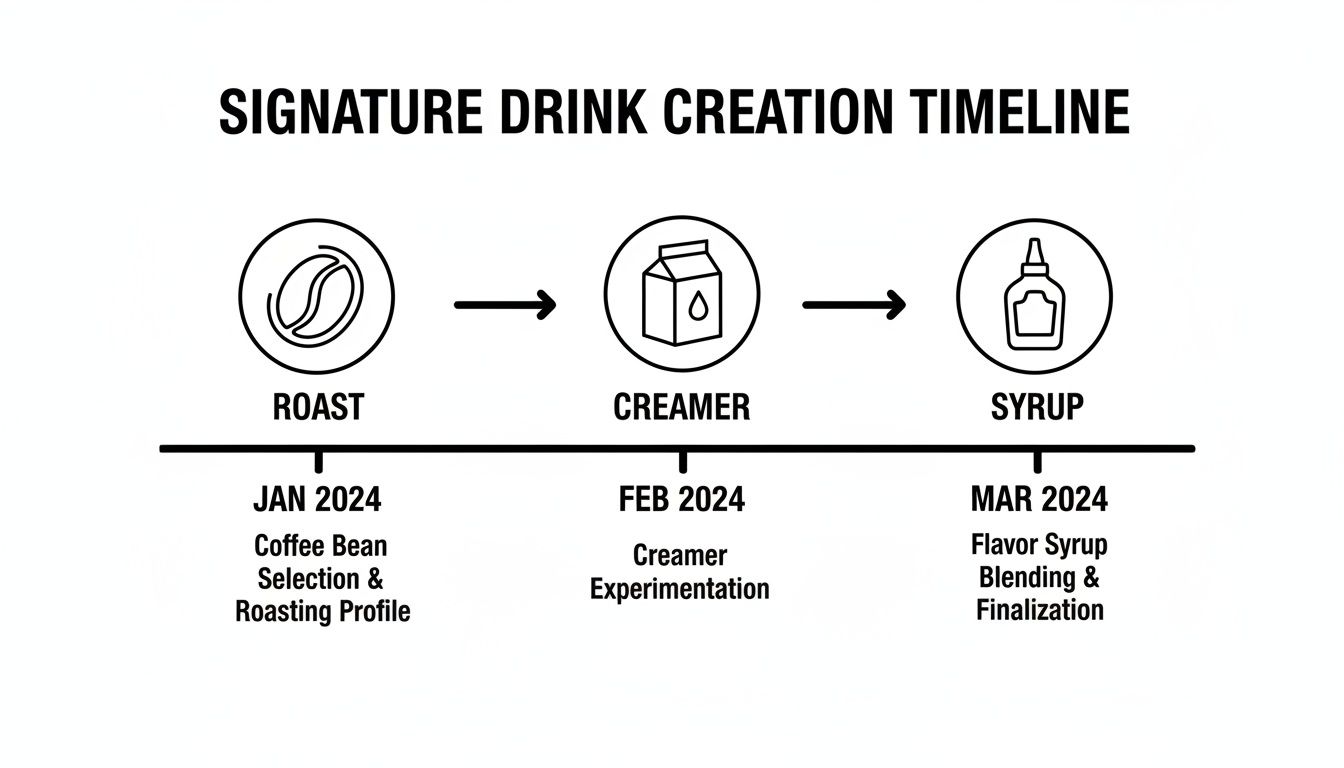
Once you've got the basic pairings down, you can start building your own unique recipes. A signature drink gives customers a reason to choose you over the place down the street — it becomes "that amazing latte I can only get at your café." A simple formula: Espresso + Steamed Milk + Creamer + Syrup.
☕ The Nutty Professor
Double shot of medium-roast espresso + steamed milk + Hazelnut creamer + drizzle of chocolate syrup.
? Salted Caramel Cold Brew
House cold brew concentrate + Caramel Macchiato creamer + splash of salted caramel syrup, served over ice.
? Canadian Autumn Special
Pumpkin spice creamer + a hint of maple syrup — a distinctly Canadian spin on a seasonal classic.
By stocking a core range of versatile coffee creamer flavours, you're giving your team the building blocks to experiment and innovate. Encourage your baristas to play around with new combinations — their next creation could become your next bestseller.
Using Seasonal Flavours to Increase Sales
Nothing gets customers in the door and creates buzz quite like a limited-time offer. When it comes to your coffee menu, tapping into the power of seasonal flavours is one of the smartest ways to generate excitement, keep regulars coming back, and give your sales a healthy boost all year long.
The whole strategy hinges on a simple but powerful psychological trigger: scarcity. When a customer knows that a unique flavour is only on the menu for a few short weeks, it creates a genuine sense of urgency. Industry data shows that seasonal specials can command 20–30% higher price points than your standard menu items. You can dive deeper into global coffee creamer market trends on Mordor Intelligence.
A Year-Round Canadian Flavour Calendar
Planning your seasonal menu in advance ensures you have the right products ready to go the moment demand hits. Here's a sample calendar built around Canadian tastes:
? Autumn (September–November)
Pumpkin Spice is the reigning champ, but a classic Maple flavour adds a distinctly Canadian twist that really connects with local customers.
❄️ Winter (December–February)
Peppermint Mocha and Gingerbread are absolute must-haves — they capture the festive spirit and feel just right on a cold day.
? Spring (March–May)
Lighter, brighter tastes like Lavender Honey or a sweet Irish Cream to line up with St. Patrick's Day celebrations.
☀️ Summer (June–August)
Coconut Cream or Toasted S'mores — perfect for iced coffees and cold brews, tapping into that vacation and campfire vibe.
Marketing Your Seasonal Specials
Just adding a new flavour to the menu isn't enough — you have to let people know it's there. Start inside your shop by updating your menu boards with vibrant, eye-catching signs. Use language that tempts the senses: "Cozy up with our Spiced Gingerbread Latte" or "Chill out with a refreshing Coconut Cream Iced Coffee."
Announcing a new seasonal flavour on social media with high-quality photos can generate immediate interest and drive customers to your door. A simple, well-lit picture of your new drink can be your most powerful marketing tool.
Sourcing Bulk Coffee Creamers for Your Business
For any foodservice operation — from a bustling downtown café to a corporate breakroom — smart inventory management is the engine that drives profitability. When it comes to your coffee program, this means getting strategic about how you buy your coffee creamer flavours. Sourcing in bulk isn't just about getting a better price; it's the most effective way to manage costs, guarantee consistency, and keep your most popular options in stock.
Choosing the Right Creamer Format
Bulk coffee creamers come in several formats, and each has distinct pros and cons depending on your service style, volume, and storage space.
- Liquid Concentrates and Large Format Bottles: Workhorses for high-volume settings like cafés and busy restaurants. They offer the best quality and flavour, mixing seamlessly into both hot and cold beverages.
- Powdered Creamers: Incredibly long shelf life with no refrigeration required — excellent for self-serve stations, office kitchens, and catering events where convenience is king.
- Single-Serving Portions (PCPs): Ideal for hotel rooms, healthcare facilities, and conference centres where hygiene and portion control are top priorities. They eliminate cross-contamination and give customers a consistent, sanitary experience every time.
Choosing the correct format is a strategic decision that directly impacts your operational efficiency, product quality, and bottom line. A high-traffic café might rely on large liquid formats, while an office supplier would prioritize the convenience and shelf stability of PCPs and powders.
Comparing Bulk Creamer Formats for Foodservice
| Format Type | Pros | Cons | Best For |
|---|---|---|---|
| Liquid Bottles & Concentrates | Highest quality and flavour. Mixes instantly. Ideal for recipe customization. | Shorter shelf life. Requires refrigeration after opening. Higher shipping weight. | High-volume cafés, restaurants, and anywhere quality is paramount for barista-made drinks. |
| Powdered Creamer | Extremely long shelf life. No refrigeration needed. Very cost-effective and lightweight for shipping. | Can clump if stored improperly. May not dissolve as smoothly in cold drinks. | Self-serve coffee stations, office breakrooms, catering, and budget-conscious operations. |
| Single-Serve Cups (PCPs) | Maximum hygiene and portion control. Convenient for grab-and-go settings. No waste from spoilage. | Highest cost per serving. Generates more packaging waste. Not practical for high-volume use. | Hotel rooms, healthcare facilities, conference centres, and any environment prioritizing sanitation. |
Ultimately, many businesses use a hybrid approach — liquids behind the counter for crafted drinks and powders or PCPs at the self-serve station for customer convenience.
Storage and Shelf Life Management
Liquid creamers, especially dairy-based ones, absolutely require refrigeration after opening and have a much shorter shelf life — typically around 7 to 14 days. Always check the "best by" date and practice the First-In, First-Out (FIFO) inventory method to slash spoilage. Powdered creamers just need a cool, dry spot away from moisture and direct sunlight to prevent clumping and preserve their flavour.
The Advantage of a Single Supplier
Managing a dozen different vendors for all your café needs is a logistical nightmare. By partnering with a one-stop shop, you can streamline your entire procurement process. Imagine placing one order for your bulk coffee creamer flavours, premium Tonino Lamborghini coffee beans, and essential 3M water filtration systems — one order, one delivery, one invoice. This simplified approach lets you focus less on logistics and more on what truly matters: serving your customers an exceptional cup of coffee.
Your Guide to Coffee Creamer Flavours: FAQ
The following operator questions are answered with cited sources. Every FAQ links to Reddit, Quora, PAA, or a public regulator.
How should a Canadian cafe compare flavoured coffee creamer options for a commercial coffee bar?
Source: r/Coffee: As a cafe is it just a waste to not roast your own beans
Which flavoured coffee creamers actually hold up in a high-volume cafe self-serve setup?
Source: r/coffee_roasters: Wholesale bean supplier recommendations
How can a buyer offer multiple creamer flavours without doubling cooler space?
Source: r/roasting: People who sell wholesale to cafes what has been your experience
What is the practical difference between liquid and powdered flavoured creamers for a cafe?
Source: r/coffee_roasters: If you were to open a coffee shop what wholesale supplier
How should a Canadian operator price flavoured creamers as part of a coffee service?
Source: r/Frugal: Most economical way to make espresso drinks at home
Which flavoured creamers travel well for an off-site catering coffee service?
Source: r/roasting: How do you roasters approach get wholesale accounts
How can a cafe operator rotate seasonal creamer flavours without overstocking?
Source: r/Coffee: I was about to buy a Breville Barista Touch
What packaging sizes of flavoured creamer work best for a Canadian cafe?
Source: r/smallbusiness: Where to buy wholesale food for a restaurant or bar food business
Authoritative Sources
The following government and public-health sources informed the operator guidance above. Citations to Reddit, Quora, and operator forums appear in the FAQ block above.