
2026 Mar 1st
Canada Vending Machine Business — A Canadian Guide
Canada Vending Machine Business: A Comprehensive Guide to Starting Your Venture
Thinking about jumping into the Canada vending machine business? It's a seriously compelling idea, mixing the allure of passive income with a business model you can actually scale. For a lot of new entrepreneurs, it hits that sweet spot: tapping into our 24/7 need for convenience without the crushing overhead of a traditional retail shop.
Why Canadian Vending is a Growing Opportunity
The whole automated retail scene in Canada isn't just holding steady—it's actively expanding, and at a pretty impressive clip. A few key trends are fuelling this growth, creating a genuinely fertile ground for anyone looking to get started. More and more people are living in cities, which means more high-traffic spots hungry for quick, easy options. At the same time, new tech has made running a vending business smoother than ever before.
This isn't your grandfather's vending business. We've moved way beyond just sticking a candy machine in a community centre and calling it a day. Modern vending is all about really understanding what people want and delivering it right where they are, conveniently.
What's Fuelling the Market Growth?
A few big shifts in consumer behaviour and technology are really pushing the Canadian vending market forward:
- The Non-Stop Demand for Convenience: Life is busy. People are constantly looking for ways to grab a snack, a drink, or even a quick meal without having to stand in a queue.
- Painless Payments: The move to contactless payments has been huge. Tap-to-pay and mobile wallets mean no more fumbling for change, which removes a major barrier to making a purchase and definitely boosts sales.
- It's Not Just Chips and Pop Anymore: The game has changed. There's a real and growing demand for healthier snacks, good-quality coffee, and even unique local products you wouldn't expect to find in a machine.
The numbers back all this up. The Canadian vending machine market was valued at USD 2,075.85 million in 2024 and is on track to hit USD 3,490.52 million by 2033. That's a serious growth rate, and it highlights just how resilient this sector is for operators looking for efficient new income streams. If you want to dig deeper, you can explore the complete market analysis to get the full picture.
The Big Takeaway: The Canadian vending sector is on a major upswing, thanks to modern consumer habits and better technology. This creates a prime opportunity for entrepreneurs who can strategically place modern machines and stock them with products people actually want.
Building Your Vending Business Financial Blueprint
A profitable vending machine business in Canada doesn't start the day you plug in your first machine. It begins way before that, with a solid financial plan that acts as your roadmap from a rough idea to a real, money-making operation. This is where you dig into the numbers, figure out the legal stuff, and get a clear picture of what it will actually cost to get going.
Getting this right means going deeper than just looking for a busy spot. You have to do some real market research to find a niche that isn't being served. Is there an office park full of people who would love healthy snack options? Could a high-end coffee machine be a huge hit in a university library? What about a hot food machine in a 24-hour factory? Pinpointing these specific gaps in the market is the first real step to building a financial model that can weather the ups and downs.
Navigating Canadian Legal and Regulatory Requirements
Before you even think about buying a machine, you need to get your head around the legal framework. This isn't just about picking a business name; it's a checklist of provincial and municipal rules you have to follow to operate legally and safely.
- Business Registration: First things first, you need to register your business. This could be a sole proprietorship, partnership, or corporation, and each one has different implications for liability and taxes.
- GST/HST Account: Once you're registered, you'll have to set up a Goods and Services Tax (GST) or Harmonized Sales Tax (HST) account with the Canada Revenue Agency (CRA).
- Provincial Health Permits: If you plan on selling any kind of food or drinks, you'll almost certainly need permits from your provincial health authority to ensure products are stored and served safely.
- Municipal Licenses: Many cities and towns also have their own specific business licenses for operating vending machines. Make sure you check with your local municipal office.
Breaking Down Your Real Startup Costs
The money you'll need upfront is a lot more than just the price tag on a machine. A realistic budget needs to cover every single expense to get that first machine up, running, and turning a profit.
Key Insight: While a brand-new, high-tech machine can run you anywhere from CA 5,000 to CA 10,000, you can often find a reliable refurbished one for CA 1,500 to CA 3,000. This can seriously lower your barrier to entry and let you get started with less capital.
Your main costs are going to fall into a few key buckets:
- The Machine Itself: This is your biggest single expense. The choice between new and used will have the biggest impact on your startup budget.
- Initial Inventory: Your machine can't be empty on day one. You'll need to buy enough snacks, drinks, or whatever you're selling to fill it up completely.
- Insurance: This is non-negotiable. You'll need commercial general liability and product liability insurance. Expect to pay between CA 300 to CA 1,000 per machine each year.
- Location Fees or Commissions: Some prime, high-traffic locations might ask for a flat monthly fee or a cut of your sales.
Modelling Your Stocking Costs and Profit Margins
This is where your plan starts to feel real. You can actually model your stocking costs and figure out your profit margins before you spend a dime on equipment, just by looking at a supplier's catalogue.
For example, you could hop onto the Chicken Pieces website and build a mock inventory list. Thinking about placing a machine in a local recreation centre? You could price out the cost of stocking it with bulk cases of popular candy brands or see what it would cost to supply Frostline soft serve mixes to their concession stand. This simple exercise gives you a clear per-item cost, which lets you set a smart retail price that guarantees a healthy profit margin from the very first sale.
Securing Profitable Machines and Locations
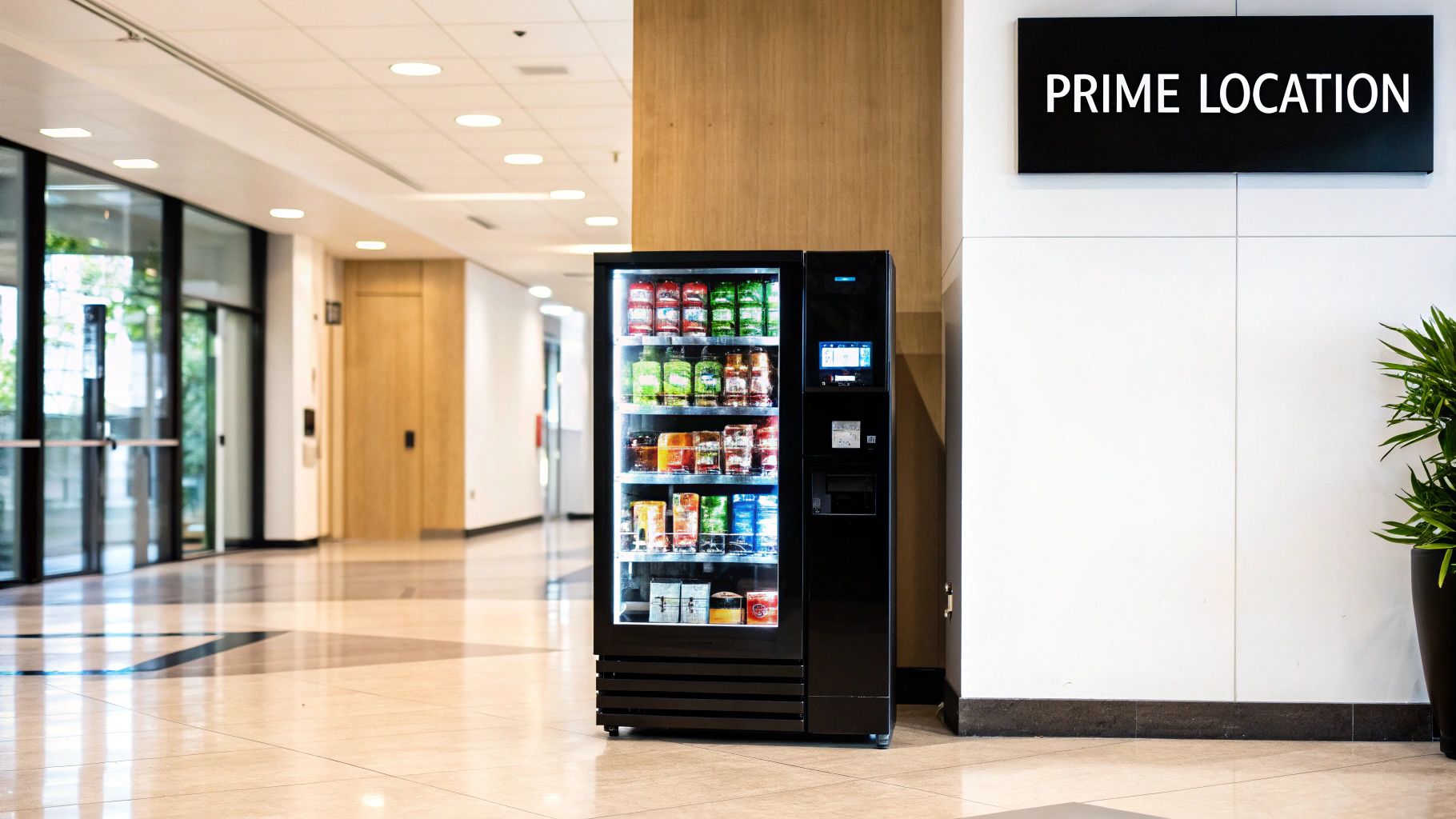
Let's cut right to it. The long-term success of your vending business truly boils down to two things: the right equipment and the right spot. A fantastic, modern machine in a deserted hallway won't make a dime, and a clunky, outdated one in a busy office will just lead to frustrated customers. Nailing this combination is the practical heart of your entire operation.
Choosing the Right Vending Machine for Your Business
Vending machines come in a few key categories, each built for different environments and customer demands.
- Snack Machines: These are the classics, dishing out chips, chocolate bars, and other grab-and-go treats. They're incredibly versatile and can work almost anywhere, from schools to warehouses.
- Beverage Machines: Stocked with everything from canned pop and bottled water to juices, these are high-demand units. You'll often find them in gyms, community centres, and office break rooms.
- Combo Machines: These dual-purpose units offer both snacks and drinks. They're a space-efficient choice for smaller locations that can't justify having two separate machines.
- Specialty Machines: This is where you can carve out a real niche — think high-end coffee machines, frozen treats, or even PPE vendors.
One of the most exciting growth areas right now is hot food. The demand for convenient, ready-to-eat meals is surging in 24/7 locations. The Canada hot food vending machine market hit USD 450.4 million in 2024 and is projected to climb to USD 669.4 million by 2033. You can read the full research about this expanding market.
Expert Tip: Don't even consider a machine without modern payment options. Any unit you look at, new or used, absolutely must have a reliable contactless payment system (tap-to-pay, mobile wallet). This isn't a luxury anymore; it's a customer expectation that directly impacts your sales.
Scouting and Evaluating High-Traffic Locations
A great location is your single most valuable asset. Your goal is to find places with a consistent, captive audience. Start by brainstorming a list of potential spots in your area, then go out and evaluate each one methodically.
Your scouting checklist should cover a few key points:
- Consistent Foot Traffic: Is there a steady stream of people moving through the area all day?
- Target Audience: Do the people here actually match the products you plan to sell?
- Existing Competition: Are there other vending machines or a full-blown cafeteria just around the corner?
- Accessibility and Security: Can you easily get in to service the machine? Is it in a safe, visible spot to deter vandalism?
- Power and Space: Is there a suitable spot with a nearby electrical outlet?
Prime locations are often office buildings, hospitals, university campuses, large apartment complexes, manufacturing plants, and even the staff break rooms of big retail stores. Get creative — think about a community hockey arena. A machine stocked with Slush Puppie syrups would be a perfect, high-margin match for that crowd.
Approaching Property Managers and Nailing the Pitch
Once you've zeroed in on a promising spot, you need to convince the property manager or business owner to let you place your machine. This requires a professional and persuasive pitch — don't just show up unannounced. Send a brief email or make a call to schedule a quick meeting.
Your pitch needs to be sharp and focused on what's in it for them. You're offering a convenient amenity for their employees or customers at absolutely no cost or effort on their part.
Sample Pitch Points to Emphasize:
- A Free Amenity: Frame it as a valuable, no-cost service you're providing for their staff, tenants, or patrons.
- Modern, Reliable Equipment: Let them know you use clean, modern machines with cashless payment options.
- Customized Product Selection: Offer to tailor the product mix to their specific demographic — even offer to survey their employees.
- Commission Potential: For very high-traffic locations, offering a small percentage of the sales (typically 5–15%) can be a powerful incentive to seal the deal.
Be ready to sign a placement agreement. This simple contract should outline the commission structure (if any), the length of the agreement, and the responsibilities of both parties.
A Smart Strategy for Stocking and Pricing Your Products
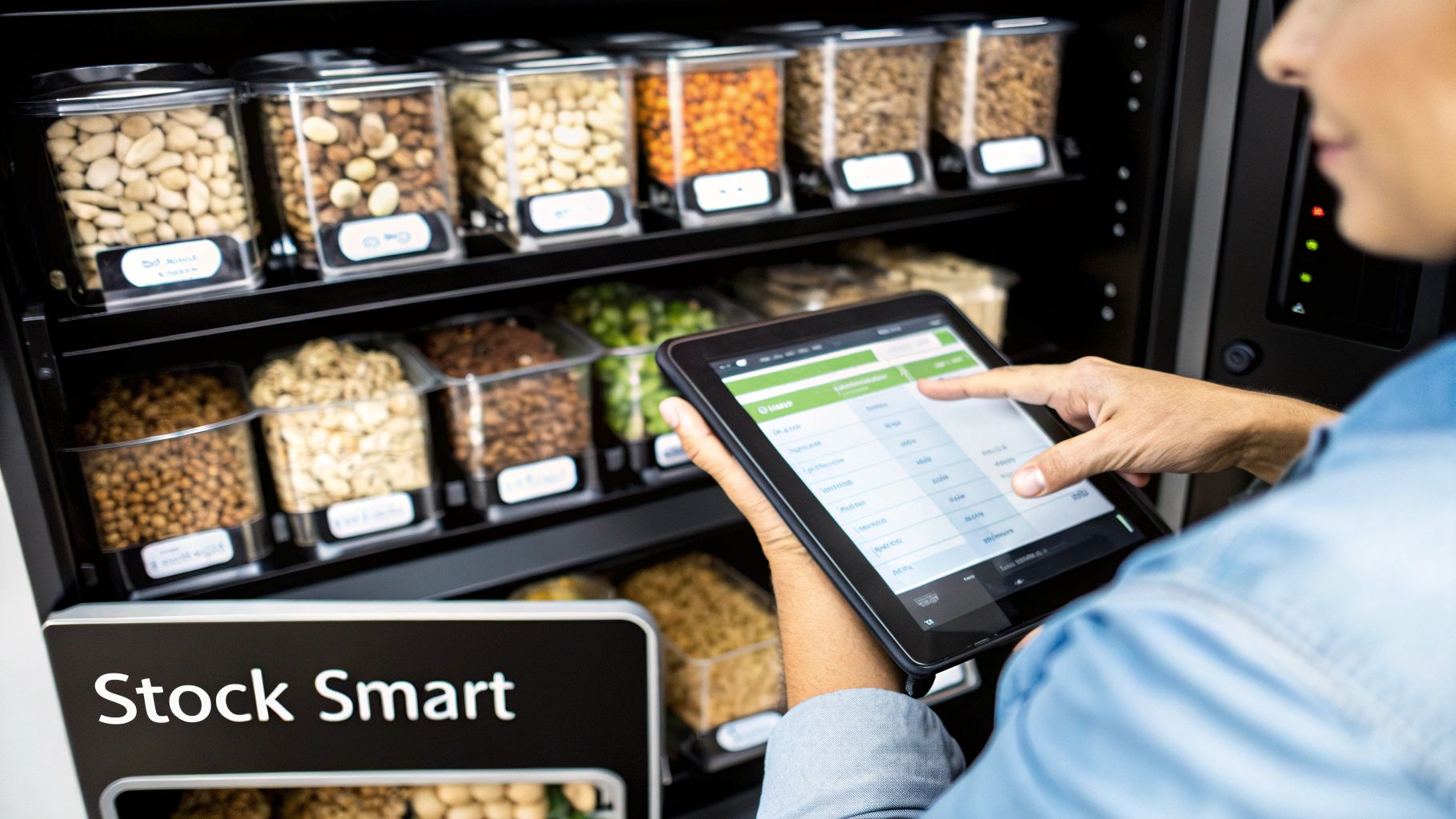
The products you pick and the prices you set are the two levers that directly control your bottom line. Getting your inventory and pricing right isn't just an operational task — it's the core strategy that turns a break-even side hustle into a thriving Canadian vending machine business. The winning formula is a careful mix of high-demand, recognizable brands with unique, higher-margin items that give customers something new to try.
Building Your Perfect Product Mix
Your product selection should never be a guessing game. It has to be a direct reflection of your location's demographic.
- Office Buildings: Professionals are often looking for "better-for-you" snacks, good quality coffee, and quick lunch alternatives.
- Schools and Universities: Students are almost always driven by value and the brands they already know. Think classic chips, chocolate bars, and popular soft drinks.
- Blue-Collar Workplaces: High-calorie, satisfying snacks and energy drinks are usually the top sellers in factories, warehouses, and on construction sites.
Partnering with a one-stop supplier like Chicken Pieces simplifies this entire process. You can source everything from bulk cases of popular confectionery and snacks to premium beverages all from a single place. This not only makes ordering way more efficient but also unlocks the financial perks of buying in bulk, which is critical for maximizing your profit on every single item.
The Canadian market for retail vending is massive. In 2024, it generated USD 782.3 million and is forecasted to climb to USD 1,073.0 million by 2033. Beverages are the leading revenue driver and the fastest-growing segment. Discover more insights about Canada's retail vending market.
A Simple Model for Smart Pricing
The Profit Formula: Your retail price must cover the product cost, a slice of your operational overhead (like location commissions and insurance), and your desired profit margin. A common target for vending operators is a 50–75% gross profit margin on most items.
Here's a simple model to follow:
- Calculate Per-Item Cost: Divide the total cost of a bulk case by the number of individual units inside. (e.g., CA 24 case ÷ 48 chocolate bars = CA 0.50 per bar).
- Factor in Operating Costs: Add a small amount to cover commissions, fuel, and other overhead. Adding CA 0.10 per item makes your "landed cost" CA 0.60.
- Set the Retail Price: To achieve a healthy margin, you might price that CA 0.60 item at CA 1.50 or CA 2.00. Do this calculation for every single product in your machine.
Managing Inventory and Adapting to Trends
Your work isn't done once the machine is stocked. Smart inventory management is an ongoing process of tracking sales, watching expiration dates, and adapting your offerings to what customers are actually buying.
Use a simple spreadsheet or vending management software (VMS) to track what sells and what doesn't. If a particular snack has been sitting in a slot for months, it's taking up valuable real estate — swap it out for something new.
Be obsessive about expiration dates. Implement a "first-in, first-out" (FIFO) system, placing newer stock at the back of the coil so older items sell first. Finally, pay attention to seasonal shifts — hot chocolate or coffee might sell well in the winter, while iced teas and cold-brew coffee could be big hits in the summer.
Managing Daily Operations and Scaling Your Vending Empire
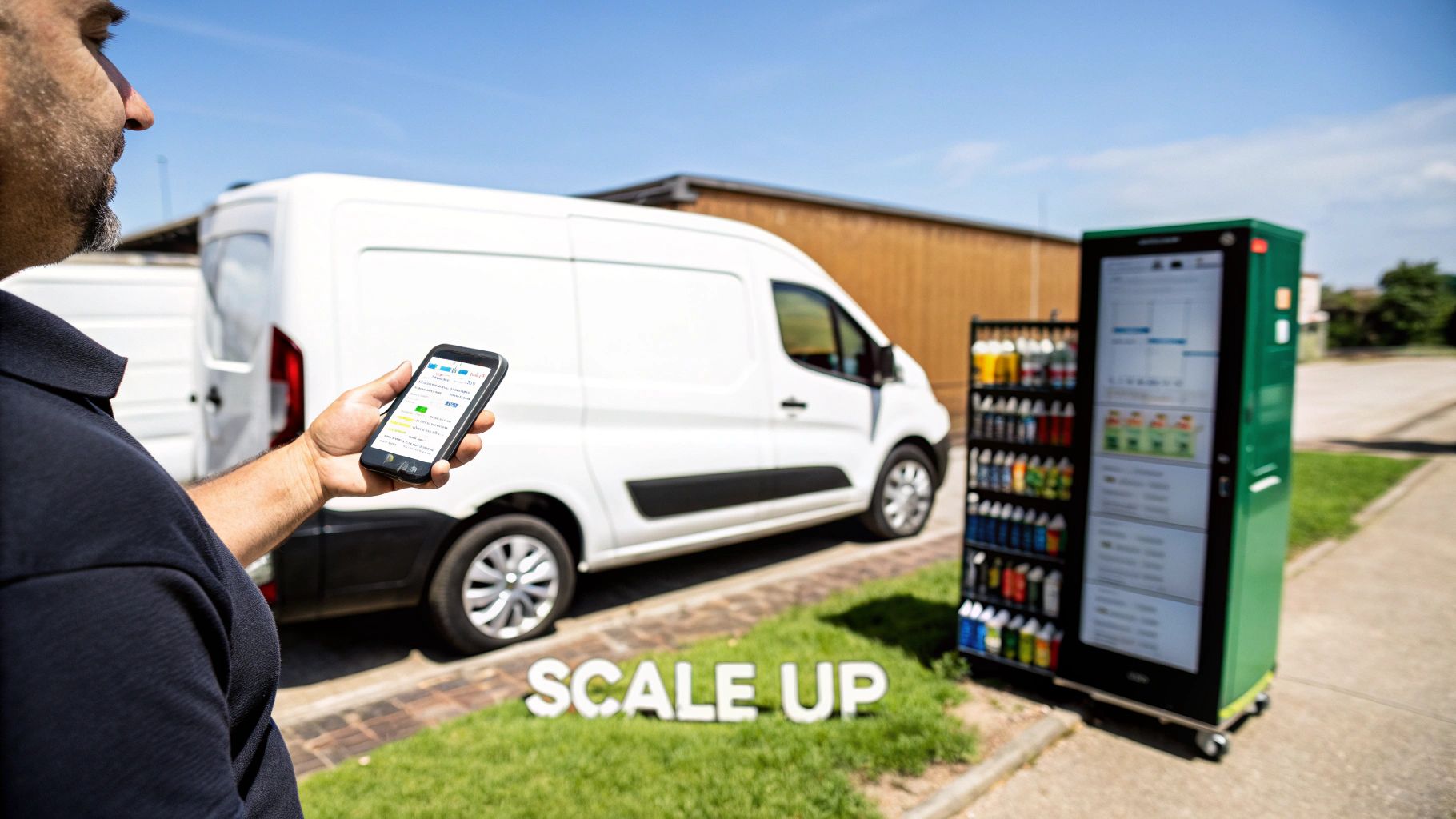
You've done the hard work of getting your machines placed and stocked. Now, the real business begins. The day-to-day rhythm of managing your machines is where you build a truly successful Canadian vending business — not just by picking good spots, but through flawless execution and a clear plan for growth.
Running a smooth operation is all about creating systems that save you time and money. Efficiency starts with your service route. As you add more machines, driving aimlessly from one side of town to the other will quickly eat up your profits and your patience. Develop a logical, geographically clustered route — group your locations by neighbourhood to slash travel time and fuel costs.
Mastering Routine Maintenance and Cleanliness
A clean, well-maintained machine isn't just a small detail; it's a direct reflection of your business. Customers are far more likely to buy from a machine that looks sparkling clean and works perfectly.
Your routine checklist for every single visit should include:
- Exterior and Interior Cleaning: Wipe down the glass, keypad, and delivery bin. Dust the interior and clean up any spills or crumbs.
- Functionality Test: Run a quick check to make sure the bill validator, coin mechanism, and card reader are all working as they should.
- Temperature Check: For any machine with drinks or cold food, verify the refrigeration unit is holding the correct temperature.
Cleanliness is completely non-negotiable. It builds customer trust and protects the integrity of the products you're selling. Using professional-grade sanitation supplies is a small investment that pays huge dividends in customer confidence and food safety.
For this critical task, you need reliable supplies. Partnering with a supplier that offers commercial-grade cleaning products ensures you meet health and safety standards. You can easily source essential Ecolab sanitation supplies through Chicken Pieces, keeping your machines hygienic and appealing without juggling a separate supplier for your cleaning gear.
From a Single Machine to a Vending Network
Scaling your operation from one or two machines into a multi-location network requires a smart approach. The goal is to shift from a hands-on side hustle to a more automated, system-driven business. This transition is fuelled by reinvesting your profits and using technology to work smarter, not harder.
The most common growth strategy is to reinvest the profits from your first machines directly into new ones. Once your first machine is consistently profitable, use that cash flow to fund the purchase of your next unit — this methodical, self-funded approach allows you to expand your footprint without taking on unnecessary debt.
As you grow, remote inventory management software becomes a game-changer. This tech lets you see real-time sales data and stock levels for every machine right from your phone or computer. Instead of driving to a location only to find it's still half-full, you can service machines precisely when they need it.
Sample 3-Year Profit Projection (Per Machine)
| Financial Metric | Year 1 | Year 2 | Year 3 |
|---|---|---|---|
| Gross Annual Revenue | CA 6,000 | CA 7,200 | CA 8,500 |
| Cost of Goods Sold (COGS) | CA 2,400 | CA 2,880 | CA 3,400 |
| Gross Profit | CA 3,600 | CA 4,320 | CA 5,100 |
| Operating Expenses | CA 1,200 | CA 1,250 | CA 1,300 |
| Net Profit (Before Tax) | CA 2,400 | CA 3,070 | CA 3,800 |
Disclaimer: These figures are illustrative examples. Actual results will vary based on location, product mix, and operational efficiency.
As the table shows, a single machine can generate a solid stream of income. The real power, however, comes from multiplication. Imagine having five, ten, or even twenty machines all performing at this level. By focusing on efficient daily operations and strategically reinvesting your earnings, you can steadily scale from a single unit into a profitable vending empire.
Common Questions About Starting a Vending Business in Canada
The following operator questions are answered with cited sources. Every FAQ links to Reddit, Quora, PAA, or a public regulator.
How should a first-time Canadian operator evaluate a vending machine route?
Source: r/smallbusiness: Where to buy wholesale food for a restaurant or bar food business
What locations actually work for a small vending machine business in Canada?
Source: r/vending: Struggling with cotton candy vending machine placement
How can a buyer compare vending machine product mix versus location foot traffic?
Source: r/Entrepreneur: Has anyone done a food truck or traveling concession stand
Which vending categories give the best margin for a small Canadian operator?
Source: r/Entrepreneur: How profitable could an ice cream business be
How should a Canadian operator plan the cash and restock schedule for a vending route?
Source: r/foodtrucks: How lucrative is your food truck business
What vending machine categories should a new operator avoid until the route is stable?
Source: r/AskReddit: What is a product with insane profit margins
How can a small vending operator handle expiry and rotation without over-buying?
Source: r/Costco: Anyone use the bottled water delivery how is it
What is a realistic first-month revenue expectation for a small Canadian vending route?
Authoritative Sources
The following government and public-health sources informed the operator guidance above. Citations to Reddit, Quora, and operator forums appear in the FAQ block above.