
2026 Jan 14th
Alcohol Isopropyl 70 A Guide for Businesses — Canada Guide
Alcohol Isopropyl 70 A Guide for Businesses
When you see Alcohol isopropyl 70 on a label, you're looking at a tried-and-true disinfectant made of 70% isopropyl alcohol and 30% purified water. This specific blend isn't just a random number; it's widely considered the gold standard for sanitation in professional settings, valued for its power to wipe out a huge range of germs.
Understanding the Power of Alcohol Isopropyl 70
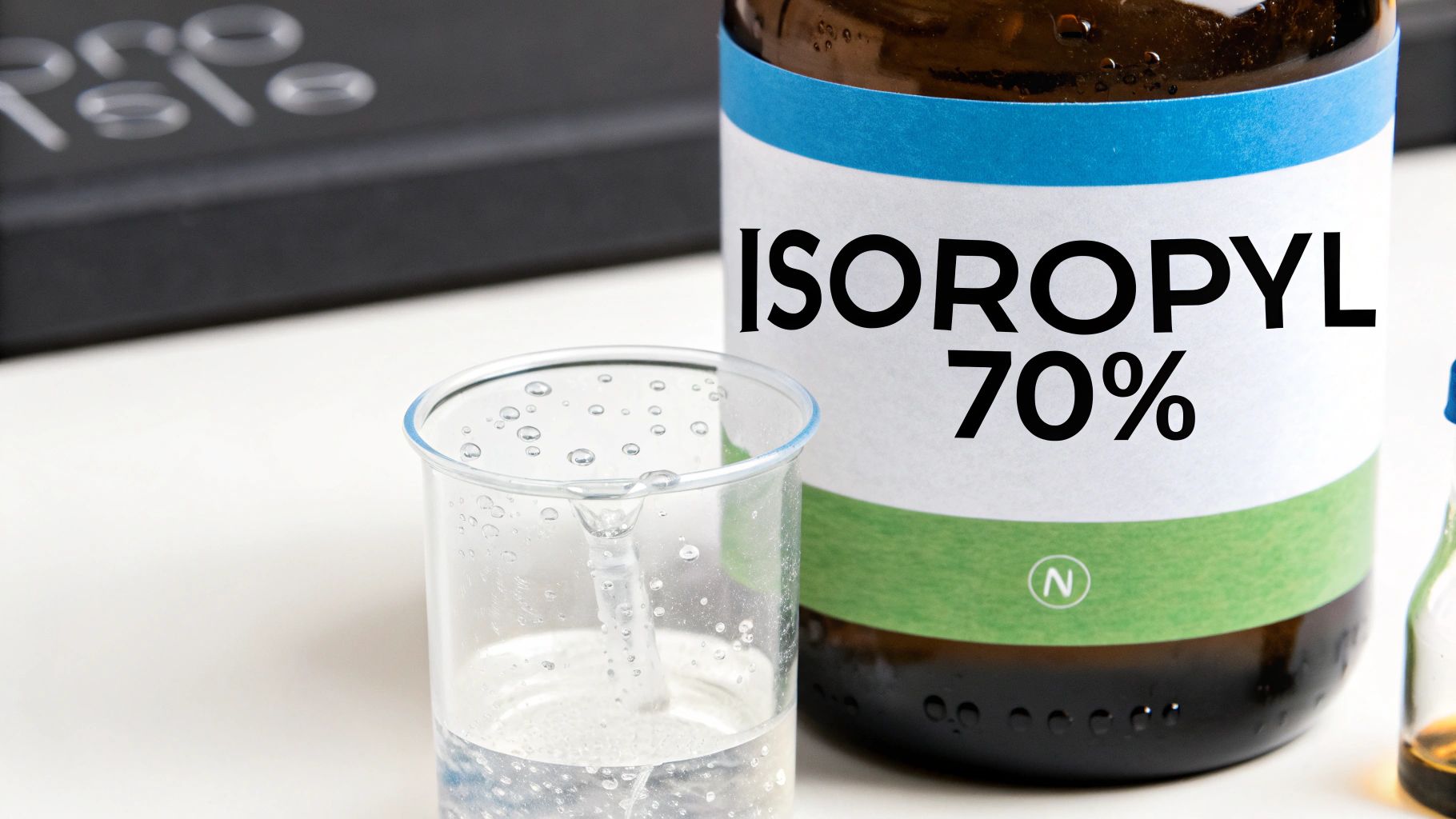
If you're looking for a dependable disinfectant, it's natural to think that a higher alcohol percentage means more germ-killing power. But with isopropyl alcohol, the opposite is actually true. That 30% water isn't just a filler—it's the secret ingredient that makes the alcohol a far more effective sanitizer. This unique blend has become a staple in countless professional environments, from bustling restaurant kitchens to high-traffic janitorial routes.
This isn't just about wiping surfaces clean; it's about achieving genuine disinfection. For any business that stakes its reputation on impeccable health and safety standards, knowing why this concentration works so well is key.
The Water Paradox: Why 70% Is Better
The real magic of alcohol isopropyl 70 is how it deals with microbes like bacteria and viruses. The water in the solution plays a critical role by slowing down how quickly the alcohol evaporates, which is absolutely crucial for proper disinfection.
Think of it this way: A higher concentration, like 99% isopropyl alcohol, is like a flash fire. It burns intensely but vanishes almost instantly, often before it can do any real damage to a germ's protective outer wall. In contrast, the 70% solution is like a slow, steady burn. It has enough time to seep through the microbe's defences and destroy it from the inside out.
The water helps the alcohol to:
- Penetrate the cell wall: It acts like a carrier, helping the alcohol get through the microbe's membrane.
- Denature proteins: Once inside, the alcohol scrambles the essential proteins and enzymes, causing the cell to die.
- Increase contact time: Slower evaporation means the surface stays wet longer, giving the disinfectant the time it needs to do its job.
Your Go-To Disinfecting Solution
This simple scientific principle is why alcohol isopropyl 70 is the preferred choice for so many commercial applications. It offers a reliable, consistent, and effective method for sanitizing everything from countertops and kitchen equipment to doorknobs and other high-touch points.
For businesses that need an effective and economical solution, having a dependable supply is everything. Our 70% Isopropyl Alcohol is available in convenient bulk sizes, perfect for meeting the daily demands of your operations. This ensures you always have a trusted disinfectant on hand to maintain a safe and clean environment for both your staff and your customers.
Why 70 Percent Is the Disinfection Gold Standard
When you're looking for a disinfectant, grabbing the bottle with the highest alcohol percentage seems like a no-brainer. More alcohol must mean more germ-killing power, right? It's a common assumption, but in the world of sanitation, it's actually the opposite of the truth.
The science is clear: alcohol isopropyl 70—a simple blend of 70% alcohol and 30% purified water—is the sweet spot for disinfection. This isn't just a random number; it's a precisely balanced formula that turns water from a diluting agent into the secret weapon that makes the alcohol work.
The Critical Role of Water as a Catalyst
At its core, any disinfectant works by destroying a pathogen's cellular machinery. In the case of alcohol isopropyl 70, the goal is to denature the proteins that bacteria, viruses, and fungi need to survive. Think of it like trying to scramble an egg; once those proteins are broken down and reconfigured, the cell simply can't function and dies.
But for the alcohol to do its job, it has to get inside the microbe first. This is where the 30% water content plays its most important part. Water actually slows down the alcohol's evaporation rate, giving the solution enough time to soak through the microbe's protective outer wall.
A higher concentration, like 99% isopropyl alcohol, flashes off a surface almost instantly. It's so aggressive that it can coagulate the proteins on the outside of a germ's cell wall, essentially creating a hardened, protective shield. The alcohol never gets a chance to penetrate and finish the job, leaving the microbe damaged but potentially still alive.
The 70% solution, on the other hand, guarantees a complete kill by working from the inside out. It's a more methodical, more reliable approach that ensures true disinfection, not just temporary inhibition.
Comparing Performance Against Common Pathogens
In busy settings like restaurants, kitchens, and bars, you're not just fighting one type of germ—you're up against a whole lineup of bacteria and viruses. You need a disinfectant that works consistently across the board. This is where alcohol isopropyl 70 really shines.
For decades, 70% isopropyl alcohol has been a trusted workhorse in Canada's medical and commercial sectors. Its reliability, especially during public health crises, has cemented its place as a go-to antiseptic. You can find more details on its regulatory status and safety profile by visiting Health Canada's official resources.
To really see why the concentration is so critical, it helps to put the different blends side-by-side.
Isopropyl Alcohol Concentration Efficacy Comparison
The table below breaks down how different concentrations of isopropyl alcohol (IPA) work and where they are best used. It quickly becomes clear why 70% is the go-to for surface disinfection.
| Concentration | Mechanism of Action | Evaporation Rate | Best Use Case |
|---|---|---|---|
| 70% IPA | Optimal water content allows for deep cell wall penetration and complete protein denaturation. | Slow | Gold standard for surface disinfection and sanitizing food-contact areas. |
| 91% IPA | Faster evaporation limits cell wall penetration; good for dissolving oils and residues. | Moderate | Cleaning electronics, removing sticky residue, and general-purpose solvent use. |
| 99% IPA | Evaporates almost instantly, often coagulating surface proteins before full penetration. | Rapid | Ideal for water-sensitive applications like cleaning precision optics or as a drying agent. |
As you can see, when it comes to killing germs effectively, 70% isopropyl alcohol strikes the perfect balance. It's not about brute force; it's about having enough contact time to ensure complete destruction of the pathogen. This is what solidifies its place as the undisputed standard for commercial sanitation.
For reliable, food-safe sanitation supplies, our 70% Isopropyl Alcohol products deliver the quality and consistency your business depends on to stay safe and compliant.
70% vs 91% Isopropyl Alcohol: Which Is Better for Disinfecting?
For disinfecting surfaces, 70% isopropyl alcohol is the better choice. Its 30% water content slows evaporation, giving the alcohol enough contact time to penetrate cell walls and denature proteins. 91% isopropyl alcohol evaporates faster, which limits that penetration, so it is better suited to cleaning electronics, removing sticky residue and general solvent use. Whichever you use, follow the contact time on the product label.
Getting Practical: Using 70% Isopropyl Alcohol in Your Business
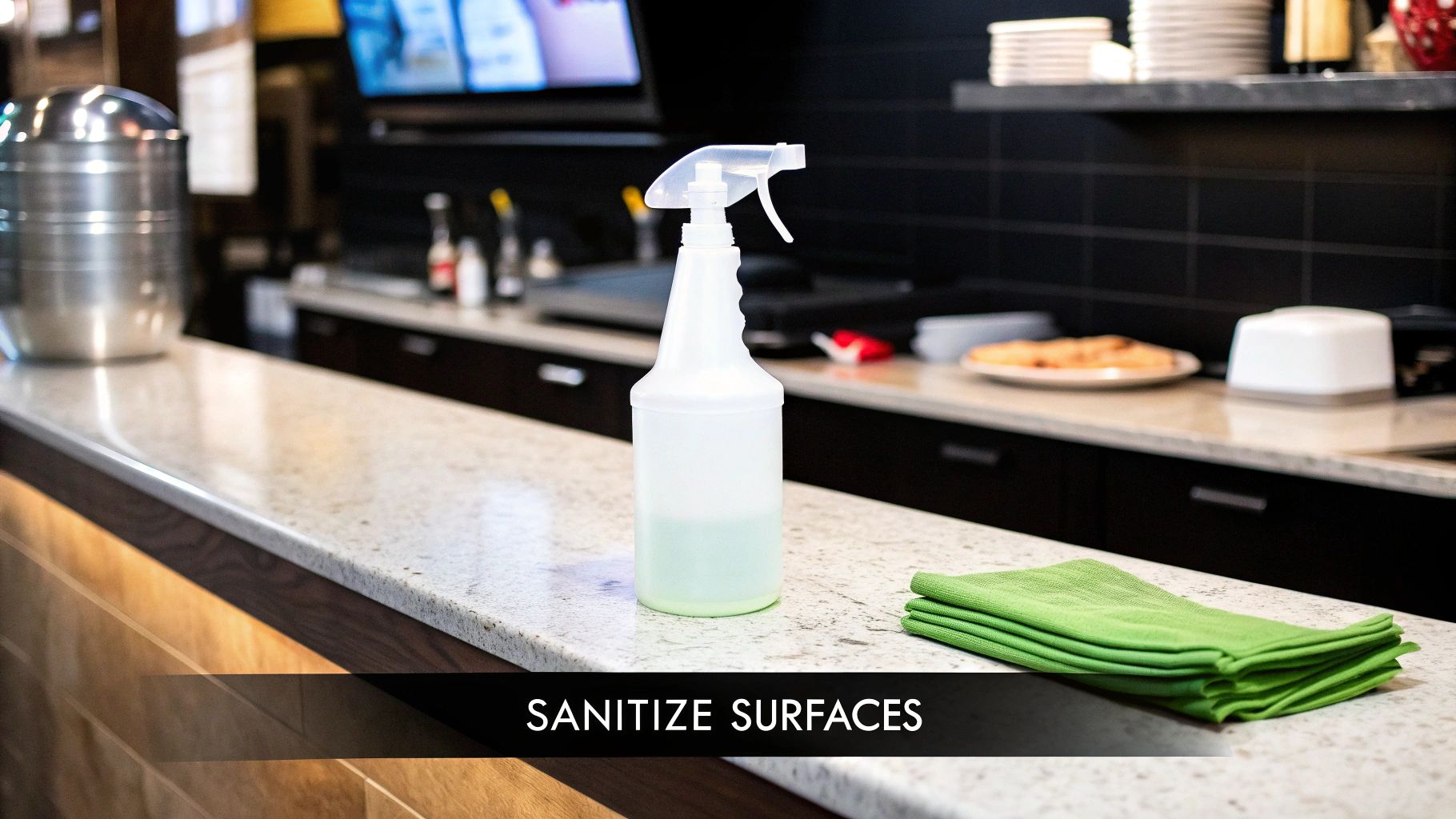
Knowing the science behind 70% isopropyl alcohol is one thing, but making it work for you day in and day out is where it really proves its worth. This stuff is a true workhorse in all sorts of commercial spaces, from busy restaurant kitchens to high-traffic public buildings. Its power lies in its ability to knock out pathogens quickly and reliably, making it a must-have for keeping your space safe and hygienic.
But here's the thing: you have to use it right. Just spraying and wiping isn't enough to get the job done. To actually kill the germs, the solution needs to sit on the surface for a specific amount of time. We call this contact time.
A surface has to stay visibly wet with 70% isopropyl alcohol for at least 30 seconds to properly disinfect against most common germs. Cut this step short, and you could be leaving dangerous microbes behind, defeating the whole purpose of sanitizing.
This rule applies everywhere, whether you're just hitting a single doorknob or sanitizing an entire commercial kitchen. Let's dig into what that looks like in the real world.
In the Restaurant and Bar
Cross-contamination is the enemy in any food service environment. 70% isopropyl alcohol is a fantastic choice here because it's effective, evaporates quickly, and doesn't leave any funky residue behind. It's great for both food-contact surfaces and other spots around the front-of-house.
Here's where it really shines:
- Bar Tops and Tables: Once you've wiped away crumbs and spills, give the surface a good spray. Let that 70% isopropyl alcohol sit for its full contact time before it dries. This is absolutely critical for the spots where your customers are eating and drinking.
- Food Prep Surfaces: Use it to sanitize your stainless steel counters and other non-porous surfaces between different prep tasks, like switching from raw chicken to fresh vegetables. It's a quick, effective way to break the chain of contamination. (Just be sure to check compatibility with materials like certain plastics or cutting boards).
- Bar Tools and Small Wares: Things like shakers, jiggers, and strainers get handled constantly. A quick spray-and-air-dry with alcohol is an efficient way to keep them sanitized during a busy shift.
For Janitorial Services and High-Touch Points
If you're in the janitorial game, your focus is on all those high-touch points—the areas that countless hands touch all day long. These are germ hotspots and need constant, careful attention.
A solid, step-by-step process ensures nothing gets missed:
- Map Out Your Surfaces: First, make a checklist of all the high-touch zones. Think doorknobs, light switches, elevator buttons, handrails, faucets, and reception desks.
- Clean First, Sanitize Second: This is a big one. Always wipe away the visible dirt and grime with a general cleaner before you sanitize. 70% isopropyl alcohol needs a clean surface to do its job properly—it's a sanitizer, not a cleaner.
- Apply and Wait: Using a spray bottle or a saturated cloth, cover the surface so it's visibly wet. Then, and this is the important part, make sure it stays that way for at least 30 seconds.
- Let It Air Dry: Whenever you can, just let the surface air dry. This is the best way to guarantee the alcohol has had enough time to neutralize any pathogens completely.
For any business juggling these kinds of cleaning protocols, keeping your team supplied is half the battle. Buying in bulk, like with our handy 4x4L Jugs of 70% Isopropyl Alcohol, is a smart move. It's cost-effective and ensures you never run out of this essential sanitizer, keeping your operations safe, compliant, and running without a hitch.
Safe Handling and Storage Protocols
While 70% isopropyl alcohol is a phenomenal disinfectant, that power demands respect. Think of it like any professional-grade tool in your kitchen or janitorial closet—knowing how to handle it safely is non-negotiable for protecting your team, your customers, and your facility. Its flammable nature means that strict safety protocols aren't just "best practices"—they're absolutely essential.
Following the right guidelines lets you get all the disinfecting benefits without taking on unnecessary risks. It all starts with the right Personal Protective Equipment (PPE) and setting up a safe space for your team to work.
Personal Protective Equipment (PPE) Essentials
Before anyone on your team even twists the cap off a bottle of 70% isopropyl alcohol, they need to be geared up properly. This is your first and most important line of defence against accidental exposure.
Your standard kit for handling isopropyl alcohol should always include:
- Nitrile Gloves: These create a reliable barrier to keep the alcohol off the skin. You might not think much of it, but prolonged contact can lead to dryness, irritation, or even dermatitis, so gloves are a must.
- Safety Glasses or Goggles: Splashes can happen in a split second, especially when refilling spray bottles or cleaning large surfaces. Protecting your eyes from irritation or injury is critical.
Creating a Safe Work Environment
Beyond the gear people wear, the environment where you use and store 70% isopropyl alcohol is just as important. Two things are absolutely critical: good ventilation and a keen awareness of anything that could create a spark.
Isopropyl alcohol evaporates fast, releasing vapours into the air. In a stuffy, closed-off room, these fumes can build up and lead to respiratory irritation, dizziness, or headaches. Always make sure there's good airflow by opening windows, turning on fans, or working in more open areas.
Here in Canada, workplace use is well-regulated to prevent overexposure. Health and safety bodies have set strict limits to avoid any potential issues, which just goes to show how important it is to use it in a controlled way. If you want to dive into the nitty-gritty, you can explore the material safety details for isopropyl alcohol.
Proper Storage and Disposal
How you store the product is key to keeping it effective and, more importantly, safe. Because it's highly flammable, 70% isopropyl alcohol needs to be stored with care.
Storage Best Practices:
- Keep It Cool: Store your containers in a cool, dry spot, well away from direct sunlight, heaters, open flames, or any other potential ignition source.
- Seal It Tight: Always double-check that the lids are screwed on tight. This stops the alcohol from evaporating—which weakens its cleaning power—and prevents flammable vapours from escaping into the air.
- Use a Designated Cabinet: If you're stocking up on larger quantities, the safest bet is to keep it in a proper flammable liquid storage cabinet.
When it's time to get rid of any excess, never, ever pour isopropyl alcohol down the drain. Check your local Canadian municipal regulations for hazardous waste. Following those rules ensures you're staying compliant and being responsible. For businesses that need a steady, safe supply, our bulk sanitation products are delivered ready for you to store and use properly right away.
Understanding Surface Compatibility and Contact Time
Mastering 70% isopropyl alcohol means going beyond a simple spray-and-wipe. For it to actually work safely and effectively, you need to get a handle on two critical concepts: surface compatibility and contact time.
In plain English, you have to know what you can safely clean with it, and how long the alcohol needs to stay wet on that surface to actually kill germs. Get this right, and you'll have a properly disinfected space without accidentally ruining your equipment or furniture.
What Surfaces Are Safe for Isopropyl Alcohol
Not everything in your restaurant, bar, or facility is going to react well to 70% isopropyl alcohol. While it's a fantastic disinfectant for many materials, using it on the wrong surface can lead to permanent damage like cracking, discolouration, or even stripping off a finish.
Here's a quick rundown of what's what in a commercial setting:
- Go for It: Stainless steel, glass, ceramics, sealed granite, and most hard, non-porous plastics are perfect candidates. These surfaces are tough and won't be harmed by the alcohol.
- Be Careful or Avoid Altogether: Steer clear of finished or painted wood, as the alcohol will likely strip the finish right off. It can also cause trouble for certain soft plastics, acrylics, rubber, and some specialty coatings on electronic screens. If you're ever in doubt, test it on a small, hidden spot first.
The Importance of Contact Time
Here's the single most important detail people miss: contact time. This is the non-negotiable amount of time a surface must stay visibly wet with the disinfectant to do its job.
A quick wipe that dries in five seconds might make a surface look clean, but it hasn't done a thing to kill the germs.
To be effective against most common bacteria and viruses, the surface must stay wet with 70% isopropyl alcohol for at least 30 seconds. If it evaporates before then, you need to reapply it.
Think of it this way: the alcohol needs time to soak into the germ's outer wall and destroy it from the inside. Without that sustained contact, you're just moving germs around. Getting the contact time right is the difference between a surface that just looks clean and one that is genuinely sanitized.
For businesses that need reliable sanitation solutions that are safe and effective, our full range of janitorial and sanitation supplies delivers the quality you can count on.
Sourcing 70% Isopropyl Alcohol in Bulk
For any business where hygiene is non-negotiable, a steady, affordable supply of disinfectants isn't a luxury—it's a core operational need. Buying 70% isopropyl alcohol in bulk is one of the smartest moves you can make, saving you money and headaches while ensuring you're never caught without your most essential sanitizer.
Think about it in simple terms: purchasing larger quantities, like a case of 4x4L jugs, drops your cost per litre significantly. This gives you better control over your budget and lets you keep every part of your facility properly stocked. From an operational standpoint, it means fewer orders to place, simpler inventory to track, and zero risk of running out during a dinner rush or a surprise health inspection. That kind of reliability is what keeps your standards high and your environment safe.
What to Look for on Canadian Labels
When you're buying any chemical for commercial use in Canada, you have to get the compliance part right. The label isn't just for decoration; it's a critical safety document that protects you and your team.
Always look for the WHMIS (Workplace Hazardous Materials Information System) symbols. For 70% isopropyl alcohol, you'll definitely see pictograms for its flammable nature. A fully compliant label will also give you clear instructions for safe handling, proper storage, first aid steps, and the contact info for the Canadian supplier. Sourcing from a trusted domestic partner like Chicken Pieces means you're getting products that tick every box for national safety standards.
The demand for isopropyl alcohol isn't just local; it's a massive global market. Valued at roughly USD 3.7 billion, the market is expected to more than double by 2033, driven by its crucial role in sterilization everywhere from hospitals to industrial plants. You can see more data on the growing isopropyl alcohol market here.
This explosive growth really drives home the importance of a solid supply chain. By choosing a reputable Canadian source for your bulk 70% Isopropyl Alcohol, you get more than just a good price. You get quality assurance, straightforward shipping, and the confidence that comes from using a fully compliant, effective, and reliable disinfectant.
Frequently Asked Questions
The following operator questions are answered with cited sources. Every FAQ links to Reddit, Quora, PAA, or a public regulator.
How do Canadian businesses actually use isopropyl alcohol in a foodservice or cleaning operation?
Source: r/chemistry: Can these be soaked in isopropyl alcohol for a clean
What concentration of isopropyl alcohol should a Canadian buyer keep on the shelf for general cleaning?
Source: r/CleaningTips: My cleaning tips as a residential cleaner
How should a Canadian operator store isopropyl alcohol safely in a foodservice back-of-house?
Source: r/fakecartridges: While cleaning a little bit of isopropyl alcohol discussion
Which surfaces and equipment can be safely wiped down with isopropyl alcohol in a commercial kitchen?
Source: r/modelmakers: How do I go about cleaning the actual interior of model parts with alcohol
How can a buyer choose between 70 percent and 99 percent isopropyl alcohol for a business?
Source: r/trees: Pipe cleaning tip nobody ever told me using isopropyl alcohol
What packaging size of isopropyl alcohol makes sense for a small Canadian business?
Source: r/lifehacks: The janitor in our company stores the cleaning supplies
How should a Canadian operator handle spills or disposal of isopropyl alcohol on site?
What Canadian regulations apply to storing and shipping isopropyl alcohol for a small business?
Source: r/functionalprint: Kirkland Costco garbage bag holder
Authoritative Sources
The following government and public-health sources informed the operator guidance above. Citations to Reddit, Quora, and operator forums appear in the FAQ block above.