
2026 Jul 25th
Janitorial Cleaning Chemicals That Keep Commercial Kitchens
Commercial kitchens and facilities need three chemical categories: hand hygiene for staff, surface detergents for grease and soil removal, and sanitizers for pathogen control. The right products reduce cross-contamination risk and keep inspection records clean.
Janitorial Cleaning Chemicals That Keep Commercial Kitchens Inspection-Ready
Airbnb hosts, property managers, and facility operators in Calgary and across Canada need reliable cleaning chemicals that work hard and meet federal standards without complicating daily routines.
Key Takeaways
Here is what matters most when stocking janitorial chemicals for food-service and high-traffic facilities.
Match Alcohol to Use Case
High-alcohol gels suit healthcare and food-prep zones. Non-alcohol foams work where flammability or skin sensitivity is a concern. Both have proper places in the same building.
Concentrates Save Storage
J-Fill and bulk concentrates reduce case count and shelf footprint. Staff dilute to proper strength, which also cuts how often you reorder.
Dispenser Compatibility Matters
Foam dispensers need foam-formula refills. Gel pumps need gel. Mismatched chemistry causes clogs, waste, and hands that do not get clean.
Iodine Detergent-Sanitizers Simplify
Single-step iodine products clean and sanitize in one pass. They suit operations with high turnover or limited training time per shift.
Case Quantities Vary Widely
Twelve-packs suit steady-use stations. Four-packs suit trial runs or low-volume sites. Match case size to consumption rate, not just shelf space.
Provincial Rules Apply
Alberta Health Services and other provincial bodies set specific requirements. Products must meet federal and local standards to pass routine inspections.
Hand Sanitizers Staff Will Actually Use
The best sanitizer is the one that stays stocked and gets used.
Hand hygiene breaks the chain of contamination in commercial kitchens and shared facilities. Staff move between tasks quickly. If sanitizer is hard to reach or harsh on skin, they skip it. The products you choose shape compliance more than any posted sign does.
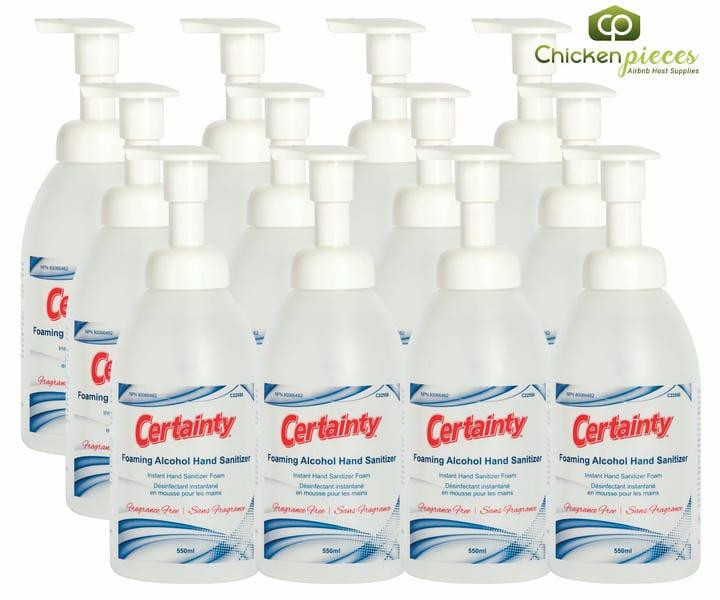
Alcohol-based gels with 70 percent content meet Health Canada guidelines for pathogen reduction. They dry fast and fit high-turnover roles. Flip-top bottles work mobile stations. Pump bottles stay at fixed sinks and prep counters. Match the format to how staff move through their shift.
Non-alcohol foam formulas suit sites with ventilation concerns or repeated application. Foam clings to hands better than liquid, which reduces drips on floors and equipment. Some staff prefer the feel. Having both types available respects individual needs without complicating your supply chain.
Mounted Dispensers Cut Waste and Mess
Proper dispensers control portion size and reduce countertop clutter.
Countertop bottles tip, leak, and disappear. Wall-mounted dispensers stay where you put them. They release measured doses, which trains staff to use enough product without over-pouring. Over a quarter, the savings in product and labour add up.
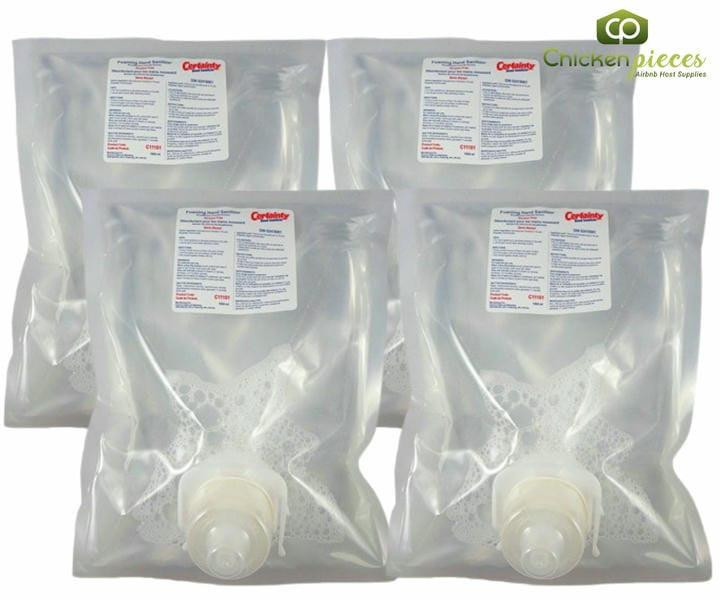
Foam dispensers need specific refill chemistry. Gel pumps need gel. The Certainty Foam Black and Chrome Dispenser holds one-litre refills and suits high-traffic commercial entries and staff wash stations. Its finish resists corrosion from wet environments common in kitchen and janitorial areas.
Check mounting height for accessibility standards. Too high, and shorter staff struggle. Too low, and bottles get knocked. The right position is elbow-height for average users. Install near entries to food-prep zones, not just at restroom doors, because hands pick up contamination between tasks.
Concentrated Detergents Handle Heavy Soil
Grease, protein residue, and hard-water minerals need targeted chemistry.
Commercial kitchens generate soil that home products cannot touch. Protein films, cooking oils, and mineral deposits build fast on surfaces and equipment. Alkaline detergents break these bonds. Acidic products handle scale. Neutral cleaners suit daily maintenance without damaging finishes.
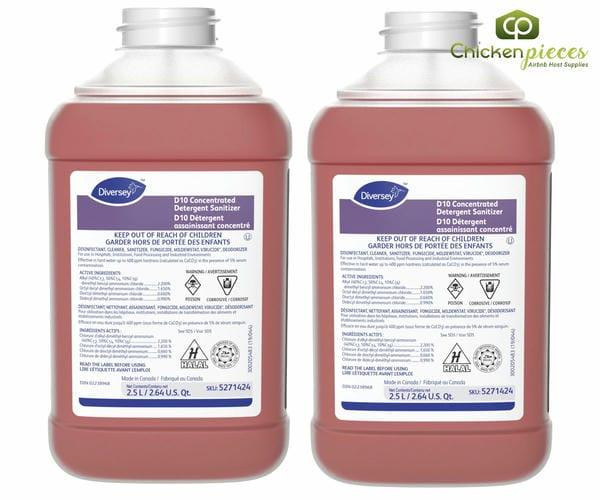
The Diversey D10 Concentrated Detergent Sanitizer in J-Fill format delivers measured concentrate through a closed system. Staff cannot over-pour or guess at ratios. This reduces waste, prevents skin and eye contact with neat chemical, and creates consistent results across shifts and locations.
Concentrated chemistry also reduces your storage footprint. A two-pack of 2.5-litre J-Fill equals cases of ready-to-use product. For operators running multiple sites or limited backroom space, this matters. Less storage means more room for operations, and fewer cases to track in inventory.
Sanitizers Finish What Detergents Start
Cleaning removes soil; sanitizing reduces microorganisms to safe levels.
Detergents and sanitizers are partners, not replacements. Detergent lifts grease and debris. Sanitizer then addresses what you cannot see. Using sanitizer on a dirty surface wastes product and gives false confidence. Train staff to clean first, then sanitize, with adequate contact time.
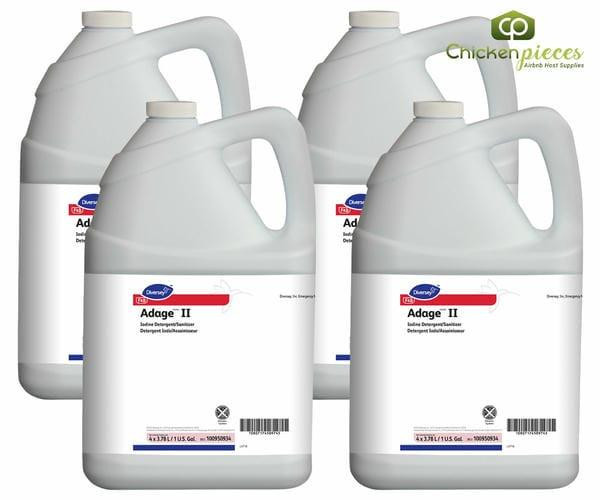
Iodine-based detergent-sanitizers like Diversey Adage II combine both steps for certain applications. In low-sensitivity areas with predictable soil types, this speeds turnaround. In high-risk zones, separate steps with dedicated products remain the safer protocol. Know your inspection requirements before combining.
Contact time is not optional. Spray and wipe immediately, and you have moved product, not killed organisms. Follow label directions for wet-contact duration. This usually means leaving surfaces visibly wet for one to ten minutes depending on the organism targeted and the chemistry used.
Travel-Size Sanitizers for Mobile Staff
Not every role stays at a fixed station.
Housekeeping carts, delivery drivers, and maintenance staff move between buildings and floors. They touch shared equipment, elevator buttons, and door handles. Fixed dispensers do not serve them. Two-ounce bottles fit pockets, belts, and cart caddies without adding bulk.
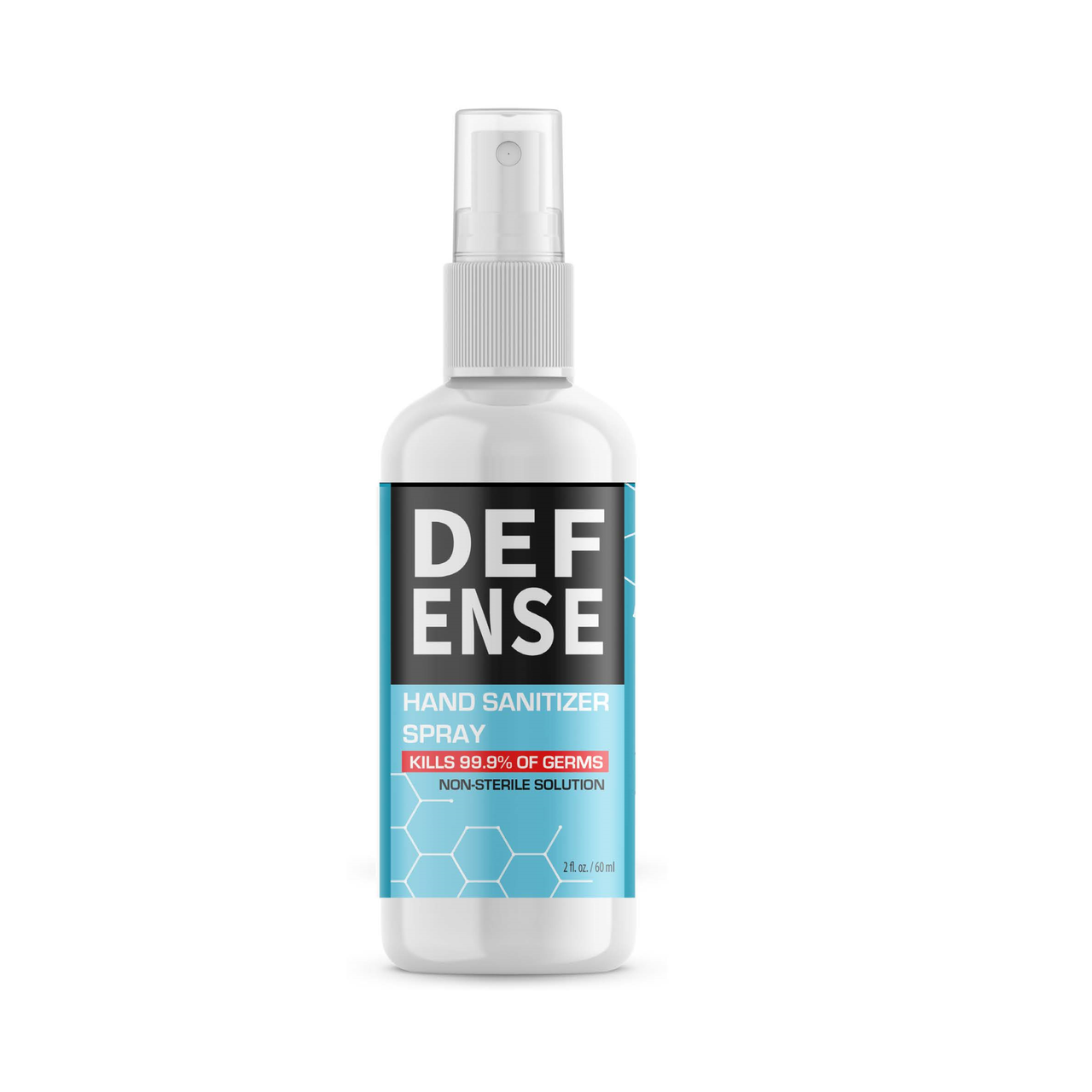
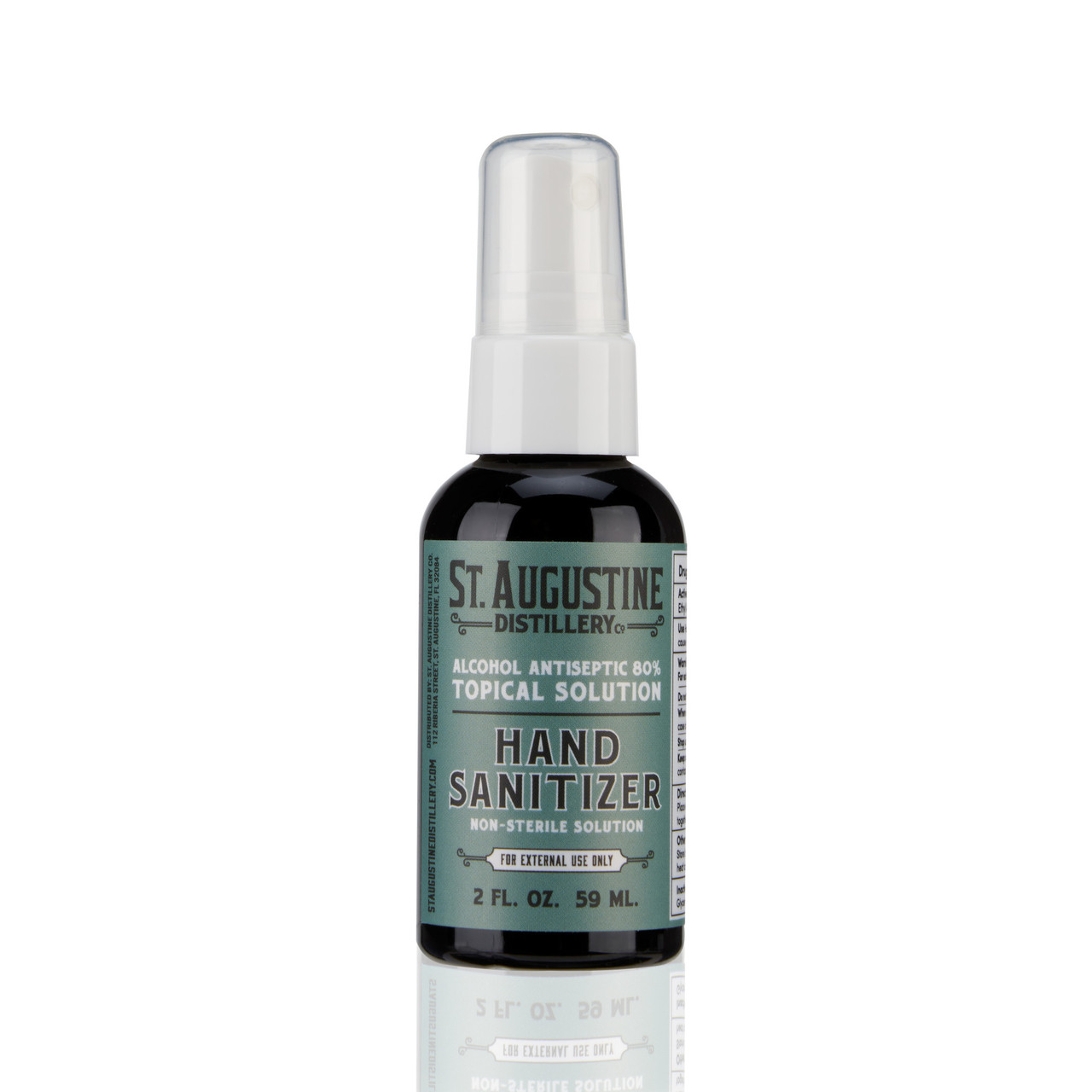
The 2 oz Defense Hand Sanitizer and Distributed 2oz Spray options suit these roles. Sprays cover larger skin area quickly. Gels stay put for thorough rubbing. Both formats need staff training on adequate volume; a quick dab is not sufficient coverage for two hands and wrists.
Consider branding and location naming for distributed teams. The St. Augustine designation on the Distributed spray helps track inventory by site or route. This matters when you manage multiple properties and need to reconcile usage against headcount and shift patterns at month end.
Build a Chemical Lineup That Scales
The right mix prevents stockouts and reduces emergency orders.
Start with hand hygiene at all entry and exit points to food and guest areas. Add surface detergents for daily and deep-clean schedules. Finish with sanitizers for post-clean protocols. This three-tier system covers most inspection criteria and daily operational needs without excess complexity.
Match case quantities to consumption rate, not just price per unit. A twenty-four-pack of Bioss Gel suits a hotel with fifty rooms and full housekeeping. A twelve-pack of Avmor suits a smaller Airbnb portfolio. Buying bulk for bulk's sake ties up cash and risks expiry before use.
Document what you use where. When Health Services Alberta or another provincial body inspects, they ask about protocols and products. Having compatible chemistry from known suppliers simplifies record-keeping. ChickenPieces ships from Calgary with same-day dispatch on stock orders, which reduces the temptation to grab whatever is available locally in an emergency.
Compare Janitorial Chemical Types for Your Facility
Use this table to match product categories to your operational needs and compliance requirements.
| Product Type | Best For | Format Options | Staff Training Level |
|---|---|---|---|
| Alcohol Gel Sanitizer | High-turnover hand hygiene | Pump, fliptop, 2oz | Basic |
| Non-Alcohol Foam Sanitizer | Sensitivity or flammability concerns | Pump, dispenser refill | Basic |
| Mounted Foam Dispenser | Fixed stations, portion control | Wall-mount, 1L capacity | Minimal |
| Concentrated Detergent | Heavy soil, grease, daily cleaning | J-Fill, bulk | Moderate |
| Iodine Detergent-Sanitizer | Speed, single-step protocols | Jug, 3.78L | Moderate |
| Travel-Size Sanitizer | Mobile, multi-site staff | Spray, gel, 2oz | Basic |
| J-Fill System | Accurate dilution, waste reduction | 2.5L concentrate, closed loop | Moderate |
Janitorial Chemicals for Commercial Facilities
Hand sanitizers, detergents, and sanitizers selected for Canadian commercial kitchens, short-term rentals, and institutional facilities.


People Also Ask
Real questions buyers search before they order — answered straight.
What are the main types of cleaning chemicals, and what is each one for?
The core families are detergents for everyday soil, degreasers for baked-on grease, acidic cleaners and delimers for scale and mineral build-up, and sanitisers or disinfectants for killing germs. Most kitchens need one product from each group rather than a separate bottle for every surface. Knowing which family a job needs stops staff reaching for the wrong, and often harsher, product.
Is a stronger chemical always better for a tough job?
No, the right match to the soil and surface matters more than raw strength, and an over-strong product can damage finishes, leave residue, or create fumes. Heavy grease needs a degreaser, while scale needs an acidic cleaner, so strength is only useful when it fits the task. Using the correct product at the correct dilution usually beats simply reaching for the harshest option.
How do cleaning chemicals actually lift grease and soil?
Most cleaners use surfactants that loosen soil so it can be rinsed away, while the product's acidity or alkalinity is matched to the type of dirt, such as alkaline for grease and acidic for scale. Contact time lets the chemistry do the work before you wipe. This is why letting a product dwell for its stated time cleans better than scrubbing immediately.
What do professional cleaning teams rely on to get consistent results?
Professionals lean on controlled dilution, the correct product for each task, and trained staff who follow the label rather than guessing. Dispensing systems that mix concentrate to a set ratio remove much of the human error. Consistency comes from process and training as much as from the chemicals themselves.
What do many facilities use instead of bleach?
Many sites use accelerated hydrogen peroxide or quaternary (quat) disinfectants because they can be gentler on surfaces and leave less harsh odour than bleach while still meeting disinfection needs. The best choice depends on the surfaces, the germs you need to control, and the contact time you can allow. Checking the label for an approved disinfectant claim matters more than the active ingredient alone.
How do you build a core cleaning-chemical kit without over-buying?
Start with a small set of multi-taskers, such as an all-purpose cleaner, a degreaser, a sanitiser, a glass cleaner, and a washroom cleaner, rather than a separate product for every surface. Concentrates stretch further and cut storage space. Reviewing which products your team actually reaches for lets you trim the range and reorder only what earns its shelf space.
What Canadian facility operators say
Facility operators and property managers across Canada rely on these products for daily compliance and staff safety.
We switched to the J-Fill system for our three Calgary properties. Staff stopped guessing at mix ratios, and our inspection scores improved within two quarters. The closed system also cut down on spills in the storage room.
The foam dispensers look sharp in our lobby and the refill schedule is predictable now. Guests comment on cleanliness more often, and my housekeeping team appreciates not wrestling with loose bottles on carts.
I run a small janitorial crew for restaurants in Kelowna. The iodine detergent-sanitizer saves us serious time on deep cleans. One pass instead of two means we finish faster without cutting corners on standards.
Chemical Selection and Use: Frequently Asked Questions
The following operator questions are answered with cited sources. Every FAQ links to Health Canada, CFIA, Canada.ca, or another authoritative regulator.
What sanitizer do professionals actually use on food contact surfaces in a commercial kitchen?
Products referenced:
- Diversey D10 Concentrated Detergent Sanitizer J-Fill 2.5 L
- Diversey Adage II Iodine Detergent/Sanitizer 3.78L
Source: Professionals - what sanitizer do you use? : r/Cooking
Is the Diversey J-Fill closed dispensing system actually worth it for a small facility?
Products referenced:
- Diversey D10 Concentrated Detergent Sanitizer J-Fill 2.5 L
What is the liquid restaurants keep their wiping rags in, and is quat the right choice?
Products referenced:
- Diversey Adage II Iodine Detergent/Sanitizer 3.78L
- Diversey D10 Concentrated Detergent Sanitizer J-Fill 2.5 L
Source: What is the liquid that restaurants keep their rags in for : r/NoStupidQuestions
Why do my restaurant tables get sticky even though I wipe them with sanitizer after every turn?
Products referenced:
- Certainty Non-Alcohol Foam Hand Sanitizer 1,000 mL
- Avmor Gel Hand Sanitizer 70 Percent Alcohol Fliptop 500ML
Can I use bleach as a sanitizer in a commercial kitchen, and is it the cheapest option?
Products referenced:
- Diversey D10 Concentrated Detergent Sanitizer J-Fill 2.5 L
How often should food-handling cooks and chefs actually wash their hands in a busy commercial kitchen?
Products referenced:
- 2 oz Defense Hand Sanitizer
- Distributed 2oz Spray Hand Sanitizer St. Augustine
What is the difference between a detergent and a sanitizer in food safety?
Products referenced:
- Diversey D10 Concentrated Detergent Sanitizer J-Fill 2.5 L
- Certainty Foaming Hand Sanitizer 70% Alcohol Pump Bottle 550 mL
Source: Cleaning vs Sanitizing vs Disinfecting | Key Differences - gofoodservice.com
What does a real daily, weekly, and monthly cleaning schedule in a busy restaurant kitchen look like?
Products referenced:
- Bioss Gel Hand Sanitizer with Pump 500ML 24 Units/Case
- Avmor Gel Hand Sanitizer 70 Percent Alcohol Fliptop 500ML 12 Units/Case
Are non-alcohol foam sanitizers actually as effective as 70% alcohol gel?
Products referenced:
- Certainty Foaming Hand Sanitizer 70% Alcohol Pump Bottle 550 mL
- Certainty Non-Alcohol Foam Hand Sanitizer 1,000 mL
Source: Hospital hand sanitizer is destroying my hands : r/nursing
Which janitorial chemicals are approved for food-contact surfaces in Canada, and who enforces it?
Products referenced:
- Diversey D10 Concentrated Detergent Sanitizer J-Fill 2.5 L
- Diversey Adage II Iodine Detergent/Sanitizer 3.78L
Source: Food Premises Reference Document, 2019 - Simcoe Muskoka District Health Unit
Related guides from ChickenPieces
Why Canadian Facilities Choose ChickenPieces
Calgary-based supply with national reach and compliance-focused product selection.
Same-Day Calgary Dispatch
Stock orders ship the same day when placed before cutoff. Local operators get next-day delivery. National customers get predictable transit without cross-border delays.
Volume Case Options
Four-unit trials to twenty-four-unit bulk cases let you match inventory to actual use. No forced bulk purchases for products you have not tested.
Format Matching
We stock pumps, fliptops, sprays, foam dispensers, and J-Fill systems. One supplier covers your fixed stations and mobile staff without compatibility issues.
Compliance-Verified Chemistry
Products are selected for alignment with Health Canada and CFIA standards. This supports your inspection readiness and reduces the risk of non-compliant chemistry in your facility.
Sources & further reading
Get a Quote for Your Facility
Tell us your property count, staff headcount, and current chemical lineup. We will recommend case quantities and formats that fit your storage space and usage rate. Request your quote today.
Request a Quote