
2026 Jul 25th
Store Janitorial Chemicals Safely to Protect Staff and
Store janitorial chemicals in a cool, dry, locked area with constant airflow. Keep incompatible products apart, and label every container clearly. These three steps prevent fumes, fires, and accidental mixing that harm staff and guests.
Store Janitorial Chemicals Safely to Protect Staff and Guests
Airbnb hosts, property managers, and facility operators in Alberta rely on safe chemical storage to prevent accidents, avoid liability, and keep operations running without interruption.
Key Takeaways
Here are six practical steps to keep your chemical storage compliant and your people safe.
Ventilate the storage room
Install an exhaust fan or keep windows open to move air continuously. Stagnant air lets fumes build up, causing headaches or worse for anyone entering the space.
Segregate incompatible chemicals
Never store acids near bases or oxidizers near flammables. A simple shelf separation prevents reactions that produce toxic gas or start fires.
Label every container clearly
Original labels wear off. Add durable secondary labels with product name, hazard symbols, and date received so anyone can identify contents instantly.
Lock the storage area
Restrict access to trained staff only. Children, guests, and untrained cleaners must not enter unsupervised, even for a moment.
Use spill containment trays
Place bottles and jugs in secondary tubs or on grated shelving that catches drips. Concrete floors absorb spills and release fumes for days.
Rotate stock by date
Store newer products behind older ones and check expiry dates quarterly. Degraded chemicals lose effectiveness and can become unpredictable.
Keep Air Moving in Your Chemical Storage Room
Fresh airflow is your first defence against dangerous fume buildup.
Every janitorial chemical releases some vapour, even when sealed. Bleach-based products, in particular, off-gas chlorine compounds that irritate eyes and lungs at low concentrations. A small storage closet without airflow becomes hazardous within hours, especially in Calgary's tightly sealed modern buildings where energy efficiency traps everything inside.
Mechanical ventilation works best. An exhaust fan rated for corrosive environments pulls fumes outside rather than recirculating them through your HVAC system. If you cannot install a fan, position the storage area near an operable window and create cross-ventilation with a vent on the opposite wall. Check airflow monthly by holding a tissue near the vent; it should flutter visibly.
Store chemicals at floor level or on low shelving, never overhead where leaks drip downward and fumes rise into breathing zones. Keep containers closed when not in use, and do not transfer products to unmarked bottles. Even a brief open period in stagnant air concentrates vapours enough to trigger respiratory symptoms in sensitive individuals.
Separate Chemicals That React Dangerously
Incompatible products stored together create fire, explosion, or toxic gas risks.
Read every product label for hazard classification before deciding where it belongs. Oxidizers like sodium hypochlorite bleach react violently with acids, ammonia, and some organic compounds. Store these on separate shelving units with physical barriers between them, not merely different spots on the same shelf. The barrier can be as simple as a solid plastic divider that prevents bottles from touching during an earthquake or bump.
Acid toilet bowl cleaners and alkaline degreasers also demand separation. When mixed, they neutralize each other violently, generating heat and splashing corrosive material. Store acids low and to the left, bases low and to the right, following the standard organizational system that trained staff recognize instantly. Post a compatibility chart on the storage room door for reference.
Never store janitorial chemicals near anything flammable like propane, paint thinners, or fuel containers. Even indirect heat from a nearby furnace can degrade plastic containers and increase vapour pressure. Maintain at least three metres between chemical storage and any ignition source, and keep a fire extinguisher rated for chemical fires accessible just outside the room, not inside where you cannot reach it during an emergency.
Label Containers So Anyone Can Act Safely
Clear identification prevents dangerous guesswork during emergencies.
Original manufacturer labels contain hazard symbols, first aid directions, and product identifiers that emergency responders need. Preserve these by applying clear tape over them or storing bottles in protective sleeves. When original labels degrade or containers transfer to spray bottles, create secondary labels with permanent marker on waterproof tape or use a commercial label printer with chemical-resistant adhesive.
Your secondary labels need four pieces of information: product name exactly as written on the safety data sheet, primary hazard warning, date of transfer or first opening, and your contact number. Include the dilution ratio if you mixed the product yourself. Never use abbreviations or codes that only one person understands; turnover in hospitality and facility work means anyone might face the container unprepared.
Post an inventory list near the storage room entrance showing what should be present and in what quantities. Update this list whenever products arrive or deplete. During an emergency, responders ask what chemicals are on site. A current inventory lets you answer accurately without entering the room yourself. Review labels quarterly and replace any that have smudged, curled, or become unreadable from moisture or chemical contact.
Choose Shelving and Spill Control That Lasts
The right physical setup prevents accidents before they start.
Select shelving materials that resist corrosion from chemical vapours and splashes. Powder-coated metal rusts where coating chips; solid high-density polyethylene or stainless steel performs better long-term. Avoid wood entirely, which absorbs spills and becomes structurally compromised without visible warning. Shelf lips or raised edges prevent bottles from sliding during minor earthquakes or accidental bumps.
Install spill containment beneath every shelf level, not just the floor. Individual tray systems let you remove and clean one section without disturbing everything above. For bulk containers over ten litres, use bunded pallets with four-inch walls that hold the entire volume if the primary container fails. Check containment monthly for cracks, especially after Calgary's freeze-thaw cycles if your storage area experiences temperature variation.
Lighting matters for safe handling. Install sealed LED fixtures rated for damp locations; standard fixtures corrode and create electrical hazards. Position lights to eliminate shadows behind containers, and keep a battery-powered lantern or headlamp in a wall-mounted holder for power outages. Never use candles or open-flame lights near chemical storage, which seems obvious but happens during extended winter blackouts when people improvise poorly.
Train Teams to Handle Chemicals Correctly
Procedures only protect people when everyone follows them consistently.
Document your storage procedures in a one-page checklist that every employee signs before handling chemicals independently. Include photographs of the properly organized storage room so visual learners understand expectations. Review this document during onboarding and annually thereafter, not as a formality but as a genuine skills check with questions that confirm comprehension.
Assign one person per shift as the chemical safety point person who checks storage conditions daily. Their brief inspection covers: ventilation functioning, no leaks visible, labels legible, lock engaged, and inventory matches the posted list. This takes under two minutes but catches problems before they escalate. Rotate this responsibility monthly so multiple staff maintain familiarity with proper conditions.
Create an incident response sequence for spills, exposures, and missing inventory. Post this inside the storage room door and in the staff break area. Practice the sequence quarterly with simulated scenarios: a tipped bleach jug, a splash in the eyes, a child found near the unlocked door. Muscle memory from repetition outperforms rational thinking during adrenaline spikes. Keep emergency contact numbers updated, including Poison Control and your nearest hospital emergency department.
Pass Inspections Without Last-Minute Scrambling
Regular self-audits keep you ready for regulatory visits anytime.
Alberta Occupational Health and Safety requires employers to maintain safety data sheets for all hazardous products and ensure worker training on hazards and controls. Keep printed SDS binders in the storage room and a backup set in your office. Digital-only access fails during power outages or when the responsible person's device dies. Update SDS within ninety days of any product formulation change.
Schedule monthly self-inspections using the same checklist inspectors employ. Photograph conditions each time to demonstrate consistent compliance over time. Address deficiencies within forty-eight hours and document corrections. This paper trail proves due diligence if an incident occurs despite your efforts, potentially reducing liability exposure significantly compared to ad-hoc management with no records.
Health Canada and WHMIS regulations evolve; subscribe to updates from the Canadian Centre for Occupational Health and Safety. When regulations change, adjust your procedures before the compliance deadline rather than after. Your suppliers, including ChickenPieces.com, can confirm whether current stock meets revised standards. Request compliance certificates for your records whenever you question a product's regulatory status.
Compare Safe Storage Approaches for Different Property Sizes
Match your storage method to your operation scale and chemical volume.
| Storage approach | Best for | Key requirements | Maintenance frequency |
|---|---|---|---|
| Locked cabinet, single shelf | Small Airbnb, under 10 units | Ventilated room, spill tray, basic labels | Monthly inspection |
| Multi-shelf segregated shelving | Mid-size property, 10-50 units | Exhaust fan, compatibility dividers, full inventory | Bi-weekly inspection |
| Dedicated storage room | Large facility, 50+ units | Mechanical ventilation, bunded pallets, SDS station | Weekly inspection |
| Climate-controlled container | Remote or seasonal property | Insulation, temperature alarm, remote monitoring | Weekly inspection |
| Central receiving with distribution | Multi-property management company | Trained receiver, barcoded tracking, bulk containment | Daily inspection |
| Mobile caddy per building | Campus or complex layout | Sealed transport, limited quantities, return-to-base rule | Per-use inspection |
| Third-party managed storage | Very limited on-site space | Contract specifying access, inventory reporting, emergency response | Quarterly audit |
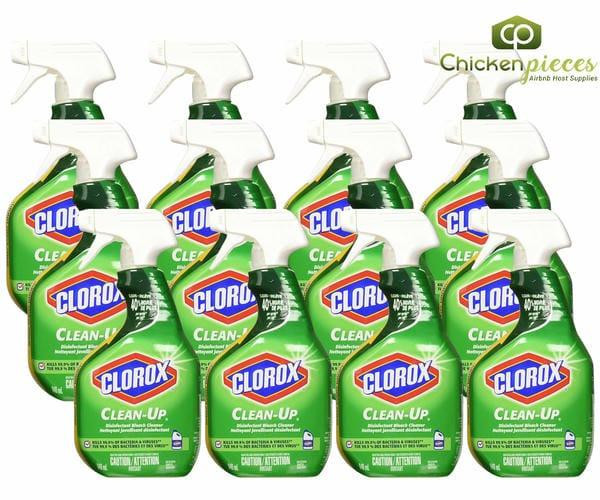
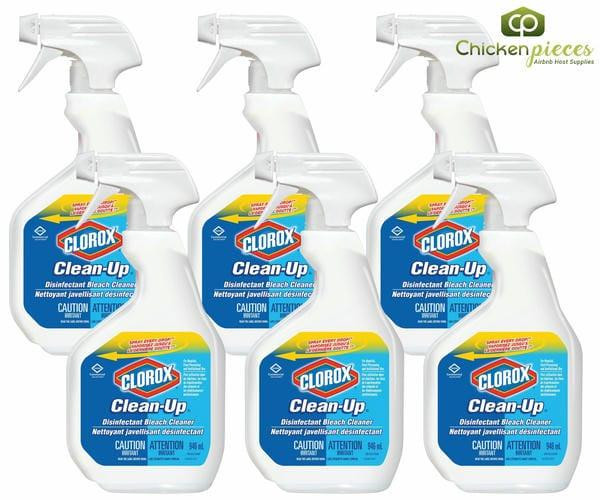
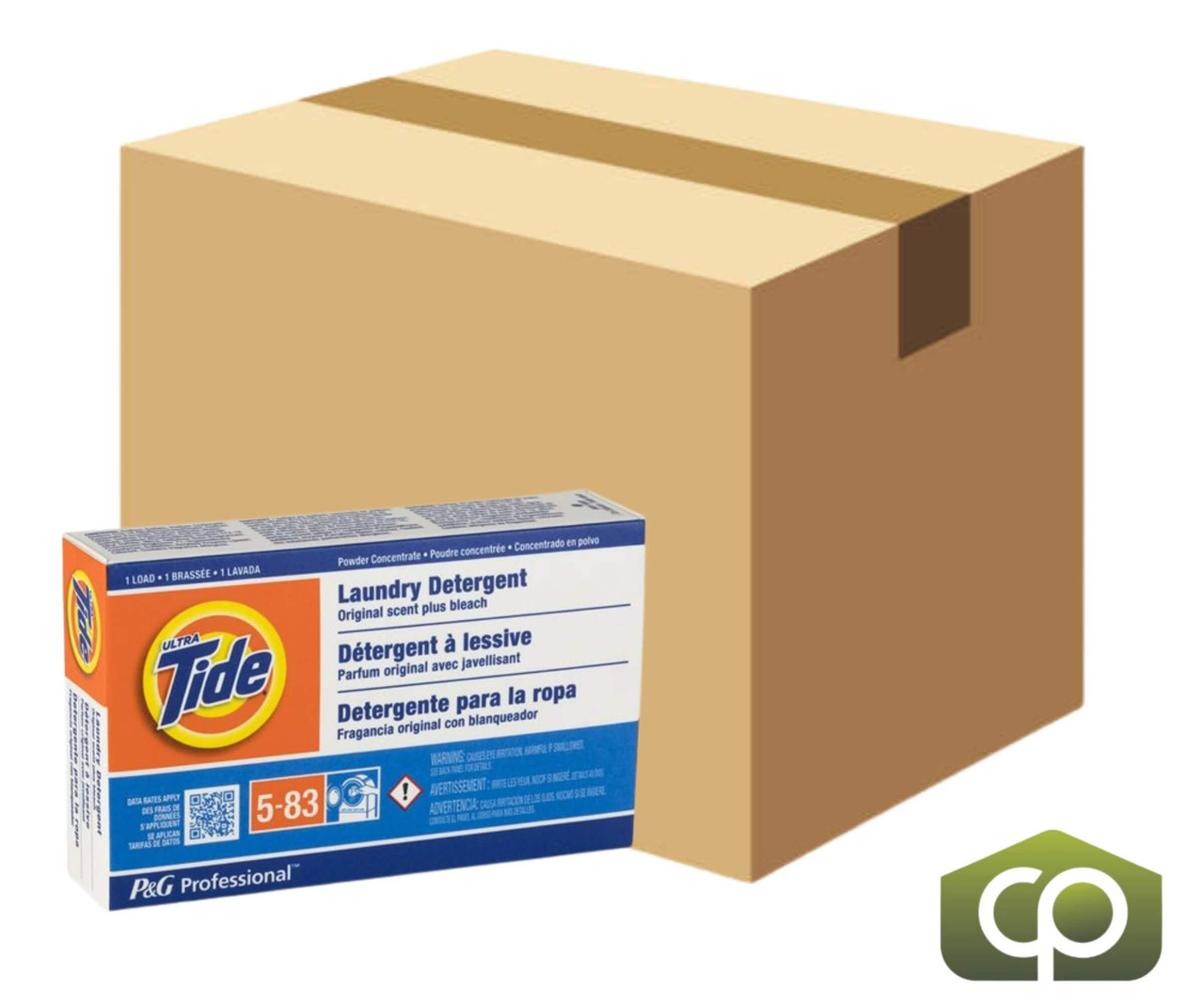
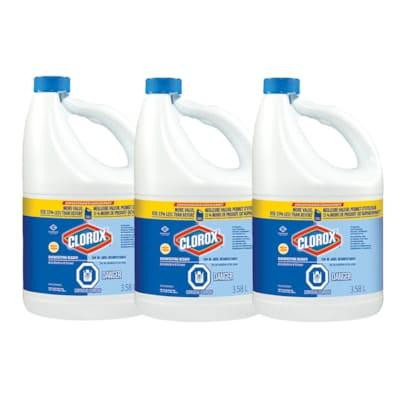
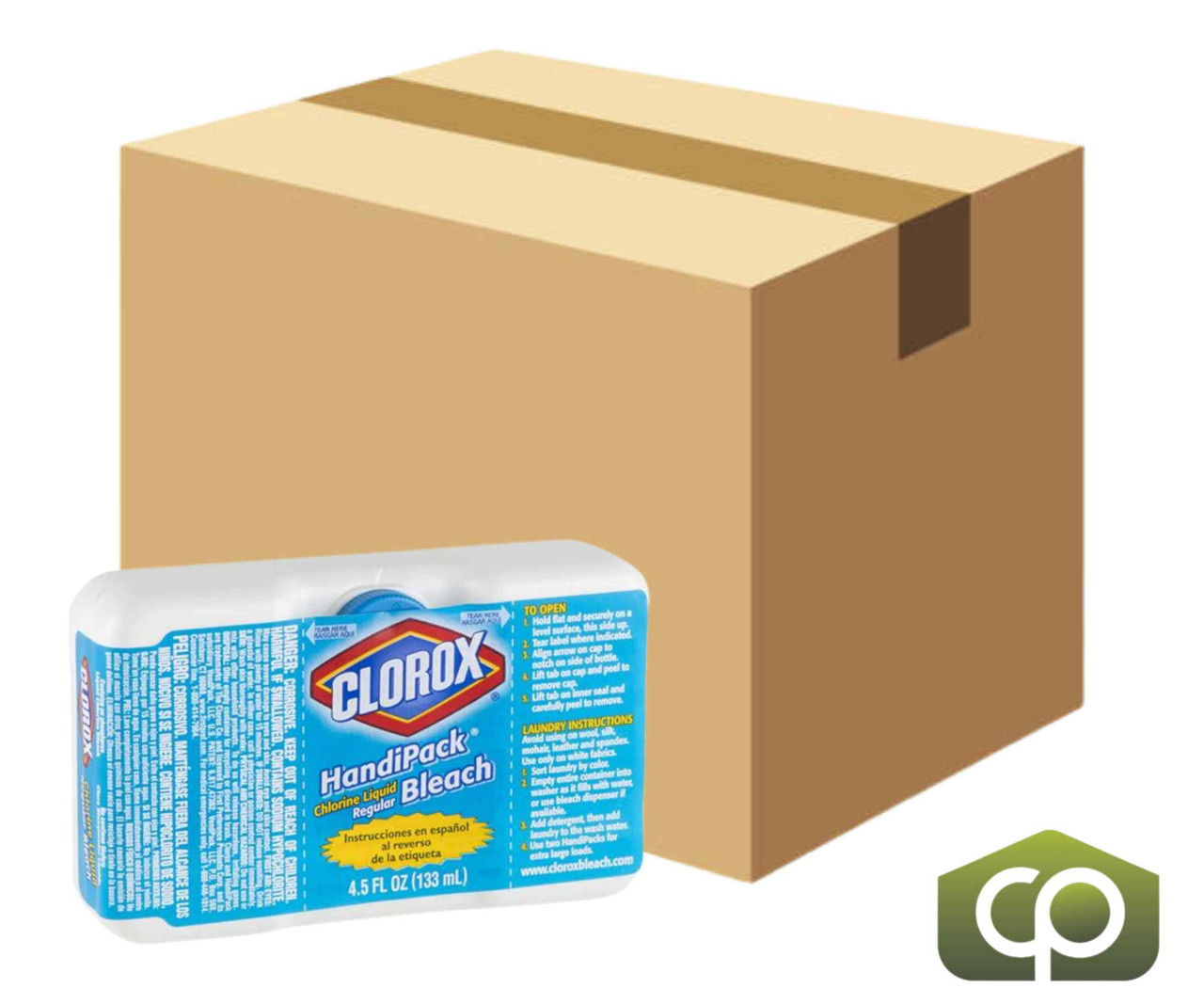
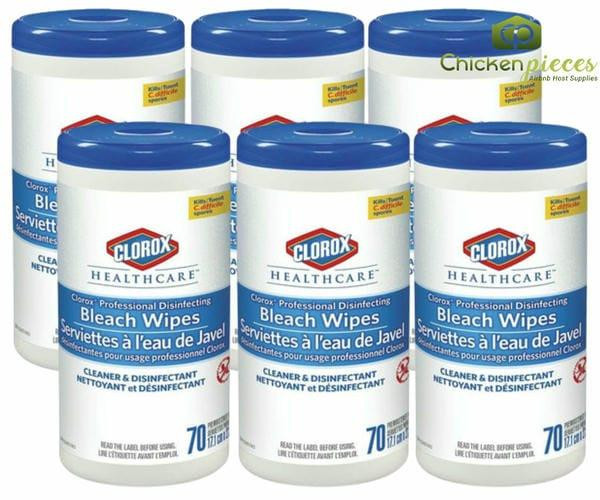
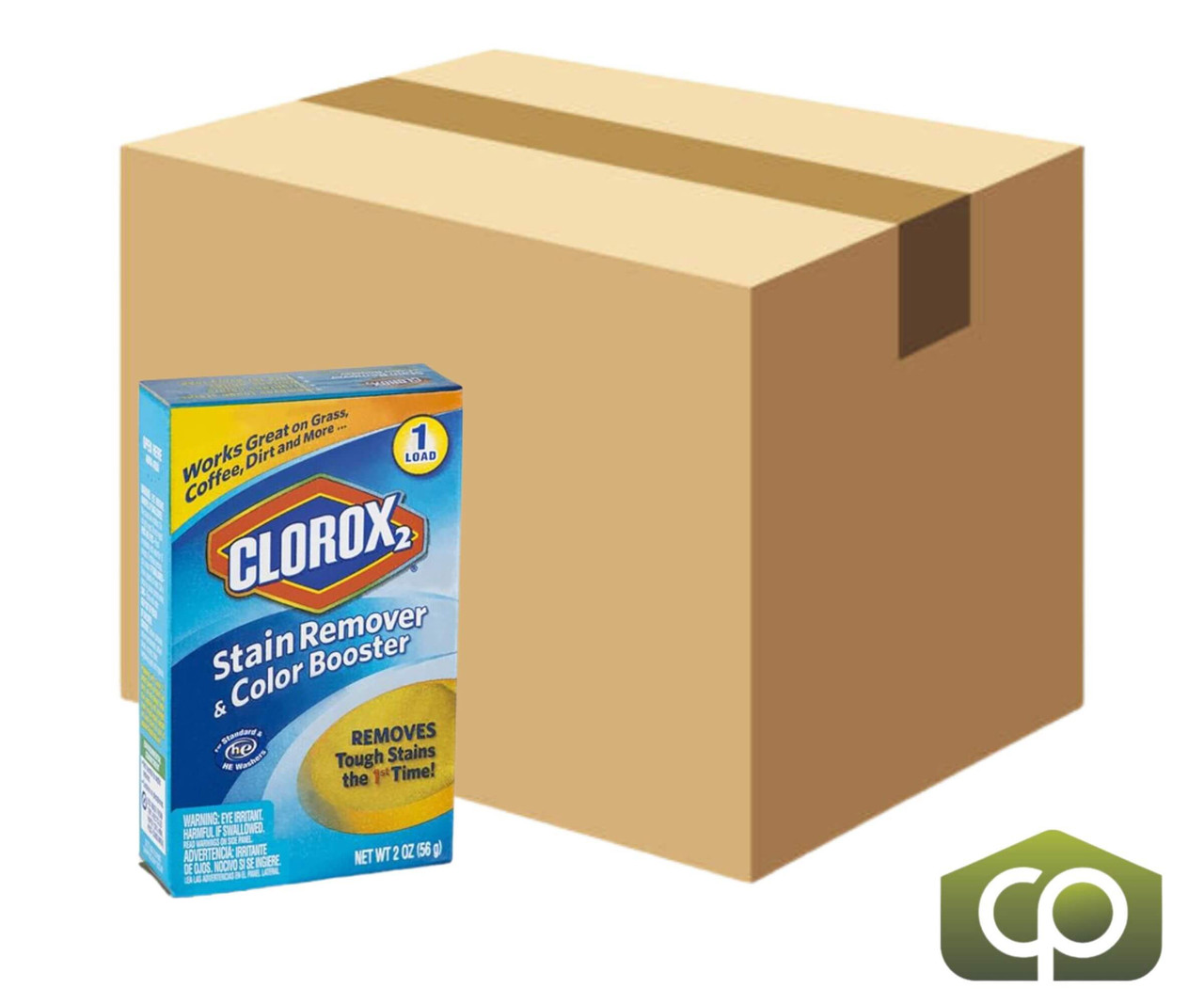
Bleach and Disinfectant Products for Safe Storage
Our Clorox range covers every property size, from single Airbnb units to full facility operations.

People Also Ask
Real questions buyers search before they order — answered straight.
What is the best way to store cleaning chemicals safely?
Keep every product in its original, clearly labelled container, in a cool, dry, well-ventilated area away from food, heat, and direct sunlight. Store products below eye level where possible, keep incompatible ones apart, and lock the area if children or the public could reach it. A tidy, organised store with good airflow is the single biggest safeguard.
Source: Professional cleaning wholesale supplies for - r/canadasmallbusiness
Which cleaning chemicals must be kept apart from each other in storage?
Acids and alkalis should be separated, oxidisers such as bleach kept well away from ammonia and other cleaners, and any flammable products stored apart from everything else. A simple compatibility chart on the store-room wall helps staff shelve products in the right zones. When in doubt, give each group its own shelf and never let concentrates share a single spill tray.
Is it better to store cleaning products in glass or plastic containers?
Most concentrates come in the plastic their maker chose, and the safest option is to leave them in that original container rather than decanting into glass, which can break. If you must use a secondary bottle, match the material to the product and label it clearly. Some strong acids can attack certain plastics, so always follow the maker's guidance.
Source: KM says no bleach in the kitchen, what is a good alternative? - r/KitchenConfidential
What are the risks of storing cleaning chemicals badly?
Poor storage can lead to leaks, dangerous reactions between products that mix, slips from spills, and fumes building up in an unventilated room. Damaged or unlabelled containers make accidental misuse far more likely. Good storage is really about preventing these avoidable incidents before they start.
Source: Cost per use: green vs conventional cleaning chemicals - r/CommercialCleaning
How should cleaning chemicals be arranged on shelves?
Store heavier containers and liquids on lower shelves so any fall or spill does less damage, and keep lighter items higher up. Avoid keeping liquids above head height, and never stack containers so high that they become unstable. Sturdy shelving with a lip or a spill tray helps keep any leak contained.
Do you need to keep a record or inventory of your cleaning chemicals?
A simple written list of every product you store — what it is, how much you hold, and where it is kept — makes both a safety check and an emergency response far quicker. It also lets anyone find the matching safety data sheet fast if something goes wrong. Keeping this record current is good practice and is often expected under workplace safety rules.
Source: How can I buy cleaning supplies in bulk? - r/Detailing
What Canadian property managers say
Alberta property professionals trust our supply consistency and compliance support.
We switched to the Handipack bleach after a guest accidentally grabbed the wrong bottle from our supply closet. Individual packs eliminated that risk entirely, and our incident reports dropped to zero.
The Healthcare wipes come in sealed canisters that stack neatly on our labelled shelving. Our health inspector specifically noted the organized storage during last year's audit.
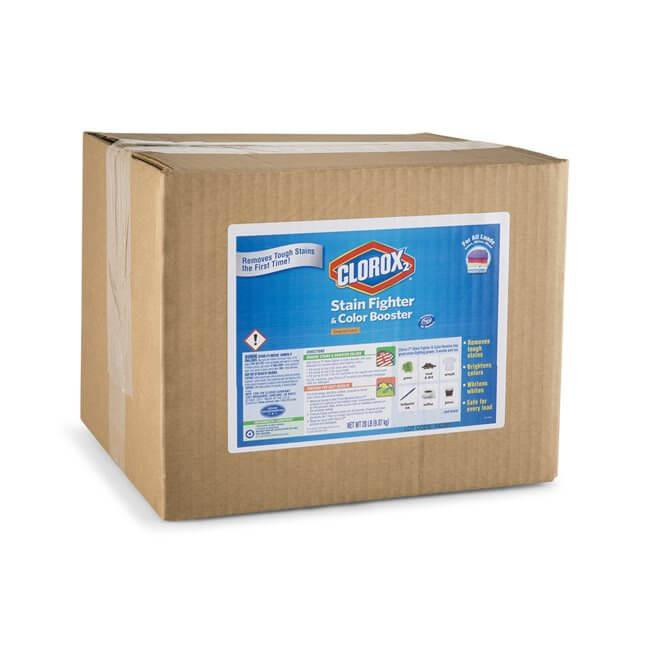
I manage forty units and the bulk Clorox2 box lasts three months. The carton packs let me distribute smaller amounts to each property without decanting into mystery bottles.
Chemical Storage Safety: Frequently Asked Questions
The following operator questions are answered with cited sources. Every FAQ links to the community thread, buyer guide, or regulator page it was researched from.
Where should I keep my cleaning supplies so they are safe?
Products referenced:
- CP-WEB-604-001
Source: Where should you keep your cleaning supplies? - Quora
What is the proper way to store janitorial supplies in a facility?
Products referenced:
- CP-WEB-604-002
How much ventilation does a janitorial chemical storage closet need?
Products referenced:
- CP-WEB-604-003
Source: Are there any tools or cleaning chemicals that Michelin restaurants use? - r/Chefit
Do I need to keep bleach and ammonia-based cleaners in separate cabinets?
Products referenced:
- CP-WEB-604-004
What temperature should a janitorial chemical storage closet be kept at?
Products referenced:
- CP-WEB-604-005
Source: Why is it, in the restaurant we have to clean and sanitize - r/AskCulinary
Do spray bottles and other secondary containers need GHS labels?
Products referenced:
- CP-WEB-604-006
Source: Halal beef tallow suppliers in Canada for restaurants?
What is the cheapest way to store janitorial chemicals safely in a small business?
Products referenced:
- CP-WEB-604-009
Source: How do I store cleaning supplies and chemicals safely? - Quora
Is it legal to keep janitorial chemicals under a sink in a commercial kitchen?
Products referenced:
- CP-WEB-604-010
Source: How do I store cleaning supplies and chemicals safely? - Quora
What does WHMIS require for storing janitorial chemicals in a Canadian workplace?
Products referenced:
- CP-WEB-604-011
Source: Best bulk juice concentrate brand for restaurant - r/Chefit
How does the Canadian Centre for Occupational Health and Safety guide chemical storage?
Products referenced:
- CP-WEB-604-012
Source: r/AskCulinary — What's the best product for cleaning kitchen grease?
Related guides from ChickenPieces
Why Alberta Properties Source Chemicals from ChickenPieces.com
We supply verified products with documentation that satisfies Alberta inspectors.
Calgary-based stock
Same-day delivery across the Calgary metro area means you restock before running critically low, never scrambling with empty shelves before inspections.
Volume flexibility
Order single cartons for small operations or pallet quantities for multi-property portfolios. No artificial minimums force you to overstock beyond safe storage capacity.
SDS on demand
We provide current safety data sheets with every shipment in printable format. Your compliance binder stays current without hunting manufacturer websites.
Health Canada aligned
All products meet Health Canada and WHMIS requirements for hazard communication, packaging, and transport documentation. We verify supplier certificates before adding anything to our catalogue.
Sources & further reading
Get a Quote for Your Property's Chemical Needs
Tell us your unit count and current products. We will size a shipment that fits your storage capacity and keeps you compliant. Request your quote today and receive a response within one business day.
Request a Quote