
2026 Jul 25th
Choose a Disinfectant That Actually Passes Health Canada
Watch: the chemistry test inspectors fail kitchens on
Check for a Health Canada DIN on the label. Match the kill claims to your actual pathogens. Pick a contact time your staff can realistically achieve. These three checks eliminate most unsuitable products before you read a spec sheet.
Choose a Disinfectant That Actually Passes Health Canada Standards
This guide helps Canadian hosts, property managers and facility operators pick disinfectants with proper Health Canada registration and proven kill claims.
Key Takeaways
Six practical checks to run before you stock your cleaning cart.
Verify the DIN exists
Every legal disinfectant in Canada needs a Drug Identification Number. Search the Health Canada database to confirm active registration before you buy in volume.
Match kill to your risk
A kitchen wipe that kills salmonella does not cover C. difficile spores. Read the fine print on the label or the DIN registration details.
Contact time must fit workflow
Four minutes of wet contact is pointless if your team wipes dry in thirty seconds. Pick a product your people will actually use correctly.
Check surface compatibility
Quats can dull finishes. Bleach corrodes metal. Hydrogen peroxide discolours fabrics. Test on a small area before full deployment.
Wipes versus liquid trade-offs
Wipes save mixing and measuring but cost more per square metre. Liquids need dilution equipment and training. Factor both into your total protocol cost.
Document your choice
Inspectors and insurers ask for proof. Keep SDS sheets, DIN records and contact-time protocols in a binder or shared drive for every property.
What a DIN Proves About Your Disinfectant
The Drug Identification Number is your first filter for legal, tested products.
Health Canada assigns a DIN only after reviewing efficacy data, safety profiles and manufacturing standards. The number itself means nothing about performance, but its absence means everything. No DIN equals no legal disinfectant status in Canada, regardless of what the front label promises. For commercial buyers, this is your baseline gate: no DIN, no further discussion.
The DIN registry is public. You can search any number to confirm active status, approved uses and the exact organisms the product has been tested against. Smart buyers run this check before their first order, not after a failed inspection. The registry also flags products with changed formulations or expired registrations, which happens more often than most purchasers realize.
Some importers sell products registered in other jurisdictions under different schemes. Those numbers are not DINs. A US EPA registration does not transfer. European CE markings mean nothing for Canadian disinfectant law. Your insurance and your local health unit will ask for the Canadian number every time.
Read Disinfectant Kill Claims Like a Technician
The organism list tells you where a product actually works, not where marketing hopes it works.
Kill claims break into tiers. Sanitizers reduce bacteria to safe levels. Disinfectants destroy specific organisms listed on the label. Sporicides are the heavy class, rated for bacterial endospores like C. difficile. A product can be a disinfectant without being a sporicidal. Know which tier you need before you compare bottles.
The label organism list matters more than the front-panel adjectives. Look for your actual risks: norovirus in short-term rentals, tuberculosis in medical-adjacent facilities, MRSA in high-touch shared spaces. A product that kills staphylococcus but not pseudomonas is the wrong choice for certain environments, even if both are gram-positive bacteria.
Marketing terms like hospital-grade have specific regulatory meanings in some jurisdictions, but in Canada they ride alongside the DIN, not instead of it. The approved organism list on the Health Canada filing is the binding document. Request it from your supplier if the label typography is unclear.
Why Contact Time Determines Real Effectiveness
Wet contact time is the hidden failure point in most cleaning protocols.
Contact time is the minutes a surface must remain wet with the disinfectant solution to achieve the listed kill rate. Ten seconds, one minute, four minutes, ten minutes. These are not suggestions. They are laboratory-validated conditions of use. Your protocol either achieves them or it achieves nothing.
Short contact times suit high-turnover environments: quick-change Airbnb units, restaurant table resets, fitness equipment rotations. Longer times suit terminal cleans and outbreak responses where thoroughness beats speed. The mistake is assuming your team will wait four minutes when their training and their scheduling say thirty seconds.
Wipes complicate this further. The liquid in the canister may have a two-minute contact time, but the wipe fabric releases it fast and the evaporation rate in a dry Calgary winter differs from a humid Ontario summer. Test your actual conditions. Time your actual wipes. Adjust your product choice to your real environment.
Pick Wipes, Ready-to-Use or Concentrate Formats
Format shapes labour cost, storage needs and compliance risk in equal measure.
Ready-to-use liquids eliminate mixing variables. What is in the bottle is what the DIN covers. This matters for properties with rotating staff, language barriers, or no dedicated chemical management training. The trade-off is shipping weight and storage volume, significant factors for downtown Toronto condos with no loading dock.
Wipes add convenience and subtract steps. They also add per-use cost and generate more waste. For Airbnb turnovers, the time saved may justify the cost. For daily facility rounds, the economics flip. Consider your task frequency, not just your task difficulty, when you choose.
Concentrates demand proportioning equipment, training records and regular calibration checks. If your operation has these, concentrates scale well. If not, the hidden costs of error and rework exceed any per-litre savings. Be honest about your infrastructure before you commit.
Match Disinfectant Chemistry to Your Surfaces
The right kill claims mean nothing if they destroy your finishes.
Quats, or quaternary ammonium compounds, are the workhorse of commercial disinfection. They are stable, low-odour and effective against a wide organism range. They are also incompatible with some silicone seals, certain touchscreen coatings and unsealed natural stone. Read manufacturer compatibility charts, not just disinfectant labels.
Hydrogen peroxide formulations break down to water and oxygen, leaving minimal residue. They can bleach fabrics and corrode some metals at use strength. Accelerated hydrogen peroxide products claim shorter contact times but may need specific wipe materials to maintain stability. The DIN filing includes these details if you dig.
Sodium hypochlorite, plain bleach, is cheap and broad-spectrum. It attacks stainless steel, destroys coloured textiles and reacts dangerously with acids and ammonia. Most commercial settings have moved to formulated alternatives for routine use, reserving bleach for specific outbreak protocols with controlled application.
Build Inspection-Ready Disinfectant Records
Your product choice is only as good as your proof of proper use.
Every disinfectant in your facility needs a matching SDS, a DIN verification printout and a written protocol specifying dilution, contact time, application method and required PPE. This is not excessive. This is what insurance adjusters and health unit officers expect when they arrive unannounced.
Training records tie the product to the person. Signatures, dates, refreshers. Digital or paper, your choice, but retrievable within minutes. Photos of proper wipe technique and wet-contact timing help, especially with high-turnover staff who may not read English fluently.
Review your records quarterly. Products change formulations, registrations lapse, staff forget. A fifteen-minute desk audit prevents the frantic search that follows a failed inspection. Build the habit when things are calm. You will need it when they are not.
Compare Disinfectant Types for Commercial Use
Match format and chemistry to your operation type and staff capacity.
| Format & Chemistry | Best For | Contact Time Range | Key Trade-Off |
|---|---|---|---|
| Quat liquid concentrate | Large facilities with dilution equipment | 2–10 minutes | Low cost, high training need |
| Ready-to-use quat liquid | Small teams, variable staff | 1–4 minutes | Higher per-use cost, zero mixing error |
| Hydrogen peroxide wipes | Healthcare-adjacent, outbreak response | 1–5 minutes | Sporicidal option, shorter shelf life |
| Quat wipes (canister) | Quick turnovers, high-touch surfaces | 1–4 minutes | Convenience, higher waste volume |
| Quat wipes (flat pack) | Mobile carts, tight storage | 1–4 minutes | Space saving, single-hand dispensing |
| Fragrance-free quat wipes | Guest-facing, scent-sensitive spaces | 1–4 minutes | Guest comfort, same efficacy |
| Bleach-based liquid | Controlled outbreak protocols only | 5–10 minutes | Broadest kill, highest surface risk |
Health Canada-Registered Disinfectants in Stock
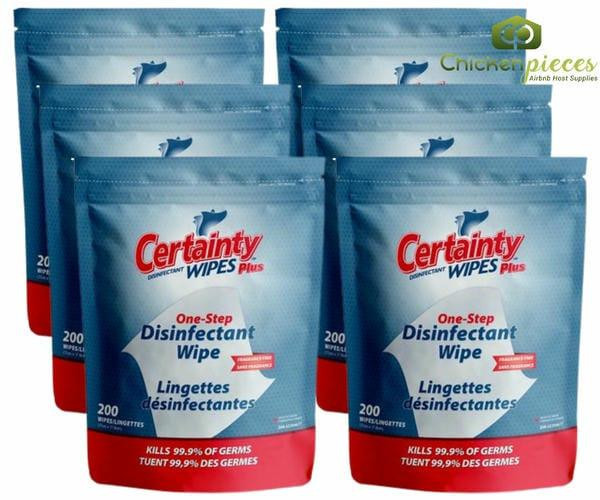
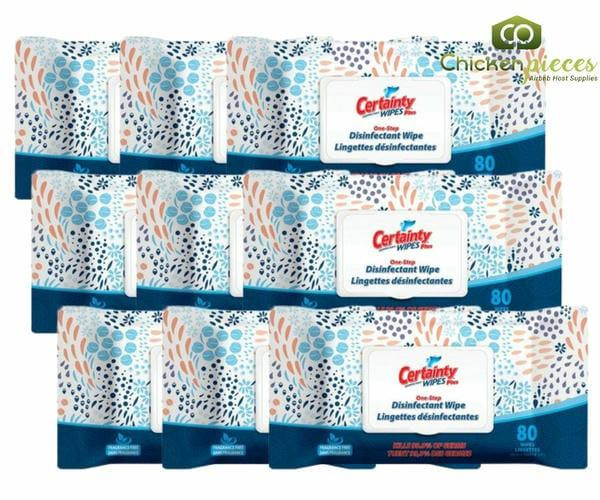
Verified DIN products for commercial cleaning teams across Canada.
People Also Ask
Real questions buyers search before they order — answered straight.
What is the most effective disinfectant for a commercial setting?
There is no single most effective disinfectant for every job, because the best choice depends on the germs you need to kill, the surface, and the contact time you can allow. A product that suits a washroom may be wrong for a food-contact surface. Match the disinfectant to the task and its label claims rather than chasing the strongest one.
What are the main types of disinfectants, and how do they differ?
The main groups are quaternary ammonium (quats), chlorine or bleach-based products, hydrogen-peroxide disinfectants, and alcohols, each with different strengths and contact times. Quats and peroxides are common for general surfaces, while chlorine is often used against tougher germs. Knowing the group helps you pick one suited to your surfaces and the germs you face.
How do you choose a disinfectant for a specific germ, such as norovirus or C. difficile?
Check the label for the specific germs a disinfectant is proven to kill, as products vary in whether they cover norovirus, C. difficile, or other hardy organisms. A product effective against everyday bacteria may not handle a resistant spore-former. When a particular germ is a concern, choose one that names it and follow the stated contact time exactly.
Does a disinfectant containing bleach work better than one without?
A disinfectant with bleach is not automatically better; bleach is strong against many germs but can corrode surfaces, needs rinsing on food-contact areas, and must never be mixed with other cleaners. Bleach-free options such as hydrogen peroxide or quats can be gentler while still effective. Choose based on the surface and the germs rather than assuming bleach is strongest.
How long does a disinfectant stay effective once it is diluted or opened?
Many disinfectants lose strength once diluted, so a made-up solution is usually meant for same-day use rather than storing for weeks. Concentrates and sealed products last longer, but check the label for an expiry or 'use within' guide. Mixing fresh batches and dating your bottles keeps every clean effective.
Why must a surface be cleaned before a disinfectant will work?
A disinfectant works best on an already-clean surface, because grease, food, and soil shield germs and can stop the product working. The correct order is to clean first, then disinfect, and allow the full contact time. Skipping the cleaning step is one of the most common reasons a disinfectant seems to fail.
What Canadian facility operators say
What Canadian operators say about switching to properly registered products.
I used to grab whatever was cheapest. Then our health unit visit went badly. Now every property has a DIN-matched product and a printed protocol. No stress last inspection.
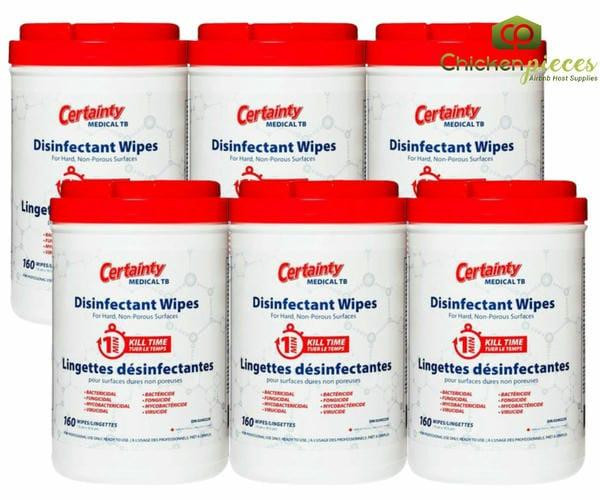
The Certainty wipes cut our turnover time without cutting corners. My cleaners know exactly which wipe for which surface. Training took half a day, not half a week.
We switched from bleach to quat after damaging three stainless tables. The flat packs fit our mobile carts. Inspector asked for DIN proof and we had it ready.
DIN and disinfectant basics: Frequently Asked Questions
The following operator questions are answered with cited sources. Every FAQ links to Health Canada, CFIA, Canada.ca, or another authoritative regulator.
What does DIN actually mean on a Canadian disinfectant label and is it legally required?
Products referenced:
- DIN-verified disinfectant wipes
- HP/DPD registry lookup
Source: Washing vs Sanitizing vs Disinfecting | r/CleaningTips
How do I check if a disinfectant DIN is still active and approved for the organisms I need?
Products referenced:
- DIN verification printout
- SDS sheet binder
- active ingredient register
Source: Search criteria — Drug Product Database online query | Health Canada
Why does my disinfectant label say 10 minutes wet contact time when my cleaner only wipes for 30 seconds?
Products referenced:
- 1-minute quat wipes
- 3-minute hydrogen peroxide wipes
- 10-minute sporicidal wipes for outbreak response
Source: Wiping timing and contact time troubleshooting | r/CleaningTips
Are fragrance-free disinfectant wipes actually less effective for an Airbnb or guest turnover?
Products referenced:
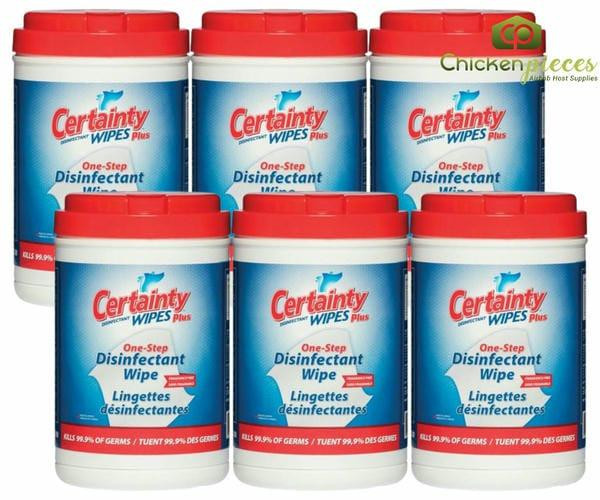
- Certainty Plus Fragrance-Free Disinfectant Wipes
- fragrance-free flat pack wipes
- fragrance-free canister wipes
Source: Scent-free cleaning brands for rentals | Professional Hosts (Facebook)
Should I use a kitchen disinfectant in the bathroom, or do I need a separate DIN product?
Products referenced:
- dual-registered quat wipes
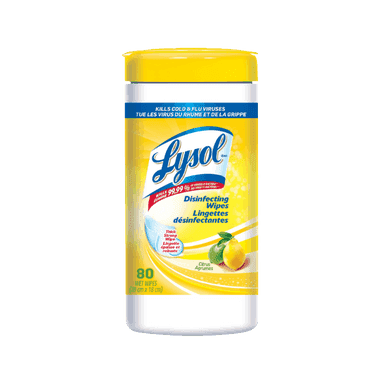
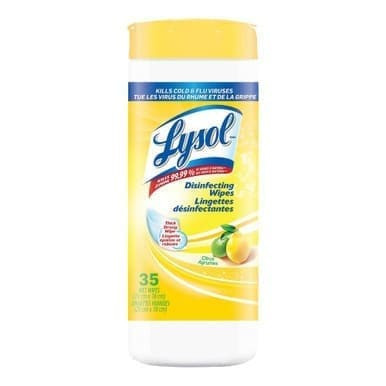
- Citrus Disinfectant Cleaner Wipes
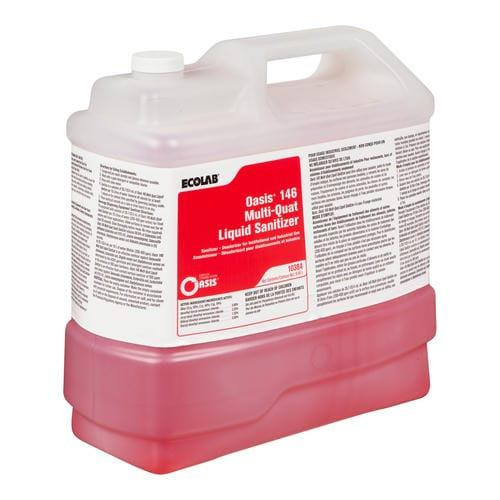
- Ecolab Multi-Quat Oasis 146
Source: Guidance documents on disinfectants: Summary | Health Canada
What is the actual difference between 'sanitizing' and 'disinfecting' on a Canadian product label?
Products referenced:
- DIN-registered disinfectant wipes (bathroom/high-touch)
- food-contact sanitizer (kitchen surfaces)
- Ecolab Multi-Quat Oasis 146
Source: Sanitizing vs disinfecting: when to use which | r/CleaningTips
Do I need a sporicidal disinfectant wipe for a regular Airbnb or facility cleaning, or only for outbreaks?
Products referenced:
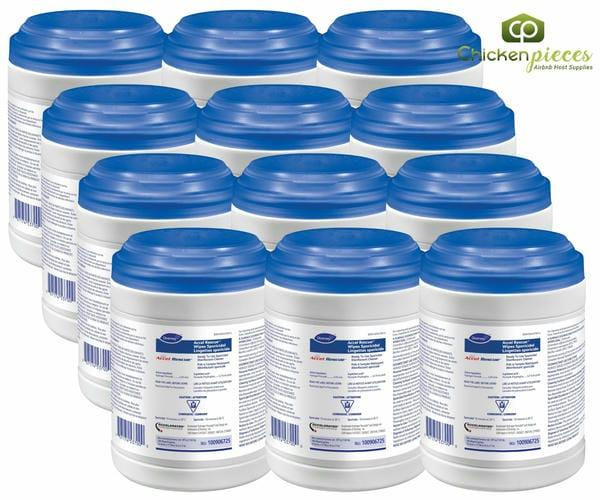
- Diversey Accel Rescue sporicidal wipes (outbreak only)
- standard 1-minute quat wipes (routine)
- hydrogen peroxide wipes (intermediate risk)
Source: Wipes vs sprays for C. difficile control | Contagion Live
Is ready-to-use disinfectant cheaper than concentrate when you include labor and training?
Products referenced:
- Ready-to-use quat wipes
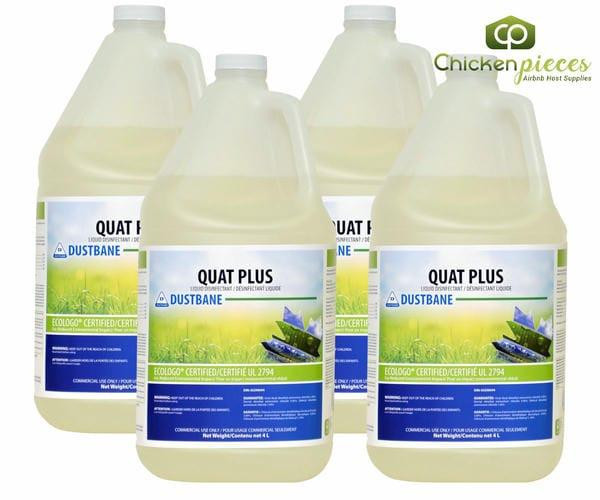
- Dustbane Quat Plus concentrate
- RTU spray bottles
Source: Concentrate vs RTU disinfectant for small business | Quora
How do I keep disinfectant wipes from drying out in a mobile cleaning cart or unheated storage?
Products referenced:
- Certainty Plus Flat Pack wipes (80ct)
- resealable canisters
- mobile cleaning cart
What documentation do I need to keep on file for a Canadian health inspection of my cleaning program?
Products referenced:
- SDS sheet binder
- DIN verification printouts
- training sign-off sheets
- written cleaning protocol template
Source: Hard Surface Disinfectants Monograph (revised) | Health Canada
Related guides from ChickenPieces
Why Operators Buy Disinfectants from ChickenPieces
We stock only DIN-verified products with clear kill claims and realistic contact times.
Verified registrations
Every disinfectant in our catalogue is cross-checked against Health Canada's active registry before we list it. No expired DINs, no grey-market imports.
Format flexibility
Concentrates for central kitchens, wipes for mobile carts, flat packs for tight storage. Match your physical space and your staff workflow.
Plain documentation
We supply SDS sheets, DIN records and protocol templates with bulk orders. No hunting, no guessing, no last-minute scrambling before inspections.
Canadian compliance focus
Our product selection prioritizes Health Canada and CFIA-aligned formulations. You meet Canadian standards, not foreign registrations that raise inspector questions.
Sources & further reading
Get a Disinfectant Quote for Your Properties
Tell us your surface types, turnover frequency and staff size. We will match you to DIN-verified products with contact times your team can actually achieve. Request your quote today.
Request a Quote