

2026 Jul 11th
Airbnb Pantry Stocking List: Bulk Essentials
Pantry consumables are honestly the cheapest five-star lever a host has. Airbnb's amenity guidance already expects you to provide cooking basics — oil, salt and pepper alongside pots and pans — and the coffee station is the one thing guests mention in reviews more than anything else. The trick is to buy the recurring stuff (coffee, tea, oil, condiments, individually wrapped snacks) once a season in bulk, instead of paying retail every time you turn the property over. And stick with sealed, single-serve, or shelf-stable formats that survive between bookings. ChickenPieces.com ships bulk pantry consumables Canada-wide from Calgary, no membership required.
Key takeaways
- Airbnb's cooking-basics amenity expects oil, salt and pepper — so a bare pantry isn't a neutral choice, it's a missing amenity.
- Coffee and tea are the highest-leverage items on the list. Hospitality guides keep saying the same thing: a well-stocked coffee station is one of the most frequently praised details in five-star reviews.
- Sealed and single-serve beats open every time. An opened bag of coffee from three guests ago is worse than no coffee at all.
- Buy the recurring items in bulk once a season. Retail top-ups between every turnover is where hosts quietly lose their margin.
- Split your pantry into three tiers: expected (Airbnb baseline), noticed (drives reviews), and skip (perishables that'll rot).
- Label and date anything you leave out. It costs nothing, and it answers the guest's silent question: "is this safe?"
Why guests choose a rental in the first place
A big part of it is the kitchen. Guests book a rental instead of a hotel partly because they want to cook — and that's why an empty kitchen stings so much. It's not that the guest expected free groceries. It's that they arrived at 9pm, wanted to throw together a simple meal, and discovered there was no oil, no salt, and no way to make one without a supermarket run they hadn't planned on.
That's the whole psychology behind the pantry. You're not feeding your guests. You're removing the small frictions that can turn a great stay into a five-minute complaint in a review.
Tier 1: The expected baseline (Airbnb's cooking basics)
This is the non-negotiable layer. Airbnb's amenity guidance expects hosts to provide cooking basics — described as pots and pans, oil, salt and pepper — and lists dishes and cutlery alongside. If you claim that amenity on your listing, the pantry side of it actually has to be there.
- Cooking oil — a neutral oil in a manageable bottle. Replace it, don't just top it up.
- Salt and pepper — sealed grinders or shakers, refreshed between guests.
- A small core spice set — not a rack of forty jars that'll sit for years. Just three or four that people actually use.
- Sugar and sweetener — single-serve sachets are the honest answer here.
- Dish soap, dishwasher tabs, paper towel — technically cleaning, but guests count them as kitchen.
Tier 2: The coffee station (this is the one that earns reviews)
If you do one thing beyond the baseline, do this. Hospitality guides and host resources keep seeing the same pattern: the coffee station is what shows up in the review. Airbnb itself lists a coffee maker as a recommended amenity rather than a required one — which makes it exactly the kind of "above baseline" detail guests notice and give you credit for.
Guests arrive tired, and they wake up before they're ready to leave the building. Coffee is the first thing they reach for and the first judgement they make about whether you thought about them. A good coffee station is cheap. A missing one is memorable.
Tier 3: The consumables that punch above their price
| Item | Why guests notice it | Buy in bulk? |
|---|---|---|
| Coffee (single-serve / portioned) | First morning. First impression. Most-cited amenity in reviews. | Yes — highest turnover item |
| Assorted tea bags | Costs almost nothing; the non-coffee guest feels considered. | Yes |
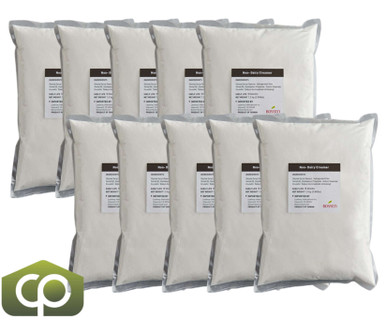
| Shelf-stable creamer | Survives an empty gap between bookings, unlike fresh milk. | Yes |
| Cooking oil | Required by the cooking-basics amenity. If it's missing, that's a complaint. | Yes |
| Condiment sachets (ketchup, mustard, mayo) | Sealed, portioned, never "half-used by a stranger." | Yes — ideal STR format |
| Individually wrapped snacks / crackers | The welcome-basket effect at a fraction of the cost. | Yes |
| Honey / jam (small jars or portions) | Feels generous; shelf-stable; a genuine local-touch option. | Yes |
| Fresh milk, bread, butter, produce | Lovely when it works, but it rots on a vacancy. High-effort, low-reliability. | No — skip or do per-stay |
The rule that saves you the most money: sealed beats open
Every experienced host learns this eventually. A guest won't use a half-empty bag of coffee, a squeezed ketchup bottle, or an opened box of crackers left by a stranger. They'll look at it, decide it's not for them, and buy their own — and quietly note that the kitchen wasn't properly reset.
So the format matters as much as the item. Sealed, portioned and single-serve formats get used. Open packets get ignored and eventually binned by your cleaner. That's not fussiness; it's the difference between a consumable you actually deliver and a consumable you buy twice.
It's also exactly why foodservice packaging suits short-term rentals so well. The hospitality trade solved this problem decades ago, and the solution is portion control — the same sachets, minis and single-serves that hotels and cafes have always used.
Buying it in bulk: the once-a-season pantry order
Here's the shape of a sane restock, whether you run one unit or ten:
- Count your turnovers per quarter, not your guests. That's the real unit of consumption.
- Multiply by a per-turnover allowance: coffee portions, tea bags, condiment sachets, snack packs, and one bottle of oil per x stays.
- Add 20% for the guest who takes the lot home. It happens; price it in rather than resenting it.
- Order it once. Store it in a locked cupboard or an owner's closet, and let your cleaner restock from that, not from a shop.
The savings aren't glamorous, but they're real and they compound quietly across a season. And honestly, the operational win is bigger than the financial one — because "the cleaner had it in the cupboard" is a far more reliable system than "someone remembered to stop at the store."
How it works in Canada
Canadian hosts don't need a warehouse membership or a distributor account to buy foodservice-format consumables. ChickenPieces.com stocks pantry foods, tea & coffee, honey and general grocery lines in bulk and single-serve formats, and ships Canada-wide from our Calgary hub — free shipping on most orders over CA 199.
If your listing already leans into a local story, our Canadian Made range is a straightforward way to stock a pantry guests actually comment on. Canadian honey in a rental in the Rockies does more for a review than another sachet of anything. And if the kitchen itself still needs work, our kitchen category covers the durable side of the equation.

Frequently Asked Questions
The following operator questions are answered with cited sources. Every FAQ links to the community thread, buyer guide, or regulator page it was researched from.
What kitchen supplies do I actually need for my Airbnb?
Source: Source
Should I buy commercial-grade kitchen equipment for my Airbnb?
Source: Source
How many plates and glasses do I need for a vacation rental?
Source: Source
Where can I buy bulk Airbnb supplies in Canada?
Source: Source
What pantry items should I stock for Airbnb guests?
Source: Source
How often should I replace Airbnb kitchen supplies?
Source: Source
What's the best cookware material for Airbnb kitchens?
Source: Source
How much does it cost to stock an Airbnb kitchen from scratch?
Source: Source
References: Health Canada - Food Packaging Materials CFIA - Food Allergen Labelling for Industry.