
2026 Jul 27th
Calculate Restaurant Dinnerware Needs Without Guesswork
A full-service restaurant needs roughly three times the seat count in dinner plates and two-and-a-half times in goblets. Add fifteen percent for breakage, then round up to the nearest case pack to avoid partial boxes sitting in storage.
Calculate Restaurant Dinnerware Needs Without Guesswork
Restaurant operators and kitchen managers need reliable par levels to keep service smooth during rushes without tying up cash in excess inventory.
Key Takeaways
Here is what to know before placing your next dinnerware order.
Start with seat count
Multiply seats by cover turns per service to find pieces in active rotation. Most kitchens run three full sets: one in use, one in wash, one in reserve.
Build in breakage buffer
Glassware breaks faster than melamine. Add ten to fifteen percent for plates, twenty to twenty-five percent for goblets, adjusted for your actual loss history.
Round to case packs
Suppliers ship in fixed quantities. Buying eleven goblets when cases hold twenty-four leaves you short or overstocked. Math should end at whole cases.
Count by position setting
A formal table needs more pieces than casual service. Map each seat's full setting: dinner plate, salad plate, bread plate, water goblet, wine goblet.
Track seasonal swings
Patio season and holiday bookings spike seat turnover. Order extra cases before busy periods rather than rushing mid-service replacements.
Audit quarterly
Actual breakage rates drift. A quarterly count against par levels keeps your buffer honest and catches slow theft or chipping before it costs a full re-order.
How to set par levels from your seat count
Par levels start with simple multiplication, then get refined by your operation's rhythm.
Your seat count is the anchor. A casual restaurant with one-hundred seats and two daily turns puts two hundred covers through. Each cover needs a dinner plate, so base par starts at two hundred. But plates do not move in straight lines. Some are on tables, some are scraping at the dish station, some sit in racks drying. Kitchens that never want to run short keep three full sets: one live, one dirty, one clean and waiting.
The math scales with service style. Fine dining with longer turns and more courses per seat needs more plates per cover because guests see fresh china for each course. A tasting menu restaurant might need six dinner plates per seat to keep service fluid. Quick-serve operations compress this because guests bus their own trays and plates cycle faster through a smaller washing window.
Your historical data sharpens the estimate. Pull a month of service counts and compare to your plate inventory. If you ran out of salad plates twice despite hitting your calculated par, your turnover ratio is tighter than your math assumed. Adjust upward before the next order rather than hoping the rush slows down.
Why glassware needs a deeper buffer
Goblets break more often and disappear in ways plates do not.
Glassware carries risk that melamine and ceramic do not. Thermal shock from ice to hot rinse cracks stems. Staff bump racks in tight dish pits. Guests pocket souvenirs. Your buffer for goblets should run twenty to twenty-five percent above plate levels, not the ten to fifteen percent that works for flatware and china. This is not waste; it is the cost of keeping every seat served during a Friday push.
The shape of your glassware matters too. Banquet goblets with elegant stems look sharp on white tablecloths but the stem is a failure point. Shorter stems or stemless options reduce breakage but change the guest perception. Most full-service restaurants accept the trade-off and budget the buffer accordingly. Count your stemware separately from tumblers and highballs since loss rates differ by shape and use case.
Audit your glassware monthly, not quarterly. The pace of loss is faster and harder to spot than plate shortages because a single missing goblet gets replaced from backup without anyone noting the gap. By the time you notice the backup shelf is bare, you are subbing water glasses for wine service. Track by the case, not by the piece, to keep the pattern clear.
How to round orders without overbuying
Suppliers ship in fixed case quantities, and partial cases cost more per piece.
Case-pack math sounds simple until you layer in your par level, breakage buffer, and minimum order thresholds. A calculated need of one hundred and forty-seven dinner plates becomes one hundred and sixty-eight when you add fifteen percent buffer. If plates come twenty-four per case, you need seven cases for one hundred and sixty-eight pieces. That leaves you with one hundred and sixty-eight, twelve pieces above your buffered target. Those twelve are your first replacement stock before the next order cycle.
The rounding decision gets harder near case boundaries. A need of one hundred and forty-five pieces with a fifteen percent buffer hits one hundred and sixty-six, which rounds to seven cases. But if your usage pattern shows steady growth, the eighth case might cover expansion without a rush re-order. The wrong move is buying six cases and running short. The expensive move is buying eight and storing two cases for a year. Split the difference by watching your growth slope.
Storage space is the hidden cost of case-pack rounding. A case of melamine plates is light but bulky. Glassware cases stack higher but weigh more. Before you round up, confirm your dry storage can hold the extra without crowding your active stock. A cluttered shelf leads to breakage that your buffer was supposed to prevent.
When melamine outperforms ceramic for volume
High-turn operations need durability that traditional china cannot match.
Melamine dinnerware has earned its place in banquet halls, cafeterias, and high-volume casual dining not because it looks cheap but because it survives the cycle. A ceramic plate lasts until it cracks; a melamine plate lasts until it is lost or deeply scratched. For operations running two hundred covers a night, that durability translates to fewer mid-service replacements and lower lifetime cost even if the upfront order looks comparable.
The visual quality gap has closed. Modern melamine carries marble patterns, checkered rims, and matte finishes that read as intentional design choices rather than budget compromises. Guests at a buffet or patio service rarely register the material unless they lift the plate and feel the weight difference. For front-of-house positions where presentation still matters, use melamine for backup and high-turn sections, ceramic for VIP and tasting rooms.
Temperature limits matter. Melamine does not go under heat lamps or into ovens. Train your line on the boundary and label storage clearly. The failure mode is not breakage but warping, which happens slowly enough that you will spot it during plating before it reaches the guest. Inspect weekly and rotate stock so older pieces see the hardest use first.
How table style drives piece count per seat
A full formal setting multiplies your needs beyond the seat count.
Map your table before you order. A basic casual setting needs a dinner plate and a single goblet. Add a salad plate and you are at two pieces. Formal service brings bread and butter plates, charger plates, separate red and white wine goblets, water goblets, and sometimes a champagne flute. Each position setting multiplies your par level independently because each piece has its own breakage rate and wash cycle timing.
The position map also guides your case-pack mix. If you need one hundred dinner plates, fifty salad plates, and fifty bread plates for the same seat count, you are buying different case quantities for each. Do not assume one case count covers all. Salad plates often pack forty-eight to a case while dinner plates run twenty-four. Your rounding math applies separately to each category, which can leave you with mismatched surplus if you are not careful.
Specialty service adds complexity. Tasting menus need plates for each course timed to the kitchen's fire pace. Shared-plate restaurants need more small plates and fewer large ones. Build your position map from the menu out, not from standard settings in. A restaurant serving only shared appetizers and mains needs a different ratio than one running full French service.
When to trigger your next dinnerware order
Waiting until shelves are bare costs more than keeping a clean par sheet.
The reorder point sits above zero. When your reserve stock drops to one full rotation set, you have enough buffer to receive and inspect a new shipment before the active stock runs out. For most restaurants ordering monthly, this means checking par levels mid-cycle and flagging categories that are trending low. Do not wait for the monthly count if your water goblet shelf looks thin after a busy weekend.
Lead time varies by product and season. Standard banquet goblets in common sizes usually stay in stock. Specialty shapes or large case orders might need longer fulfillment. Your supplier can confirm availability but should not promise speed. Build two weeks of buffer into your reorder timing for non-standard items, more if you are ordering ahead of holiday season when warehouse volume spikes.
Document every order against your par sheet. Over time you will see which categories move faster than expected and which sit in storage. Adjust your base par levels annually, your buffer percentages quarterly, and your reorder timing monthly. The goal is neither minimal inventory nor maximum safety stock but a predictable flow that keeps service smooth without tying up capital in unused cases.
Dinnerware and glassware par levels by service type
Use this table to benchmark your starting par before adding your breakage buffer and rounding to case packs.
| Service style | Pieces per seat | Goblets per seat | Typical buffer |
|---|---|---|---|
| Casual quick-serve | 2.0 dinner plates | 1.5 water goblets | 10% plates, 15% glass |
| Casual full-service | 2.5 dinner plates | 2.0 banquet goblets | 12% plates, 20% glass |
| Upscale dining | 3.0 dinner plates | 2.5 banquet goblets | 15% plates, 22% glass |
| Fine dining | 3.5 dinner plates | 3.5 wine goblets | 15% plates, 25% glass |
| Banquet / catering | 3.0 dinner plates | 2.5 water goblets | 10% plates, 18% glass |
| Tasting menu | 5.0+ plates total | 3.0 varied stems | 20% all categories |
| Patio / seasonal | 2.0 melamine plates | 2.0 polycarbonate | 15% all, higher wind loss |
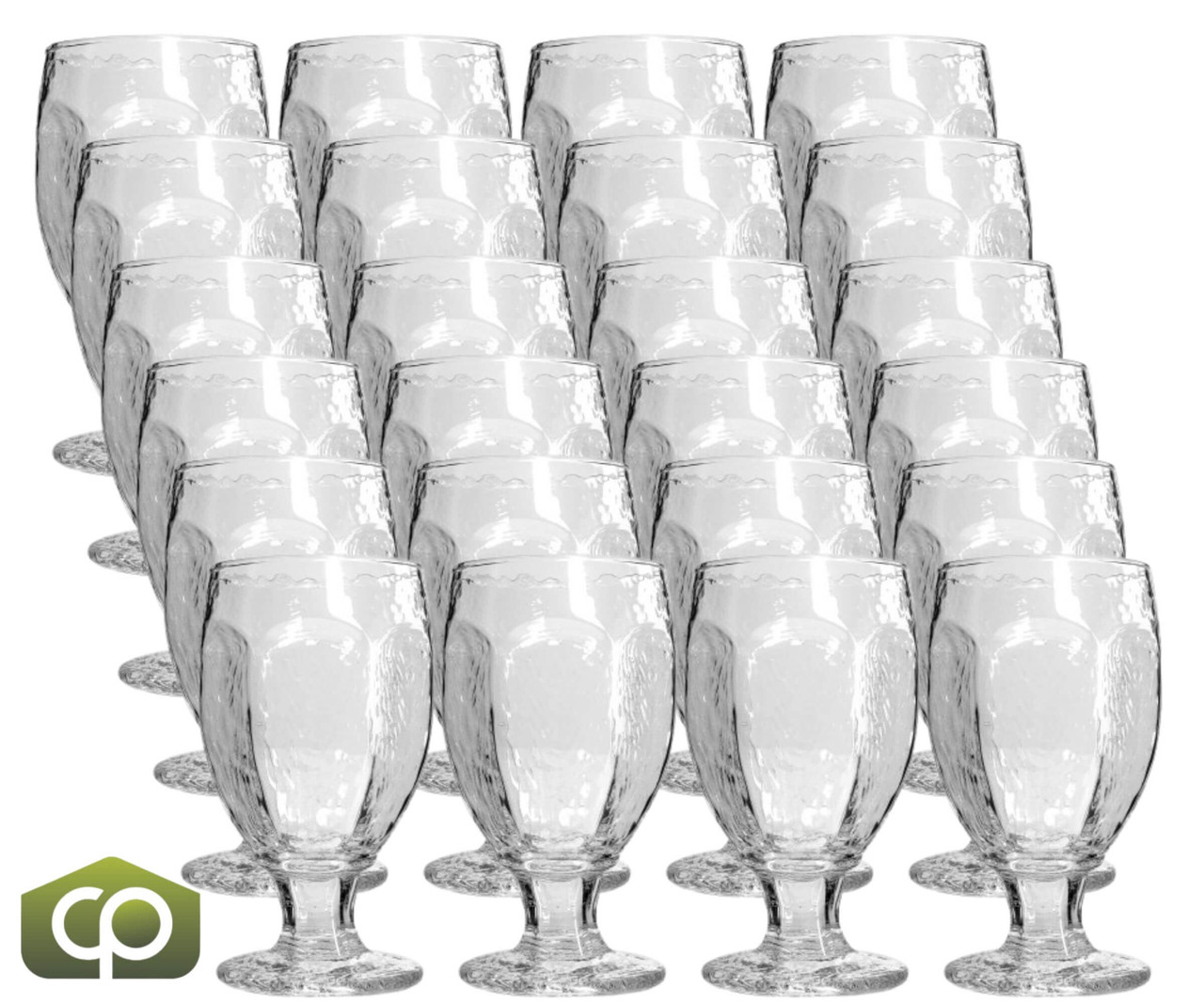
Banquet goblets and melamine dinnerware
Browse case-packed glassware and durable melamine plates sized for volume foodservice.







People Also Ask
Real questions buyers search before they order — answered straight.
What is the difference between tableware and dinnerware?
Dinnerware means the plates, bowls, and mugs guests eat from, while tableware is the wider term that also covers glassware, cutlery, and serving pieces. When you plan quantities, count dinnerware per place setting first, then layer in the glassware and serving dishes each table needs. Splitting your order this way stops you from over- or under-buying any one category.
What are the main types of dinnerware?
The common types are porcelain, stoneware, bone china, and melamine, each with a different balance of durability, weight, and look. Stoneware and melamine hold up best in high-turnover settings, while porcelain and bone china suit a more formal table. Deciding on the type before you count sets keeps your whole order consistent and easy to restock.
What is the most durable dinnerware for everyday use?
For everyday, high-traffic use, tempered glass and commercial-grade stoneware resist chips and thermal shock better than delicate china. Melamine is nearly unbreakable, which makes it a favourite for patios, poolside, and family-heavy venues. Buying a durable line plus a small stock of spares means a few breakages never leave you short mid-service.
Porcelain or stoneware dinnerware — which is better for a busy venue?
Porcelain is lighter, thinner, and takes a crisp white finish, so it reads as more upscale, while stoneware is thicker and more forgiving of knocks. For a busy venue with fast table turns, stoneware usually survives longer, whereas porcelain suits calmer, formal service. Many operators run stoneware day to day and keep a porcelain set for special events.
Which dinnerware is chip resistant?
Fully vitrified tempered glass, commercial stoneware, and melamine are the most chip-resistant options for demanding use. Look for pieces described as vitrified or rolled-edge, as the reinforced rim is where most chips start. Chip-resistant lines cut your replacement rate, so your working count stays stable through busy weeks.
Are melamine plates microwave safe?
No — melamine should not go in the microwave, as heat can cause it to crack or leach, so keep it to cold service, patios, and buffets. If your venue reheats plated food, choose a microwave-safe material such as stoneware, porcelain, or tempered glass instead. Matching the material to how the plate is actually used avoids damaged stock and safety issues.
What Canadian restaurant operators say
Here is what operators say about planning stock with case-pack math.
I used to guess at goblet orders and always had either too many or not enough. The fifteen percent breakage buffer and case rounding method finally got my shelves level. No more mid-week emergencies.
Switching to melamine for our patio cut replacement costs in half. The checkered rim plates still look sharp on Instagram, which our front house manager cares about more than I do.
We run a banquet hall and the twenty-five percent glassware buffer was higher than I expected, but it matched our actual loss rate. First time my counts have stayed accurate through wedding season.
Stock planning: Frequently Asked Questions
The following operator questions are answered with cited sources. Every FAQ links to Health Canada, CFIA, Canada.ca, or another authoritative regulator.
How many plates, bowls, cups, and silverware should I buy for my restaurant or cafe?
Source: Source
How many plates per seat does a restaurant actually need?
Source: Source
How often do plates and glasses break in a restaurant, and how should I budget for breakage?
Source: Source
How much of my restaurant budget should go into dinnerware?
Source: Source
How do I size portions so the plate looks full without overserving?
Source: Source
Should I use melamine or ceramic plates in my restaurant?
Source: Source
What is the standard number of dishes and silverware needed at a sit-down restaurant?
Source: Source
What food-safety standards apply to commercial dinnerware in Canada?
Source: Source
Related guides from ChickenPieces
Why operators order tableware through ChickenPieces
We supply volume foodservice with case-packed stock and clear specifications.
Case-pack clarity
Every product lists exact case quantities so your par-level math works without guessing. No hidden inner packs or broken-case fees.
Volume focus
We serve restaurants, hotels, and institutional kitchens that buy by the case, not by the piece. Our catalog is built for your order size.
Specification detail
Dimensions, capacities, and pack counts are verified against manufacturer data. You order once and receive what you planned for.
Compliance assured
All food-contact products meet Health Canada requirements for commercial foodservice. We do not list items that fail CFIA material safety standards.
Sources & further reading
Request a quote for your par-level order
Send us your seat count and service style. We will run the case-pack math and send back exact case quantities for each category. No minimums, no speed promises, just accurate numbers.
Request a QuoteReferences: Health Canada - Food Chemical Contaminants CFIA - Food Safety for Industry.
Authoritative References