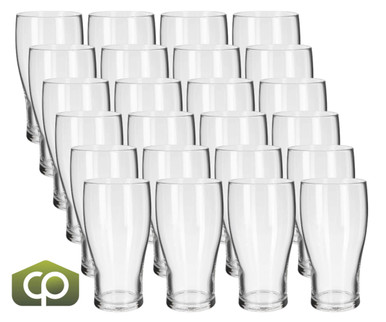
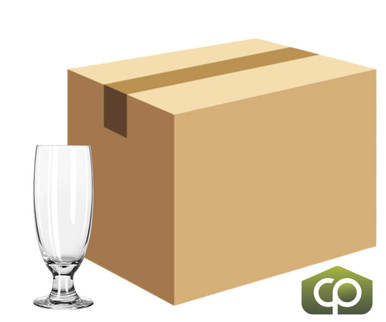
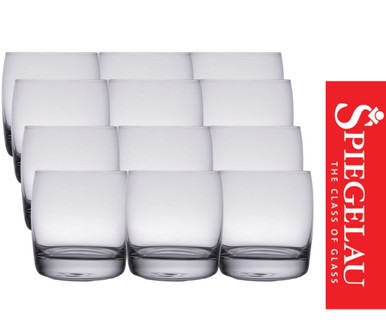
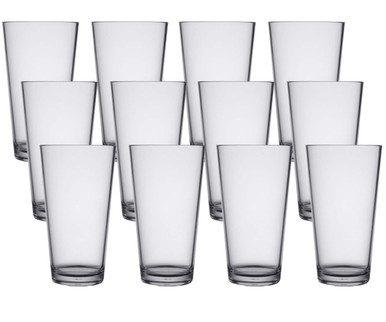
DuraTuff is a Libbey heat treatment applied only to the top of pressed glasses like Gibraltar, so they resist thermal and mechanical shock but still break into a few large pieces. Rim-tempered means the same idea focused on the rim. Safedge is not a treatment at all. It is a Libbey guarantee to replace a glass whose rim chips, and it never covers breakage.
At a Glance
Key Takeaways
DuraTuff is a top-band treatment
Libbey heats only the upper portion of pressed tumblers and stemware. It is not full tempering.
HT means heat-treated blown glass
The same idea on blown glass. Libbey adds HT to the item number, like the 1639HT pint.
Safedge is a guarantee
Chipped rim, and on some stems a chipped foot, gets replaced or refunded through your dealer. Breakage does not.
Fully tempered breaks small
Stronger on impact, but it fails in many small shards. Most Libbey glass is annealed on purpose.
Thermal shock breaks more glass than drops
Ice in a warm glass and hot racks with cold glasses are the usual culprits.
Crystal and Tritan are materials
Spiegelau crystal glass and Libbey Infinium Tritan solve different problems than a treated rim.
Interactive
Which glass treatment fits your bar?
Tap a term to see what it does and how it fails. The diagrams below mark the treated band, the Safedge zones and the break pattern for that term. Then pick what you pour and how you wash, and the selector points you to the treatment and the cases that suit that setup.
1. Compare the treatments
Exploded cutaway of a Gibraltar-style rocks tumbler
Rim
The lip that takes knocks in the rack and at the tap.
Treated upper portion
Libbey applies DuraTuff to roughly the top third of pressed glasses like Gibraltar.
Untreated sidewall
Below that band the body stays annealed.
Heel and base
The heavy sham that gives a Gibraltar its weight. It is not part of the DuraTuff band.
Heat-treated blown glasses use the same idea on the upper portion, marked HT on the item number. No treatment makes a glass unbreakable.
2. Match a glass to your bar
Treatment facts come from Libbey and Spiegelau published guidance cited in this post. No glass is unbreakable, and none of the guarantees cover breakage.
Methodology
How we put this guide together
We read Libbey's foodservice explainer on tempered vs partially tempered glass, the Libbey Care + Use brochure, the Libbey care and handling page, Libbey's international catalogue pages on DuraTuff, heat treatment, Safedge and SheerRim D.T.E., Libbey's Infinium material sheets and Spiegelau's own care and lead-free statements on November 16, 2026. We pulled Google People Also Ask and autocomplete questions at the Canadian setting and read bartender and kitchen threads on Reddit and Quora about glasses that chip, crack or break in the dish pit. Every product below was checked live in our catalogue the same day.
DuraTuff
What is Libbey DuraTuff?
DuraTuff is Libbey's name for a thermal after-process on pressed glass. After a tumbler or stem is made, Libbey heats the upper portion of the glass and cools it in a controlled way. Libbey's catalogue says the treatment covers roughly the upper third of the glass and runs at a lower temperature than tempering. The goal is more resistance to thermal and mechanical shock in the part of the glass that hits the rack, the tap and the next glass over.
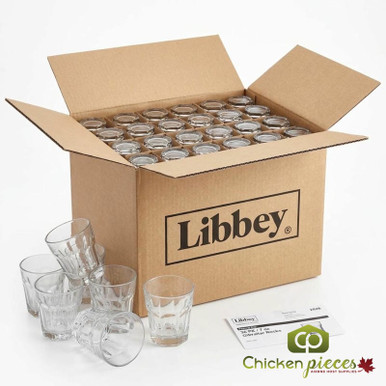
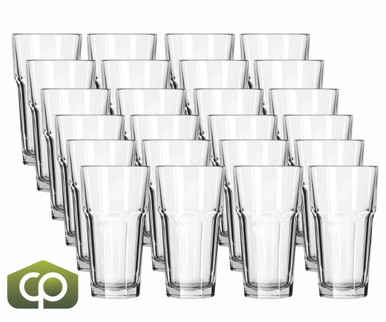
Libbey lists Gibraltar, Winchester, paneled tumblers and Restaurant Basics among its DuraTuff lines, and it embosses the DuraTuff name on DuraTuff products. If you have poured from a Gibraltar rocks glass in a busy bar, you have used it.
Blown glasses get a similar treatment called heat treating. Libbey describes it as heating and rapid cooling on the upper portion of blown tumblers and stemware, and it recommends it for fast service cycles. Those item numbers end in HT, which is why the 1639HT pint carries the letters.
Field tip: Check old stock for the embossed DuraTuff name before you mix it with a new case. Libbey marks DuraTuff products that way, so it is the quickest way to know what you have.
Tempering
Rim-tempered vs fully tempered vs annealed glass
Most Libbey glassware starts as annealed glass. Annealing cools the glass slowly so it carries no built-in tension. When annealed glass breaks, Libbey says it comes apart in a few large pieces, which keeps cleanup simple.
Fully tempered glass goes the other way. It is heated past the strain point and cooled fast. Libbey puts its impact strength at 2 to 4 times that of annealed glass. The tradeoff is all that stored tension. When a fully tempered glass fails, it fails violently and throws small shards across the floor and into ice bins. Anyone who has burned an ice well after a break knows what that costs a shift.
Rim tempering sits in between. Libbey calls it partial tempering and describes it as putting the strength at the rim, the part most likely to get damaged, while the rest of the glass stays annealed. DuraTuff and heat treatment are Libbey's own versions of that idea.
How annealed glass breaks, versus fully tempered glass
Annealed or rim-treated
A few large pieces
Fully tempered
Many small shards
Annealed or rim-treated
Libbey says the glass comes apart in a few large pieces, which keeps cleanup simpler.
Fully tempered
Stronger on impact, at 2 to 4 times annealed glass, but it fails in many small shards that can travel into ice bins.
DuraTuff, heat treatment and rim tempering keep the safer annealed break pattern on purpose. That is one reason most Libbey glass is not fully tempered.
Guarantees
What Safedge, Safedge Rim and Foot and SheerRim D.T.E. mean
These three names are guarantees, and people mix them up with treatments all the time. Libbey's wording is simple. If the rim of a glass covered by the Safedge guarantee chips, Libbey will replace or refund the price of that glass when it is returned to the dealer or distributor it was bought from. Safedge Rim and Foot extends that to a chipped foot on stemware like the Embassy 3725 pilsner.
SheerRim D.T.E. (Dura Temp Edge) covers glasses with a beadless crack-off rim that is polished after it is cracked off. Libbey lists Cidra in that family, so the Cidra 13 oz rocks glass gives you a thinner rim than a Gibraltar with a chip guarantee behind it.
Libbey states the same limit on every one of these: the guarantees do not cover breakage. A cracked bowl, a snapped stem or a glass that shattered in the machine is breakage.
Exploded Embassy-style pilsner, where Safedge applies
Safedge Rim
If the rim chips, Libbey replaces or refunds the glass when it is returned to the dealer.
Safedge Rim and Foot
The same promise, extended to a chipped foot on stemware such as the Embassy pilsner.
Bowl and stem
A cracked bowl or a snapped stem is breakage. The guarantee does not cover it.
SheerRim D.T.E. is also a rim-chip guarantee, used on beadless crack-off rims such as Cidra. None of these names is a heat treatment.
Field tip: Keep a labelled bin for chipped guaranteed glasses instead of tossing them. The claim runs through the dealer you bought from, so you need the glass back in hand.
Comparison
DuraTuff vs rim-tempered vs Safedge vs tempered vs crystal
Why glasses crack in the dish pit, and how to stop it
A treated rim helps, but it does not beat physics. Libbey's Care + Use guide calls sudden temperature change thermal shock and lists the habits that cause it: cold water or ice going into a warm glass, and glasses that just held ice going straight into the machine. Bartenders on Reddit describe the result exactly, a clean ring that pops off near the rim of a rocks glass with no knock at all.
The same Libbey guide covers the mechanical side. Do not pick glasses up by the rim in bunches. Never scoop ice with a glass. Do not stack glasses that are not designed to stack, keep glasses from touching in overhead racks, use the right rack for stems and tumblers, and check machine temperature twice a day. Pull abraded, cracked or chipped glasses from service before they fail in a guest's hand.
Cloudy glasses are a separate problem from breakage. If glasses come out hazy, run the 10-second vinegar test to tell filming from etching before you change detergent.
Field tip: Keep enough stock that clean glasses can sit a few minutes before service. Libbey recommends an adequate supply so washed items do not go straight back into use, and our glassware par calculator helps you size it.
Materials
When crystal glass or Tritan beats a treated rim
Spiegelau makes lead-free crystal glass. Spiegelau says it has produced only crystal glass without lead oxide as a principal ingredient since 2015, and that most of its glasses are dishwasher safe, tested to EN 12875 for at least 1,000 cycles with no visible change to shine or clarity. Pieces packed as handwash only, or with no care instructions, should be hand washed. The Spiegelau Soiree rocks glass is the pick when the pour is the point and staff will rack it with care.
Libbey Infinium is not glass at all. Libbey describes it as 100% BPA-free Tritan copolyester that is highly resistant to impact, cracking and shattering and handles temperatures from boiling to freezing. Libbey's washing guidance is a 140 to 160°F (60 to 71°C) wash and a 180 to 194°F (82 to 90°C) rinse, and it does not recommend high-acid citrus drinks in standard Infinium. For pools, patios and arenas, the Infinium 16 oz pint removes the broken-glass problem entirely.
Not fully tempered. Libbey describes DuraTuff as a thermal after-process for pressed tumblers and stemware that is done only on the upper portion of the glass. Libbey heats that top band at a lower temperature than full tempering, which raises resistance to thermal and mechanical shock while keeping the safer break pattern of annealed glass. That is why a DuraTuff Gibraltar rocks glass tends to break into a few large pieces instead of a spray of small shards.
Is heat-treated glass the same as tempered glass?
No. On Libbey glassware, heat-treated means a secondary heating and rapid cooling on the upper part of a blown glass, the area that takes the most abuse. Libbey marks those item numbers with HT, like the 1639HT pint. Fully tempered glass is heated past its strain point and cooled fast across the whole piece. Libbey says that makes it 2 to 4 times stronger on impact but adds so much tension that it breaks violently when it finally goes.
What does rim tempered mean on a glass?
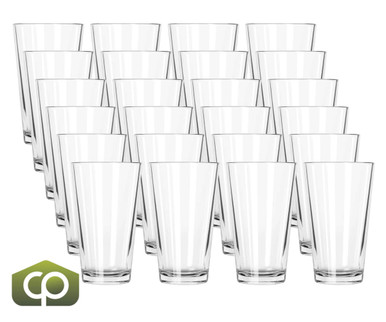
Rim tempered means the strengthening is concentrated at the rim, the part of a glass that gets knocked most often against taps, racks and other glasses. Libbey calls it partial tempering and describes it as a middle ground: the rim gets extra strength, and the body stays annealed so a failure stays small. You will see rim-tempered on many Libbey Restaurant Basics mixing glasses and coolers.
Is commercial glassware tempered?
Some is, most is not. Libbey says the majority of its glassware is annealed, slowly cooled so it carries no built-in tension. Many of its bar and restaurant lines then get a treated top, either DuraTuff on pressed glass or heat treatment on blown glass. Fully tempered drinkware exists from other makers. It takes more impact, but it breaks into many small pieces, which is a real problem near an ice bin or a salad bar.
Does the Libbey Safedge guarantee cover broken glasses?
No. Safedge is a guarantee against chips, not breakage. Libbey states that if the rim of a glass covered by Safedge chips, it will replace or refund the price of that glass when it is returned to the dealer it was bought from. The Safedge Rim and Foot version adds chips on the foot of stemware. A snapped stem, a cracked bowl or a glass broken in the dish pit is breakage, and none of the Libbey guarantees cover breakage.
Why do rocks glasses crack around the rim for no reason?
There is almost always a reason, and it is usually thermal shock or old damage. Libbey warns against putting ice or cold water into a warm glass, running glasses through the machine right after they held ice, scooping ice with a glass and stacking glasses that are not designed to stack. A glass that already has abrasion or a small chip at the rim fails much more easily. Pull abraded or chipped glasses from service, and let glasses come back to room temperature before ice goes in.
Is Libbey glassware dishwasher safe?
Libbey foodservice glass is made for commercial dish machines, and Libbey marks each product with a care icon such as Dishwasher Safe or Handwash Only, so check the case. The bigger risk is temperature swings, not the machine. Libbey says to let glassware reach room temperature before washing, dump ice first, use the right racks for stems and tumblers, and check the machine temperature twice a day. For cloudy glasses after washing, our vinegar test for filming vs etching sorts out the cause.
Is Libbey DuraTuff microwave safe?
DuraTuff is a strength treatment, not a microwave rating. Libbey shows microwave safety per product with a Microwave Safe icon and states plainly that glass mugs are not safe for the microwave. Bar tumblers like Gibraltar are built for cold drinks and the dish machine. If you serve hot drinks in glass, Libbey recommends preheating the glass with warm water before you pour.
Are Libbey glasses lead free?
Libbey says its products are considered leadless, non-toxic and safe for food contact, and that they meet FDA lead and cadmium guidelines and California Proposition 65 at the time of sale. Its glass is soda lime glass, which gets its clarity without lead, cadmium or barium. Libbey also notes that decoration or alteration by a third party can void that compliance statement, so ask your decorator about printed logos.
Is it safe to use chipped glassware?
No. A chip is a cut risk for guests and staff, and it is the weak point where the next crack starts. Libbey tells operators to remove abraded, cracked or chipped items from service. If the glass carries a Safedge or SheerRim D.T.E. guarantee, keep the chipped piece and return it to the dealer you bought it from for a replacement or refund.
How can you tell if a drinking glass is tempered?
The reliable way is the maker's spec, not the look of the glass. Libbey embosses the DuraTuff name on DuraTuff products and adds HT to heat-treated item numbers. Fully tempered glass gives itself away when it breaks: it goes into many small pieces, while annealed and rim-treated glass breaks into a few larger ones. If a case only says dishwasher safe, ask for the treatment before you buy for a busy bar.
How do you calculate shipping on bulk orders?
We calculate shipping on live carrier rates at checkout, not on flat or subsidized tiers. Every order is priced against real LTL, parcel, or pallet-freight quotes from our Calgary warehouse to your dock. That means you never absorb hidden shipping costs into product margins - what we charge is what the carrier charges us, plus a small handling pass-through. For bulk and pallet orders this typically runs 15–25% lower than competitors who bake shipping into their unit prices, because the rate is transparent and tied to the actual shipment weight and distance.
Why Partner With ChickenPieces
Bars, restaurants, hotels and caterers buy Libbey and Spiegelau glassware from us by the case. Chicken Pieces is a Calgary foodservice, hospitality and medical supply company founded in 2018, with about 20,000 products in the online catalogue. We supply glassware, kitchen supplies, pantry ingredients and medical nutrition. We are not a poultry or meat distributor.
Local Calgary Support
Real people in Calgary answer the phone and check case packs, capacities and stock for you.
Wide Product Range
Glassware, bar supplies, disposables, janitorial and pantry staples from one supplier.
No Membership Needed
Order by the case or the pallet with no membership and no minimum order quantity.
Food Safe Focus
We write for operators working under CFIA and Health Canada aware food safety plans.