What Is Par-Cooking? — Canada Guide

2026 Oct 10th

What Is Par-Cooking? — Canada Guide

Canadian-Owned No MOQ Ships Canada-Wide Calgary Warehouse Food Safe Focus
Commercial Kitchen Method
AK

Amani Khehra

Chicken Pieces · Calgary, AB

What Is Par-Cooking?

Cook it partway now, finish it at service. What par-cooking is, why kitchens do it, the method on the line, and the potatoes, pasta, rice, oils and seasonings behind it.

Quick Answer

Par-cooking means partly cooking food during prep, stopping before it is done, then finishing it to order at service. Kitchens do it for speed, consistency and texture, such as double-cooked fries. Par-cooked food is cooled fast and held cold, never left sitting warm.

At a Glance

Key Takeaways

Partly cooked on purpose

Par-cooking cooks food partway during prep and stops before it is done.

Finished to order

The last part of the cook happens at service: fry, grill, sauté, roast or reheat until fully cooked and hot.

“Par” means partial

It covers par-boiling, par-frying and par-baking.

Speed and consistency

The long part of the cook is done in prep, and every portion starts the finish from the same point.

Cool fast, hold cold

Stop the cook, cool quickly, cover, label, date and hold cold. Never leave it sitting warm.

Not cook-and-reheat

Par-cooked food is deliberately unfinished. It is not a full cook that gets reheated later.

Definition

What par-cooking is

Par-cooking means partly cooking food during prep, stopping before it is done, then finishing it to order during service. “Par” comes from “partial.” Par-boiling, par-frying and par-baking are all forms of it.

The food leaves prep tender at the edges but still firm in the centre. It is cooled, held cold, and only finished when the ticket comes in.

Why

Why commercial kitchens par-cook

  • Speed at service. The long part of the cook is done in prep, so the finish on the line is short.
  • Consistency. Every portion starts the finish from the same point, so plates come out the same.
  • Better texture. Classic double-cooked fries are par-cooked first and finished crisp later. Dense vegetables like potatoes and carrots finish evenly.
  • Batch prep. Banquets and catering can prep large batches ahead and finish them in waves.
Field tip: Par-cook in batches sized to what the line can actually finish during service. Unused par-cooked food goes back into cold holding, labelled and dated.
Method

How to par-cook on the line

  1. Cook partway. Boil, fry or bake until tender at the edges and still firm in the centre.
  2. Stop the cook quickly. Drain and spread out on sheet trays, or move vegetables into an ice bath.
  3. Cool fast, then hold cold. Cover, label and date, then hold cold.
  4. Finish to order at service. Fry, grill, sauté, roast or reheat until fully cooked and hot.
Field tip: Follow your site’s food-safety plan for cooling and cold-holding times and temperatures. This guide does not replace it.
On the Line

Common par-cooked foods

Par-cooking works best on foods that take a long time to cook through or need a two-stage texture:

  • Potatoes and fries for double-cooked fries, roast potatoes and home fries.
  • Dense vegetables such as carrots, broccoli stems and green beans.
  • Pasta, cooked partway and finished in the sauce or a quick reheat.
  • Rice and grains for fast finishing in batches.
  • Pizza and bread bases, par-baked and finished with toppings.
Clarity

What par-cooking is not

  • Not a full cook and reheat. Par-cooked food is deliberately unfinished.
  • Not just blanching for colour. Par-cooking vegetables often uses the same boil-and-chill steps as blanching and shocking, but the goal is a head start on the cook.
  • Not something to leave sitting warm. Par-cooked food must be cooled fast and held cold, or finished right away.
  • Not a shortcut for raw meat. Par-cooking raw meat for later finishing needs a proper food-safety plan. This guide covers potatoes, vegetables, pasta, rice and bread.
Comparison

Par-cooking vs blanching vs full cook-and-reheat

FactorPar-cookingBlanchingFull cook and reheat
GoalHead start on the cook; finish to orderColour, texture or prep (e.g. peeling)Food is fully cooked in advance
Done at prep?Partly cookedBrief boil, then stoppedFully cooked
CoolingCool fast, hold coldUsually shocked in ice waterCool fast, hold cold
At serviceFinish until fully cooked and hotUsed in a later cook or servedReheated
Typical foodsPotatoes, fries, dense vegetables, pasta, rice, par-baked basesGreen vegetables, some fruitBatch dishes

Whichever method you use, follow your site’s food-safety plan for cooling and holding.

Shop the Range

Pantry staples for par-cooking

Idahoan Fresh Cut Hash Browns Potatoes, 2.12 lbs (6/Case)

Potato product for breakfast and home-fry service.

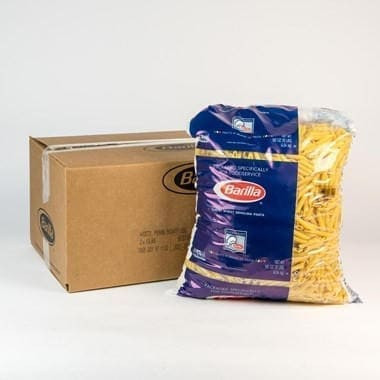
Barilla, Penne Rigate Pasta 10 lb (2/Case)

Bulk penne for par-cooking and finishing in sauce.

Browse Grocery →

FAQ

Frequently asked questions

What does par-cooking mean?

Partly cooking food during prep, stopping before it is done, then finishing it to order during service. "Par" comes from "partial."

Why do restaurants par-cook food?

For speed at service, consistent portions, better texture such as double-cooked fries, and batch prep for banquets and catering.

What foods are commonly par-cooked?

Potatoes and fries, dense vegetables such as carrots, broccoli stems and green beans, pasta, rice and grains, and par-baked pizza and bread bases.

How do you par-cook on the line?

Cook partway until tender at the edges and firm in the centre, stop the cook quickly, cool fast, cover, label and date, hold cold, then finish to order until fully cooked and hot.

How do you stop the cook?

Drain and spread the food out on sheet trays, or move vegetables into an ice bath.

Is par-cooking the same as cooking and reheating?

No. Par-cooked food is deliberately unfinished. A full cook-and-reheat cooks the food completely in advance.

Is par-cooking the same as blanching?

Not quite. Par-cooking vegetables often uses the same boil-and-chill steps, but blanching is usually for colour or texture, while par-cooking gives a head start on the cook.

Can par-cooked food sit warm until service?

No. Par-cooked food must be cooled fast and held cold, or finished right away.

Can you par-cook raw meat?

Par-cooking raw meat for later finishing needs a proper food-safety plan. This guide focuses on potatoes, vegetables, pasta, rice and bread.

How do you calculate shipping on bulk orders?

We calculate shipping on live carrier rates at checkout, not on flat or subsidized tiers. Every order is priced against real LTL, parcel, or pallet-freight quotes from our Calgary warehouse to your dock. That means you never absorb hidden shipping costs into product margins — what we charge is what the carrier charges us, plus a small handling pass-through. For bulk and pallet orders this typically runs 15–25% lower than competitors who bake shipping into their unit prices, because the rate is transparent and tied to the actual shipment weight and distance.

Why Partner With ChickenPieces

Canadian foodservice supplies for par-cook prep: potatoes, pasta, rice, frying oils, salt and seasonings. Chicken Pieces is a Calgary foodservice and hospitality supply company founded in 2018. We supply pantry ingredients and kitchen supplies for this work. We are not a poultry or meat distributor.

Local Calgary Support

Based in Calgary, we understand regional operator needs and ship Canada-wide.

Wide Product Range

Source pantry ingredients, seasonings, disposables, janitorial, bar, and hospitality supplies from one supplier.

No Membership Needed

Order what your kitchen needs with no minimum order quantity and no forced membership model.

Food Safe Focus

Chicken Pieces is a Calgary foodservice and hospitality supply company founded in 2018, not a poultry or meat distributor. We write for operators working under CFIA- and Health Canada-aware food-safety plans.

Request Your Custom Quote Today

Call 1-833-462-8550 or shop chickenpieces.com.

Request a Quote

References: Health Canada - Food Chemical Contaminants CFIA - Food Safety for Industry.