FAQFrequently asked questions
The following operator questions are answered with cited sources. Every FAQ links to the community thread, buyer guide, or regulator page it was researched from.
Does clarified butter have lactose?
Very little. Clarifying removes the milk solids and water, and that's where most of the lactose and casein sit, so clarified butter is close to pure butterfat. Many people with lactose intolerance tolerate it well, but it isn't guaranteed dairy-free. People with a milk protein allergy should still avoid it.
When should you not use clarified butter?
Skip it where the milk solids and water do a job: laminated doughs, cookies and cakes that rely on butter's water for steam and texture, brown butter (which needs the milk solids to toast), and finishing sauces like beurre blanc that need whole butter to emulsify. Use clarified butter for high-heat cooking instead.
What is clarified butter?
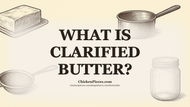
Clarified butter is butter with the water and milk solids removed, leaving almost pure butterfat. You make it by melting butter slowly, skimming the foam and pouring the clear golden fat off the milky solids at the bottom. It has a higher smoke point and keeps longer than whole butter, which is why kitchens use it for sautéing.
What is clarified butter used for?
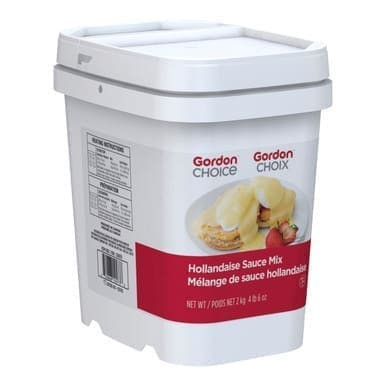
Kitchens use it for high-heat sautéing and searing, hollandaise and béarnaise, crêpes, potato rösti, dipping sauce for lobster and crab, and greasing pans for eggs. Because it doesn't burn as quickly as butter, it gives a butter flavour where whole butter would scorch. It's also the base of many Indian and Middle Eastern dishes.
Why do chefs use clarified butter instead of regular butter?
It handles heat. Without milk solids, clarified butter doesn't brown and burn at normal sauté temperatures, so it gives clean butter flavour on the line. It also keeps longer, stays liquid in a warm bain-marie for service, and makes smoother emulsions like hollandaise because there's no water to thin them.
What is the difference between clarified butter and ghee?
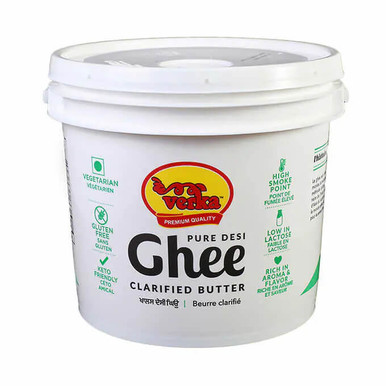
Ghee is clarified butter cooked longer, until the milk solids brown and are strained out, giving a nutty, toasted flavour and even longer shelf life. Clarified butter is pulled before the solids colour, so it tastes milder. They work the same at high heat. A tub like
Verka pure desi ghee 1.6 kg saves clarifying in-house.
Does clarified butter have a higher smoke point?
Yes. Whole butter starts smoking around 175°C (350°F) because its milk solids burn. Clarified butter has those removed and holds up to about 230°C (450°F). That puts it in the range of many vegetable oils, so you can sear and sauté with it at temperatures that would scorch regular butter.
Does clarified butter go bad?
Eventually, yes, but slowly. With the water and solids removed, it keeps for several weeks at room temperature in a sealed container and several months in the fridge. It goes off by turning rancid, which you can smell as a sharp, sour or crayon-like odour. Use a clean, dry spoon every time to avoid mould.
Can you freeze clarified butter?
Yes, it freezes very well. Portion it into ice cube trays or small containers, freeze, then store the cubes in a sealed bag for up to about a year. It thaws quickly and the texture doesn't change, so batching a large amount and freezing portions works well for slower kitchens.
Is clarified butter healthier than regular butter?
Not really. It's almost all fat, so it has slightly more calories and saturated fat per tablespoon than butter, which still has some water in it. Its advantages are cooking ones: a higher smoke point and very little lactose. Nutritionally it's still butterfat, so use it in the same amounts you would butter.
What is the easiest way to clarify butter?
Melt unsalted butter over low heat without stirring until it separates. Skim the white foam off the top, then slowly pour the clear yellow fat into a container, leaving the milky layer behind. Straining through cheesecloth or a coffee filter catches the last of the solids. One pound of butter gives about 12 oz of clarified butter.
\n
Why Partner With ChickenPieces
Canadian foodservice supplies for sauce and sauté stations: ghee, sauce mixes, and pantry ingredients. Chicken Pieces is a Calgary foodservice and hospitality supply company founded in 2018. We supply pantry ingredients and kitchen supplies for this work. We are not a poultry or meat distributor.
Local Calgary Support
Based in Calgary, we understand regional operator needs and ship Canada-wide.
Wide Product Range
Source pantry ingredients, seasonings, disposables, janitorial, bar, and hospitality supplies from one supplier.
No Membership Needed
Order what your kitchen needs with no minimum order quantity and no forced membership model.
Food Safe Focus
Chicken Pieces is a Calgary foodservice and hospitality supply company founded in 2018, not a poultry or meat distributor. We write for operators working under CFIA- and Health Canada-aware food-safety plans.