
2025 Dec 13th
A Complete Guide to Wholesale Coffee Beans Canada for Canada
A Complete Guide to Wholesale Coffee Beans Canada
Sourcing wholesale coffee beans in Canada is where your entire coffee program begins. For any café, restaurant, or caterer serious about serving exceptional coffee, this isn't just a line item on an invoice—it's the very foundation of your quality, brand, and profitability. It all starts with partnering with the right suppliers to get the right beans in bulk.
Navigating The Canadian Wholesale Coffee Market
So you've decided to level up your coffee game. Fantastic. But stepping into the world of wholesale beans can feel a bit like walking into a massive, bustling market for the first time. You've got roasters shouting about single-origin profiles, importers talking logistics, and a whole lot of jargon about pricing and certifications. It can be overwhelming.
Think of this guide as your personal roadmap. We're going to cut through the noise and break down the entire process into clear, actionable steps. We'll explore the pros and cons of working with local Canadian roasters versus international importers, decode quality standards and pricing, and get you comfortable with the logistics of getting fresh, delicious coffee right to your door. The goal here is simple: to help you build a reliable, high-quality, and profitable coffee supply chain.
Why Sourcing Matters More Than Ever
Let's be clear: the demand for truly good coffee in Canada isn't just a fleeting trend; it's a massive, booming industry. In 2025, the Canadian coffee market hit a staggering USD 24.50 billion in value. That's a significant jump from USD 23.61 billion just the year before, and it's all driven by a growing appetite for premium and specialty coffees that you simply can't fake with subpar beans. You can dig deeper into these coffee market findings and see the full report for yourself.
This growth is a huge opportunity for your business. Nailing down your sourcing strategy gives you a serious competitive edge. It allows you to:
- Control Quality: You get to be the one who decides the exact flavour profile and freshness of the coffee you serve. No more compromises.
- Improve Profitability: Buying in bulk isn't just convenient; it's smart. You access much better pricing, which significantly lowers your cost per cup and boosts your bottom line.
- Build a Brand Story: Your choice of supplier says something about you. You can partner with roasters who share your values, whether that means supporting local Canadian businesses or championing ethical, sustainable farming practices around the world.
What This Guide Will Cover
From understanding the difference between a light and dark roast to managing your inventory like a pro, we're covering it all. We'll give you a solid framework for evaluating suppliers—including one-stop-shop options like Chicken Pieces, where you can source premium coffee alongside other essential café supplies. By the end of this, you'll have the confidence and the know-how to place your first order and really set your business apart in Canada's competitive coffee scene.
Where to Buy Your Beans: Choosing Between Local Roasters and Global Importers
Alright, so you've decided to buy wholesale coffee beans in Canada. The very first fork in the road is deciding who to buy from. This choice will define the taste of your coffee, its freshness, and even the story you tell your customers. You have two main paths: partnering with a local Canadian roaster or working directly with a global importer.
There's no single "right" answer here. Each route has its own distinct perks. A local roaster gives you incredible freshness and a direct connection to the craft. An importer, on the other hand, can open up a world of rare coffees and save you money on massive orders. The best choice really hinges on your business model, brand, and what you're trying to achieve.
Think of it like this: a local roaster is like the artisan baker down the street, while an importer is the massive flour mill supplying the whole region. Both are essential, but they serve very different needs.
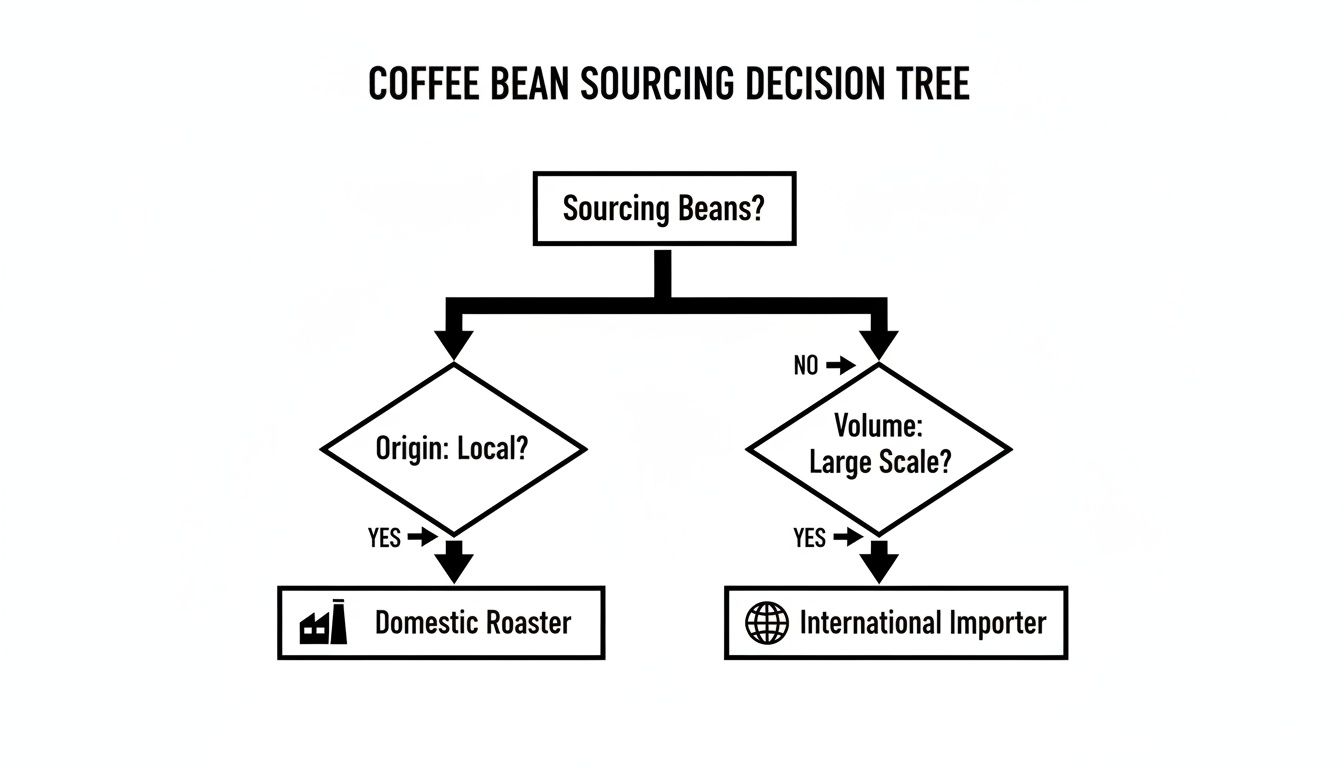
As you can see, your decision often comes down to a simple trade-off: community connection and freshness versus global access and sheer volume.
The Case for Canadian Roasters
Working with a local roaster feels more like a partnership. You're getting a product made with passion, often just days after it left the roasting drum. For customers who care about freshness and supporting the local economy, this is a massive selling point.
The benefits are immediate and easy to see:
- Peak Freshness: Coffee tastes best within a few weeks of being roasted. Local partners slash the time it takes to get from the roaster to your grinder, guaranteeing you serve coffee at its absolute best.
- Lower Shipping Costs & Times: Sourcing from within Canada means your deliveries are faster, more reliable, and way cheaper than getting beans shipped from overseas. No customs headaches, either.
- Direct Relationships: In many cases, you can talk directly to the person who roasts your beans. This opens the door for custom blends, expert advice, and support that's just a phone call away.
- A Compelling Brand Story: Telling customers you've partnered with a local Canadian roaster is a powerful marketing tool. It's a story of community, quality, and collaboration that adds value beyond the cup itself.
This path is perfect for cafés, restaurants, and shops aiming to build a reputation on top-notch quality and a local feel. Offering a unique, locally roasted coffee can be what sets you apart in a crowded market.
For a lot of businesses, the slightly higher per-kilogram cost of locally roasted coffee is easily paid back through marketing value and quality control. Customers are often happy to pay a little more for a product with a transparent, local story they can get behind.
Of course, there are a few things to keep in mind. Smaller roasters might have a more limited selection of coffee origins compared to a big importer. Their production capacity could also be a factor if you need to place exceptionally large orders.
Exploring Global Importers
Now, if your business operates on a much larger scale or you're on a quest for rare, exclusive micro-lot coffees straight from the source, then a global importer might be your best bet. These companies are the bridge between coffee-growing regions and the Canadian market, handling all the complex logistics of international trade.
Going with an importer unlocks a different set of advantages:
- Unmatched Variety: Importers have massive catalogues with beans from dozens of countries. You can find everything from well-known Colombian and Ethiopian coffees to unique beans from more exotic locales.
- Potential for Cost Savings: If you're ordering huge volumes—think multiple pallets at a time—importers can often offer better pricing simply because of their scale.
- Direct-from-Source Access: Many importers have built direct relationships with specific farms or co-ops. This gives you traceability and access to unique, single-origin lots you just won't find anywhere else.
But this route comes with its own hurdles. The Minimum Order Quantities (MOQs) are usually much higher, and you'll have to deal with longer lead times, international shipping, and potentially customs clearance. More importantly, the beans you get are green (unroasted). That means you need your own roasting equipment and expertise—a significant investment in both cash and training.
Ultimately, your decision should line up with what your business can handle and what you promise your customers. By carefully weighing the benefits of freshness and community against variety and scale, you'll find the perfect wholesale coffee partner for your needs in Canada.
Understanding Wholesale Prices and Minimum Orders
Let's get down to the numbers. The price you pay for wholesale coffee beans in Canada isn't just pulled out of a hat. It's a direct reflection of that bean's entire story—from its origin and quality score to the ethics involved in getting it to you. Getting a handle on these numbers is the first step to building a coffee program that's both outstanding and profitable.
Think of it like buying ingredients for a high-end restaurant. A standard tomato has one price, but a rare, heirloom variety grown on a specific sun-drenched hill in Italy will naturally cost more. Coffee is exactly the same. Things like cupping scores (a professional quality rating), coveted certifications like Organic or Fair Trade, and specific processing methods all add to the final cost per kilogram.
A higher price often signals a better, more ethically sourced product with a compelling story you can share with your own customers. Knowing what drives these costs helps you forecast expenses, manage your inventory, and set your menu prices with confidence.
Decoding Minimum Order Quantities
As you start exploring wholesale coffee beans canada, you'll run into the term Minimum Order Quantity, or MOQ. This is simply the smallest amount of coffee—usually measured in kilograms or pounds—that a roaster or importer is willing to sell in one go.
MOQs are there for a very practical reason: efficiency. Roasting, bagging, and shipping a tiny one-kilogram order is incredibly time-consuming and costly for a supplier. By setting a minimum, they can streamline their operations, keep their own costs in check, and pass some of those savings on to you. For a small café, an MOQ might be as low as 5 kg, while larger importers might require orders of 50 kg or more.
Balancing MOQs with your cash flow and storage space is one of the most important skills a new wholesale buyer can learn. Ordering just enough to meet the minimum keeps your inventory fresh and your capital free. As you grow, buying in larger volumes can unlock better pricing—if you have the sales to support it.
Leveraging Tiered Pricing for Growth
Most wholesale suppliers use a tiered pricing structure, which is fantastic news for a growing business. The idea is simple: the more you buy, the less you pay per kilogram. A roaster might have one price for orders between 5-20 kg, a lower price for 21-50 kg, and an even better one for anything over 50 kg.
This model rewards commitment and scale. As your café gets busier and your coffee consumption grows, you automatically move into better pricing tiers, which directly boosts your profit margins. It's a built-in incentive to grow your business. When you're talking to potential suppliers, always ask for their complete price list to see how you can save as you expand.
This entire system relies on a steady flow of green beans into the country. Canada's coffee bean imports saw a massive growth of 20.66% from 2023 to 2024, showing just how much our national coffee habit depends on these wholesale channels. In August 2025 alone, imports hit CCA 308 million, highlighting the scale of the supply chain you're now a part of. You can explore more data on the Canadian coffee bean market to get a feel for these trends.
This is exactly why suppliers like Chicken Pieces are so valuable. They let you bundle various supplies with your coffee order, helping you consolidate purchasing and manage costs more effectively. You can get what you need without having to meet a massive MOQ for every single item your business depends on.
How to Evaluate Bean Quality and Roast Profiles
Once you've sorted out the pricing and logistics, you get to the heart of the matter: the coffee itself. Choosing the right wholesale coffee beans in Canada is a sensory journey. It's about learning the language of the beans—their origin, their quality, their roast—so you can build an unforgettable experience for your customers. Great coffee tells a story, and this is where you learn to read it.
Think of a coffee bean like a grape destined for wine. Its potential is shaped by its variety, the soil it grew in, and the climate it endured. The roaster, in this analogy, is the winemaker, skillfully developing those inherent flavours to create something complex, balanced, and memorable. Your job as the buyer is to be the sommelier—to understand these factors and pick the perfect bottle for your menu.
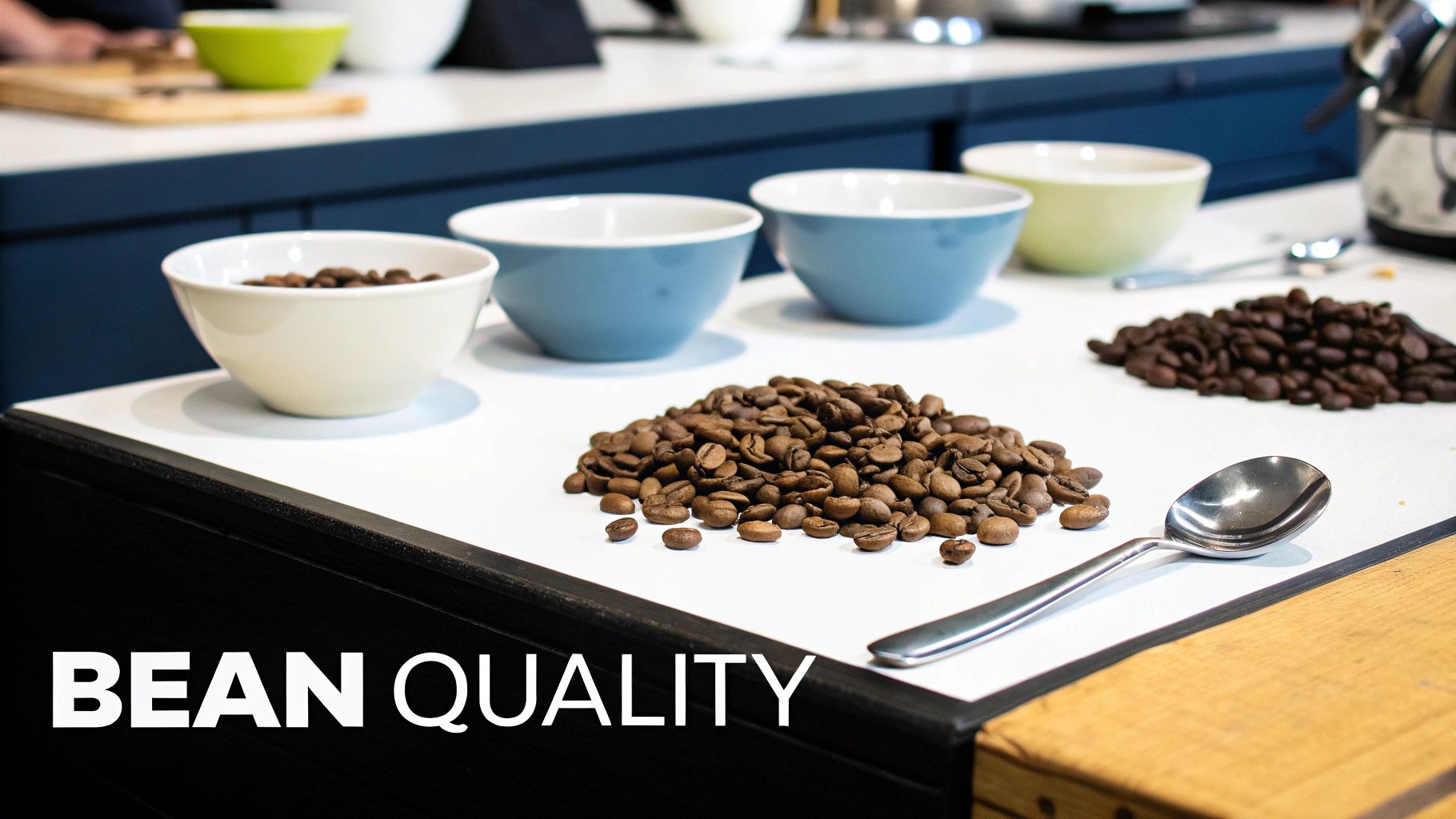
This isn't about finding a single "best" coffee. It's about finding the right coffee for your specific needs, whether that's a rock-solid espresso blend or a delicate single-origin that shines as a pour-over.
Arabica vs. Robusta: The Fundamental Choice
The first major fork in the road is the species of the bean. The two heavyweights on the global stage are Arabica and Robusta, and they couldn't be more different.
- Arabica (Coffea arabica): This is the darling of the specialty coffee world, making up over 60% of global production. Grown at high altitudes, Arabica beans are prized for their complex acidity, incredible aromatics, and a massive range of flavours—from bright and fruity to sweet and floral. They're trickier and more expensive to grow, and that's reflected in the price tag.
- Robusta (Coffea canephora): Just like its name suggests, Robusta is a much hardier plant that thrives in warmer climates. Its flavour is often described as strong and bold, sometimes with rubbery or chocolatey notes. It also packs nearly double the caffeine of Arabica. While you won't see it headlining at most specialty cafés, high-quality Robusta is a secret weapon in traditional Italian espresso blends for the thick, stable crema it produces.
For most Canadian cafés and restaurants aiming for top-tier drip coffee and espresso, 100% Arabica is the way to go. That said, a blend with a small percentage of well-chosen Robusta can add some serious body and a beautiful crema to an espresso shot.
Understanding Roast Profiles
Roasting is where the magic happens. It's the process that turns a dense, green seed into the brittle, aromatic bean we all know and love. The roast profile—basically, how long and how hot a bean is roasted—has a massive impact on the final flavour in the cup.
A roaster's job is to unlock the potential within the bean. A light roast showcases the bean's origin and terroir, while a dark roast emphasizes the flavours created by the roasting process itself.
Here's a quick breakdown of the three main roast levels you'll encounter:
- Light Roast: Roasted for less time, these beans are light brown and have no oil on the surface. This profile lets the bean's origin characteristics do all the talking, resulting in higher acidity, a lighter body, and bright, often floral or fruity notes. It's perfect for filter methods like pour-over or batch brew where you want that clarity to shine.
- Medium Roast: This is the crowd-pleasing middle ground. Medium-roasted beans are a richer brown and rarely have an oily sheen. The flavour profile strikes a beautiful balance between the bean's origin notes and the deeper, sweeter flavours developed during roasting, like caramel and chocolate. This makes them incredibly versatile for both espresso and filter coffee.
- Dark Roast: Roasted the longest, these beans are dark brown to nearly black and are often shiny with oil. At this stage, the roasting process itself dominates the flavour. You'll get a low-acidity, heavy-bodied cup with bold, smoky, and bittersweet chocolate notes. This profile is a classic for traditional espresso blends.
The Story Behind Certifications
As you look through wholesale coffee lists, you'll start noticing different logos and labels. These certifications aren't just marketing fluff; they are third-party verifications that tell a story about the bean's journey from the farm to the roaster, signaling a commitment to quality, ethics, and sustainability.
Understanding these labels helps you choose coffees that not only taste great but also align with your brand's values.
Common Coffee Certifications and What They Mean
| Certification | Primary Focus | Benefit for Your Business |
|---|---|---|
| Organic | Prohibits the use of synthetic pesticides, herbicides, and fertilizers. | Appeals to health-conscious consumers and signals a commitment to environmental stewardship. |
| Fair Trade | Guarantees farmers receive a fair, stable price for their coffee and promotes community development. | Provides a powerful story of ethical sourcing that resonates deeply with socially conscious customers. |
| Rainforest Alliance | Promotes biodiversity, conservation, and sustainable farming practices to protect ecosystems. | Demonstrates a commitment to environmental responsibility and protecting the planet's natural resources. |
Offering a certified coffee gives you a way to connect with your customers on a deeper level. It turns a simple cup of coffee into a statement about what your business stands for. Suppliers like Chicken Pieces often carry a diverse range of products, including certified options like Tonino Lamborghini coffee, allowing you to source beans that match your brand's commitments right alongside your other operational necessities.
Mastering Logistics From Packaging to Storage
Sourcing exceptional wholesale coffee beans in Canada is a huge win, but the work isn't over when the delivery truck pulls away. Now comes the critical part: protecting that investment. Think of it like this: you wouldn't buy a beautiful, fresh-baked loaf of artisan bread only to leave it unwrapped on the counter. The same principle applies here. Proper packaging, storage, and inventory management are what ensure the quality you paid for actually makes it into the cup.
This is the operational side of the business, and frankly, it's just as important as the beans themselves. Get it right, and you preserve flavour, extend shelf life, and prevent costly spoilage. Get it wrong, and a premium product can turn into a stale, disappointing one in no time.
The Importance of High-Quality Packaging
When your beans show up, the first thing you'll see is the bag they came in. Professional roasters use high-quality, multi-layered bags for a very good reason. They aren't just for branding; they're scientifically designed to shield the coffee from its four biggest enemies: oxygen, moisture, light, and heat.
Keep an eye out for bags with a one-way degassing valve. That little plastic circle is a non-negotiable feature for truly fresh coffee. Right after roasting, beans release a lot of carbon dioxide for several days. This valve lets that CO2 escape without letting damaging oxygen sneak in. It's a simple piece of tech, but it's absolutely vital for preserving the complex aromatics and delicate flavours of your coffee.
Establishing a Rock-Solid Storage System
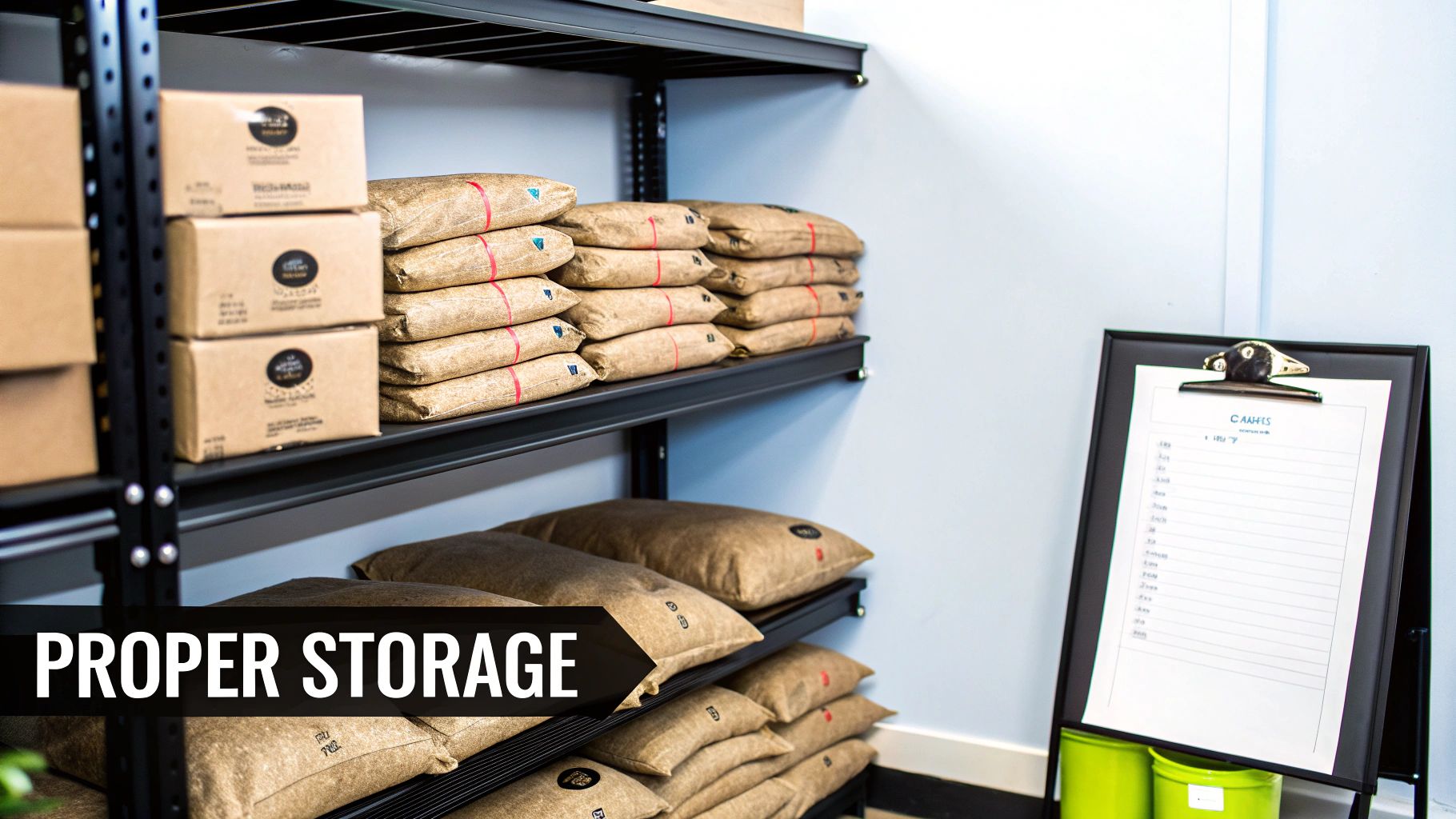
Once you've got your beautifully packaged beans, where you put them matters immensely. Coffee is porous, meaning it will happily absorb any strong odours or moisture floating around. The ideal storage conditions are simple but strict.
- Cool: Keep those beans far away from heat sources like ovens, dishwashers, or direct sunlight. Heat is the enemy of freshness and will accelerate the staling process faster than anything.
- Dark: Light, especially sunlight, degrades the quality of roasted coffee. Opaque bags are a great start, but storing them in a dark pantry or cupboard is even better.
- Dry: Moisture will ruin your coffee and can even lead to mould. A dry, sealed environment is absolutely essential.
Proper storage isn't just about preventing spoilage; it's about maximizing flavour. A well-stored bean holds onto its delicate notes and vibrant acidity. A poorly stored one just becomes flat, bland, and generic.
Implementing First-In, First-Out (FIFO)
To make sure you're always brewing the freshest possible coffee for your customers, a First-In, First-Out (FIFO) inventory system is essential. It's a dead-simple principle: the first bags of coffee you receive are the first ones you use. This simple habit prevents older stock from getting lost at the back of a shelf until it's too late.
Organise your storage area so that new deliveries always go to the back, pushing the older stock to the front. A quick scribble of the delivery date on each bag with a marker can make this process foolproof. FIFO is really the cornerstone of quality control in any food service business, protecting both your profits and your reputation. By managing your stock with this kind of diligence, you guarantee every single customer gets the same high-quality experience you intended.
A Practical Checklist for Placing Your First Order
You've waded through the world of sourcing, quality grades, and logistics. Now it's time to actually buy some coffee. Placing your first big order for wholesale coffee beans can feel like a huge step, but if you have a clear plan, it's a pretty straightforward process that lays the groundwork for your entire coffee program.
Think of this as your pre-flight check. Each step ensures you're getting the right product from the right people, eliminating guesswork, and building a reliable supply chain from day one.
Step 1: Research and Initial Contact
Before you even think about picking up the phone, do your homework. Shortlist three to five potential suppliers—a mix of local roasters and larger distributors is a good idea. Dive into their websites, read their sourcing stories, and get a feel for their overall vibe and product range.
Once you have your list, it's time to reach out. A professional email or a quick phone call works perfectly. Introduce your business, explain what you're looking for (e.g., a workhorse espresso blend, a couple of interesting single origins for filter), and ask about their wholesale program. This is your chance to make a good first impression and start gathering the essential details.
Step 2: Request and Evaluate Samples
Never, ever commit to a big order without tasting the coffee first. Ask your potential suppliers to send you samples of the beans you're most interested in. Most roasters are happy to provide small sample bags, sometimes for a small fee that they'll often credit toward your first purchase.
When the samples arrive, it's time for a "cupping" or a formal tasting. More importantly, just brew each coffee exactly how you plan to serve it in your café. As you taste, evaluate them on:
- Aroma: What do you smell? Is it floral, fruity, nutty, or chocolatey?
- Flavour: What are the main tastes? Is it bright and acidic, or rich and deep?
- Body: How does it feel in your mouth? Is it light and tea-like, or heavy and syrupy?
- Aftertaste: What flavour sticks around after you swallow?
This is the most critical step. You have to make sure the coffee's profile is exactly what you want to be serving your customers.
Choosing a supplier is about more than just taste; it's about partnership. Pay close attention to their communication, how quickly they respond, and how willing they are to answer your questions. A great partner is truly invested in your success.
Step 3: Ask the Right Questions
Your relationship with your roaster is absolutely key, so don't be shy about asking detailed questions before you commit. A good partner will be transparent and happy to help. The answers you get will tell you a lot about their business and the kind of support you can expect.
This is also a great time to appreciate the industry you're joining. The Coffee & Tea Production sector in Canada, which is all about processing wholesale coffee beans, is projected to have a market size of CA 4.1 billion in 2025. By picking a great local partner, you're plugging into a massive, thriving part of the Canadian economy. You can discover more insights about Canada's coffee production industry to really grasp the scale of it all.
Step 4: Finalize and Place Your Order
Okay, you've chosen your supplier and picked your beans. You're ready to pull the trigger.
Confirm the final pricing, including any volume discounts, and get clarity on shipping costs and delivery timelines. A one-stop supplier like Chicken Pieces, for instance, can make this even easier by letting you bundle your coffee order with other café essentials, which can help you hit free shipping minimums faster.
Before you send any money, triple-check all the details on the invoice. Once you've paid, your first batch of amazing wholesale coffee will be on its way.
Common Questions About Buying Wholesale Coffee
The following operator questions are answered with cited sources. Every FAQ links to Reddit, Quora, PAA, or a public regulator.
How should a Canadian cafe compare wholesale coffee bean suppliers before committing?
Source: r/coffee_roasters: If you were to open a coffee shop what wholesale supplier
What questions should a buyer ask a wholesale coffee roaster about delivery and freshness?
Source: r/roasting: People who sell wholesale to cafes what has been your experience
How does a buyer verify the actual roast date on wholesale coffee bean deliveries?
Source: r/coffee_roasters: Wholesale bean supplier recommendations
Which wholesale coffee bean terms and contracts do Canadian cafes need to read carefully?
Source: r/Coffee: As a cafe is it just a waste to not roast your own beans
How can a small Canadian cafe keep coffee cost predictable when buying wholesale?
Source: r/roasting: How do you roasters approach get wholesale accounts
What is a realistic monthly volume for a Canadian cafe to qualify for wholesale coffee pricing?
Source: r/smallbusiness: Where to buy wholesale food for a restaurant or bar food business
How should a buyer store wholesale coffee beans to keep them fresh for the longest usable life?
What packaging formats work best for a Canadian cafe buying wholesale coffee beans?
Source: r/SmallBusinessCanada: Researching cost of building a small commercial kitchen
Regulatory reference: The FDA Food Code and Health Canada's food safety guidelines set the standards for commercial kitchen operations across North America.
Authoritative Sources
The following government and public-health sources informed the operator guidance above. Citations to Reddit, Quora, and operator forums appear in the FAQ block above.