
 US Dollar (USD)


2026 Jan 14th
White Meat vs Dark Meat: A Culinary Showdown
White Meat vs Dark Meat: A Culinary Showdown
When you get right down to it, the difference between white and dark meat is all about how the bird uses its muscles. Dark meat, found in hard-working muscles like the legs, is richer in flavour and fat. White meat, from less-used muscles like the breast, is much leaner and milder. One isn't better than the other; the "best" choice is simply about matching the right cut to what you're trying to achieve in the kitchen.
Understanding the Core Differences
The split between white and dark meat goes way beyond colour. It's a matter of biology and chemistry that directly impacts how each cut cooks, tastes, and feels. For anyone in foodservice—or even a serious home cook—getting these basics down is the first step to making smarter buying and cooking decisions. The key difference comes down to a protein called myoglobin, which is responsible for delivering oxygen to muscle tissue.
The more a muscle gets used, the more myoglobin it requires, which gives the meat a darker colour and a completely different set of characteristics. This simple biological fact dictates everything from the nutritional breakdown to the perfect cooking method for each piece of chicken.
Here's a quick rundown of what sets them apart:
- Muscle Location: White meat comes from muscles used for quick, short bursts of energy, like the breast and wings. Dark meat is found in endurance muscles that are used all day long—primarily the legs and thighs.
- Flavour and Fat: That increased blood flow and myoglobin in dark meat gives it a richer, more robust flavour and a higher fat content, which is exactly what keeps it so moist and forgiving during cooking.
- Texture: White meat is lean with a finer grain, making it incredibly tender when cooked just right but also prone to drying out if you're not careful. Dark meat's higher fat and connective tissue give it a succulent, juicy texture that stands up to longer cooking times.
For any professional kitchen, choosing between white and dark meat is a strategic decision that affects everything from menu cost and flavour profile to customer satisfaction. Recognizing their unique properties allows you to maximize the potential of every cut.
This guide will break down these differences in detail, giving you practical advice for picking the right cut for your specific needs. Whether you're sourcing bulk boneless, skinless chicken breasts for consistent grilling or flavourful bone-in thighs for a slow-cooked stew, knowing the 'why' behind each choice is essential.
Comparing Nutrition and Flavour Profiles
The age-old debate between white and dark meat usually kicks off with flavour and nutrition. These two factors drive everything from how a chef builds a menu to the choices a health-conscious diner makes. While it's easy to just label white meat as "lean" and dark meat as "rich," the real differences are much more interesting, involving specific vitamins, minerals, and the very makeup of the muscle itself. Getting to know these distinctions is the key to using each cut for what it does best.
This visual guide breaks down the core differences in flavour, best cooking uses, and nutritional highlights between white and dark poultry.
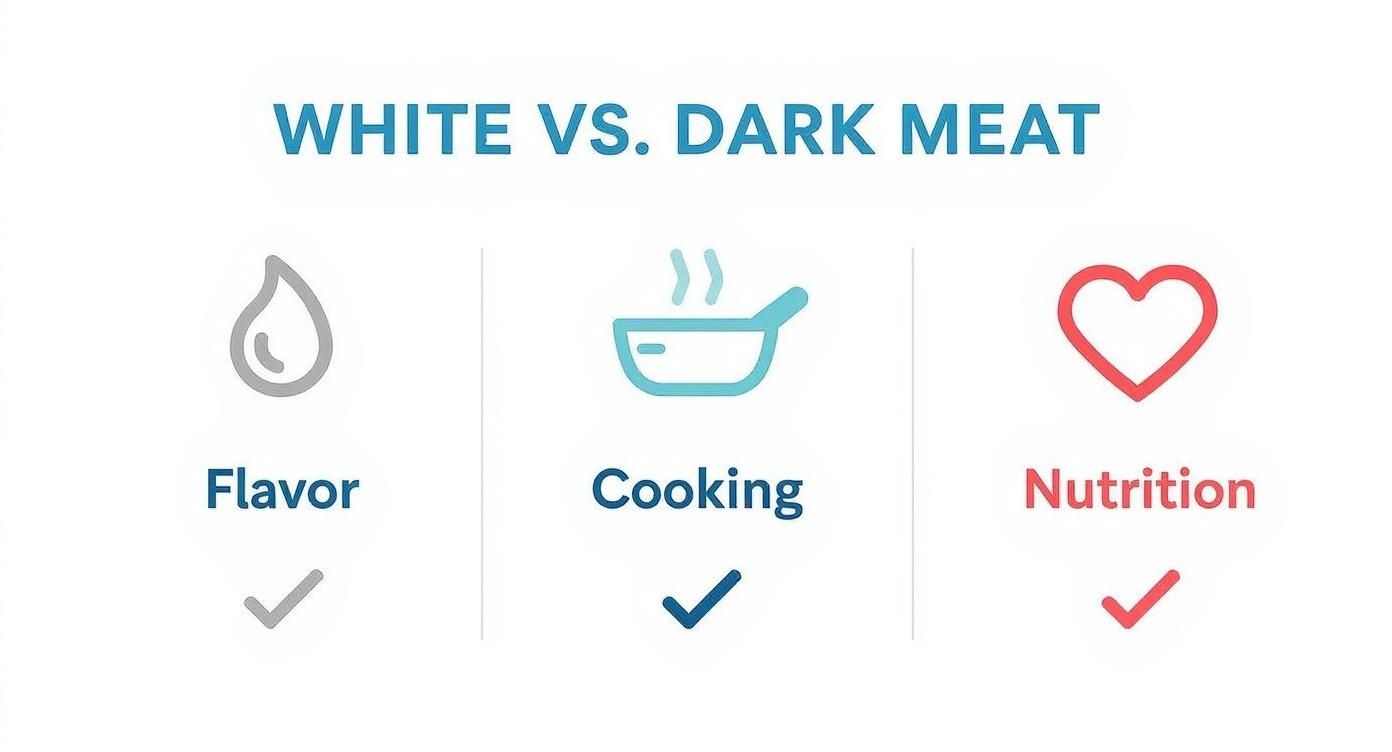
As the infographic shows, while white meat is the go-to for leanness, dark meat consistently delivers a juicier, more flavourful experience thanks to its higher fat content.
The Nutritional Breakdown
White meat, which comes from the breast and wings, is famous for being lower in calories and fat. A 100g serving of cooked chicken breast has noticeably fewer calories and less fat than the same amount of thigh meat. This makes it a staple for health-focused menus and diets. It's also a powerhouse of lean protein, essential for muscle repair and growth.
But don't count dark meat out; it has its own nutritional wins. Found in the legs and thighs, these harder-working muscles pack more iron and zinc—minerals critical for immune function and keeping energy levels up. Dark meat also boasts higher levels of B vitamins, especially B12 and niacin, which are great for brain health. And while it does have more fat, a good portion of it is monounsaturated—the heart-healthy kind that gives dark meat its signature moisture and deep flavour.
For chefs and foodservice operators, this translates to clear choices:
- White meat is perfect for dishes you want to market as low-fat or high-protein, like healthy salads, lean sandwiches, or simple grilled entrées. You can source consistent portions with our bulk boneless, skinless chicken breasts.
- Dark meat is the foundation for richer, more satisfying dishes where its higher mineral content can be a legitimate nutritional selling point. Our bone-in chicken thighs provide an excellent base for these hearty recipes.
To help you see the differences at a glance, here's a direct comparison of their key nutritional and sensory attributes.
Nutritional and Flavour Snapshot: White Meat vs. Dark Meat (Per 100g Cooked)
This table offers a direct comparison of key nutritional values and sensory characteristics to help chefs and home cooks make informed decisions based on their specific needs.
| Attribute | White Meat (Chicken Breast) | Dark Meat (Chicken Thigh) |
|---|---|---|
| Calories | ~165 kcal | ~209 kcal |
| Protein | ~31 g | ~26 g |
| Total Fat | ~3.6 g | ~10.9 g |
| Iron | ~0.7 mg | ~1.3 mg |
| Zinc | ~0.8 mg | ~2.4 mg |
| Flavour Profile | Mild, neutral, adaptable | Rich, savoury, distinctly "chicken-y" |
| Texture | Lean, firm, can dry out easily | Juicy, tender, succulent |
This snapshot makes it clear: white meat wins on lean protein, but dark meat delivers more key minerals and a richer eating experience.
A Tale of Two Flavours
The biggest split between white and dark meat comes down to the eating experience. White meat has a mild, almost neutral flavour that makes it an incredibly versatile canvas. It soaks up marinades, herbs, and spices beautifully without fighting them. Its greatest strength is this adaptability, letting it fit seamlessly into almost any type of cuisine.
Dark meat, on the other hand, brings a robust, savoury, and unmistakably "chicken-y" flavour to the table. That richness is a direct result of its higher fat content and the presence of myoglobin, the protein that gives the meat its darker hue. As it cooks, the fat renders and bastes the meat from the inside, creating a succulent texture that white meat just can't replicate.
The higher fat content in dark meat acts as a built-in insurance policy against overcooking. It provides a wider window for achieving a perfectly cooked, juicy result, making it a more forgiving and reliable option in a busy kitchen environment.
This fundamental difference in flavour and moisture dictates how you use them. A delicate sauce that would get lost on dark meat can perfectly complement the subtlety of a chicken breast. Conversely, the bold flavour of dark meat stands up brilliantly to strong seasonings, hearty braising liquids, and smoky barbecue sauces.
Shifting Consumer Preferences
For a long time, especially in North America, diners overwhelmingly preferred white meat. But a real shift is happening as both chefs and home cooks rediscover the incredible flavour and texture of dark meat. Since 2000, the value share of chicken breast in a whole chicken has dropped from 66% to about 45%. Meanwhile, the share for chicken legs has climbed from 12% to nearly 30%.
This isn't just a fad; it points to a growing appreciation for the rich qualities that myoglobin and fat bring to the plate. You can find more data on these changing consumer trends to help guide your menu planning and purchasing decisions.
Best Cooking Techniques for Each Cut
Knowing the flavour and nutritional differences between white and dark meat is one thing, but the real magic happens in the kitchen. The right cooking technique can elevate a good piece of chicken into something spectacular, and it all comes down to understanding how each cut responds to heat.
Simply put, the distinct structure of these meats calls for completely different approaches. White meat is lean and cooks fast; it demands your attention. Dark meat is loaded with connective tissue and fat; it rewards your patience. Mastering this fundamental divide is the key to unlocking the full potential of every piece of poultry you prepare.
Mastering White Meat for Maximum Juiciness
The biggest challenge with white meat, especially chicken breast, is keeping it from drying out. Its low fat content gives you a very narrow window for perfection. The goal is always to cook it quickly and with precision, locking in as much moisture as possible before it has a chance to escape.
High-heat methods are your best friend here. Think grilling, pan-searing, stir-frying, and roasting at high temperatures. These techniques blast the outside with heat, creating a beautiful crust while the inside cooks through just enough to be succulent and safe. For any foodservice pro who needs consistency, using uniformly sized cuts is non-negotiable. Our bulk boneless, skinless chicken breasts are perfect for this, ensuring reliable results whether you're making grilled chicken salads or seared entrées.
To really nail it, you have to control the temperature. The standard food safety guideline is an internal temperature of 74°C (165°F). But a more advanced technique relies on carryover cooking. If you pull the chicken from the heat at around 71°C (160°F), the residual heat will continue to cook the meat as it rests. This brings it to a safe final temperature without pushing it into dry, stringy territory.
A critical insight for any chef: food safety isn't just about temperature, it's about temperature and time. Chicken held at a lower temperature, like 69°C (157°F), for just over 30 seconds is every bit as safe as chicken brought instantly to 74°C (165°F). This lower-and-slower approach produces a significantly juicier and more tender result.
Unlocking the Richness of Dark Meat
Where white meat demands speed, dark meat rewards patience. Cuts like thighs and drumsticks are packed with collagen and connective tissue. When cooked slowly, that tough tissue breaks down and transforms into luscious gelatin, resulting in meat that practically falls off the bone. This process requires lower heat and longer cooking times.
The best methods for dark meat are all about slow, moist heat:
- Braising: Simmering the meat in a flavourful liquid for hours until it's unbelievably tender.
- Stewing: Creating hearty one-pot meals where the chicken becomes the succulent star of the show.
- Slow Roasting: Using a low oven temperature to gently render the fat and tenderize the meat over time.
- Barbecuing: Applying low, indirect heat to smoke the meat until it's tender and infused with deep flavour.
While dark meat is technically safe to eat at 74°C (165°F), it's far from its best. The real transformation happens when you push the internal temperature higher, somewhere between 79°C and 85°C (175°F and 185°F). In this range, all that connective tissue fully breaks down, releasing moisture and creating that signature shreddable, succulent texture. For classic dishes like coq au vin or a rich chicken curry, using bone-in chicken thighs is the way to go—the bone and marrow add an unparalleled depth of flavour to the entire dish.
A Quick Comparison of Cooking Methods
| Cooking Method | Best for White Meat | Best for Dark Meat | Rationale |
|---|---|---|---|
| Grilling | Excellent | Good | High heat cooks lean breast quickly, locking in moisture. Dark meat's fat prevents drying, but you have to watch for flare-ups. |
| Braising | Poor | Excellent | Long, moist cooking is a disaster for white meat but perfect for melting the connective tissues in dark meat until it's tender. |
| Pan-Searing | Excellent | Good | Delivers a fast cook with a fantastic crust for breasts. Thighs also sear beautifully thanks to their higher fat content. |
| Slow Cooking | Not Recommended | Excellent | White meat becomes tough and stringy. Dark meat becomes fall-apart tender and absorbs all the flavour. |
| Stir-Frying | Excellent | Good | The quick, high-heat method is ideal for tender strips of breast. Dark meat works too, but it needs to be cut smaller to cook through. |
Ultimately, the debate isn't about which cut is superior. It's about which cut is right for the dish you're making. When you match your cooking technique to the meat's unique composition, you guarantee delicious, perfectly cooked results every single time.
Cost and Yield Analysis for Foodservice
For any foodservice operation, whether you're running a busy restaurant or a high-volume catering business, managing food cost is everything. When it comes to poultry, the white meat vs. dark meat debate goes way beyond flavour—it hits your bottom line directly. A smart analysis of price per kilogram, cook yield, and portion control is what separates a good menu from a profitable one.
While chicken breast often carries a higher upfront cost per kilogram, dark meat frequently makes a more compelling financial case once you factor in edible yield and moisture retention. Getting a handle on these details allows you to make strategic purchasing decisions that boost both quality and profitability.
Price Per Kilogram vs. True Cost
At first glance, dark meat like thighs and drumsticks is almost always cheaper than white meat. This price gap comes from a long history of consumer demand in North America, which has traditionally favoured the leaner breast meat. For kitchens laser-focused on managing expenses, this makes dark meat a very attractive starting point.
But the initial price tag is only half the story. The true cost of a protein is dictated by its yield—the amount of usable, servable meat you have left after cooking. This is where dark meat really pulls ahead. Its higher fat content acts like a built-in baster during cooking, leading to significantly less moisture loss compared to lean white meat.
A key takeaway for kitchen managers: Dark meat can experience as little as 15-20% weight loss during cooking, while white meat can easily lose 25-30% or more, especially if it's even slightly overcooked. This difference in yield can completely erase the initial price gap, often making dark meat the more cost-effective choice per cooked portion.
This superior moisture retention means you get more servable product for every kilogram you buy. When you're planning menus, exploring bulk chicken thighs for cost-effective menus can be a savvy financial move, especially for dishes like stews, curries, or pulled chicken where its rich flavour is a bonus.
Labour Costs and Portion Control
Beyond the raw product cost, labour and portion consistency are huge factors in a professional kitchen. This is where pre-portioned white meat has a clear advantage. While buying whole legs or bone-in thighs is economical, the time and skill needed to debone and trim them adds directly to your labour costs.
On the other hand, using pre-portioned products simplifies your kitchen's workflow and guarantees consistency from plate to plate. For dishes that demand precise sizing, like grilled chicken salads or sandwiches, checking the pricing on case-lots of chicken breast for precise portioning can streamline prep and ensure every dish meets your specs.
Here's a quick breakdown of the trade-offs:
- Dark Meat (Thighs/Legs): Lower initial cost and higher cooked yield. It's perfect for slow-cooked dishes where exact portioning is less critical and the rich flavour is a feature. Just be aware that labour costs can climb if you're deboning in-house.
- White Meat (Breasts): Higher initial cost but delivers unbeatable portion control and minimal prep time when purchased pre-portioned. It's the go-to for quick-cooking applications and menus that highlight lean protein.
The Economic Impact of Dark Meat
The economic weight of the poultry industry, including dark meat cuts, is massive, especially in key agricultural regions. California's turkey production, for instance, shows just how important dark meat is in both volume and value. Back in 2006, the state produced around 15.8 million turkeys, a significant jump from the previous year, contributing a farm-gate value of about $197 million. The state's total poultry meat production, from both chickens and turkeys, is approaching $1 billion annually. This huge scale is a big reason why you can learn more about the scale of California's poultry production and its economic impact to see why this matters.
Ultimately, the most profitable choice depends entirely on your menu, your kitchen's workflow, and your target food cost percentage. By looking past the initial price tag to analyze cooked yield and associated labour, you can make the informed purchasing decisions that strengthen your business's financial health.
Menu Inspiration for Your Kitchen
Knowing the technical differences between white and dark meat is one thing, but turning that knowledge into craveable menu items is where the real magic happens. The trick is to design dishes that play to the natural strengths of each cut. You want to match the lean, delicate nature of white meat with recipes that keep it tender, and pair the rich, juicy qualities of dark meat with preparations that amplify its deep flavour.
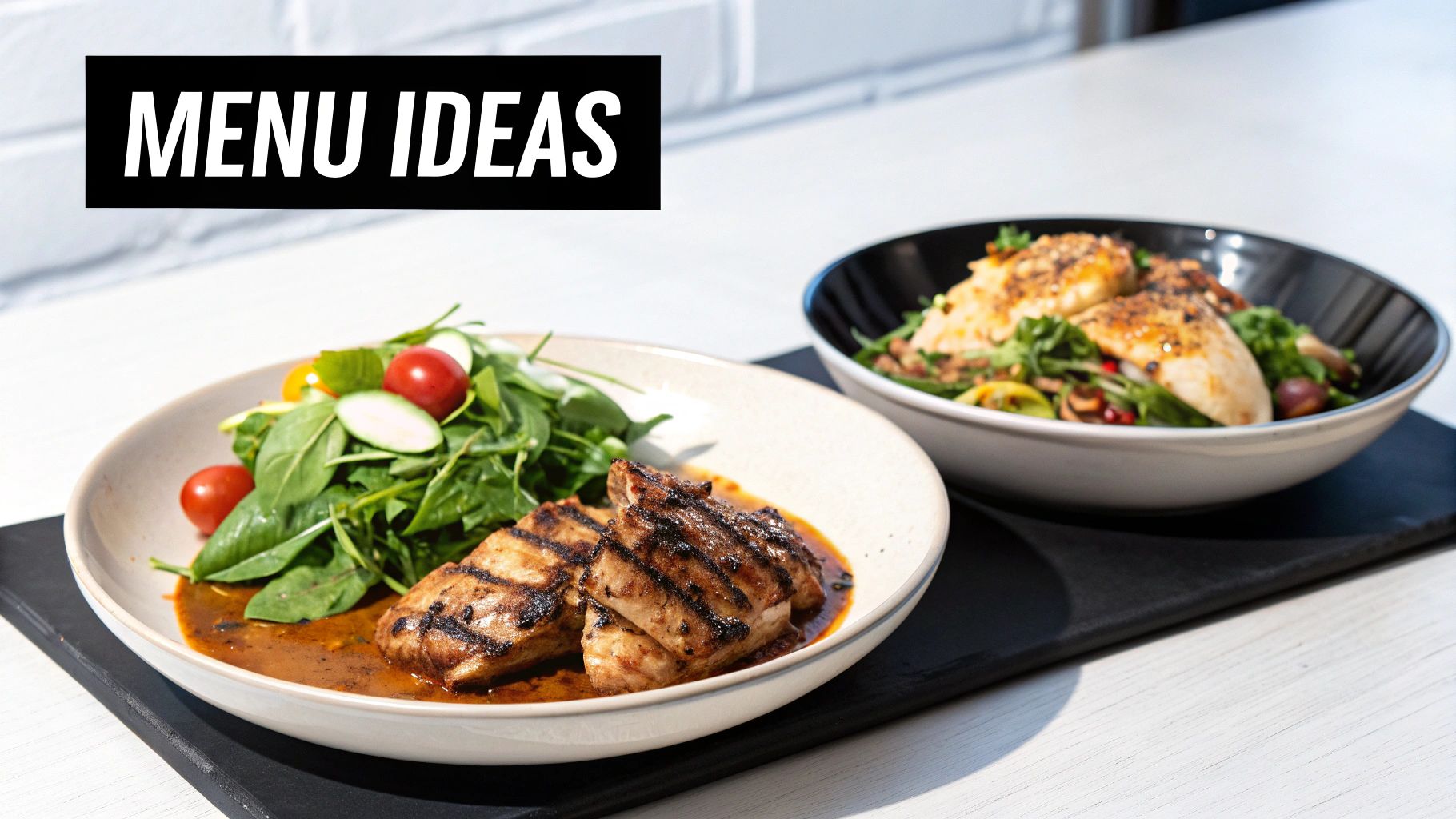
Whether you're building a menu for a café, catering an event, or planning entrées for a restaurant, choosing the right cut can make or break a dish. Here are some concrete menu ideas that showcase the best of both worlds, moving the white meat vs. dark meat debate from theory into delicious, practical application.
Showcasing the Versatility of White Meat
White meat, especially chicken breast, is the ultimate blank canvas for a chef. Its mild flavour and lean texture make it perfect for dishes where you want other ingredients to take centre stage, or where a light, healthy perception is key. The number one rule? Cook it quickly to keep it moist and tender.
Here are a few menu concepts that let white meat shine:
- Gourmet Chicken Sandwiches: Think beyond the basic. A perfectly grilled chicken breast, sliced thin and served on artisanal bread with pesto aioli, roasted red peppers, and arugula, creates a premium lunch offering. The mild chicken soaks up the bold flavours of the condiments beautifully.
- Healthy Power Salads: For your health-conscious customers, a grilled or poached chicken breast is the ideal protein topper. Pair it with quinoa, mixed greens, avocado, and a light vinaigrette. Our bulk boneless, skinless chicken breasts help you nail portion consistency for every single salad.
- Elegant Pan-Seared Entrées: A simple pan-seared chicken breast finished with a delicate pan sauce—like a lemon-caper piccata or a creamy mushroom sauce—is a timeless classic. The quick, high-heat sear locks in the juices, delivering a tender result that feels both sophisticated and satisfying.
Embracing the Richness of Dark Meat
Dark meat was made for big, robust flavours and slow cooking methods that transform its connective tissue into succulent, fall-apart tenderness. Its higher fat content keeps it incredibly moist and carries flavour in a way white meat just can't, making it the hero of hearty, comforting dishes.
Consider these ideas to play up the strengths of dark meat:
- Pulled Chicken Tacos or Sliders: Slowly braise chicken thighs in a smoky chipotle-lime broth until they shred with a fork. This creates an incredibly juicy and flavourful base for tacos or sliders, giving you a fantastic, cost-effective menu item with high perceived value.
- Rich and Hearty Curries: The bold flavour of dark meat stands up perfectly to the complex spices in a coconut-based curry. To build an incredible depth of flavour, create the perfect chicken curry with our tender bone-in chicken legs available for bulk order; the bone and marrow enrich the sauce as it simmers.
- Classic Braised Dishes: Traditional recipes like coq au vin or Filipino chicken adobo were designed for dark meat for a reason. The slow, moist cooking breaks down the collagen, resulting in ridiculously tender meat that has soaked up all the aromatic flavours of the braising liquid.
The most successful menus offer a balanced selection. They recognize that the choice between white meat vs. dark meat isn't about which is better, but which is perfectly suited for the intended culinary experience.
By thoughtfully aligning each cut with the right recipe, you create dishes that are not only delicious but also operationally efficient and financially sound. It's a strategic approach that ensures every plate you serve is a perfect example of matching the right ingredient to the right preparation.
Your Guide to Sourcing and Storing Poultry
Getting the right cut—whether it's white or dark meat—is only half the job. The real measure of quality comes down to how you handle it from the moment it arrives at your door to the second it hits the plate. For a high-volume restaurant or a home cook obsessed with quality, proper sourcing and storage are everything. It's the foundation for food safety and incredible flavour.
When you're buying poultry in bulk, there are a few things that are simply non-negotiable. Fresh chicken should always have pink, plump flesh and absolutely no off-odours. The skin should look moist and intact, never dry or discoloured. And of course, always check the expiry dates and make sure the packaging is sealed tight.
Best Practices for Poultry Storage
Once that chicken is in your kitchen, the clock starts ticking. Getting it into proper storage immediately is essential to preserving its integrity. Temperature control isn't just a suggestion; it's your single most important tool against bacterial growth.
- Refrigeration: Fresh chicken belongs in the coldest part of your fridge, which should be holding at or below 4°C (40°F). To be safe, keep it in its original packaging and place it on a low shelf. This simple step prevents any potential drips from contaminating other foods below it.
- Freezing: If you're not using it within a day or two, freezing is the way to go. Aim for a freezer temperature of -18°C (0°F) or colder. For the best results, wrap individual cuts or portions tightly in freezer-safe packaging. This is your best defence against freezer burn, which absolutely ruins both texture and flavour.
Proper handling is every bit as critical as storage. Always—and I mean always—use separate cutting boards and utensils for raw poultry. Wash your hands thoroughly with soap and water after you've touched it. This one habit is one of the most effective ways to stop foodborne illness in its tracks, whether you're in a commercial kitchen or at home.
Sourcing from a Reliable Supplier
The quality of any dish you create begins with the quality of your raw ingredients. This is especially true in a major market like California, where the poultry industry is a massive economic force. To put it in perspective, back in 2015, California producers raised over 250 million broiler chickens. That contributed to a state industry valued at around $1 billion annually just from meat birds. With that kind of volume flooding the market, you absolutely have to partner with a supplier who puts safety and quality above all else. You can learn more about the scale of California's poultry production and its economic impact to see why this matters.
At Chicken Pieces, we're obsessed with upholding the highest safety standards for every single product we sell. We know that our customers, from professional chefs to dedicated home cooks, are counting on us for consistent, high-quality poultry for everything they create.
Whether your menu is built around lean grilled breasts or rich, slow-cooked thighs, our catalogue is built to meet your needs. We invite you to explore our wide selection of both white and dark meat cuts and find the perfect foundation for your next great dish. Trust us to be your partner in quality.
Your Top Questions Answered
When it comes to white versus dark meat, a few questions always pop up in the kitchen. Whether you're a chef tweaking a menu or a home cook trying to get the most out of your bulk order, getting straight answers is key. Here's what you need to know.
Is Dark Meat Less Healthy Than White Meat?
Not necessarily. It's a bit of a trade-off. While dark meat does have more fat and calories, it's also packed with essential nutrients like iron, zinc, and B vitamins. That higher fat content is exactly what gives it that rich flavour and keeps it incredibly moist.
For most balanced diets, the nutritional boost from dark meat is a great addition, especially when eaten in moderation. The "healthiest" choice really comes down to your dietary goals and how you prepare it.
Can I Substitute White Meat for Dark Meat in a Recipe?
You can, but you need to be strategic about it. Swapping white meat into a recipe that calls for slow-braised dark meat is a recipe for disaster—you'll end up with dry, stringy chicken. White meat just can't handle long, slow cooking.
On the flip side, you can often use dark meat in quick-cooking recipes like stir-fries, but just know it'll bring a much bolder, richer flavour to the dish.
The best rule of thumb is to play to each cut's strengths. Use white meat for quick, high-heat cooking like grilling or pan-searing. Save dark meat for longer, moist-heat methods like braising and stewing. Stick to that, and you'll get the best texture and flavour every time.
Why Is Dark Meat Often Cheaper Than White Meat?
It all comes down to supply and demand, especially here in North America. For decades, consumer preference has leaned heavily toward chicken breasts, which drives the price of white meat up. Thighs and legs just weren't as popular, so they became the more affordable option.
That trend is definitely shifting as more chefs and home cooks discover the incredible flavour of dark meat. Still, a price gap usually remains, making dark meat a fantastically cost-effective choice for foodservice businesses and anyone cooking on a budget.
At Chicken Pieces, we provide a full range of high-quality poultry to meet any culinary need. Explore our extensive selection of both white and dark meat cuts to find the perfect ingredients for your kitchen at the official Chicken Pieces website.