
2026 Feb 8th
Profitable Three Course Meal Planning for Restaurants
A classic three course meal is a beautiful thing. It's a complete story on a plate: a light appetizer to start, a satisfying main course for the heart of the experience, and a sweet dessert to wrap it all up. This isn't just about food; it's a structured dining journey that guides your guest from a gentle beginning to a memorable end.
The Strategic Value of a Three Course Meal
So, why structure your menu this way? Beyond the culinary appeal, offering a three-course meal—especially as a prix fixe or fixed-price option—is a brilliant business move. It's about more than just selling three dishes; it's about crafting a profitable, efficient, and appealing package for both you and your customers.
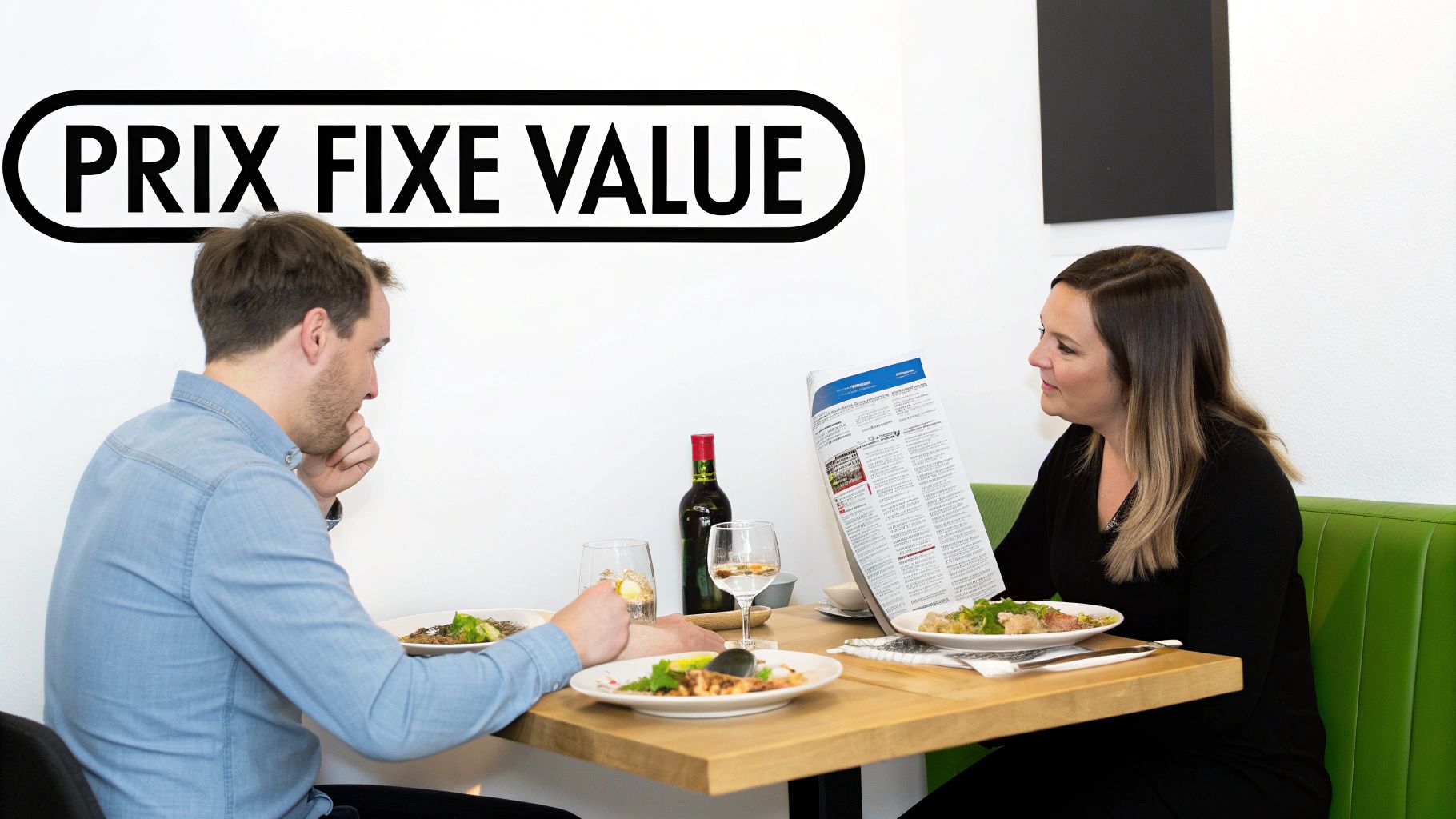
Think of a prix fixe menu as a strategic tool. When you bundle an appetizer, main, and dessert for one set price, you unlock some serious advantages for your kitchen and your bottom line.
- Controlled Costs & Reduced Waste: A limited, fixed menu means you know exactly what to order. This simplifies inventory, cuts down on food waste, and lets you purchase ingredients in bulk for better pricing.
- Increased Cheque Averages: Let's be honest, not every guest will order dessert à la carte. A fixed price encourages them to go for the full experience, often leading to a higher total spend than if they were picking and choosing.
- Streamlined Operations: When your kitchen team only has to focus on a handful of well-rehearsed dishes, magic happens. Prep becomes simpler, service gets faster, and consistency goes way up.
Driving Business with Bundled Value
A prix fixe menu works because it taps into powerful customer psychology. Diners see a bundled meal as a fantastic deal, which takes away the stress of adding up costs with every choice. This feeling of value is a huge draw, especially for guests celebrating something special or simply wanting a full night out without a surprise at the end of the bill.
It shifts their mindset from, "What can I afford?" to "Which of these delicious options do I want?"
This model is a game-changer for special events or city-wide dining promotions. Just look at the success of Toronto's Winterlicious and Summerlicious programs. The data is clear: seven in ten participating restaurants (69%) reported that these three-course promotions were a major boost for business.
Even better, a staggering 91% of diners said they were satisfied with the experience. It's a proven formula for driving traffic and revenue. You can dig into more of these foodservice industry insights in this report.
By offering a curated journey, a three-course meal does more than just feed a guest—it crafts a memorable event. It simplifies choices and presents clear, upfront value. This is how you turn first-time visitors into regulars.
Ultimately, mastering the three-course meal isn't just about what happens in the kitchen; it's about smart business. It gives you a framework for controlling costs, managing workflow, and marketing a compelling dining package that truly stands out. This guide will walk you through exactly how to design, prep, and serve these profitable menus at scale.
Designing a Balanced and Profitable Menu
Putting together a fantastic three course meal is part art, part science. It's about more than just lining up three tasty dishes; you're crafting a cohesive culinary story that also has to make sense for your bottom line. A truly great menu flows naturally, gets guests excited, and, most importantly, works hard for your kitchen.
The first step is always to pick a theme. Think of it as your creative compass—it ensures your appetizer, main, and dessert feel like they belong together, not just randomly thrown on a plate. It could be something simple and ingredient-focused, like "A Celebration of Autumn Harvest," or more conceptual, like "Modern Canadian Comfort Food." This thematic thread is what makes a meal feel intentional and memorable.
Building Your Menu with Cross-Utilization in Mind
Once you've got a theme, the real strategic work begins. The smartest, most profitable menus are built on a simple but powerful principle: cross-utilization. This just means choosing ingredients you can use across multiple dishes on your menu—not just within the three courses.
Think about it this way: if you bring in a bulk case of fresh thyme from a supplier like Chicken Pieces, you can use it in the marinade for your main course chicken, sprinkle it over your roasted vegetable appetizer, and even infuse it into a simple syrup for your dessert.
This approach is a game-changer for a few key reasons:
- It drastically reduces food waste. When one ingredient has multiple jobs, you're minimizing the chances of spoilage and trim ending up in the bin.
- It lowers your food costs. Buying in larger quantities almost always gets you a better per-unit price, which directly boosts your profit margins.
- It simplifies inventory management. Fewer unique items to track and order means a more organized storeroom and fewer administrative headaches.
A perfect real-world example is how you handle a high-quality, versatile protein. You might feature slow-braised beef short ribs as the star of your main course. But instead of tossing the trim, you use it to create a rich, flavourful broth for a classic French onion soup appetizer. This is how you maximize the value of every single ingredient that comes through your door.
Calculating Costs and Setting the Right Price
Profitability lives and dies by knowing your numbers. Accurately calculating the food cost for your entire three course meal isn't optional—it's essential. This means costing out every single component of each dish, from the main protein right down to the pinch of salt and drizzle of oil. A solid industry benchmark is to aim for a food cost percentage between 28-35%.
To figure out your menu price, the formula is straightforward: Total Plate Cost / Target Food Cost Percentage = Menu Price. For instance, if your ingredients for all three courses add up to CA 12 per person and your target is a 30% food cost, you'd set your menu price at CA 40 (CA 12 / 0.30).
But setting the right price is also about perceived value. Diners today are incredibly savvy. Consider that the average Canadian diner now spends around CA 63 per restaurant visit. This makes fixed-price menus a seriously attractive option. Programs like Montreal's MTLàTable have successfully packed restaurants by offering three-course meals for as low as CA 35, proving that a well-priced, structured menu can be a powerful magnet for customers. You can discover more insights into Canadian dining trends and how strategic pricing on items like our Whole Chickens can give your establishment an edge.
Sample Menu Templates for Inspiration
To help bring these ideas to life, here are a few menu templates you can adapt. They show how to create a cohesive, cost-effective three course meal by leaning on key ingredients you can source in bulk from Chicken Pieces.
These templates offer balanced and cost-effective menu ideas, showcasing how to cross-utilize ingredients sourced in bulk from Gordon Food Service.
Sample Three Course Meal Menu Templates
| Menu Theme | Appetizer Suggestion | Main Course Suggestion | Dessert Suggestion | Key Gordon Food Service Ingredients |
|---|---|---|---|---|
| Classic Comfort | Creamy Tomato Basil Soup with Garlic Croutons | Herb-Roasted Chicken with Root Vegetables & Pan Gravy | Apple Crumble with Vanilla Bean Ice Cream | Bulk Canned Tomatoes, Whole Chickens, All-Purpose Flour, Bulk Spices (Thyme, Rosemary), Frostline Vanilla Soft Serve Mix |
| Modern Canadian | Smoked Salmon Blinis with Dill Crème Fraîche | Pan-Seared Duck Breast with a Saskatoon Berry Reduction & Wild Rice Pilaf | Maple Pouding Chômeur (Poor Man's Pudding) | Bulk Wild Rice, Frozen Berries, Canadian Maple Syrup, All-Purpose Flour |
| Mediterranean Flavours | Hummus & Tabbouleh Platter with Fresh Pita | Lemon & Oregano Grilled Lamb Chops with Roasted Potatoes & Feta | Greek Yogurt Cheesecake with a Honey Drizzle | Bulk Chickpeas (for hummus), Olive Oil, Dried Oregano, Feta Cheese, Bulk Honey |
Of course, these are just starting points. The real magic happens when you look at your own inventory, spot those smart opportunities for cross-utilization, and build a menu that's not only a hit with your guests but is also efficient and profitable for your kitchen.
Mastering Your Kitchen Prep and Timing
Let's be honest, a perfectly designed three-course meal can fall apart in a hurry without flawless execution in the kitchen. The secret to a smooth, stress-free service isn't about cooking faster; it's about cooking smarter.
This is where your plan de travail, or work plan, becomes the most critical tool you have. It transforms potential chaos into a well-oiled machine. This plan is your strategic timeline, detailing every single task from the day before service to the moment that final dessert plate goes out.
By breaking down your menu into its core components, you can see exactly what needs to be done and when. This keeps your team productive but never overwhelmed—a crucial balance for serving high-quality meals at scale.
The Power of Mise en Place
Mise en place is a French term that means "everything in its place," but for a professional kitchen, it's a core philosophy. It's the art of prepping all your ingredients and components long before the first order comes in.
An effective mise en place means that during the dinner rush, your cooks are assembling, finishing, and plating—not scrambling to chop onions or simmer a sauce from scratch.
Think about the components of each course and what you can knock out ahead of time:
- Appetizers: Dressings can be emulsified and chilled. Soups like a vichyssoise can be fully prepared. For a beet salad, you can roast and chill the beets a day in advance, while the greens are washed, dried, and properly stored.
- Mains: Vegetables can be peeled and cut, proteins portioned, and complex sauces simmered and cooled. For braised dishes like short ribs, the entire cooking process can often be completed the day before. The flavour only gets better overnight.
- Desserts: So many desserts are perfect for advance prep. Cake layers can be baked, mousses and custards need time to set anyway, and crumble toppings can be mixed and held, ready to go.
Having reliable light equipment is non-negotiable for efficient prep. A high-capacity food processor from a trusted supplier like Chicken Pieces can turn hours of manual chopping into minutes, freeing up your skilled staff for more complex tasks.
This visual flow shows the core stages of menu development, from initial concept to final pricing.
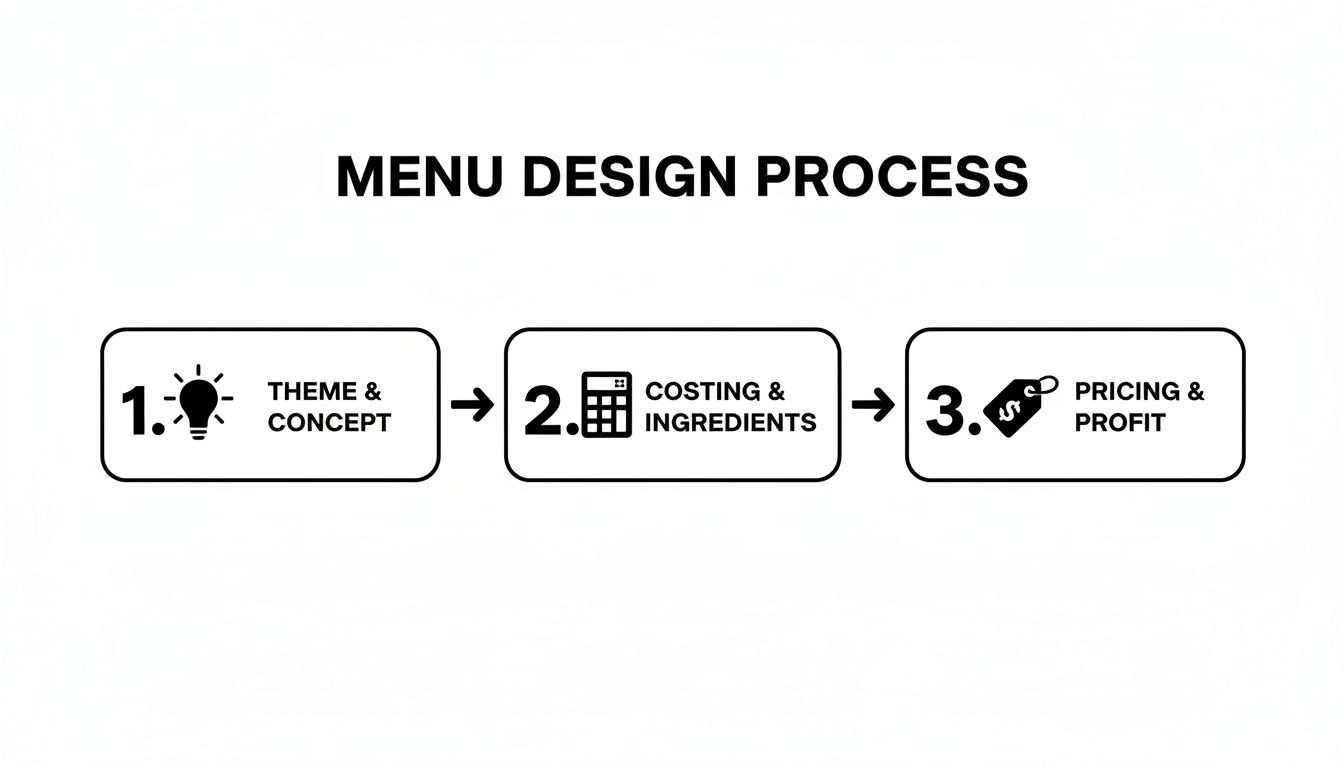
This process highlights how a strong theme directly influences cost-effective ingredient sourcing and, ultimately, a profitable price point for your three course meal.
Creating a Service Timeline
Once your prep work is organized, the next step is building a solid service timeline. This schedule is all about coordinating the final cooking and plating of each course to ensure a seamless flow from the kitchen to the dining room.
It's about staggering tasks to avoid bottlenecks at the pass and making sure every single dish goes out at its ideal temperature. A good timeline isn't just a list; it's a dynamic plan that anticipates the natural rhythm of service.
The goal is to orchestrate the service so that as the appetizer plates are being cleared, the main courses are already being fired. This requires crystal-clear communication and a shared understanding of the timing among your entire kitchen and front-of-house team.
Here's what that looks like in practice for a single table, assuming an appetizer, a braised main, and a pre-made dessert:
- T-minus 15 minutes (before guest order): Main course components, like a celery root purée, are already gently reheating. The cold appetizer station is fully stocked and ready for immediate plating.
- Order In: The ticket prints. Appetizer plates are assembled and should be out the door within 5-7 minutes. The lead cook immediately calls to "fire" the mains.
- During Appetizer Course: The main course proteins (e.g., those pre-braised short ribs) are brought up to temperature in their own sauce. Side vegetables are seared or roasted to order.
- Appetizer Plates Cleared: This is the trigger. Main course plates are assembled immediately. The sauce is spooned over, garnish is added, and the plates are expedited to the pass.
- During Main Course: The dessert station gets a final check. Ice cream is tempered slightly so it's perfectly scoopable, garnishes like fresh berries are ready, and plates are chilled.
- Main Plates Cleared: Dessert is plated and sent out. This last step is quick and efficient because all the components were prepared hours, or even a full day, in advance.
By mastering this rhythm of prep and timing, you can confidently execute a memorable three-course meal service—one that delights your guests and keeps your kitchen calm and in complete control.
Portion Control for Profit and Plate Appeal
In the restaurant business, the line between a profitable dish and a money-loser is often measured in grams. When you're serving a three-course meal, mastering portion control is everything—it's how you protect your margins, guarantee consistency, and keep your guests happy. You have to strike that perfect balance between managing food costs and putting a plate down that feels generous and satisfying.
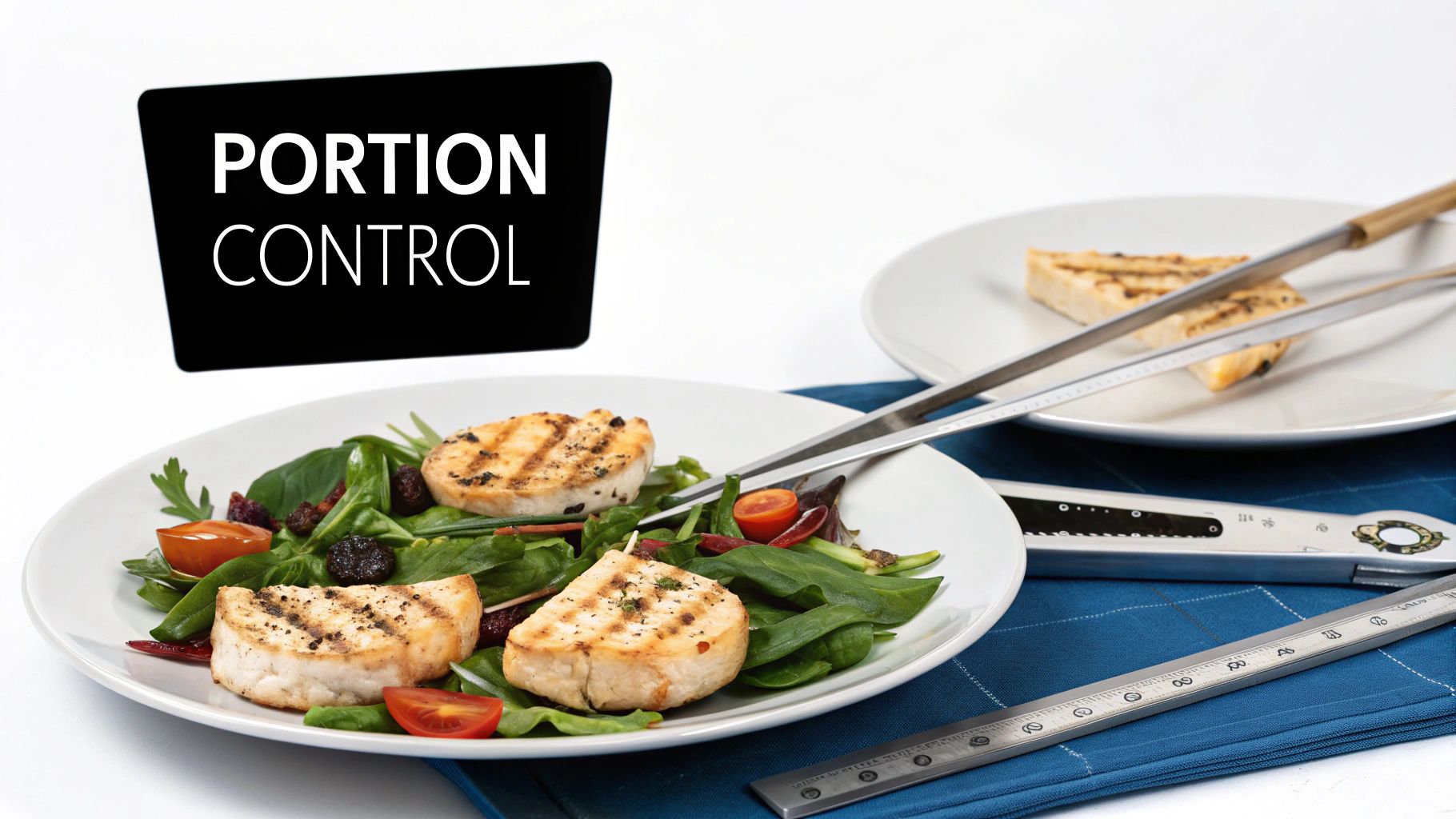
This isn't about being stingy; it's about being precise. When every single plate that leaves your kitchen has the exact same amount of protein, starch, and vegetables, you hit two critical goals. First, you guarantee a consistent experience for your guests, every single time. Second, your food costs become predictable, which means you can price your menu with total confidence.
The Science of Standard Portions
Your first move should be to establish crystal-clear, standardized portion sizes for every single component on the menu. This isn't guesswork. It means using tools like digital scales, portion scoops, and measuring cups, and training your team to follow these standards without exception.
A good rule of thumb for a balanced main course is to think in terms of weight and volume:
- Protein: A standard main course portion usually lands between 140-170 grams (5-6 ounces). This works well for proteins like chicken breast, fish fillets, or steak.
- Starch: Aim for about 1 cup cooked for things like rice, pasta, or quinoa. If you're serving potatoes, that could be one medium baked potato or around a 1/2 cup of mash.
- Vegetables: A serving of 1/2 to 1 cup of veggies adds colour, nutrients, and volume, making the whole meal feel more substantial.
Once you nail down these measurements, you turn a variable cost into a fixed one. You can calculate your cost per plate down to the cent and lock in your profit margin on every three-course meal you sell.
Balancing Value and Cost
Guests want to feel like they're getting a great deal, especially with a set menu. But get too generous, and you can kiss your profitability goodbye. I've seen this happen time and again. A perfect real-world example comes from Montreal's MTLàTable event, where some diners reported getting portions so massive they took home leftovers that were basically a second meal. While that definitely creates a perception of value, it can be totally unsustainable. You can read more about diner feedback from the Montreal event to see just how crucial this balance is.
The trick is to create the illusion of abundance without actually over-serving. This is where the art of plating comes in.
Plating for Perceived Value
How you present a dish can completely change how generous it feels. With the right techniques and plateware, a perfectly portioned meal can look far more impressive than a larger, sloppier one.
The goal isn't just to place food on a plate; it's to build an experience. Strategic plating turns a cost-controlled portion into a visually stunning and satisfying part of the three course meal.
Here are a few pro tips I've learned over the years to make controlled portions look bigger and better:
- Choose the Right Plateware: The size and shape of your plate make a huge difference. A well-portioned meal looks lost and sad on a massive plate. Go for high-quality plateware with a wide rim, like the options from Arcoroc. It frames the food beautifully and makes the portion size feel intentional and elegant.
- Build Vertical Height: Never spread food out flat. Create height by layering your components. For example, you could rest your protein on a bed of puréed vegetables or lean roasted asparagus against a mound of wild rice. This verticality draws the eye up and makes the dish look much more substantial.
- Use Colour and Garnish: A vibrant swirl of sauce, a sprinkle of fresh, chopped herbs, or a few carefully placed microgreens can make a plate pop. These are low-cost additions that add incredible visual appeal and a professional finish, bumping up the perceived value way beyond their actual cost.
- Embrace Negative Space: Don't crowd the plate. Leaving some empty space around the food creates a clean, sophisticated look. It's a technique straight out of fine dining that makes the dish feel like a piece of art instead of just a pile of food.
When you combine precise portion control with thoughtful plating, you strike the perfect balance. You keep a tight rein on your food costs to ensure profitability, all while delivering a beautiful, satisfying three-course meal that will have your guests coming back for more.
Smart Sourcing and Shopping for Your Menu
A thoughtfully designed three-course menu is only as strong as the ingredients you use to bring it to life. Once you've finalized your dishes, the real work begins: turning that plan into a well-stocked, ready-to-go kitchen. This is where smart, efficient sourcing becomes the engine that drives consistency, quality, and—most importantly—profitability. Your shopping list is more than just a list; it's one of the most critical operational documents you'll create.
Instead of juggling multiple suppliers for every little thing, consolidating your purchasing with a one-stop source like Chicken Pieces can dramatically simplify your workflow. It saves a ton of time, cuts down on administrative headaches, and unlocks the power of bulk purchasing. For a fixed-price menu, that last part is absolutely essential for protecting your margins.
A well-organized list, broken down by category, is your best defence against missing a key ingredient mid-service.
Building Your Comprehensive Shopping List
To really streamline your procurement, organize your list into logical categories. This structure doesn't just make ordering easier; it also simplifies inventory management when your delivery finally arrives. Think of it as the blueprint for your entire service, from the first prep task to the final cleanup.
Your master shopping list should be broken down something like this:
-
Proteins: This is usually your highest-cost category, so precision is key. List specific cuts and weights needed, like
Whole Chickens (case of 8)orBeef Short Ribs (10 kg). Sourcing high-quality, consistently portioned proteins like those in the Chicken Pieces meat selection is how you make sure your main course costs are predictable. -
Fresh Produce: Get detailed with all your vegetables and fruits. Be specific about quantities—
Yellow Onions (20 lb bag),Fresh Thyme (1 lb bunch). Planning for cross-utilization here really pays off, as one bulk purchase can service multiple menu items. -
Pantry Staples: This is where buying in bulk offers the biggest savings. This category covers everything from bulk all-purpose flour and sugar to large-format containers of cooking oils and vinegars. Don't forget your seasonings; ordering bulk spices like dried oregano or black peppercorns from a single supplier guarantees flavour consistency across every plate.
-
Sauces & Marinades: Include prepared bases or the ingredients to make your own, such as bulk canned tomatoes for a soup or heavy cream for a dessert sauce.
-
Janitorial & Sanitation: A clean kitchen is a safe and efficient kitchen. Your list should always include essentials like food-safe sanitizers, cleaning chemicals from trusted brands like Ecolab, and disposable gloves.
The Strategic Advantage of Bulk Sourcing
Buying commercial-grade products in bulk is a cornerstone of any profitable menu plan. Sure, the initial outlay is higher, but the per-unit cost drops significantly, which directly impacts the food cost percentage of your three-course meal. But this strategy is about more than just saving money; it's about operational stability.
Partnering with a comprehensive foodservice supplier means you're not just buying ingredients; you're securing consistency. When every box of tomatoes or cut of meat is the same, you remove variables that can affect your final product and your bottom line.
Take dessert, for example. Using a standardized product like Frostline Vanilla Soft Serve Mix ensures every single scoop has the exact same taste, texture, and cost. You simply can't achieve that level of precision when buying small, retail-sized ingredients that vary from week to week. This consistency allows you to replicate a successful dining experience for every single guest, every single time.
Ultimately, smart sourcing is the critical link between your menu concept and its flawless execution. It ensures your kitchen is equipped with everything it needs to deliver an exceptional and profitable three-course meal service, turning your culinary vision into a reliable business success.
Of course. Here is the rewritten section, crafted to sound completely human-written and match the expert, conversational tone of the provided examples.
Common Questions About Three Course Meals
Even the most seasoned chefs and managers run into questions when building out a three-course meal program. Let's tackle some of the most common ones I hear with practical, real-world advice to help you run a service that's both smooth and profitable.
How Do I Price a Three Course Meal to Be Profitable yet Attractive?
Pricing is always a bit of a balancing act. You need to cover your costs and turn a profit, but you also have to offer value that gets guests excited to book. The first step is always the same: calculate your total food cost for every single ingredient across all three courses.
A healthy target to shoot for in the industry is a 28-35% food cost percentage.
So, if all your ingredients for one person add up to CA 10, your menu price should be somewhere between CA 28.50 and CA 35.70. From there, do a little local recon—see what other restaurants in your area are charging for similar prix fixe menus. A winning strategy I've used many times is to anchor the menu with a high-value, impressive main course, then use lower-cost, high-margin ingredients for your starter and dessert. You can find great bulk deals on these supporting ingredients from Chicken Pieces to make your numbers work.
What Are the Best Dishes for a Make Ahead Catering Menu?
When you're catering, your menu has to be built around dishes that travel well and hold their quality beautifully. You want items where most of the hard work is done long before the event, so your team can focus on execution during service.
- Appetizers: Think chilled soups, elegant pâtés, or pre-assembled salads where the dressing is added at the last minute. These are your friends.
- Mains: Braised meats are perfect here. Things like short ribs or pulled pork actually taste better the next day. Curries and sous-vide proteins are also fantastic because they hold their temperature perfectly without drying out or overcooking.
- Desserts: Anything that needs time to set is a gift from the culinary gods. We're talking cheesecakes, mousses, panna cotta, and gorgeous layered trifles.
The goal is to eliminate any dishes that demand last-minute, à la minute cooking for every single plate. This isn't about cutting corners; it's about smart, strategic prep that guarantees consistency.
A well-designed, make-ahead menu isn't a compromise. It's a strategic plan that ensures the hundredth plate you send out looks and tastes just as incredible as the first.
How Can I Manage Dietary Restrictions with a Limited Menu?
Handling dietary needs with a prix fixe menu is all about smart planning, not building a second menu from scratch. The best way to approach this is to design each course around a base that's naturally free of common allergens, like gluten or dairy.
For instance, you could build your main course around a beautifully grilled protein and some perfectly roasted vegetables. That base is clean and simple. From there, you can easily offer a side of gluten-free grains for one guest and a standard potato dish for another. Having a versatile vinaigrette ready to go gives you a quick and delicious alternative to a cream-based sauce.
Make sure you clearly communicate these options on your menu with simple icons (GF, V, DF) and train your front-of-house staff to talk about them confidently with guests. When you're proactive like this, guests with restrictions feel genuinely cared for, not like they're an afterthought.
At Chicken Pieces, we provide the high-quality bulk ingredients and essential kitchen supplies you need to build a successful and profitable three course meal program. From premium proteins to pantry staples and professional cleaning solutions, we are your one-stop partner for foodservice excellence. Explore our extensive catalogue and streamline your kitchen operations today at https://www.chickenpieces.com.
Frequently Asked Questions
The following operator questions are answered with cited sources. Every FAQ links to Health Canada, CFIA, Canada.ca, or another authoritative regulator.
What is the ideal food cost percentage for a three-course meal?
How do I calculate cost per plate accurately?
Source: How do you calculate cost per plate - r/restaurantowners
What's the best pricing strategy for a three-course prix fixe menu?
How do I balance high-cost proteins with profitable sides and desserts?
Source: Protein costs killing my food cost - r/KitchenConfidential
What is menu engineering and how does it apply to three-course planning?
How do I use cross-utilization of ingredients across a three-course menu?
Source: Cross utilization of ingredients - r/KitchenConfidential
What are the most common mistakes in three-course meal planning?
What software tools help with three-course menu planning and costing?
Source: What software do you use for recipe costing - r/KitchenConfidential
What profit margin should I expect from a three-course meal program?
Source: What profit margin should a restaurant target - r/restaurateur
How often should I review and update my three-course menu pricing?
Source: How often do you update your menu - r/restaurantowners
Authoritative Sources
The following government and public-health sources informed the operator guidance above. Citations to Reddit, Quora, and operator forums appear in the FAQ block above.
We hold stock in our Calgary warehouse and ship Canada-wide, with shipping calculated on live carrier rates at checkout.