
2025 Dec 30th
Restaurant supplies wholesale Canada — Canada Guide
Restaurant Supplies Wholesale Canada: Your Guide to Saving on Bulk Purchases
Sourcing for your restaurant is more than just placing orders. It's the lifeblood of your operation. Finding the right wholesale partners is one of the most critical things you'll do, forming the very backbone of your success in Canada. This guide is designed to cut through the noise and give you a clear blueprint for sourcing everything your kitchen needs to run smoothly and profitably.
Building Your Restaurant Supply Chain in Canada
Think of your supply chain as your restaurant's circulatory system. A steady flow of blood keeps the body healthy and strong; a reliable stream of high-quality goods does the same for your business. From the crispest produce to the most durable takeout containers, this flow is essential for your survival and growth.
Without it, even the most talented chef and dedicated staff will be fighting an uphill battle. The real challenge is finding dependable, cost-effective suppliers in a competitive market. This isn't just about chasing the lowest price—it's about forging genuine partnerships that support your kitchen's daily rhythm and your restaurant's long-term vision. It means understanding who provides what, how they operate, and which ones truly align with your standards for quality.
Thriving in a Growing Market
The good news? You're building this business in an expanding market. The Canadian foodservice industry isn't just surviving; it's showing impressive resilience. In the first nine months of the year alone, the industry added a remarkable 23,600 jobs, outpacing the broader private sector.
This growth, highlighted in Restaurants Canada's Q3 Quarterly Report, saw commercial foodservice sales jump by 6.9% in the first seven months. You can learn more about what the Canadian foodservice industry's growth means for suppliers and operators alike.
A strong supply chain isn't a cost centre; it's a competitive advantage. It ensures your chefs have the ingredients they need to create exceptional dishes, your servers have the tools to provide excellent service, and your business has the foundation to thrive.
This guide is your playbook for building that advantage. We'll walk through everything from decoding different supplier types to mastering the logistics of your storeroom. Our goal is to give you actionable strategies to optimize your purchasing, slash waste, and ultimately, boost your bottom line. Whether you're opening your first café or managing a multi-location chain, getting your supply chain right is the key to success.
Decoding Your Wholesale Supplier Options
Figuring out the world of wholesale restaurant supplies in Canada can feel a little overwhelming at first. You'll come across a few different kinds of suppliers, and each one operates a bit differently, with its own unique strengths and quirks. Getting a handle on these differences is the first real step to building a supply chain that's both reliable and easy on your budget.
Think of it like putting together a championship-winning sports team. You wouldn't just sign a dozen goalies, right? You need a mix of players, each a pro in their specific position. In the same way, a smart sourcing strategy for your restaurant usually means working with a blend of different suppliers to make sure all your needs are covered.
The Broadline Distributor: The All-Rounder
Broadline distributors are the heavy hitters in the foodservice game. We're talking about the giants like Sysco and Gordon Food Service, who run massive distribution networks. Their catalogues are huge, designed to cover up to 90% of what a typical restaurant needs—from frozen foods and dry goods to cleaning supplies and basic equipment. They really aim to be a one-stop shop.
Their entire business is built on volume and efficiency. For you, that means the convenience of one order, one bill, and one delivery truck showing up at your door. It's a massive time-saver for any busy operator. The trade-off for all that scale, though, can sometimes be a lack of specialization. They're perfect for your everyday workhorses like flour, cooking oil, and standard janitorial supplies, but you might find their selection of unique, local, or artisanal products is a bit limited.
The Specialty Supplier: The Niche Expert
And that's where specialty suppliers come into play. These are the folks who go deep on one specific category, and their expertise is their biggest selling point. Think of a local butcher who sources amazing, ethically raised meats, a dairy that supplies incredible artisanal cheeses, or an importer who brings in rare spices from around the world.
Working with a specialty supplier is how you get your hands on those high-quality, brand-defining ingredients that make your menu stand out. A farm-to-table bistro, for instance, would be lost without its local produce supplier delivering seasonal vegetables. A high-end coffee shop probably has a close relationship with a small-batch roaster. These partnerships give you access to unique products and deep knowledge that the big guys just can't offer.
Your choice of supplier is a direct reflection of your restaurant's brand. A broadliner provides the foundation, but specialty suppliers add the character and quality that make your establishment memorable.
This flowchart shows the simple but critical flow of goods: from the producer, to your supplier's warehouse, and finally, onto the truck that arrives at your receiving door.
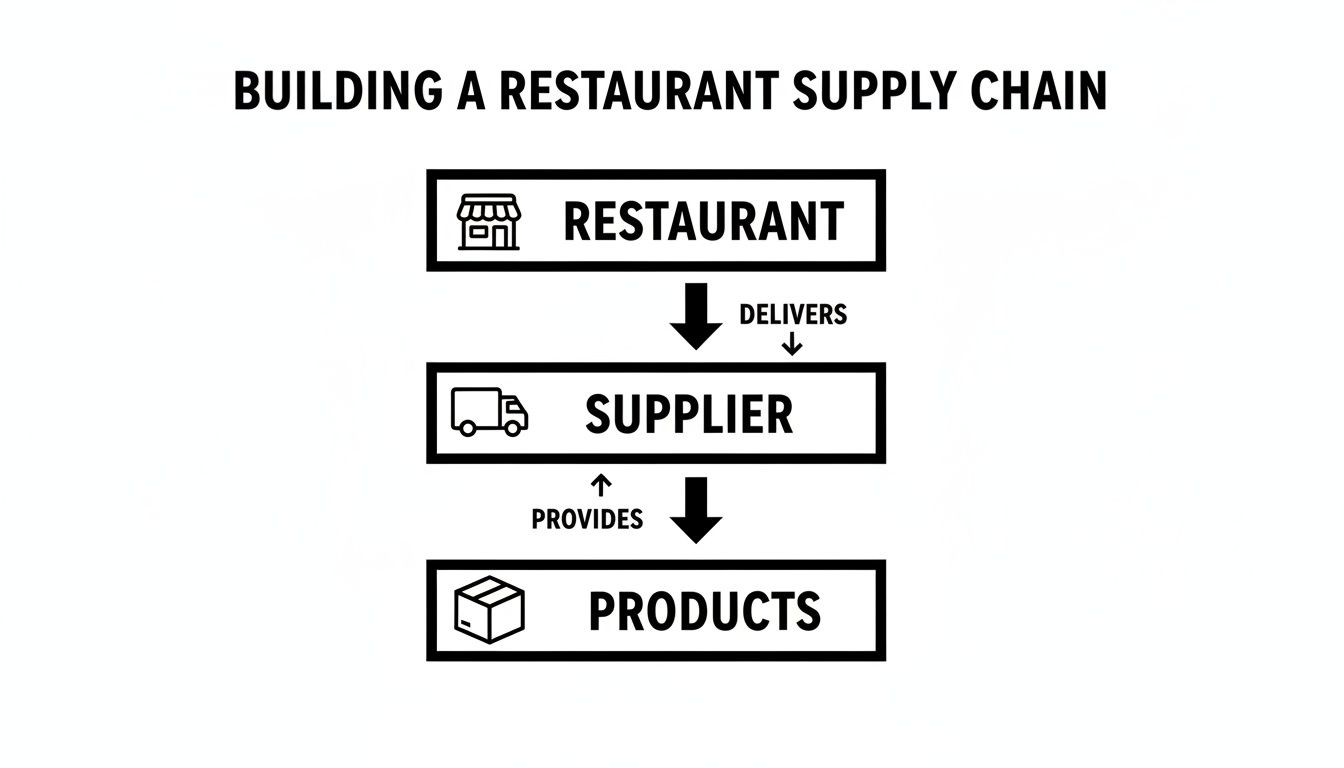
As you can see, a reliable supplier is the essential link that ensures the products you count on show up consistently, keeping your kitchen humming.
The Cash-and-Carry Wholesaler: The Emergency Backup
Finally, we have the cash-and-carry wholesalers. These are the big, warehouse-style stores where you can walk right in, buy products in bulk, and haul them away yourself—no waiting for a delivery. They are your ultimate safety net.
Did an unexpected dinner rush wipe out your cooking oil? Did a freezer break down, forcing you to restock essentials immediately? A quick trip to a cash-and-carry can absolutely save your service. While they aren't practical for your main sourcing strategy (it just takes too much time and labour), they are an indispensable resource for last-minute emergencies or for topping up key items between your regular deliveries.
To help you decide which combination is right for your operation, here's a quick breakdown of how these supplier models compare.
Comparing Wholesale Supplier Models in Canada
| Supplier Type | Product Range | Typical Pricing Structure | Best For | Key Considerations |
|---|---|---|---|---|
| Broadline Distributor | Very wide; covers most food, disposable, and janitorial needs. | Volume-based discounts, contract pricing. | Sourcing the bulk of your everyday staples and non-perishables. | Less specialized; may lack unique or artisanal products. Minimum order sizes often apply. |
| Specialty Supplier | Narrow and deep; focused on a single category (e.g., meat, produce, coffee). | Often higher per-unit cost, but with superior quality. | Sourcing high-quality, brand-defining ingredients and unique items. | Requires managing multiple vendor relationships and deliveries. |
| Cash-and-Carry | Broad but can be inconsistent; bulk sizes. | Pay-as-you-go, membership-based discounts. | Emergency restocks and filling inventory gaps between deliveries. | Requires your own transportation and labour; not efficient for primary sourcing. |
Ultimately, building a resilient supply network is all about balance. Use a broadline distributor for the bulk of your non-perishable staples to keep things efficient. Layer on trusted specialty suppliers for those key ingredients that define who you are. And always know where your nearest cash-and-carry is for those inevitable moments when you need something right now. This mix-and-match approach gives you the perfect blend of cost-effectiveness, quality, and flexibility.
Stocking Your Restaurant From the Ground Up
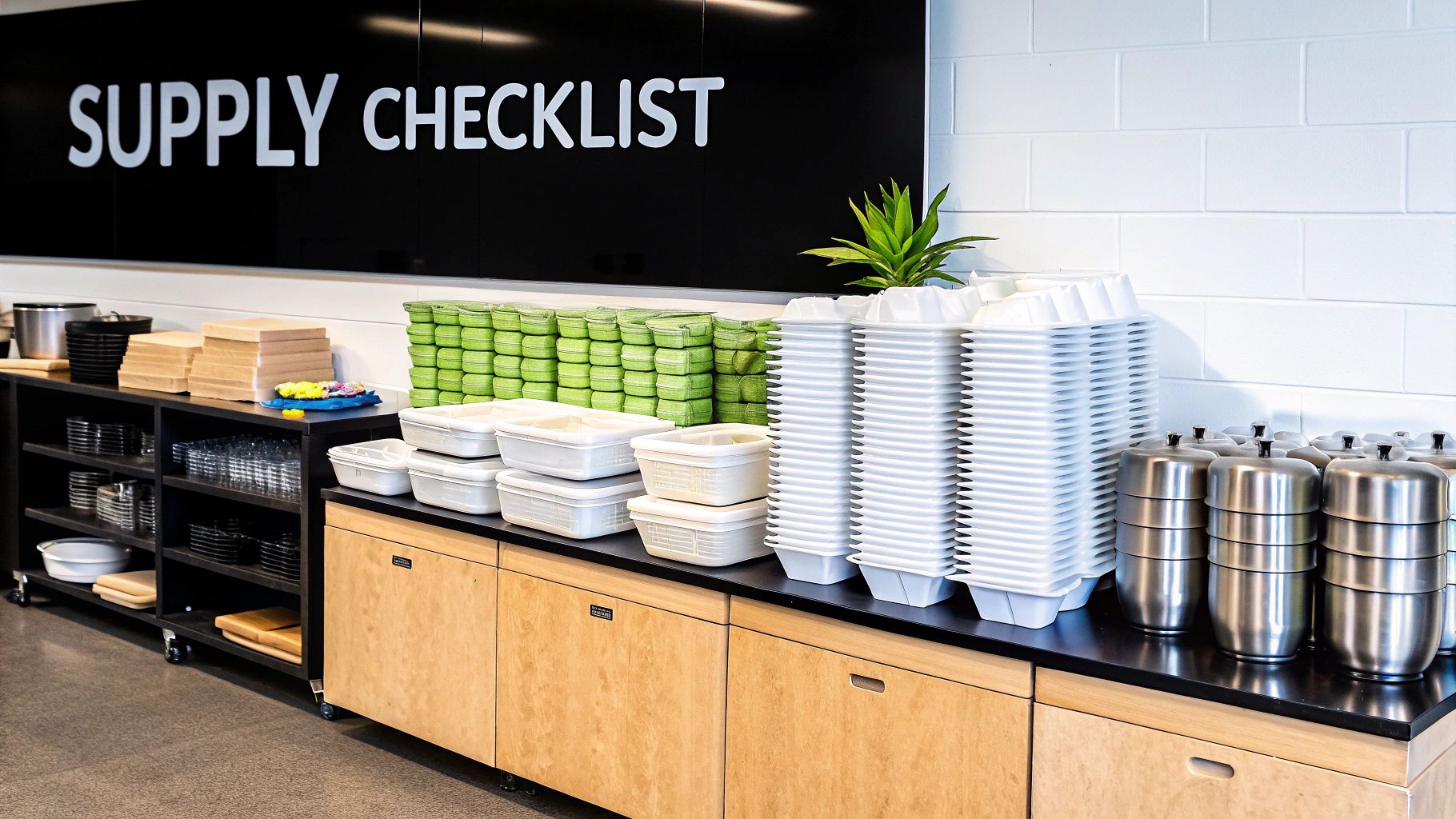
Alright, you've got a handle on your supplier strategy. Now comes the fun part: building your ultimate shopping list. This isn't just a trip to the store; it's the strategic outfitting of every single part of your operation.
Think of it as the architectural blueprint for your restaurant's daily life. Every item, from the salt shakers on the tables to the convection oven in the back, plays a part in your guest experience and, just as importantly, your bottom line. Let's break down the essential categories to make sure nothing gets missed.
Food and Beverage Essentials
This is the heart and soul of your business—the raw ingredients that you'll transform into your signature dishes. The choices you make here directly impact your flavour, consistency, and food cost, so sourcing through a reliable restaurant supplies wholesale Canada provider is key to keeping your margins healthy.
Your foundational list will look something like this:
- Pantry Staples: Flour, sugar, cooking oils, spices, and grains are the bedrock of countless recipes. Buying these in bulk is a classic, effective cost-saving move. Keeping a well-stocked pantry with essentials like our bulk spices and cooking essentials means you're always ready.
- Proteins and Produce: Fresh or frozen, these are usually the star of the show. Forging solid relationships with suppliers who guarantee top quality and freshness is absolutely non-negotiable.
- Beverages: This covers everything from coffee beans and tea bags to soft drink syrups and bar mixes. Don't overlook the chance to offer something special, like our Tonino Lamborghini coffee selections for that premium touch.
Disposables and Takeout Packaging
In today's world, your takeout and delivery game is just as crucial as your dine-in service. Your packaging is more than just a container; it's a mobile billboard for your brand and the final touchpoint a customer has with your food.
Here's what to keep in mind:
- Food Containers: Clamshells, soup cups, pizza boxes, and portion cups. They need to be sturdy, reliable, and right for your menu.
- Bags and Cutlery: A branded bag and decent disposable cutlery complete the to-go experience. It's a small detail that matters.
- Napkins and Wraps: Whether it's a branded paper wrap for a sandwich or a durable napkin, these little things make a big difference.
Choosing eco-friendly packaging isn't just a trend; it's a powerful brand statement. A 2023 study revealed that 78% of consumers are more likely to buy a product clearly labelled as environmentally friendly, making sustainable disposables a smart investment.
Commercial Kitchen Equipment
Welcome to the engine room. This is where you'll make your most significant upfront investment. Picking durable, energy-efficient, and correctly sized equipment is vital for long-term success. Going cheap here is a false economy; equipment that constantly needs repairs will drain your time and your bank account.
Focus on these core areas:
- Cooking Equipment: Ovens, ranges, grills, and fryers are your kitchen workhorses. Make sure they match the demands of your menu.
- Refrigeration: Walk-in coolers, freezers, and under-counter fridges are the backbone of food safety and inventory control.
- Food Prep Equipment: Mixers, slicers, food processors, and solid work tables are what will make your kitchen workflow smooth and efficient.
Janitorial and Sanitation Supplies
A sparkling clean restaurant is non-negotiable. It's fundamental for customer trust and for staying on the right side of health regulations. Skimping on cleaning supplies will cost you dearly in reputation and inspection reports. Think of your janitorial closet as your first line of defence.
Your checklist must include:
- Cleaning Chemicals: Disinfectants, degreasers, glass cleaners, and floor soaps are used daily. Stocking trusted brands like Ecolab cleaning chemicals ensures you're meeting professional standards.
- Tools and Hardware: Mops, brooms, buckets, and quality cleaning cloths are the tools of the trade.
- Restroom Supplies: Never, ever run out of toilet paper, hand soap, or paper towels. It's one of the quickest ways to get a customer complaint.
Tabletop and Barware
Finally, let's talk about the items your guests interact with directly. Your choice of plates, glassware, and cutlery sets the entire tone for the dining experience. It reinforces your brand's vibe, whether you're a rustic pub or an elegant fine-dining spot.
This category is being supercharged by the huge growth in Canada's foodservice market. The sector hit an estimated CA 135.2 billion, with the country's 79,097 full-service restaurants creating massive demand for wholesale tableware and barware. You can learn more about the trends shaping Canada's growing foodservice industry to stay ahead.
- Dinnerware: Plates, bowls, and platters need to be tough enough for commercial use while matching your restaurant's style.
- Glassware: Water glasses, wine glasses, and specialty cocktail glasses are key. Exploring options from respected brands like Libbey and Arcoroc helps you find the perfect fit.
- Flatware: Forks, knives, and spoons should feel good in the hand—a nice weight and balance completes the dining experience.
- Linens: Tablecloths and napkins can add a touch of class and define your restaurant's atmosphere in an instant.
By working through these five categories methodically, you'll build a complete, strategic shopping list. This approach ensures your restaurant is fully equipped for a smooth opening and ready for success right from day one.
Choosing Your Ideal Wholesale Supply Partner

Picking your wholesale supplier is one of the biggest calls you'll make for your restaurant. It's not just a transaction; you're essentially hiring a critical business partner.
The right supplier keeps your kitchen humming along without a hitch. The wrong one? They introduce a constant, low-grade friction that drains your time, money, and even your team's morale.
Of course, price matters. But it should never be the only thing you look at. A cheap product that breaks down or a delivery that's always late will cost you way more in the long run. The real goal is to find a partner who delivers genuine value, not just a low invoice. That means you need to dig a little deeper.
Look Beyond the Price Tag
A supplier's true worth is measured in their reliability and the quality they bring to your door. When you're vetting potential partners, your evaluation needs to go far beyond the catalogue price. A great supplier relationship is built on trust and predictability—knowing you'll get exactly what you need, right when you need it.
Start by looking at these core pillars:
- Product Quality and Consistency: Are their products actually built for a tough commercial kitchen? Ask for samples of high-use items like takeout containers or cleaning chemicals and put them to the test yourself.
- Delivery Reliability: Do they have a solid reputation for showing up on time? Ask about their fill rates—the percentage of items on an order they actually deliver—and find out their process for backordered items.
- Customer Service: What happens when something goes wrong? A supplier who's impossible to reach when a delivery is missing on a busy Friday night is a massive liability.
- Ordering Process: Is their website or online portal actually easy to use? A modern platform can make everything from placing orders to tracking inventory a breeze, saving you hours of admin time. For instance, our online store lets you re-order essentials like our Ecolab cleaning chemicals without any fuss.
Asking the Right Questions
Once you've got a shortlist of potential suppliers, it's time to interview them. Don't be shy about asking direct, detailed questions. How they answer will tell you a lot about their standards and how much they value their clients. Transparency is a very good sign.
Think of this as your vetting checklist:
- What is your return policy for damaged or incorrect items? A clear, no-hassle return process is non-negotiable.
- Do you have minimum order requirements for free delivery? This is a critical detail for managing your budget and cash flow.
- Can you provide references from other local restaurants? Talking to their current customers is the single best way to get an honest read on their service.
- What is your emergency support protocol? You need to know who to call after hours if a critical delivery doesn't show up.
Your supplier relationship is a two-way street. A partner who understands your kitchen's rhythm, anticipates your needs, and communicates proactively is an invaluable asset. They don't just drop off boxes; they help solve problems.
By treating the selection process with this kind of diligence, you're doing more than just finding a vendor. You're building a strong, long-term partnership that's based on mutual success. This foundation lets you focus on what you do best: creating an incredible experience for your guests, knowing your supply chain has your back.
Mastering Your Restaurant's Supply Chain Logistics
Choosing a great supplier is a huge win, but it's only half the battle. The other half is mastering the day-to-day logistics of keeping your restaurant perfectly stocked. This is where your financial savvy and operational smarts really come together.
Get it right, and you have exactly what you need, right when you need it, without tying up precious cash in a storeroom overflowing with excess inventory. Think of it as the choreography behind a flawless dinner service—it's all about precise timing, careful planning, and constant communication to make sure everything flows smoothly from the warehouse to the plate.
Controlling Costs and Maximizing Value
Managing your supply costs goes way beyond just picking the vendor with the lowest price tag. True financial control comes from looking at the bigger picture and finding ways to be more efficient, which is absolutely critical when you're sourcing restaurant supplies wholesale Canada.
Start by leveraging your purchasing power. It's simpler than it sounds:
- Negotiate Volume Discounts: If you're consistently ordering big quantities of certain items—think cooking oil, flour, or napkins—don't be afraid to ask your supplier for a volume discount. Your loyalty is valuable to them, and it should be valuable to you, too.
- Understand Delivery Fees: Are you paying extra for delivery? Many suppliers will waive those fees for orders that hit a certain dollar amount. Bundling your orders together can help you meet that minimum and cut out an unnecessary expense.
- Explore Group Purchasing Organizations (GPOs): A GPO is a powerful tool, especially for smaller, independent restaurants. It pools the buying power of many different operators to negotiate better prices than any single restaurant could get on its own.
Smart Inventory Management Techniques
Every box on your storeroom shelf is basically money just sitting there. Smart inventory management makes sure that money is working for you, not against you. The goal is to find that sweet spot: having enough stock to never run out, but not so much that you risk spoilage or waste capital that could be used elsewhere.
One of the most fundamental principles here is FIFO (First-In, First-Out). This simple but powerful method just means you use your oldest stock first. It's the single best way to cut down on spoilage, especially for perishables like produce and dairy. A quick tip is to just label incoming inventory with the delivery date—it makes FIFO easy for the whole team to follow.
An organized storeroom isn't just about tidiness; it's a direct reflection of your restaurant's financial health. Every misplaced case or forgotten box represents a potential loss. Mastering inventory is mastering cash flow.
The Growing Role of Technology
Across Canada, a mix of technology and cost pressures is changing how restaurants manage their supplies. Modern tools are quickly moving from a "nice-to-have" luxury to an essential part of staying competitive.
Square's Future of Restaurants report found that operators are investing heavily in automation to adapt to customers cutting back on dining out. While the high upfront cost of tech is a barrier for 51% of restaurants, the efficiency it brings is hard to ignore. As digital ordering continues to grow by double-digits, wholesale demand is shifting toward supplies that support it, like durable delivery packaging. You can find more insights on how technology is reshaping the Canadian restaurant industry on ibisworld.com.
Even simple tech can make a massive difference in your daily operations. A good inventory management system, often built right into your POS, can:
- Track your stock levels in real-time.
- Automatically trigger reorders when supplies run low.
- Give you data to forecast future needs based on your sales history.
This data-driven approach takes the guesswork out of purchasing. It transforms your supply chain from a reactive scramble into a proactive strategy, helping your operation run like a well-oiled machine. For example, being able to quickly re-order essentials like our Ecolab cleaning chemicals with just a few clicks saves time and prevents you from ever running out.
Navigating Canadian Food Safety and Regulations
Getting your food safety right isn't just about dodging fines from the health inspector. It's about building trust with every customer who walks through your door and protecting the reputation you've worked so hard to build. In Canada, every single restaurant operates under a tight web of food safety rules, and your wholesale supplier is arguably your most important partner in meeting those standards.
Think of your suppliers as the first line of defence in your food safety program. When you source restaurant supplies wholesale Canada, you're handing over a huge piece of your food safety responsibility to them. Their commitment to federal and provincial regulations has a direct, day-to-day impact on your business.
That's why you absolutely have to work with suppliers who live and breathe the guidelines set by Canada's food safety agencies. A supplier who knows their stuff ensures the products arriving at your back door are safe, properly handled, and compliant from the moment they leave the warehouse.

Key Regulatory Bodies in Canada
In Canada, food safety is a team effort between federal, provincial, and local authorities. Knowing who's who helps you ask smarter questions of your suppliers and your own team.
- Canadian Food Inspection Agency (CFIA): This is the big one. The CFIA is the federal body responsible for safeguarding Canada's entire food supply. They're the ones enforcing the policies that govern everything from a farm to your walk-in fridge.
- Health Canada: Think of Health Canada as the architects of food safety. They set the national standards and policies for nutrition and food safety, essentially writing the rulebook that the CFIA enforces.
- Provincial and Municipal Health Authorities: These are the local inspectors. They're the folks who show up at your restaurant to conduct on-the-ground inspections, making sure your daily operations are up to code.
Why Supplier Compliance Is a Non-Negotiable
A good supplier doesn't just drop boxes at your door; they deliver peace of mind. They manage critical safety protocols long before a product ever gets near your kitchen, focusing on two areas you absolutely need to understand.
Food Traceability: This is the ability to track a product's journey from its source all the way to your restaurant. If a foodborne illness outbreak ever happens, a supplier with solid traceability can pinpoint the source in hours, not weeks. This protects the public, and it could save your restaurant from being wrongly implicated.
Maintaining the Cold Chain: For anything perishable—from chicken to cheese to produce—keeping a consistent, cold temperature from the supplier's warehouse to your cooler isn't just a good idea, it's the law. This unbroken chain of refrigeration is called the "cold chain," and it's what stops dangerous bacteria from growing. Any reputable supplier will use refrigerated trucks and temperature monitoring to guarantee that cold chain is never broken.
A supplier's failure to maintain the cold chain doesn't just risk product quality—it creates a significant public health hazard. A single lapse can compromise an entire shipment, putting your customers and your business license at risk.
Finally, look for suppliers with certifications like HACCP (Hazard Analysis Critical Control Point). This isn't just a fancy acronym; it's an internationally recognized system that proactively identifies and controls potential food safety hazards. A supplier with HACCP certification is showing you they're serious about safety, making them a much more reliable partner. This commitment should extend to everything they sell, ensuring even janitorial supplies like our Ecolab cleaning chemicals are stored and handled correctly as part of a complete safety plan.
Your Wholesale Supply Questions Answered
The following operator questions are answered with cited sources. Every FAQ links to Health Canada, CFIA, Canada.ca, or another authoritative regulator.
Where can I buy restaurant supplies wholesale in Canada?
Products referenced:
- ChickenPieces
- BulkMart
- Nexday Supply
- Prime Restaurant Supply
- Mega Store
Source: Prime Restaurant & Foodservice Supplies Wholesale Canada
Do I need a business license to buy wholesale restaurant supplies in Canada?
Products referenced:
- no membership required
- public access
- wholesale pricing
Source: Rec: Look for local restaurant supply stores for your kitchen needs - r/BuyCanadian
What's the difference between wholesale and retail restaurant supply pricing in Canada?
Products referenced:
- wholesale pricing
- case quantities
- bulk savings
What restaurant supplies are best to buy wholesale in Canada?
Products referenced:
- disposable packaging
- cleaning chemicals
- paper products
- dinnerware case
- smallwares
What are the best Canadian wholesale suppliers for commercial kitchen equipment?
Products referenced:
- Denson CFE
- Brama
- Russell Hendrix
- commercial kitchen equipment
How much can I save buying restaurant supplies wholesale vs retail in Canada?
Products referenced:
- wholesale savings
- bulk pricing
- free shipping
Source: Mega Store - Canadian Wholesale Foodservice Supplier
What disposable foodservice products are available wholesale in Canada?
Products referenced:
- compostable containers
- paper straws
- compostable cutlery
- deli containers
- bakery boxes
Source: Prime Restaurant & Foodservice Supplies Wholesale Canada
What Canadian wholesale restaurant supply companies offer free shipping?
Products referenced:
- free shipping
- Canada-wide delivery
- wholesale online
Source: BulkMart — Canada's Top Wholesale Supplier for Foodservice
What cleaning and janitorial supplies should restaurants buy wholesale in Canada?
Products referenced:
- commercial dish detergent
- sanitizer
- degreaser
- trash bags
- nitrile gloves
What are the shipping costs and delivery times for wholesale restaurant supplies in Canada?
Products referenced:
- free shipping threshold
- Canada-wide delivery
- Calgary warehouse
- regional warehouses
Authoritative Sources
The following government and public-health sources informed the operator guidance above. Citations to Reddit, Quora, and operator forums appear in the FAQ block above.