
2025 Dec 11th
How to Open a Coffee Shop in Canada Your Complete Guide
How to Open a Coffee Shop in Canada: Your Complete Guide
Getting a coffee shop off the ground in Canada really comes down to a few big stages: nailing down a unique brand, writing a business plan that actually works, lining up your financing, and then wading through all the local red tape. It's a marathon, not a sprint. Your initial concept and strategic plan are the absolute foundation for everything else you'll do.
Crafting a Stand-Out Coffee Shop Brand and Business Plan
Before you even dream of buying an espresso machine or sampling beans, you have to answer the most important question: who are you going to be? The Canadian coffee market is crowded. Success isn't just about a good cup of coffee anymore; it's about creating a destination, an experience, and a brand that people in a specific community connect with. Just opening your doors and hoping for the best is a surefire way to fail.
Your brand is so much more than a cool logo and a clever name. It's the entire vibe of your shop—the feeling people get when they walk in. This identity will shape every single decision you make, from the furniture you choose to your style of service.
Defining Your Unique Concept
First things first, you need to pinpoint what will make your coffee shop special. Are you picturing a cozy, laptop-friendly neighbourhood hub with comfy armchairs and art from local painters? Or maybe a sleek, minimalist espresso bar focused on speed and high-quality, single-origin pour-overs for the morning commuter crowd?
Think about where you might fit in. Here are a few models to get the wheels turning:
The Community Hub: This is all about creating that welcoming "third place" for people outside of home and work. We're talking comfortable seating, free Wi-Fi, a community bulletin board, and maybe even hosting events like book clubs or open mic nights.
The Specialty Expert: This shop is built for the true coffee nerds. The whole point is to educate customers on different beans, roasting profiles, and brewing methods. The vibe is often a bit more clinical and clean, letting the quality of the coffee do all the talking.
The Grab-and-Go Model: Think high-traffic areas—downtown business districts, near a SkyTrain or Metro station. This concept is built for speed and efficiency. The menu is tight, the physical space is small, and the entire workflow is designed to get people in and out fast.
The Niche Theme: This is where you can get really creative. Maybe it's a bookstore-cafe, a spot with a Finnish-inspired menu featuring Suolakala (salt-cured salmon), or a cafe that also sells plants or vinyl records. A unique theme can be a powerful way to stand out.
Your brand concept is your North Star. It guides your menu, your marketing, your decor, and the exact type of customer you want to attract. A strong, clear concept keeps you from trying to be everything to everyone, which is how you end up being nothing special to anyone.
Building Your Business Plan
Once that brand identity is crystal clear in your head, it's time to get it down on paper in a formal business plan. This isn't just some document you write and forget about; it's your strategic roadmap. It's also the single most important tool you'll have for securing a loan from an institution like the BDC or convincing private investors to back you. A well-researched plan shows them you've thought through every angle of how to make this business profitable.
A solid business plan for a Canadian cafe needs to have these key sections:
Executive Summary: A quick, punchy overview of your entire plan. You'll write this part last, but it always goes right at the front.
Company Description: This is where you lay out your vision and mission. What makes your coffee shop different and necessary in the Canadian market?
Market Analysis: Define your ideal customer (e.g., university students, young professionals, families with kids) and take a hard look at the local coffee scene. Who are your direct and indirect competitors? What are they doing well, and where are their weaknesses?
Operations Plan: How will the shop actually run day-to-day? This covers your hours, staffing plans, and how you'll source key supplies. For instance, figuring out where you'll get everything from your Tonino Lamborghini coffee beans to your bulk cleaning supplies is crucial for controlling your operational costs from day one.
Marketing and Sales Strategy: How are you going to get people in the door and keep them coming back? Outline how you'll create buzz before you open, your grand opening plan, and your ongoing efforts like social media, a loyalty program, or partnerships with other local businesses.
Financial Projections: For any lender, this is the heart of the plan. You need detailed startup cost estimates, a projected profit and loss statement for the first three years, a cash flow analysis, and a break-even analysis. Be realistic, and be ready to show how you got your numbers.
Decoding the Numbers: Budgeting and Securing Your Funding
With your brand vision in place, it's time to translate that dream into financial reality. A lot of aspiring entrepreneurs get intimidated here, but trust me, creating a detailed budget is the most empowering thing you can do for your business. It takes your idea from a passion project and turns it into a viable investment—exactly what lenders and investors need to see.
Knowing your numbers inside and out is non-negotiable. The coffee shop market is competitive, and thin margins can make or break you. While every local market is different, it pays to look at broader trends. For instance, some mature markets have seen a decline of 5.5% in the total number of shops between 2020 and 2025, even as revenues for the successful ones went up. That tells you one thing: strong financial planning is what helps you outlast the competition from day one.
Estimating Your Startup Costs
Your first step is to nail down a list of every single one-time expense required to get your doors open. The final number can swing wildly depending on where you are in Canada, the size of your space, and whether you buy new or used gear. Being meticulous here is your best defence against surprise costs down the road.
Your biggest expenses will likely fall into these buckets:
Leasehold Improvements: This is often the biggest line item. It covers all the construction needed to turn a raw commercial space into a functioning coffee shop—think plumbing, electrical, flooring, and that custom-built counter you've been dreaming of.
Equipment and Technology: It's about more than just a fancy espresso machine. You'll need grinders, brewers, refrigerators, an ice machine, dishwashers, and a reliable Point-of-Sale (POS) system.
Initial Inventory: You'll need enough coffee beans, milk, syrups, pastries, and paper goods to get you through the first few weeks. Sourcing from a bulk supplier like Chicken Pieces can really help you manage these initial costs without over-ordering.
Professional Fees: Don't forget to budget for the experts. You'll want a lawyer to review your lease, an accountant to help set up your books, and maybe even a designer or architect.
Licences and Permits: These fees can add up quickly, covering everything from your business registration to your local health permit.
The chart below shows how the core parts of your business plan fit together, with the financial piece acting as the foundation for your brand and market strategy.
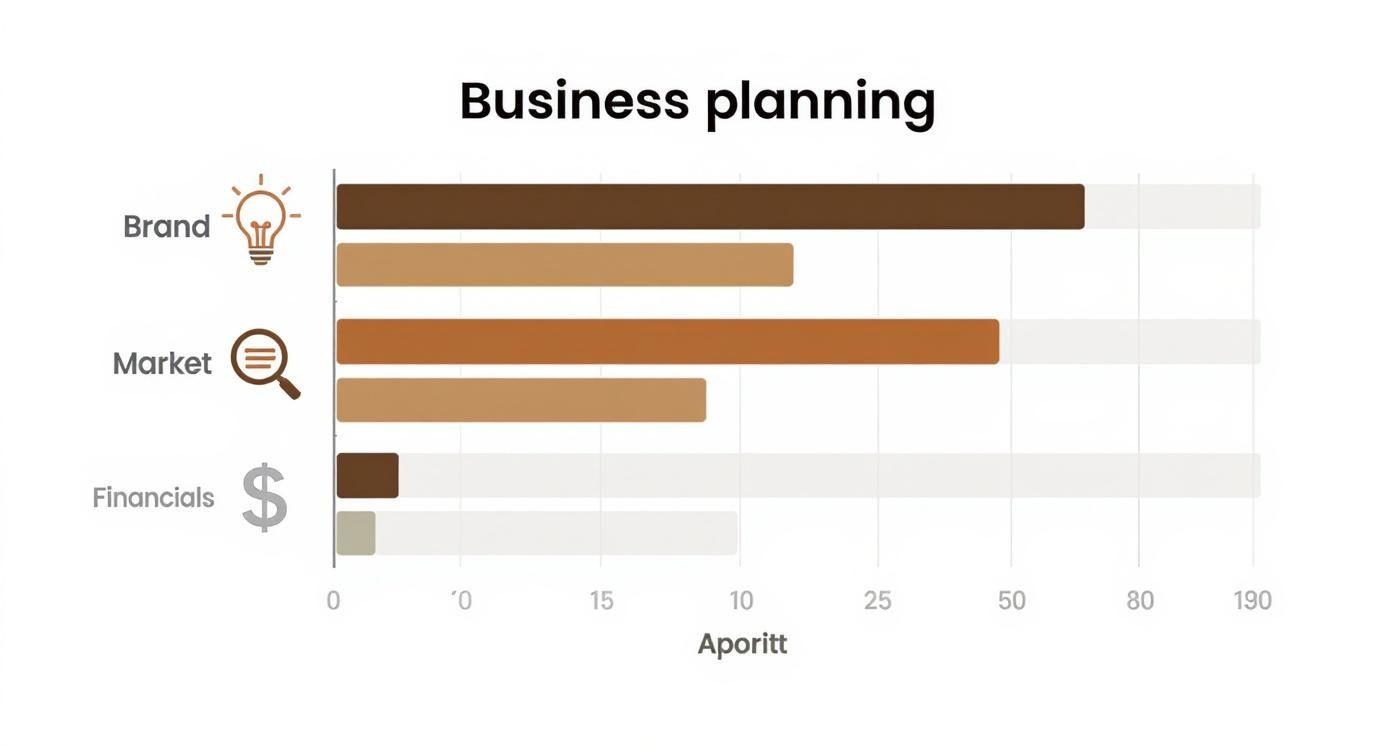
This visual really drives home how your financials make everything else possible, turning great ideas into a concrete plan that works.
To give you a clearer picture, here's a sample breakdown of potential startup costs. Remember, these are just estimates—your actual numbers will depend heavily on your specific location and choices.
Estimated Startup Costs for a Canadian Coffee Shop
| Expense Category | Low-End Estimate (CAD) | High-End Estimate (CAD) |
|---|---|---|
| Leasehold Improvements | CA 40,000 | CA 150,000 |
| Equipment & POS System | CA 35,000 | CA 80,000 |
| Initial Inventory | CA 5,000 | CA 12,000 |
| Professional Fees | CA 3,000 | CA 10,000 |
| Licences & Permits | CA 1,000 | CA 5,000 |
| Initial Marketing & Signage | CA 2,000 | CA 10,000 |
| Operating Cash Reserve | CA 10,000 | CA 30,000 |
| Total Estimated Costs | CA 96,000 | CA 297,000 |
This table illustrates the wide range you could be looking at. The key is to do your own research for your city and build a budget that reflects your reality, not just a template.
Finding the Right Funding for Your Coffee Shop
Once you have a detailed budget, you can start seeking funding with confidence. Here in Canada, entrepreneurs have some excellent options, each suited for different situations.
Don't just ask for money; tell a compelling story with your numbers. A well-prepared financial package shows you've done your homework and are a responsible steward for any potential investment.
Here are the most common funding avenues to explore:
Business Development Bank of Canada (BDC): The BDC offers loans specifically for small businesses and startups. Their financing is often more flexible than traditional banks, and they provide incredible resources and mentorship for new entrepreneurs.
Provincial and Federal Grants: Always be on the lookout for programs that support small business creation, youth entrepreneurship, or specific industries. Websites like the Government of Canada's business benefits finder are fantastic places to start.
Private Investors or "Angel" Investors: These are individuals who invest their own money in exchange for equity in your business. This route demands a polished pitch and a business plan that shows a clear path to high returns.
Personal Savings and "Friends and Family" Loans: Many founders self-fund at least a portion of their startup costs. If you go this route, always create formal loan agreements to keep things professional and avoid any awkward misunderstandings down the line.
No matter which path you choose, preparing a strong financial package is an absolute must. This means having your detailed budget, three-year profit and loss projections, and a cash flow analysis ready to go. It proves you understand how to open a coffee shop that isn't just a great place for coffee, but a sound, profitable business.
Finding the Perfect Location and Negotiating Your Lease
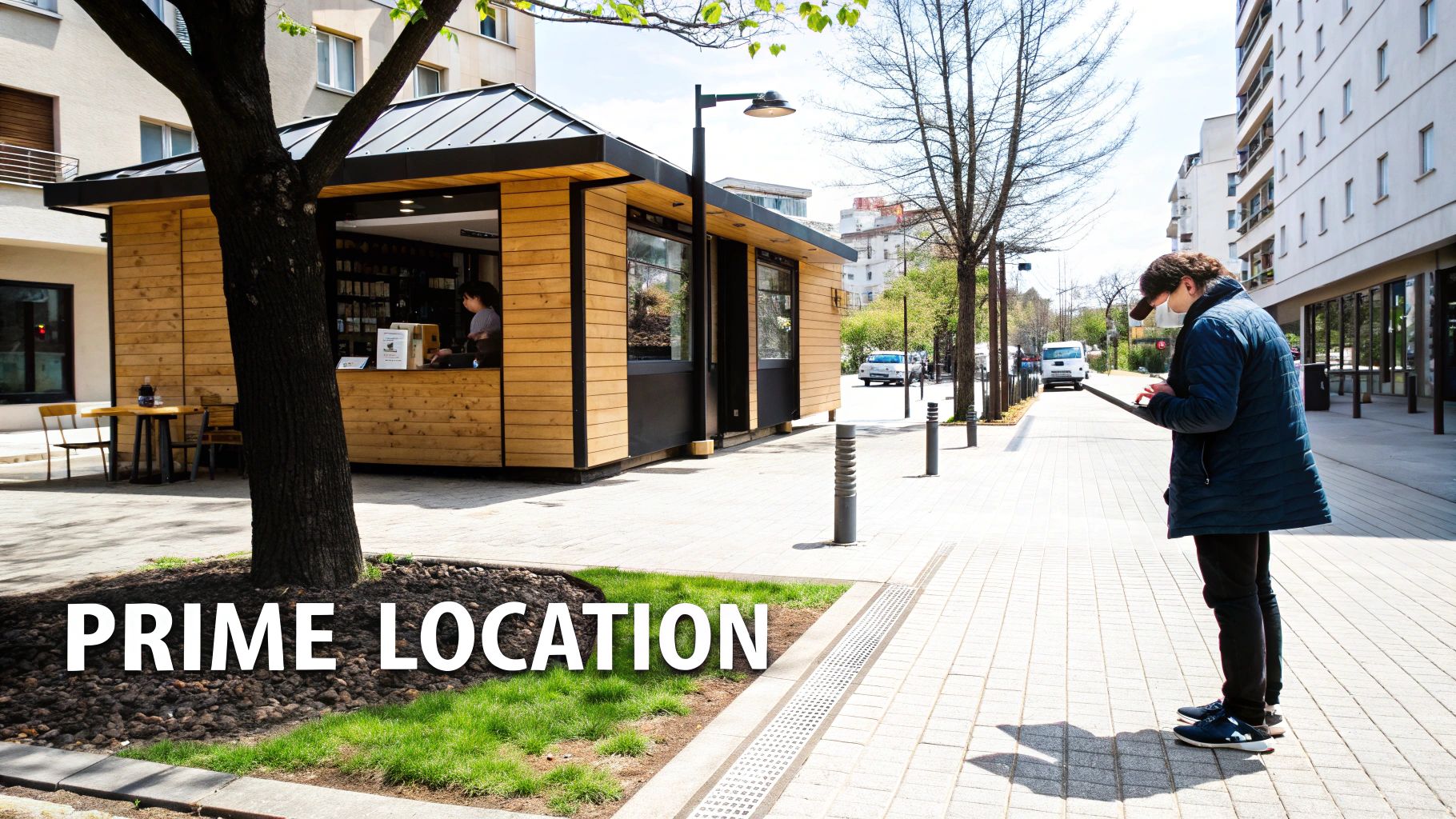
You've nailed down your brand and your budget is set, but the success of your coffee shop truly hinges on where you decide to plant your flag. That old real estate mantra "location, location, location" is more than a cliché; it's probably the single biggest factor in your day-to-day success. The perfect spot can make an average concept thrive, while a bad one can doom even the best coffee in town.
This choice goes way beyond just finding an empty storefront. It's about becoming part of a neighbourhood's daily rhythm. You need to find a place where your shop's vibe can genuinely connect with the local community.
Analyzing Potential Locations
Before you even think about signing a lease, you need to become a detective. Spend real time in the neighbourhoods you're considering. Don't just drive through—park your car and walk the streets at different times of the day and on different days of the week.
Here's what you should be looking for:
Foot Traffic: Who is walking by? Are they office workers rushing to a meeting, students heading to class, or families out for a weekend stroll? Your entire concept must align with this flow.
Visibility and Accessibility: Can people see your shop easily from the street? Is there convenient parking, or is it a short walk from a bus stop or subway station? A corner location with huge windows is often worth the extra rent.
Neighbourhood Demographics: Get a feel for who lives and works in the area. A high-end specialty coffee bar might struggle in a blue-collar industrial park but could absolutely flourish near new condo developments.
Proximity to 'Anchors': Being near businesses that draw a steady crowd—like grocery stores, gyms, universities, or large office buildings—can provide a built-in customer base right from day one.
Competition is another huge piece of the puzzle. While a high concentration of coffee shops can signal strong demand, it also means you'll have to fight harder for every single customer. The market can be intense. For example, California currently leads the U.S. with 4,063 coffee shops, which shows a vibrant but incredibly competitive environment. A coffee-loving culture is fantastic, but it also raises the stakes. You can discover more insights about U.S. coffee shop statistics to get a better sense of these competitive pressures.
Negotiating a Tenant-Friendly Lease
Once you've scouted your ideal spot, the next hurdle is the commercial lease. This legal document can feel intimidating, but negotiating favourable terms is absolutely critical for your long-term financial health. Never, ever accept the first offer from a landlord. Everything is on the table.
A lease isn't just a rental agreement; it's a long-term business partnership. You need to make sure the terms protect your investment and give you the flexibility to grow. A bad lease can slowly bleed a profitable business dry.
Focus your negotiation on these key areas:
Rent and Escalations: Push for the lowest possible base rent and try to cap how much it can increase each year. Many landlords use a "triple-net" (NNN) lease where you also pay for taxes, insurance, and maintenance, so get a clear picture of these additional costs upfront.
Tenant Improvement (TI) Allowance: This is a big one. Ask the landlord to contribute financially to your build-out costs. A decent TI allowance can be a game-changer for your startup budget, freeing up cash for better equipment or marketing.
Lease Term and Renewal Options: A shorter initial term (say, 5 years) with options to renew gives you crucial flexibility. This protects you if the location doesn't perform as well as you hoped.
Exclusivity Clause: This is vital. Negotiate a clause that prevents the landlord from leasing another space in the same building or plaza to a business whose primary focus is selling coffee.
Hiring a commercial real estate lawyer to review the lease before you sign is not an optional expense—it's a necessary investment that protects your entire business. They've seen it all and will spot the hidden clauses that can hurt you down the road.
Untangling Canadian Permits and Health Regulations
Once you've found the perfect spot, it's time to face the inevitable: bureaucracy. This part of the journey is less about chasing your passion and more about precision and paperwork. Getting tangled in red tape can stall your grand opening for months, so you need to approach this with a clear, organized strategy.
Think of it as a multi-layered process involving federal, provincial, and municipal governments. Each level has its own rulebook, and you have to follow them all. Dropping the ball here can lead to hefty fines or, even worse, a forced shutdown before you've even served your first latte.
The Three Tiers of Canadian Business Licensing
Your compliance requirements are like a pyramid. You've got the federal government at the top, your province in the middle, and your local municipality at the base. You'll need the green light from all three.
Federal Requirements: Your first official step is registering your business with the Government of Canada. This is where you'll decide on your business structure—sole proprietorship, partnership, or incorporation—and get your Business Number (BN) from the Canada Revenue Agency (CRA). This single number is your master key for taxes, payroll, and any import/export activities.
Provincial/Territorial Rules: Each province has its own flavour of regulations. This is where you'll likely register your business name provincially, apply for a liquor license if you're thinking of serving more than just coffee, and make sure you're squared away with provincial labour standards for your team.
Municipal Permits: This is where the rules get hyper-specific to your physical shop. Your local city hall is who you'll talk to for your main business operating license. They also handle permits for your beautiful new sign and any building permits for renovations.
Navigating the regulatory maze is a true test of your diligence. Don't treat it like an afterthought—build it into your business plan from day one. A detailed checklist and a timeline for every application will be your best friend, saving you from costly delays and ensuring you're 100% compliant on opening day.
Mastering Local Public Health Inspections
Of all the hurdles you'll face, passing your public health inspection is the big one. Without this approval, your doors stay locked. Simple as that.
Health inspectors are meticulous, and their job is to protect public safety. They will scrutinize every square inch of your shop, from how you store your milk to your staff's handwashing habits.
Your local public health unit will have its own checklist, but they almost always focus on these key areas:
Kitchen Design and Workflow: They're looking for a logical flow that prevents cross-contamination. This means having clearly separate areas for raw food prep (if any), cooking, and dishwashing. The whole layout has to be designed for easy, thorough cleaning.
Equipment and Surfaces: Every piece of equipment needs to be commercial-grade and NSF-certified. Any surface that touches food, like your countertops and cutting boards, must be smooth and non-porous. No exceptions.
Sanitation and Pest Control: This covers everything from proper handwashing stations for your staff (complete with hot water, soap, and paper towels) to having a three-compartment sink for dishwashing. You'll also need a contract with a professional pest control company.
Food Safety Protocols: You need a rock-solid plan for receiving, storing, and handling food at safe temperatures. This involves meticulous refrigeration, clear labelling, and robust staff training.
To get set up with the right stuff from the get-go, partnering with a reliable bulk supplier like Chicken Pieces for industrial cleaning chemicals and sanitation supplies ensures you have the correct, health-code-compliant products.
Finally, at least one person on every shift—ideally your manager or supervisor—must hold a valid Food Handler Certification. This provincially recognized course is a non-negotiable requirement across Canada. Get your key staff certified early. It shows inspectors you're serious about safety and puts you one step closer to opening.
Choosing Your Equipment and Designing a Profitable Menu
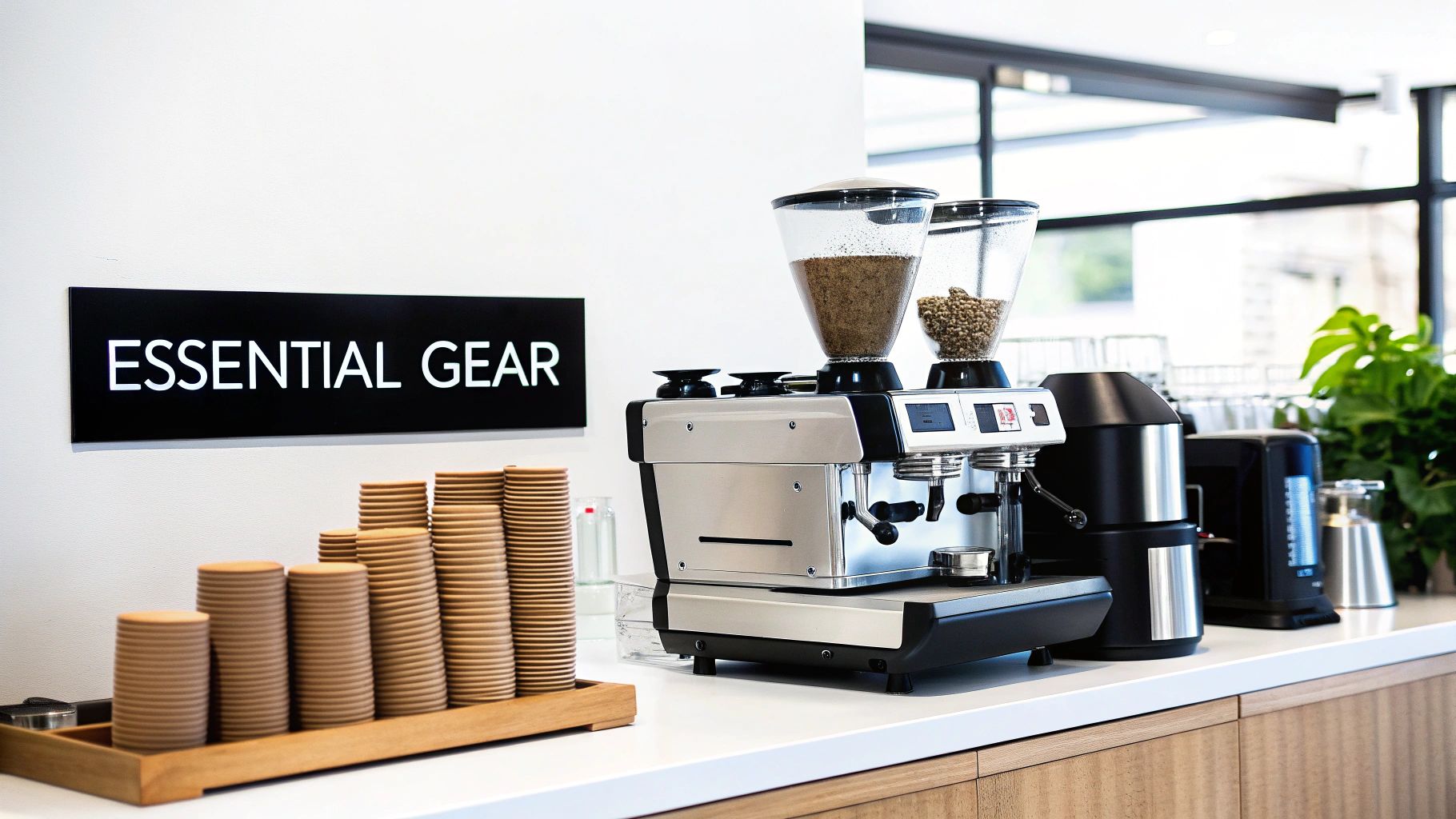
Alright, you've got your location sorted and the legal paperwork is out of the way. Now for the fun part—the stuff that actually feels like you're opening a coffee shop. It's time to pick out your gear and craft a menu that will have people lining up.
These are the things your customers will see, touch, and taste every single day. Your equipment is the engine of your business, while your menu is its soul. Getting this right is a careful balancing act. You need reliable machines that your baristas love to use, paired with a menu that not only excites your customers but also makes financial sense. Every single choice, from the espresso machine to your signature latte, directly impacts your bottom line.
Sourcing Your Essential Coffee Shop Equipment
The heart of any café is its coffee bar, and getting it kitted out will be one of your biggest upfront investments. The right equipment is the difference between quality, consistency, and speed—three things your customers will definitely notice. Whatever you do, don't fall into the trap of buying residential-grade appliances. They just can't keep up with the demands of a commercial environment and will fail you when you need them most.
Before you start shopping, create a detailed checklist of everything you need to execute your menu and run the shop. This list will be your roadmap, whether you're buying new, used, or leasing.
Espresso Machine & Grinders: This is your showpiece and your workhorse. A commercial two-group machine is a solid starting point for most small to mid-sized shops. You'll also need at least two top-notch grinders—one dedicated to espresso and another for your drip or pour-over coffee.
Brewing Equipment: Beyond espresso, think about commercial drip brewers for batch coffee, gooseneck kettles for tea and pour-overs, and maybe even a dedicated cold brew system if that's part of your vision.
Refrigeration: This isn't just one fridge. You'll likely need a main reach-in refrigerator for milk and ingredients, a smaller under-counter fridge for the bar, and a display case for pastries and grab-and-go items.
Point-of-Sale (POS) System: A modern POS system is non-negotiable. It does more than just take orders; it tracks sales data, helps manage inventory, and gives you crucial business insights. Pick one that's easy for your staff to learn and provides you with solid reporting.
Warewashing: A commercial-grade dishwasher or a proper three-compartment sink setup is essential for meeting health codes and keeping up with the constant flow of dirty dishes.
As you source these big-ticket items, you'll face the classic buy-new-versus-buy-used dilemma. New gear comes with a warranty and peace of mind, but it's pricey. Used equipment can save you a bundle—think 30-50%—but it carries the risk of breakdowns with no warranty to fall back on.
My advice? A hybrid approach usually works best. Splurge on a new espresso machine and grinders since they're the core of your operation. Then, look for quality used refrigeration and stainless steel prep tables to save some cash.
Engineering a Menu for Maximum Profitability
Your menu is so much more than a list of drinks. It's your most powerful sales tool. A thoughtfully engineered menu guides customers toward your most profitable items while still offering a range that speaks to your target demographic. It needs to reflect your brand, whether that's a tight, curated list of specialty drinks or a broader offering with unique food options.
Start with the basics every coffee shop needs: espresso, lattes, cappuccinos, and brewed coffee. Once you have that foundation, you can start adding items that give your shop personality and, more importantly, boost your profit margins.
Your menu should be a curated experience, not a chaotic list of everything you could possibly make. Every item should have a purpose, contributing to either your brand identity, customer loyalty, or your bottom line.
Consider adding signature drinks that people can't get anywhere else. This is your chance to get creative with house-made syrups and interesting flavour combinations. These unique offerings are what customers will remember and tell their friends about. You can easily find the essentials for these creations, from Tonino Lamborghini espresso beans to a wide variety of syrups, from reliable bulk suppliers.
Understanding and Managing Food Costs
Finally, pricing is where your passion for coffee meets the cold, hard numbers of business. To price your menu correctly, you have to calculate the cost of goods sold (COGS) for every single item you sell. That means adding up the cost of every ingredient—right down to the cup, lid, and sleeve. For a coffee shop, a healthy target food cost is typically between 20-30%.
Staying profitable means staying on top of these costs. It comes down to a few key practices:
Strategic Sourcing: Build strong relationships with your suppliers. Buying in bulk where it makes sense can significantly lower your per-unit costs on things like milk, beans, and cups.
Inventory Management: Use a first-in, first-out (FIFO) system to minimize waste. Keep a close eye on your stock levels to prevent spoilage and avoid running out of key ingredients during a rush.
Regular Menu Analysis: Your POS system is a goldmine of data. Use it. Constantly review your sales reports to see what's selling well (your stars) and what's not (your dogs). Adjust your menu to feature your high-profit, high-popularity items more prominently.
Launching Your Brand and Winning Your First Customers

You've built your shop, hired your team, and the smell of fresh espresso is finally in the air. But a great launch is about more than just unlocking the doors for the first time. The final push is all marketing—creating a buzz that turns initial curiosity into a lineup of loyal regulars.
Honestly, your marketing should have started weeks, if not months, ago. Think of it as creating a story your neighbourhood can follow. This is how you get people excited before you've even served a single latte.
Building Pre-Launch Buzz
Don't be a stranger until opening day. Start building an audience by giving them a peek behind the curtain. Social media, especially visual platforms like Instagram and TikTok, is your best friend here.
Share photos of the renovation chaos, a video of your shiny new espresso machine being installed, or your baristas practicing their latte art. This kind of content makes people feel like they're part of the journey and personally invested in your success.
The goal of pre-launch marketing isn't just to announce your opening; it's to build a community that's genuinely excited to support you. They should feel like they've been part of the story from the beginning.
A smart, low-cost move is to collaborate with local influencers or popular neighbourhood social media accounts. Invite them in for a private tasting before you open. Their posts will generate an authentic excitement that you just can't buy with traditional advertising.
Executing a High-Impact Launch Week
Your grand opening is your chance to make a huge first impression. Instead of putting all your energy into a single day, plan a full week of promotions and small events. This gives more people a chance to discover you and keeps the momentum going.
Consider a few of these proven launch week ideas:
First 50 Free: Offering a free coffee to the first 50 customers each day for the first week is a classic for a reason. It creates urgency and, more importantly, a visible line that attracts even more attention.
Community Partner Day: Team up with a nearby business. For example, anyone who shows a receipt from the local bookstore gets 10% off their order. It's a great way to build goodwill and cross-promote.
Charity Contribution: Announce that you'll donate a portion of all sales from your first Saturday to a local charity. This immediately shows you care about the community you're in.
Fostering Long-Term Loyalty
Launch week excitement is great, but your long-term survival depends on turning those first-timers into regulars. This is where a simple, no-fuss loyalty program comes in. Think digital punch cards or a basic points system—something easy for customers to use and for you to manage.
Just as important is asking for feedback, and actually listening to it. Use simple comment cards or a QR code survey to ask people what they love and what could be better. When you listen and respond, you show customers you value their opinion, which is the fastest way to turn them into passionate advocates for your shop.
Your Top Coffee Shop Questions, Answered
Starting a coffee business always brings up a mountain of questions. It's part of the journey. Getting solid, real-world answers is what separates a good plan from a great one. Here are some of the most common things aspiring café owners in Canada ask.
How Long Does It Realistically Take to Turn a Profit?
This is the big one, isn't it? While every situation is different, most independent coffee shops should aim to break even within 18 to 24 months. The entire first year is really about survival—building your reputation, getting a handle on cash flow, and creating a loyal customer base.
What really moves the needle on that timeline? A few things: the amount of debt you start with, your monthly rent, and how quickly you can become the "go-to" spot in your neighbourhood. I've seen shops with a killer pre-launch marketing plan and a truly unique vibe start seeing profits much sooner.
What Are the Biggest Headaches with Staffing?
Finding and keeping skilled baristas is, without a doubt, one of the toughest parts of the job. The two biggest hurdles you'll face are staff turnover and the sheer amount of time it takes to train new hires to meet your quality standards. It's a constant cycle.
The best way to get ahead of this is to build a work culture people actually want to be a part of. That means offering competitive wages, sure, but also creating opportunities for growth and showing you respect their craft. A happy, well-trained team is your single best asset for creating the amazing, consistent experience that brings customers back.
What's the Best Business Structure to Use in Canada?
For almost every new coffee shop, incorporating is the smartest path forward. When you create a corporation, it becomes its own separate legal entity. This is a huge deal because it shields your personal assets (like your house or car) from any business debts or liabilities. It's a critical safeguard you don't want to skip.
A sole proprietorship is simpler to set up, but it leaves you personally on the hook for everything. My advice? Spend the money to talk with a lawyer or an accountant. They'll help you choose the right structure for your specific financial situation, and that initial investment will pay for itself in peace of mind.
Ready to get your new café stocked with everything from premium coffee beans to the essential sanitation supplies? Chicken Pieces is your partner for building that dream coffee business from the ground up. Take a look at our huge collection of commercial-grade products at https://www.chickenpieces.com.
Frequently Asked Questions
The following operator questions are answered with cited sources. Every FAQ links to Health Canada, CFIA, Canada.ca, or another authoritative regulator.
What espresso machine should I buy for my first coffee shop in Canada?
Source: Source
How much does it actually cost to open a coffee shop in Canada?
Source: Source
Where can I buy wholesale coffee beans in Canada and what are typical MOQs?
Source: Source
Should I buy a used espresso machine or new for my first cafe?
Source: Source
What permits and licenses do I need to open a coffee shop in Canada?
Source: Source
Do I need water filtration for my espresso machine?
Source: Source
What grinder should I pair with my commercial espresso machine?
Source: Source
How do I choose between a local Canadian coffee roaster and a large importer?
Source: Source
What bulk supplies do I need beyond coffee beans and what do they cost?
Source: Source
How should I store wholesale coffee beans to keep them fresh?
Source: Source
Authoritative Sources
The following government and public-health sources informed the operator guidance above. Citations to Reddit, Quora, and operator forums appear in the FAQ block above.