

2026 Jul 25th
Soft Serve Mix in Canada: Powder, Liquid, and Real Cost Per
Powder soft serve mix ships dry, stores for months, and mixes with water on site. Liquid mix arrives ready to pour but needs cold chain handling. Powder typically wins on cost per litre and storage flexibility for lower-volume Canadian operations.
Soft Serve Mix in Canada: Powder, Liquid, and Real Cost Per Cone
Built for Canadian Airbnb hosts, property managers, and facility operators who need consistent soft serve output without machine headaches or budget surprises.
Key Takeaways
What matters most when choosing between powder and liquid soft serve formats.
Powder stores longer
Dry mix sits on a shelf for twelve months. Liquid needs refrigeration and expires faster. For seasonal properties or backup stock, powder removes spoilage risk.
Liquid saves labour
Open the bag and pour. No measuring, no whisking, no clumps to dissolve. High-turnover spots with dedicated staff often prefer this simplicity.
Overrun controls texture
Air injection determines whether your cone feels dense like custard or light like grocery store soft serve. Powder lets you tweak this at the machine.
True cost includes water
Powder lists a lower unit price but needs potable water and mixing time. Liquid includes water in the weight you pay to ship. Run both numbers for your volume.
Lactose-free draws wider crowds
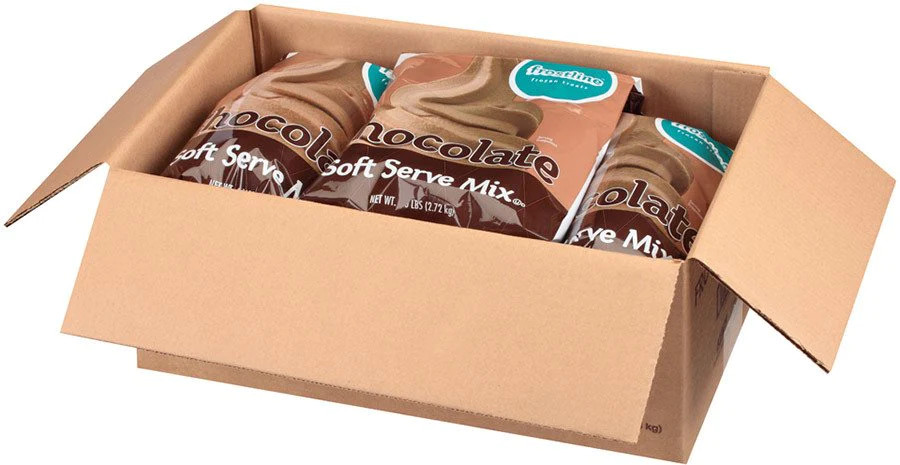
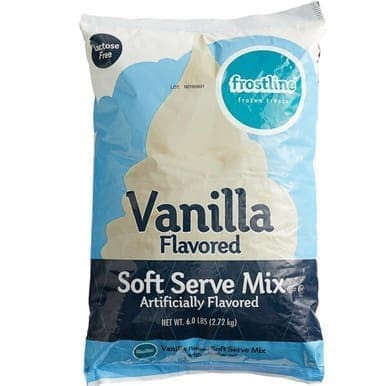
Frostline's lactose-free chocolate and vanilla serve guests standard dairy mix excludes. No separate machine needed if you flush between batches.
DOLE fruit flavours stand apart
Cherry, orange, pineapple, pomegranate, and raspberry options read as treats, not desserts. Good for pool decks, breakfast buffets, and mid-afternoon traffic.
Powder vs Liquid: What Arrives at Your Door
The physical difference shapes your storage, prep, and waste from day one.
Powder soft serve mix arrives in sealed bags or cases. You add clean potable water at a set ratio, typically around four parts water to one part powder, then blend until smooth. The mixture chills for a few hours before it enters the machine. This means you control batch size. Make two litres or twenty, then store the dry remainder for the next cycle. For Canadian operators in remote locations or seasonal markets, this flexibility matters. You are not paying to ship water weight across provincial lines.
Liquid soft serve mix ships in bags or totes, already hydrated and flavoured. You cut the bag, connect the tube, and run. The trade-off is cold chain integrity from the producer to your freezer. A broken refrigeration unit in transit or at your facility means lost product. Liquid also consumes more storage volume per serving, since the water is already included. Properties with tight walk-in space or limited freezer capacity often feel this constraint.
Both formats produce identical soft serve once the machine finishes its work. The guest eating the cone cannot tell which format started the process. Your decision rests on operational fit: labour availability, storage conditions, power reliability, and how precisely you want to manage overrun and texture. Neither format is universally better. Each solves a different set of problems for the person running the machine.
How Overrun Changes Your Cone and Your Numbers
Overrun is the percentage of air whipped into the mix as it freezes.
Overrun determines the body and mouthfeel of soft serve. Low overrun, around 30%, yields a dense, heavy product that sits in the stomach like premium custard. High overrun, pushing 80%, produces a towering twist that looks generous but melts fast and feels insubstantial. Most Canadian operators settle between 50% and 60% for a balanced cone that photographs well and satisfies without bloating the guest.
Powder mix gives you more direct control over overrun because you set the starting viscosity during the hydration step. Thicker base mix resists air incorporation. Thinner base mix accepts more. Experienced operators learn to adjust this by sight and weight. Liquid mix arrives at a fixed viscosity, so your control comes down to machine settings: dasher speed, pressure, and temperature. You still have levers, but fewer of them.
The overrun percentage directly affects your cost per cone. At 60% overrun, your yield per bag jumps significantly compared to 40%. That difference either becomes extra margin or extra portion size, depending on your strategy. Airbnb hosts offering soft serve as a complimentary amenity often prefer higher overrun for the visual impact. Properties charging per cone may prefer lower overrun for the perceived value of density. Neither approach is wrong. Both need honest math.
Calculate Real Cost Per Cone for Your Property
Sticker price on the bag is only the starting point of an honest comparison.
Start with the dry weight or liquid volume you purchase. Convert to finished volume using your target overrun. Divide by your standard portion size, typically four to five ounces per cone. That gives you a theoretical yield. Now add the variables water quality systems, staff time to mix or connect, electricity for freezing and holding, and the inevitable waste from cleaning cycles and misdraws. A machine purged daily loses several cones worth of product to maintain food safety standards.
Powder mix carries lower acquisition cost per kilogram and lower shipping cost because water travels separately through your municipal supply. Against that, assign the labour of mixing and the risk of inconsistent hydration. Under-mixed powder leaves grit. Over-mixed powder incorporates too much air early, complicating machine behaviour. Liquid mix carries higher upfront and shipping costs but reduces labour and variation. The break-even point depends on your local water rates, wage levels, and how many cones you serve daily.
Most Canadian properties serving under fifty cones daily find powder more economical once all factors are included. Properties serving hundreds of cones across multiple machines often find liquid worth the premium for throughput and consistency. Run your own numbers rather than trusting generic claims. We provide spec sheets and yield calculators on request to help with this exercise.
Match Your Mix Format to Your Equipment
Not every machine handles both formats equally well.
Soft serve machines fall into two broad categories. Gravity-fed units rely on mix flowing down into the freezing cylinder. These tend to work cleanly with liquid mix at standard viscosity. Thicker powder-hydrated mix can flow too slowly or create inconsistent draw rates, especially in warm ambient conditions. Pressurized pump machines force mix into the cylinder with mechanical assistance. They tolerate higher viscosity and give more consistent overrun control, making them friendlier to powder formats.
Your machine manual specifies recommended total solids content, a measure of dissolved matter in the mix. Powder mixes typically land in a wider range depending on your water ratio. Liquid mixes arrive at a precise specification. Running outside your machine's range accelerates wear on scraper blades, strains motors, and voids warranties in some cases. If you operate mixed equipment from different eras or manufacturers, standardizing on one format may not be practical. Many properties run liquid in older gravity units and powder in newer pressurized ones.
Before switching formats, confirm your cleaning and sanitizing protocol matches the new mix. Powder residue can cling differently than liquid film, requiring adjusted brush techniques. Your service technician or machine manufacturer can advise. We stock both formats and do not push one over the other. The right match reduces service calls and extends machine life, which matters more than any per-bag savings.
Store Smart in Canadian Conditions
Climate and infrastructure vary sharply across Canadian properties.
Canadian operators face storage conditions that range from climate-controlled basements in Toronto condos to uninsulated sheds in rural Saskatchewan. Powder mix tolerates temperature swings from freezing to summer heat as long as bags stay sealed and dry. Humidity is the enemy, causing clumping and bacterial risk. Store on pallets, away from exterior walls, and rotate stock first-in-first-out. The printed best-before date assumes reasonable conditions. Abuse accelerates degradation.
Liquid mix demands continuous refrigeration at or below four degrees Celsius. A power outage, a failed compressor, or a door left ajar overnight can ruin an entire shipment. Properties in areas with unreliable grid power or frequent electrical maintenance need backup generators or the willingness to absorb occasional losses. The cold chain also extends to delivery. Verify your carrier's refrigeration integrity, especially for summer cross-country shipments.
Seasonal operations face a specific puzzle. Closing for six winter months means either consuming liquid mix before shutdown or accepting waste. Powder lets you seal partial cases and resume next season without reordering. For properties that open Memorial Day weekend and close Thanksgiving, this single factor often decides the format. Ask yourself what happens to your inventory in the worst realistic scenario, then choose accordingly.
Flavour and Dietary Options That Drive Traffic
Your mix selection signals what kind of experience you offer.
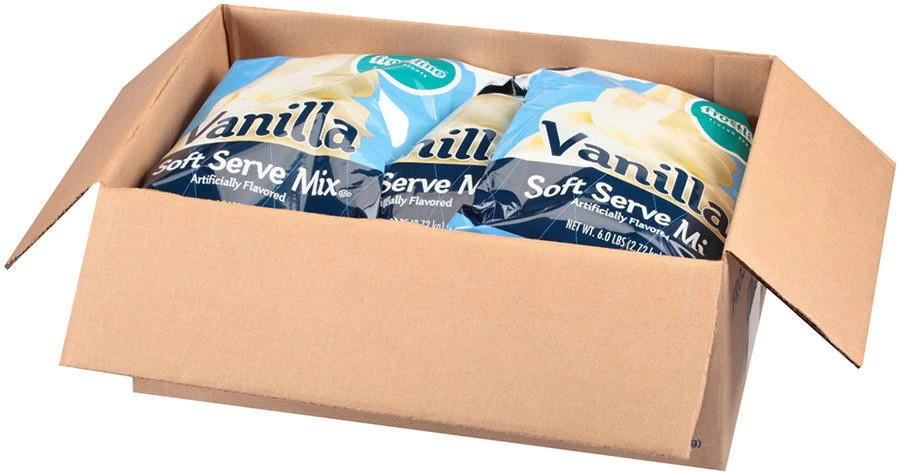
Frostline's lactose-free chocolate and vanilla cover the classic expectations. Guests who avoid dairy for intolerance, preference, or cultural reasons can participate without fuss or separate service. For properties marketing family-friendly amenities or inclusive hospitality, this removes a friction point that might otherwise generate negative reviews. The taste profile matches conventional dairy soft serve closely enough that most guests do not detect the difference unless told.
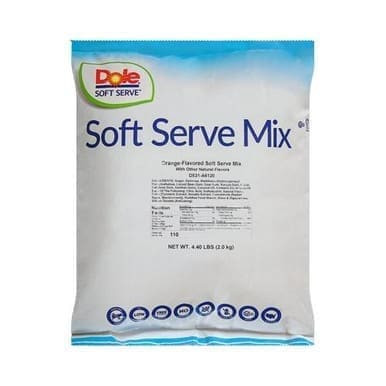
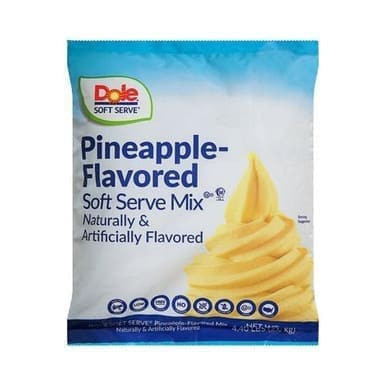
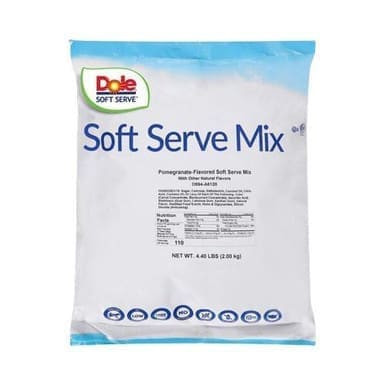
DOLE's fruit flavours, cherry, orange, pineapple, pomegranate, and raspberry, operate in a different register. They read as refreshing rather than indulgent, suitable for afternoon poolside traffic, breakfast buffets, or health-conscious positioning. Pineapple carries particular recognition as the original DOLE plantation association. These flavours also photograph in brighter colours that perform well in guest social media posts, effectively generating organic marketing.
Rotation matters. Running the same flavour daily trains guests to expect it and breeds indifference. Properties with storage capacity benefit from keeping two or three options on hand, switching by daypart or season. A breakfast buffet might run pineapple or orange, then shift to chocolate and vanilla for evening dessert service. The mix format, powder or liquid, should support this flexibility rather than constrain it. Powder makes small-batch flavour experiments cheaper and lower-risk.
Powder vs Liquid Soft Serve Mix at a Glance
Use this to compare operational fit, not just purchase price.
| Factor | Powder mix | Liquid mix | Typical winner |
|---|---|---|---|
| Shelf stability | 12+ months dry | Weeks, refrigerated | Powder |
| Shipping weight | Water added on site | Water included | Powder |
| Labour per batch | Mixing, hydration time | Pour and connect | Liquid |
| Overrun control | Adjust at hydration | Machine settings only | Powder |
| Storage space | Compact, any temperature | Larger, cold required | Powder |
| Consistency risk | User mixing variation | Factory-controlled | Liquid |
| Best for volume | Under 50 cones daily | Over 200 cones daily | Context-dependent |
Soft Serve Mix for Canadian Operations
Powder and fruit flavours from Frostline and DOLE, stocked for volume buyers.



People Also Ask
Real questions buyers search before they order — answered straight.
What is soft serve mix made of?
Most mixes blend milk solids, sugars, and stabilisers, sold as either a ready-to-pour liquid or a shelf-stable powder you combine with water. The stabilisers are what give soft serve its smooth, airy texture straight from the machine. Powder formats store longer and ship lighter, while liquid mixes save you a prep step.
Is there a dairy-free soft serve mix?
Yes — plant-based mixes built on coconut, oat, or soy bases are widely available and run in a standard machine. They let a venue serve guests who avoid dairy without buying a second machine. Check the label for any allergen the base introduces, such as soy or tree nuts.
How should I store soft serve mix, and can it be frozen?
Shelf-stable powder keeps in a cool, dry spot for months, while liquid mix needs refrigeration and has a shorter window once opened. Freezing a made-up mix is not recommended — it separates and turns grainy when thawed. Choose powder if storage space or a long shelf life matters for your site.
Why does soft serve come out gritty or icy?
Grittiness usually means the mix was over-frozen, under-mixed, or the machine was set too cold, letting large ice crystals form. Following the water ratio on the mix and letting the machine reach the right temperature fixes most cases. A mix with enough stabiliser also resists that icy texture better.
Will any soft serve mix work in my machine?
Most powder and liquid mixes run in standard gravity or pump-fed machines, but always match the mix format to how your machine feeds. Powder mixes need to be fully dissolved to the right ratio first so they pour cleanly. If in doubt, check the mix instructions against your machine type before a busy service.
What flavours does soft serve mix come in?
Vanilla and chocolate are the staples, with many ranges adding twist-friendly flavours and toppings-ready bases. A neutral vanilla base is the most flexible because you can dress it with sauces, sprinkles, and fruit. Stocking one or two mixes plus a few toppings covers most guest preferences.
What Canadian facility operators say
What Canadian operators say about switching formats.
We switched from liquid to Frostline powder for our Muskoka cottages. Cut our winter storage losses to zero and the guests cannot tell the difference in the cone.
The DOLE pineapple mix runs every July long weekend at our RV park. It moves faster than vanilla with the afternoon crowd and the colour pops in photos.
Lactose-free chocolate let us stop maintaining two separate machines. One flush between flavours and we are compliant for every guest dietary need.
Soft serve mix: Frequently Asked Questions
The following operator questions are answered with cited sources. Every FAQ links to Health Canada, CFIA, Canada.ca, or another authoritative regulator.
Is powder or liquid soft serve mix cheaper per serving?
Products referenced:
- CP-WEB-611-001
Source: Ice Cream Mix Samples - Why powder mix outperforms liquid mix (AussieBlends)
How long does soft serve mix last once it is mixed with water?
Products referenced:
- CP-WEB-611-002
Source: Soft Serve Mix - r/icecreamery
Does powder soft serve mix need refrigeration before it is mixed?
Products referenced:
- CP-WEB-611-003
Can I use any soft serve mix in my machine, or does it need to match the equipment?
Products referenced:
- CP-WEB-611-004
Why is my soft serve mix too thick for the machine to pump?
Products referenced:
- CP-WEB-611-005
What is the real cost per serving and profit margin for a soft serve concession?
Products referenced:
- CP-WEB-611-006
Source: What kind of profit margins do small, locally owned ice cream shops have? - Quora
Should I buy pre-made soft serve mix or make my own recipe?
Products referenced:
- CP-WEB-611-007
What are the hidden costs of running a soft serve machine?
Products referenced:
- CP-WEB-611-008
Source: Starting a soft serve ice cream concept - advice on costs - Quora
Related guides from ChickenPieces
Why Canadian Operators Buy from ChickenPieces.com
We supply properties, not grocery stores, and we understand your constraints.
Volume pricing
Cases and bulk formats reduce per-unit cost for properties running multiple machines or high seasonal traffic. No retail markup structure.
Seasonal planning
Order early for spring opening. We help you time deliveries around your startup date without rushing storage preparation.
Format guidance
Not sure whether powder or liquid fits your machine and volume? We ask about your equipment, traffic, and storage, then recommend without pushing one format.
Canadian compliance
All products meet Health Canada and CFIA import and labelling requirements. Bilingual labels where mandated. Proper Canadian distributor documentation for your records.
Sources & further reading
Request a Quote for Your Property
Tell us your machine model, expected volume, and storage situation. We will recommend powder or liquid, calculate your true cost per cone, and quote the right case size. No minimum order for first-time buyers.
Request a QuoteReferences: Health Canada - Food Chemical Contaminants CFIA - Food Safety for Industry.
Authoritative References