
 US Dollar (USD)

2026 Jul 25th
Pick the Right Slush Syrup Line for Your Guest-Facing Venue
Slush Puppie suits nostalgia-driven locations. Lynch offers straightforward Canadian distribution. Jolly Rancher brings instant brand recognition and the widest flavour range. Most multi-unit operators standardize on one line to simplify training and reordering.
Pick the Right Slush Syrup Line for Your Guest-Facing Venue
Airbnb hosts, property managers and facility operators in Canada need reliable syrup lines that guests actually ask for by name.
Key Takeaways
What to weigh before committing to a syrup line for your slush program.
Guest recognition matters
Branded syrups reduce explanation at the point of sale. Guests who see Jolly Rancher already know what to expect.
Concentrate ratios vary
A 5:1 mix means one bottle stretches further than weaker ratios. Check your machine manual before ordering.
Case size affects storage
Single bottles work for trial. Six-case units fit most backrooms. Pallet buys suit seasonal peaks.
Flavour breadth drives trial
Blue raspberry and cherry are safe anchors. Grape and fruit punch round out a four-tap setup.
Cross-border supply risk
Some lines move through U.S. distribution. Confirm your supplier stocks Canadian-compliant labels.
Staff training scales with simplicity
One syrup line means one set of mix procedures. Multiple lines invite errors during shift changes.
Where Each Syrup Line Comes From
Understanding source and distribution helps you gauge supply stability.
Slush Puppie built its name through cinema and convenience-store placement in the 1970s. The brand still carries that retro association, which works well at family-oriented campsites and retro-themed venues. Distribution in Canada runs through select wholesalers, so availability can be spotty outside major markets. If your location depends on consistent reordering, verify your supplier's direct relationship with the Canadian importer.
Lynch is a Canadian-made option with simpler branding and lower marketing overhead. You will not get the walk-up recognition of a candy-brand name, but you also avoid licensing fees reflected in cost. The flavour range stays narrow, typically four to six options. For facility managers running internal cafeterias rather than public-facing profit centres, this trade-off often makes sense.
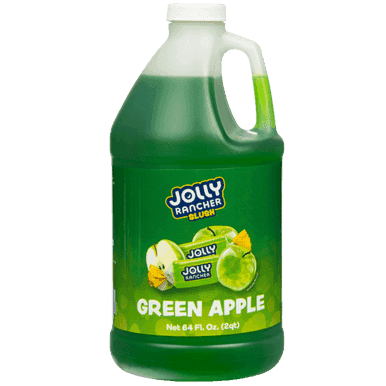
Jolly Rancher enters the slush market through a licensed partnership with a major syrup manufacturer. The candy brand's flavour profiles translate directly: blue raspberry, green apple, cherry and grape taste like the hard candies guests grew up with. This recognition speeds up purchase decisions at poolside bars, lobby kiosks and recreation-centre counters. ChickenPieces.com stocks the full Jolly Rancher slush line in single bottles, cases and pallet configurations.
Compare Flavour Selection Across Lines
More flavours let you rotate taps and test guest preferences.
Slush Puppie offers blue raspberry, cherry, grape and a rotating seasonal special. The limited core line keeps inventory simple but restricts menu changes. If your venue serves a repeat clientele, guests may tire of the same four options by mid-season. Some operators blend flavours to create variety, though this complicates staff training.
Lynch produces cola, lemon-lime, blue raspberry and cherry. The cola option is unique among the three lines and sells well at hockey arenas and community halls. Beyond those four, you are looking at special orders with longer lead times. For operators who want a set-and-forget menu, this constraint is manageable. For those chasing social-media buzz with limited-time flavours, it is a limitation.
Jolly Rancher currently fields six core flavours: blue raspberry, cherry, fruit punch, grape, green apple and watermelon. Fruit punch and green apple fill gaps the other lines ignore. A six-tap setup can run all core flavours simultaneously, or you can rotate two seasonally while keeping four permanent. The 5:1 concentrate format means each flavour uses identical mix procedures, so staff do not need flavour-specific training.
Calculate Cost Per Serving from Packaging
Concentrate ratios and case sizes determine your true unit economics.
All three lines use concentrate formats, but ratios differ. Slush Puppie ships at 4:1 in some flavours and 5:1 in others, which creates inconsistency if your staff do not double-check each bottle. Lynch standardizes at 5:1 across its range. Jolly Rancher commits to 5:1 for every flavour, simplifying the math for multi-location operators who centralize ordering.
Single bottles suit trial runs and small venues with one machine. A 1.89-litre bottle stores easily on a standard shelf and weighs under two kilograms. Case packs of six reduce per-bottle handling but require dedicated shelf space. Most Airbnb hosts and small lodges stop here. The break-even on case pricing typically justifies the storage if you move more than two bottles per month.
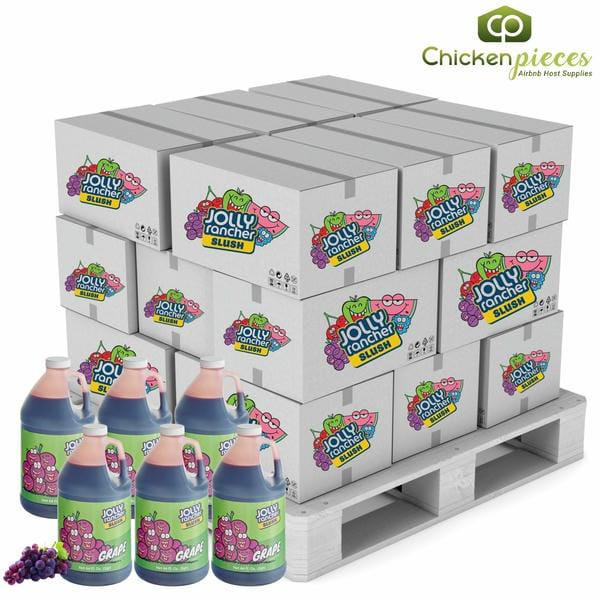
Pallet loads of sixty cases, or 360 bottles, suit seasonal camps, hotel chains and recreation centres running multiple machines through July and August. The per-bottle cost drops further, though you need dry storage and a dolly or pallet jack for receiving. ChickenPieces.com lists pallet pricing for Jolly Rancher; contact the team for mixed-flavour pallets if you want variety without losing volume pricing.
Match Syrup to Your Existing Equipment
Not all concentrates work cleanly with every slush machine.
Slush machines vary in tank size, refrigeration strength and auger design. A 5:1 concentrate run at full strength can freeze too hard in machines calibrated for weaker ratios, causing motor strain or icy texture. Slush Puppie's variable ratios mean you must verify each flavour against your equipment spec sheet. This adds a step to every reorder.
Lynch and Jolly Rancher both stick to 5:1, which matches most commercial machines sold in Canada over the past decade. If you bought your unit from a Canadian restaurant-supply dealer, it likely handles 5:1 without adjustment. Still, run a test batch before committing to a full case. Watch for separation, excessive foaming, or a slush that refuses to hold its peak texture past thirty minutes.
Machine cleaning protocols also differ by syrup. Dyes and flavour oils vary in how they coat tank walls and seals. Operators who switch lines mid-season sometimes report increased cleaning frequency for the first few batches. Jolly Rancher's formulation is consistent across flavours, so staff learn one cleaning routine regardless of what is on tap.
Read Guest Reactions to Each Brand
The right syrup turns a slush machine from equipment into a destination.
Slush Puppie triggers nostalgia in guests aged thirty-five to fifty-five. Parents buy for children while commenting on their own childhood memories. This emotional connection drives sales but also sets expectations; the product must taste like they remember. When execution is off, the disappointment is personal and vocal.
Lynch draws no pre-existing emotional response. Guests judge it purely on taste and price, which is fine for captive-audience settings like employee cafeterias or included hotel breakfasts. In competitive environments where guests choose between your slush and the café across the street, the lack of brand pull hurts. You are selling cold sugar water, not an experience.
Jolly Rancher benefits from cross-generational recognition. Teenagers know the hard candy from convenience stores. Parents know it from their own adolescence. Grandparents buy it for grandchildren by name. This three-generation awareness means less selling at the point of purchase and higher per-capita attachment rates. For operators paid on commission or profit-share, that recognition converts directly to revenue.
Choose Your Line and Lock In Supply
Your final choice should reflect who visits, how often, and what you want them to remember.
If your venue trades on nostalgia or retro theming, Slush Puppie fits the story. Confirm your supplier's Canadian stock levels and reorder cadence before you put it on the menu. Nothing erodes guest trust faster than a advertised flavour that stays empty for weeks.
If you run an internal service with no competitive pressure, Lynch covers the basics without brand premiums. The Canadian manufacturing may also simplify compliance paperwork for municipal or provincial facility audits. Just accept that you are not giving guests a reason to choose your slush over any other cold option.
Jolly Rancher offers the broadest flavour range, the strongest guest recognition and the most flexible packaging options from single bottles to full pallets. For Airbnb hosts wanting a memorable amenity, property managers standardizing across a portfolio, and recreation centres maximizing per-visit revenue, it is the lowest-risk starting point. ChickenPieces.com stocks the full line with no minimum order; build your test batch and scale from there.
Slush Syrup Line Comparison
Use this table to weigh brand recognition, flavour breadth and packaging flexibility side by side.
| Line | Core flavours | Concentrate ratio | Typical packaging |
|---|---|---|---|
| Slush Puppie | 4 + seasonal | 4:1 or 5:1 (varies) | Bottle, case, limited pallet |
| Lynch | 4 | 5:1 (consistent) | Bottle, case |
| Jolly Rancher | 6 | 5:1 (all flavours) | Bottle, case, pallet |
| Slush Puppie | Blue raspberry, cherry, grape, special | Check each bottle | Cinema/convenience heritage |
| Lynch | Cola, lemon-lime, blue raspberry, cherry | Standard 5:1 | Canadian manufactured |
| Jolly Rancher | Blue raspberry, cherry, fruit punch, grape, green apple, watermelon | Standard 5:1 | Candy-brand licensed |
| Winner by use case | Jolly Rancher for breadth | Lynch/Jolly Rancher for consistency | Jolly Rancher for scale flexibility |
Jolly Rancher Slush Syrups at ChickenPieces.com
Single bottles, cases and pallet loads in the flavours guests ask for by name.


What Canadian venue operators say
What Canadian operators say about running branded slush programs.
Switched from generic syrup to Jolly Rancher at our Calgary Airbnb. Guests now mention the slush machine in reviews unprompted. Blue raspberry runs out first every weekend.
We run a recreation centre in Manitoba with two machines. Standardized on Jolly Rancher cherry and grape. Staff training took twenty minutes because every bottle mixes the same way.
Ordered a mixed pallet through ChickenPieces for our Ontario lodge season. Fruit punch was the surprise hit with adult guests. Pallet pricing helped us hit margin targets.
Syrup selection: Frequently Asked Questions
Can I mix Jolly Rancher syrup with other brands in one machine?
You can, but stick to one line per machine cycle. Different dye formulations and flavour oils can interact oddly, producing off-tastes or faster residue buildup on seals.
How long does an opened bottle last?
Unopened concentrate stores twelve to eighteen months in a cool, dry space. Once opened, use within thirty days and refrigerate if your storage area warms above twenty degrees Celsius.
Do I need to dilute 5:1 concentrate before pouring into the machine?
Yes. Add five parts water to one part syrup, then pour the mixed solution into your slush machine tank. Pouring concentrate straight damages most machines and voids warranties.
Which flavour sells best for new locations?
Blue raspberry and cherry are the safest starting pair. They appeal across age groups and match guest expectations of what a slush should taste like.
Can I order a mixed-flavour pallet?
Contact the ChickenPieces.com team directly. Standard pallets are single-flavour, but mixed configurations are possible with lead time.
Are these syrups suitable for carbonated slush machines?
Jolly Rancher slush syrup is formulated for standard non-carbonated machines. Check your equipment manual; carbonated units often need specific viscosity ratings.
What is the shelf life on a full unopened case?
Cases stored in dry conditions below twenty-five degrees Celsius keep eighteen months from production date. Rotate stock first-in, first-out.
Do guests actually notice the brand name?
Yes. Jolly Rancher specifically triggers recognition across generations. Guests photograph branded machines and mention them in reviews more often than generic setups.
Is there a minimum order for pallet pricing?
Pallet pricing starts at sixty cases. Single bottles and six-case units have no minimum. Request a quote through the site for mixed or volume orders.
How do you calculate shipping on bulk orders?
We calculate shipping on live carrier rates at checkout, not on flat or subsidized tiers. Every order is priced against real LTL, parcel, or pallet-freight quotes from our Calgary warehouse to your dock. That means you never absorb hidden shipping costs into product margins — what we charge is what the carrier charges us, plus a small handling pass-through. For bulk and pallet orders this typically runs 15–25% lower than competitors who bake shipping into their unit prices, because the rate is transparent and tied to the actual shipment weight and distance.
Related guides from ChickenPieces
Why Operators Buy Slush Syrup from ChickenPieces.com
Calgary-based supply for Canadian hospitality and recreation businesses.
No minimum orders
Buy one bottle to test or a pallet to stock your season. Scale up as your slush program proves itself.
Real packaging clarity
Every listing shows exact case counts and pallet math. No guessing what arrives on your dock.
Direct operator support
Questions about mix ratios, machine fit or seasonal planning go to a team that serves venues, not retail consumers.
Canadian compliance
All stocked products carry labels meeting Health Canada and CFIA requirements for food-service distribution in Canada.
Request Your Slush Syrup Quote
Tell us your machine count, flavour preferences and expected monthly volume. We will reply with options at bottle, case and pallet scale. No obligation.
Request a Quote