
 US Dollar (USD)

2026 Jul 25th
Stretch Slush Syrup Further with 5:1 Concentrate Ratios
A 4L jug of Slush Puppie 5:1 concentrate mixes with water to produce roughly 27 litres of finished slush. That translates to about 135 cups per jug at 200 ml serving size, or roughly 540 cups per four-jug case.
Stretch Slush Syrup Further with 5:1 Concentrate Ratios
Concession operators and facility managers running slush machines need predictable syrup costs and simple ratios that staff can mix without mistakes.
Key Takeaways
What to know before stocking syrup for your machines.
Simple Staff Math
The 5:1 ratio means one part syrup to five parts water. Staff measure once and fill, reducing errors that waste product or dilute flavour.
Fewer Jug Changes
Each 4L concentrate jug yields over 27 litres finished. Busy locations spend less time swapping empties during rushes.
Pallet Savings on Volume
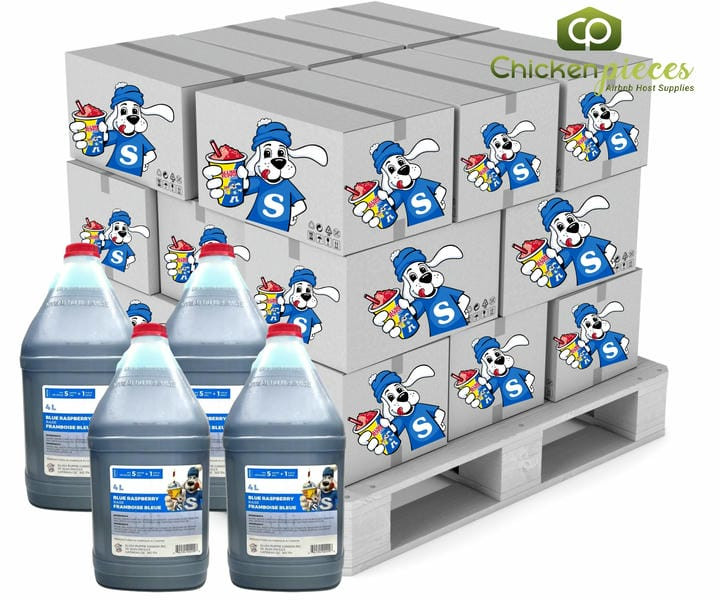
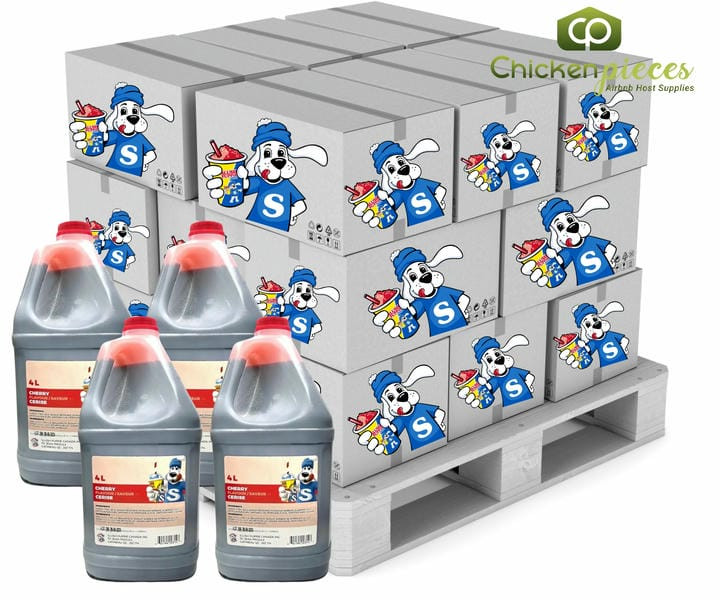
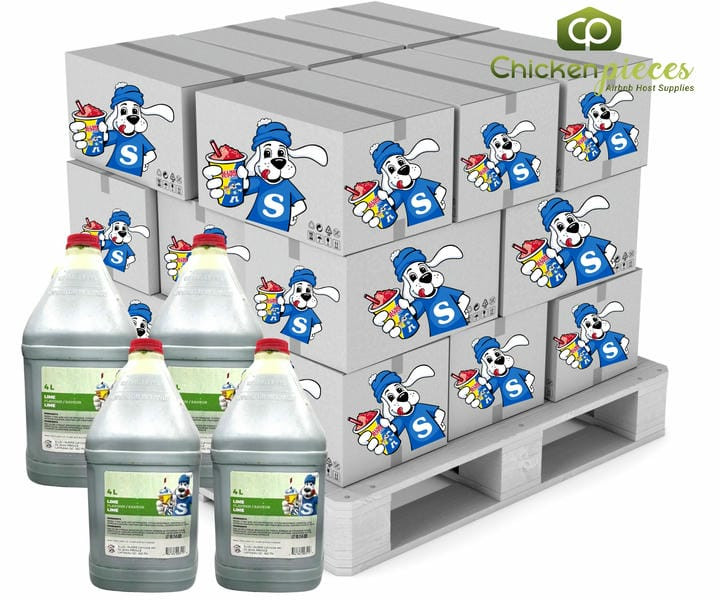
A full pallet holds 48 cases of four jugs each. High-turnover stands and multi-location operators benefit from consolidated inbound freight.
Stable Shelf Life
Sealed concentrate jugs store at ambient temperature for extended periods. Opened jugs stay viable when capped properly between events.
Flavour Rotation Flexibility
Cherry, blue raspberry, sour strawberry, lime and grape cover core demand. Stock multiple flavours without committing to single-SKU pallets.
Machine Compatibility
Slush Puppie concentrate works in standard granita and slush machines common at Canadian concession stands, arenas and rec facilities.
How 5:1 Concentrate Works in Practice
The mixing ratio determines your actual yield and flavour consistency.
Five-to-one concentrate means five parts water for every one part syrup. A 4L jug therefore produces roughly 24 litres of mixed liquid, though practical yield sits closer to 27 litres once you account for ice expansion and standard cup fill levels. This matters for ordering because a case of four jugs gives you over 100 litres of sellable product, not sixteen.
The ratio stays constant across all Slush Puppie flavours in this line. Your staff learn one procedure regardless of whether they are pouring cherry for a hockey tournament or blue raspberry for a summer fair. Standardization cuts training time and reduces the risk of weak batches that draw complaints or over-sweet batches that empty your syrup faster than planned.
Cup size directly affects your per-jug count. A 200 ml cup yields roughly 135 servings per jug. Move to 300 ml cups and that drops to about 90. Factor your actual serving vessel into projections rather than relying on generic numbers. Seasoned operators track per-event consumption to refine their pre-orders for recurring bookings.
Calculate Finished Servings Per Jug
Accurate yield estimates prevent mid-event shortages.
Start with 4L of concentrate. At 5:1, you add 20L water for 24L total mixed base. Frozen slush expands roughly 10 to 15 percent by volume as it crystallizes, giving you approximately 26 to 27 litres of finished product. At a standard 200 ml fill, that is 130 to 135 cups per jug. Scale up to a four-jug case and you are looking at 520 to 540 cups.
These figures assume full cups and minimal spillage. Real-world conditions include over-pours, sample cups, staff mistakes and machine priming losses. Experienced operators add a 10 percent buffer to their calculations. If your event history shows 500 cups sold, plan for six jugs rather than four to avoid sending someone to find more syrup during peak hours.
Larger cup sizes are increasingly common at movie theatres and sports venues. A 473 ml cup more than doubles your syrup consumption per sale. The revenue per cup rises, but so does your input cost. Model both scenarios before committing to cup size changes. Your syrup order quantities shift significantly based on this single decision.
When to Choose Pallet Quantities
Pallet loads suit operators with predictable high-volume demand.
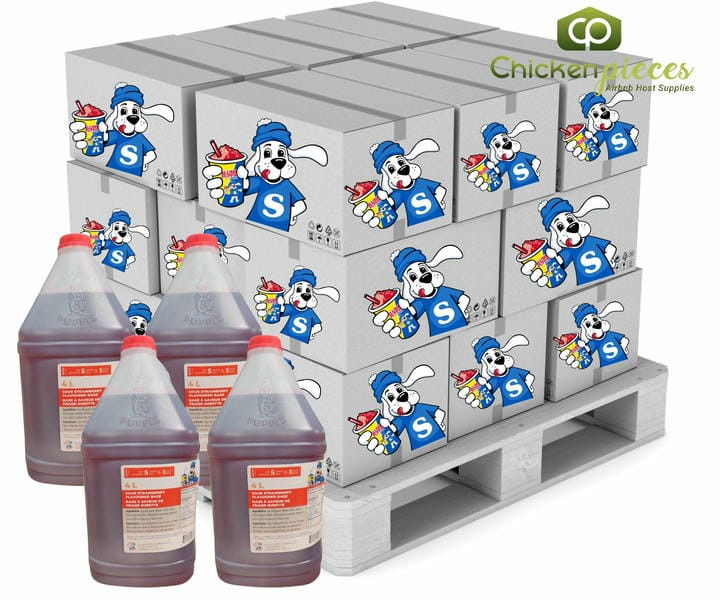
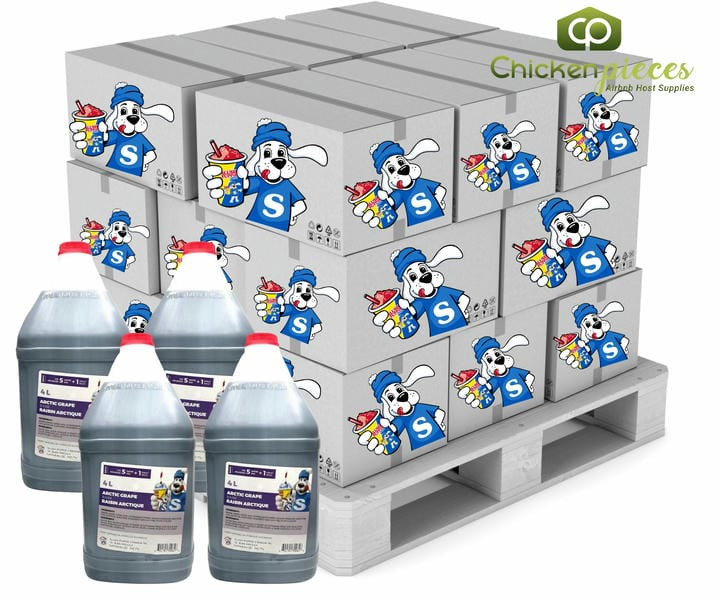
A pallet contains 48 cases, each with four 4L jugs. That is 192 jugs total, producing roughly 5,000 litres of finished slush or 25,000-plus standard cups. This volume fits seasonal operators running multiple machines across several locations, or permanent stands with daily traffic like arena complexes and large amusement facilities.
The primary advantage of pallet ordering is consolidated inbound freight. Receiving one shipment reduces handling costs compared to multiple smaller orders through peak season. Storage requirements matter though. A pallet of syrup needs dry, moderate-temperature space and a pallet jack or forklift for movement. Confirm your back-of-house layout before committing.
Mixed-flavour pallets are not standard. You receive 48 identical cases per pallet. If you need variety, consider whether single-flavour pallets plus case-level purchases of secondary flavours better match your sales mix. Cherry and blue raspberry typically outsell specialty flavours by significant margins at most Canadian concession locations.
Keep Concentrate Stable Between Events
Proper storage protects your syrup investment across seasons.
Unopened 4L jugs store at ambient temperature in dry conditions. Avoid freezing temperatures that can separate flavour compounds or cause jug deformation. Direct sunlight fades labels and potentially affects colour stability in clear containers. A dedicated storage shelf or cabinet in your dry goods area suffices for most operations.
Opened jugs need tight resealing. The high sugar content inhibits microbial growth, but contamination from dirty pour spouts or water introduction degrades quality. Assign one clean measuring vessel per flavour and train staff to wipe jug necks before recapping. Label opened jugs with dates to track exposure time.
Concentrate thickens in cold storage but returns to normal viscosity at room temperature. Do not microwave or heat jugs to speed this process. Plan your pull schedule so flavours needed tomorrow sit at room temperature today. This small operational habit prevents delays during machine setup.
Train Teams to Mix Without Waste
Consistent execution protects your margins on every pour.
The 5:1 ratio is simple on paper but easy to invert under pressure. Staff in a rush may pour heavy on syrup to speed up flavour strength, or over-dilute to stretch supply. Both errors cost you. Over-syruping empties jugs prematurely. Under-syruping produces weak product that customers notice and reject.
Build a simple measuring protocol. Mark a dedicated bucket at the 4L syrup line and 20L water line. Staff fill syrup first, then water, then transfer to the machine. This two-step method prevents direct-to-machine guessing and creates a visual check for supervisors. Photograph the correct fill and laminate it at each station.
Track waste events by flavour and shift. Patterns reveal training gaps or equipment issues. One machine consistently producing weak slush may have a faulty seal diluting the mix, not careless staff. Separate people problems from mechanical problems before retraining. Accurate records support this diagnosis.
Build a Reliable Flavour Portfolio
Core flavours cover demand; specialty rotates for interest.
Cherry and blue raspberry dominate Canadian concession sales by wide margins. These are your baseline flavours, the ones that move reliably at every event from minor hockey tournaments to summer exhibition days. Stock these deepest and never run out. They are the flavours customers default to when uncertain.
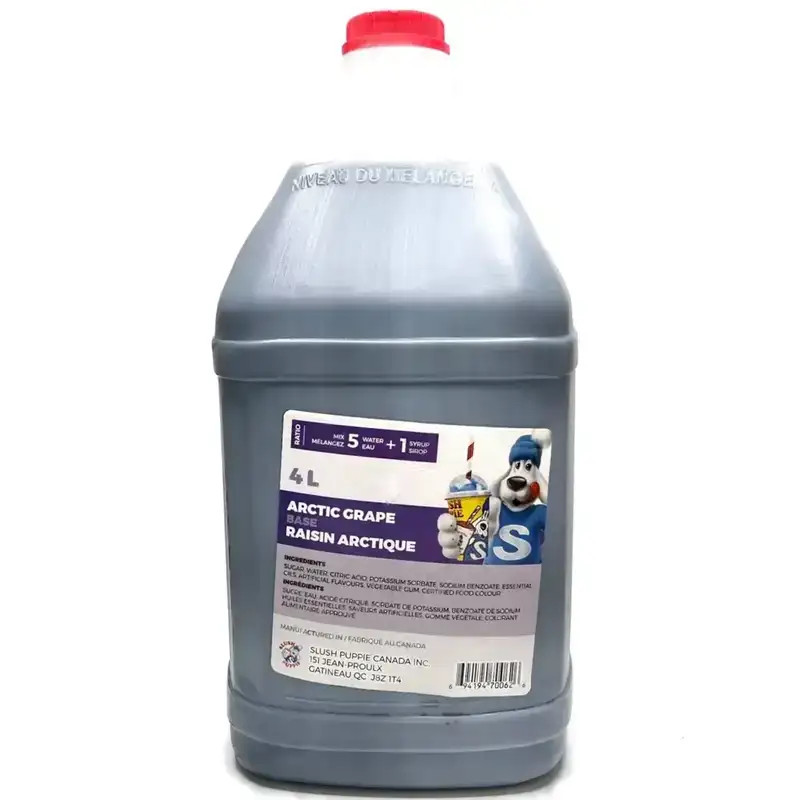
Arctic grape, lime and sour strawberry capture secondary demand and variety seekers. Grape performs well in younger demographics. Lime cuts through sweetness fatigue on hot days. Sour strawberry trends with teens and young adults seeking intensity. These rotate in your second or third machine rather than carrying full inventory depth.
Seasonal adjustments matter. Sour and citrus profiles spike in July and August. Grape climbs in back-to-school periods tied to youth sports. Track your monthly flavour mix to anticipate shifts. Ordering patterns based on annual averages rather than seasonal curves leave you overstocked in slow movers and short on trend flavours.
Slush Puppie 5:1 Concentrate Yield Comparison
Compare jug sizes, case counts and estimated finished output across typical serving scenarios.
| Format | Contents | Finished Litres | Standard Cups (200 ml) |
|---|---|---|---|
| Single 4L Jug | 1 x 4L concentrate | ~27 L | ~135 cups |
| 4-Jug Case | 4 x 4L concentrate | ~108 L | ~540 cups |
| Pallet (48 Cases) | 192 x 4L concentrate | ~5,184 L | ~25,920 cups |
| Single Cup Yield | 33 ml syrup + 167 ml water | 200 ml serving | 1 cup |
| Large Cup Yield | 50 ml syrup + 250 ml water | 300 ml serving | 1 cup |
| Jumbo Cup Yield | 79 ml syrup + 394 ml water | 473 ml serving | 1 cup |
| Machine Minimum | Typical 2-bowl unit | 10-12 L per bowl | Varies by model |
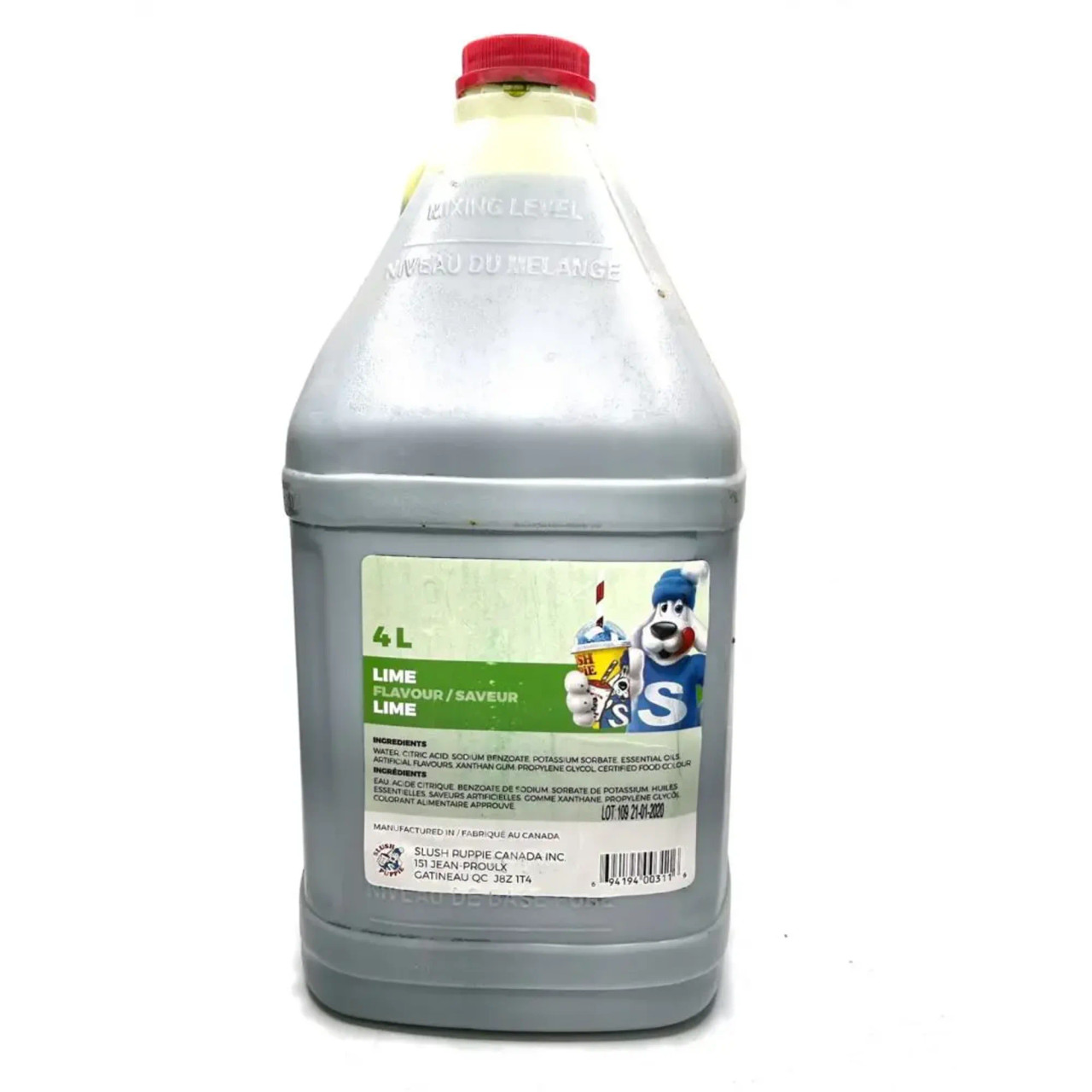
Slush Puppie 5:1 Concentrate Syrup
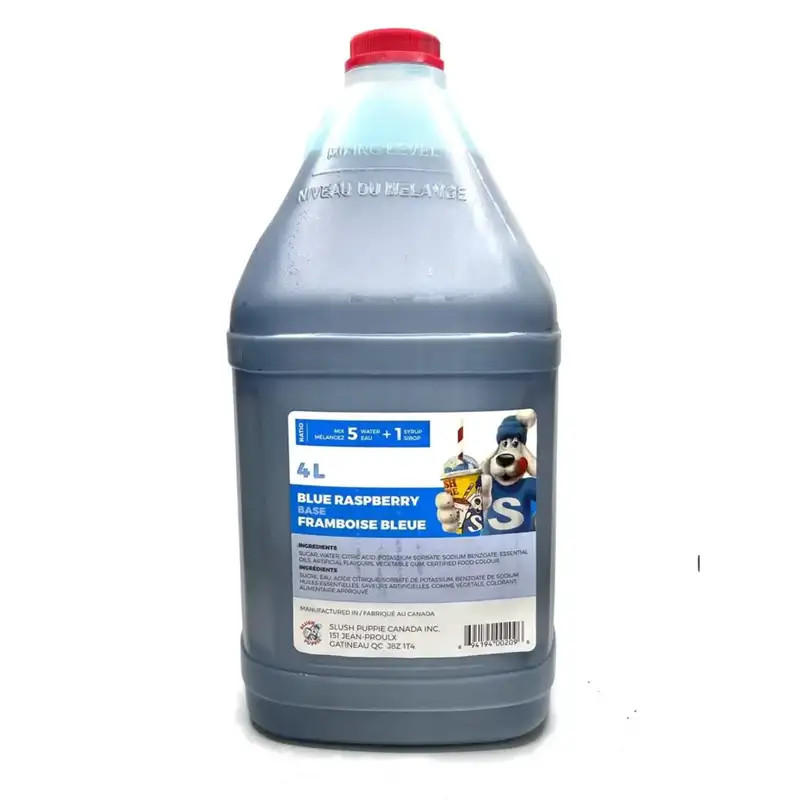
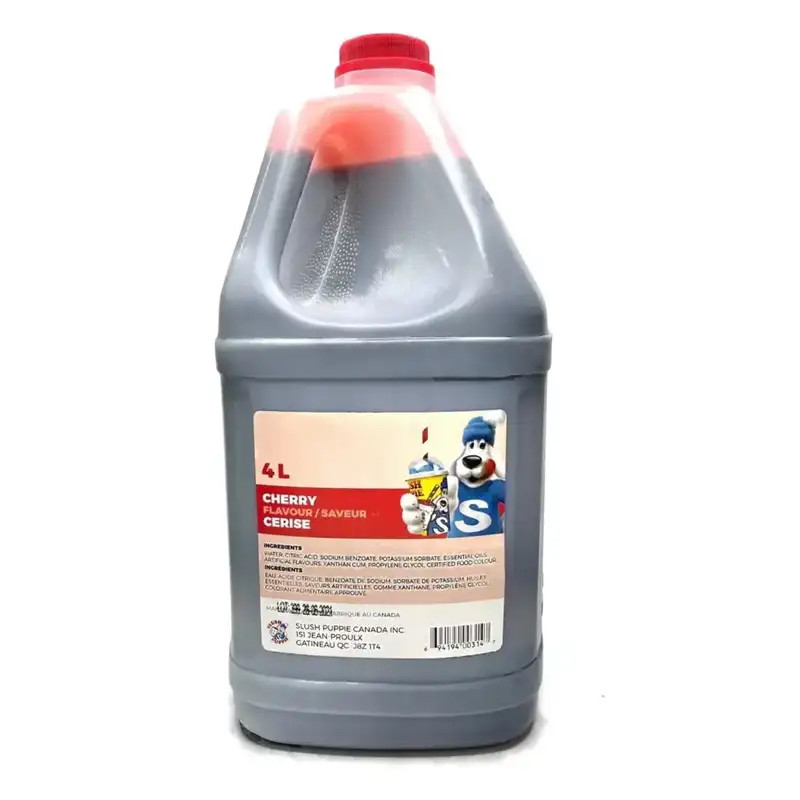
Core flavours in single jugs, cases and pallet quantities for Canadian concession operations.
What Canadian concession operators say
What operators say about running Slush Puppie concentrate at their locations.
We switched to 5:1 concentrate last season and cut our syrup restocks by half. The ratio is simple enough that my weekend staff get it right without calling me.
Ran two machines all summer at the fairgrounds. One pallet of cherry and blue raspberry got us through July and August with cups to spare.
The sour strawberry moves faster than I expected with the teen crowd. Easy to train new staff on the mix ratio too.
Syrup Concentrate Basics: Frequently Asked Questions
How much water do I add to 4L of 5:1 concentrate?
Add 20 litres of water to 4 litres of concentrate for the standard 5:1 ratio. This produces roughly 24 litres of mixed base, expanding to about 27 litres of finished frozen product.
Can I use this concentrate in any slush machine?
Slush Puppie 5:1 concentrate works in standard granita and slush machines with standard refrigeration and auger systems. Check your manual for recommended brix levels.
How long does an opened jug last?
Resealed concentrate stored at moderate temperature stays viable for extended periods. Use clean pour practices, cap tightly and track open dates on your inventory sheet.
Do I need to refrigerate unopened jugs?
Unopened jugs store at ambient temperature in dry conditions. Avoid freezing or direct heat. Room temperature storage is standard for concentrate syrups.
What cup size should I use for best margins?
Standard 200 ml cups maximize your per-jug yield. Larger cups increase revenue per sale but consume syrup proportionally faster. Model both scenarios against your price points.
How many flavours should I stock at once?
Most operators run two machines with cherry and blue raspberry as anchors, rotating a third flavour like grape or lime based on season and event type.
Is there a minimum order for pallet pricing?
Pallets contain 48 cases of identical flavour. Contact us to discuss mixed-case arrangements or consolidated orders if your volume does not justify full pallets per SKU.
How do I prevent staff from mixing ratios wrong?
Post visual guides at each machine. Use marked measuring buckets rather than direct-to-machine pouring. Supervise new staff through three mixes before independent operation.
Why does my finished slush taste weaker than expected?
Weak flavour usually indicates over-dilution, machine seal leaks admitting extra water, or cold-stored syrup not at room temperature during mixing. Check all three before adjusting your ratio.
How do you calculate shipping on bulk orders?
We calculate shipping on live carrier rates at checkout, not on flat or subsidized tiers. Every order is priced against real LTL, parcel, or pallet-freight quotes from our Calgary warehouse to your dock. That means you never absorb hidden shipping costs into product margins — what we charge is what the carrier charges us, plus a small handling pass-through. For bulk and pallet orders this typically runs 15–25% lower than competitors who bake shipping into their unit prices, because the rate is transparent and tied to the actual shipment weight and distance.
Related guides from ChickenPieces
Why Operators Source Slush Syrup from ChickenPieces
We supply Canadian concession and facility operators with straightforward bulk options and clear specs.
Bulk Pallet Loads
Order full pallets of core flavours or mix cases to match your actual sales pattern. We handle consolidated freight on large orders.
Clear Yield Data
Every product page shows ratio, finished yield and cup estimates so you order with confidence instead of guessing.
Alberta-Based Support
Our team understands Canadian concession seasonality from hockey tournaments to summer fair circuits. Ask us about flavour mix recommendations.
Product Compliance
Slush Puppie syrups meet Canadian food ingredient standards with labelling and documentation aligned to Health Canada requirements for your records.
Sources & further reading
Request a Quote for Your Season
Tell us your machine count, expected cup volume and flavour mix. We will confirm availability and put together options that match your operation. No minimum for case orders.
Request a Quote