
 US Dollar


2026 Jul 27th
Quebec's Under-16 Energy Drink Ban: What Foodservice Oper...

In June 2026 Québec adopted Bill 9, making it the first province in Canada to prohibit the sale of caffeinated energy drinks to anyone under 16. The law defines an energy drink as a beverage with at least 150 mg of caffeine per litre plus ingredients such as taurine, vitamins or minerals — and it expressly excludes coffee and tea, so your espresso and tea programs are not affected. Bill 9 comes into force six months after assent, which points to roughly December 2026. It also requires sales to happen in the physical presence of seller and buyer, which amounts to a default ban on online and vending-machine sales. Fines run to CA 62,500 for businesses. ChickenPieces.com ships sports drinks, hydration mixes, juices and coffee & tea Canada-wide from Calgary.
Key takeaways
Energy drinks become a controlled-sale product in Québec — handled like alcohol, cannabis or tobacco, even though they remain a lawful food under federal law.
Coffee and tea are expressly excluded from the statutory definition. A cafe's caffeine program is untouched; a cooler full of cans is not.
The trigger is 150 mg of caffeine per litre plus other ingredients like taurine, vitamins or minerals — so the line runs through your cooler, not around a whole category.
Photo ID and in-person sale are both required. The physical-presence rule applies regardless of the buyer's age, which by default rules out e-commerce and vending machines.
Penalties are serious: up to CA 62,500 for businesses, and reportedly double on repeat offences.
Some borderline products are genuinely unclear. What counts as a "vitamin or mineral" is expected to be settled by future regulation — audit your SKUs early rather than on the day.
What Bill 9 actually does
In June 2026 the National Assembly adopted Bill 9, An Act to prevent the harmful effects of energy drinks on the health of young people. Reporting at the time noted it passed with near-unanimous support, and that Québec is the first Canadian province — and by several accounts the first jurisdiction in North America — to restrict access to caffeinated energy drinks by age.
The practical effect for anyone selling beverages in Québec is a shift in category. An energy drink stops being ordinary stock you can put in a self-serve cooler and becomes a controlled-sale product, with an age check at the till and a paper trail expectation behind it. That is a staff-training and point-of-sale problem as much as a purchasing one.
Bill 9 comes into force six months following assent. With assent expected shortly after adoption, that points to roughly December 2026 — but the exact date is tied to assent, so confirm it rather than working from an estimate.
What counts as an "energy drink" — and what doesn't
This is the part worth reading twice, because the definition is narrower than "anything with caffeine."
Bill 9 defines an energy drink as a beverage containing at least 150 mg of caffeine per litre, along with ingredients such as taurine, vitamins or minerals. Both halves matter: caffeine alone does not capture a product, and the additive list is what pulls it in. The Act expressly excludes coffee, tea and certain natural health products, unless future regulations say otherwise.
There is a real wrinkle here that operators should not paper over. Québec's definition does not line up neatly with the federal framework. Health Canada regulates caffeinated energy drinks as supplemented foods, capping caffeine at 180 mg per serving and requiring a "high caffeine content" statement plus cautionary labelling. Québec's 150 mg figure is a concentration per litre; Health Canada's 180 mg figure is a cap per serving. They are different measures doing different jobs, and a product can sit inside one framework and outside the other.
Legal commentators have flagged that this divergence creates classification uncertainty — including the basic question of what counts as a "vitamin or mineral" for these purposes. Those edges are expected to be clarified by regulation. Until then, borderline SKUs need a supplier answer in writing, not a guess at the till.
The rules at a glance
| Provision | What it means on the floor |
|---|---|
| Sale to under-16 prohibited | No sale or gift of an energy drink to anyone under 16. |
| Proxy purchase prohibited | No sale to someone 16+ where the seller knows it is intended for a minor. |
| Photo ID | Government-issued photo identification to complete a purchase. |
| In-person sale required | Seller (or employee) and buyer physically present — regardless of the buyer's age — except as prescribed by regulation. |
| Online & vending | Default prohibition, flowing from the physical-presence rule, unless regulatory exceptions are introduced. |
| Minor's own obligations | Persons under 16 are prohibited from purchasing or misrepresenting their age; a CA 100 fine is provided for. |
| Fines | Reported at CA 500–CA 1,500 for individuals and up to CA 62,500 for businesses, doubled on repeat offences. |
The provision that catches e-commerce operators
The age restriction gets the headlines, but the in-person sales requirement is the one that quietly reshapes distribution.
Bill 9 prohibits selling an energy drink unless the sale happens in the physical presence of both the seller (or their employee) and the purchaser — regardless of the age of the purchaser — except in cases prescribed by government regulation. In practice that is a default prohibition on online sales and vending-machine distribution into Québec until regulatory exceptions arrive.
One timing detail matters: this provision comes into force on the date the first regulation about physical sales comes into force — not automatically with the rest of the Act. So the age rule and the channel rule may well start on different days. If you ship into Québec or run unattended coolers and machines, that is the sequence to watch, and a Québec-specific distribution plan is the sensible hedge.
What to stock instead
For concessions, campgrounds, arenas, pools, school-adjacent sites and convenience operations, the commercial problem is straightforward: a chunk of your cooler just became age-gated, and a meaningful share of the demand behind it is under 16. The answer is not to shrink the cooler — it is to re-weight it toward products that sit clearly outside the definition.
- Sports and hydration drinks. The natural substitute for the youth-sport and summer-concession occasion, without the age check at the till.
- Hydration and drink powder mixes. Strong margin per serving, minimal cold-chain footprint, and easy to sell alongside water.
- Juices and juice-based options. The dependable family and youth pick, and simple to merchandise at eye level where the cans used to be.
- Coffee and tea. Excluded from the definition as written — and for 16+ guests, still your highest-margin caffeine occasion.
- Mixers and mocktail bases. If you serve a zero-proof program, this is a natural place to grow it. See our guide to zero-proof drink supplies for restaurants.
Worth saying plainly: keep selling energy drinks if they earn their space. Nothing here stops you serving guests 16 and over. The point is that the under-16 share of that demand needs somewhere to go, and planning for it before the in-force date beats discovering it at the counter.
A pre-compliance checklist
- 1. Audit the cooler SKU by SKU. Check caffeine per litre and the additive list against the definition. Flag anything borderline and get a written answer from the supplier.
- 2. Confirm the in-force date. It runs six months from assent — and the physical-sales provision runs off a separate regulatory trigger.
- 3. Set up age verification. Photo ID at the till, a POS prompt if your system supports one, and a documented process — robust verification supports a due diligence defence.
- 4. Train staff on the proxy rule. Refusing an obvious buy-for-a-minor is a judgment call your team needs to have practised before it happens.
- 5. Review your channels. E-commerce into Québec, vending machines and unattended coolers all need a plan under the physical-presence rule.
- 6. Re-weight the planogram. Decide now what fills the under-16 gap, and order it in time for the changeover rather than after it.
How it works in Canada
Bill 9 is a Québec statute, so it binds sales in Québec. Operators elsewhere in Canada are not covered — but this is exactly the kind of first-mover provincial rule other provinces watch, and the federal supplemented-foods labelling requirements already apply to these products nationwide.
If you are re-weighting a cooler, ChickenPieces.com stocks sports & energy drinks, the wider apple juice range, beverage syrups and black tea, and ships Canada-wide from our Calgary hub with no membership or distributor account required. Pair the drinks reset with the rest of your soups & pantry order in a single shipment.
Gatorade 4 Flavour Sports Drink
Hydration options that sit outside the Bill 9 definition — re-weight your cooler.
View product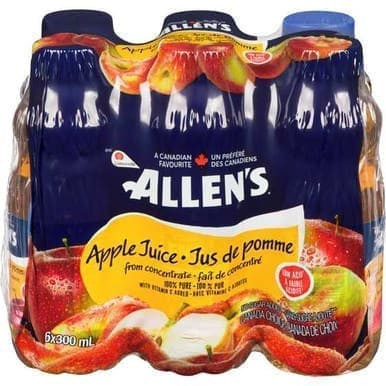
ALLEN's Apple Juice, Low Acid
Juice that sits clearly outside the Bill 9 definition — no caffeine, no additives.
View product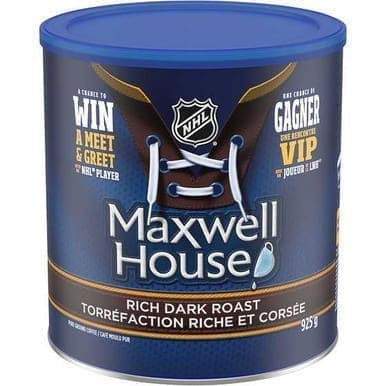
Maxwell House Rich Dark Roast
Expressly excluded from the definition — your caffeine program, unaffected.
View productWhat Canadian operators say
"ChickenPieces shipped to our Calgary cafe inside 48 hours — pricing beat our previous supplier on the bulk shortening line. Already reordered."
CP Buying Desk — Alberta · Alberta (Calgary)
"Switched our Mississauga commissary to CP for syrups and cleaners. Spec sheets arrive with the order, no chasing. Solid for GTA foodservice."
Giselle R. — Ontario · Ontario (Toronto)
"Vancouver hotel pantry switched to CP bubble-tea and concession supplies. No membership, transparent pricing, Canada-wide delivery worked for us."
Front-of-house buyer — BC · British Columbia (Vancouver)
Shop the products



Frequently Asked Questions
When does Quebec's energy drink ban take effect? +?+
What counts as an energy drink under Bill 9? +?+
Does the ban apply to coffee and tea? +?+
Can I still sell energy drinks online or through vending machines in Quebec? +?+
What are the fines for selling an energy drink to a minor? +?+
Do I have to ask for ID? +?+
How does Quebec's rule compare with Health Canada's caffeine limits? +?+
What should I stock instead for under-16 customers? +?+
How is shipping calculated for my order?+
Do you offer bulk pricing for quebec?+
Re-Stock Your Cooler Before the Changeover
Order cream soda, apple juice and coffee from ChickenPieces.com — no membership, no distributor account.
21,000+ SKUs · Operating since 2017 · Calgary-based · Ships across Canada · Free shipping on most orders over CA 199
This article is general information for foodservice buyers and is not legal advice. Bill 9's coming-into-force date depends on assent, and the in-person sales provision depends on a regulation that had not been made at the time of writing; penalty amounts and definitions may be refined by regulation. Confirm your obligations against the final statute and current Québec government guidance, and consult legal counsel for your specific operation. Sources: Fasken bulletin on Bill 9 (definition, in-person sales requirement, due diligence and federal divergence); CBC News and CTV News coverage of the bill's adoption (age restriction, photo ID, online and vending sales); Radio-Canada and La Presse (adoption vote and fine amounts); Health Canada guidance on caffeinated energy drinks as supplemented foods (180 mg per serving cap and cautionary labelling).