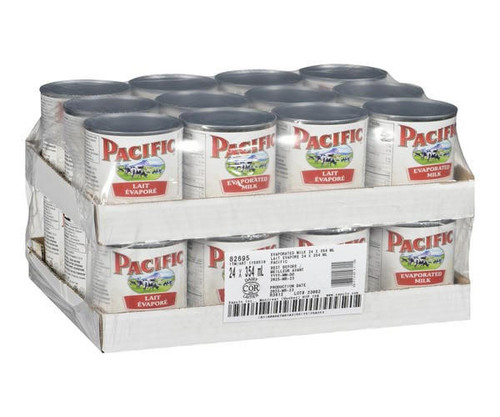
 US Dollar

Open both cans side by side. Taste a spoon of each. The condensed will coat your tongue like syrup. The evaporated tastes like milk that's been concentrated. Sugar is doing all the work.
Both products start the same way at the dairy plant. Raw milk gets clarified, standardised for fat content, then pulled into a vacuum evaporator. The vacuum lowers the boiling point so the milk can lose water without scorching. About sixty percent of it comes off. What's left is denser milk.
Then the two products part ways. Evaporated milk goes straight to the homogeniser, gets fortified with vitamin D, gets sealed in cans, and is sterilised in a retort. Condensed milk has granulated sugar dissolved into it first. The sugar saturates the liquid and that's mostly what preserves it. Heat alone isn't doing the work in a condensed milk can.
Sugar is also the reason a sealed can of condensed milk lasts up to two years on the dry shelf, while evaporated milk lasts about one. Saturated sugar is hostile to microbes in a way that being canned alone isn't.
The numbers: a 300 mL can of sweetened condensed milk holds about 225 g of sugar. That's a cup plus a few tablespoons by volume. The same volume of evaporated milk carries 25 g of sugar, which is just the lactose that was in the milk to begin with.
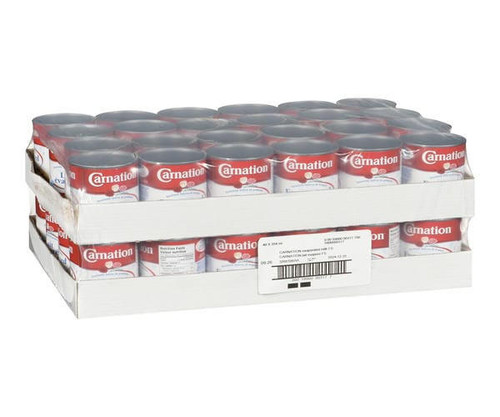
Carnation Evaporated Milk — 354 mL / 48 cans per case
Foodservice standard. Holds in a hot soup without breaking. We ship the most of this SKU because it works in almost everything that calls for concentrated dairy.
View product →