

Bleach and Acid: The Mix That Killed a Restaurant Manager

2026 Jul 21st

Bleach and Acid: The Mix That Killed a Restaurant Manager

Canadian-Owned No MOQ Ships Canada-Wide Calgary Warehouse WHMIS 2015 Aligned Health Canada Registered Disinfectants
Quick Answer

Never mix bleach with an acid (descaler, delimer, toilet bowl cleaner, rust remover, vinegar) or with ammonia (many glass cleaners). Bleach plus acid releases chlorine gas in seconds and has killed a working restaurant manager. In Canada the control is not a poster: WHMIS 2015 requires a workplace label on every spray bottle you decant into, and the practical fix is a colour coded, pre-mixed, single-chemical-per-surface system so two unlabelled bottles never meet.

Janitorial Chemical Safety
A

Amani

ChickenPieces.com · Calgary, AB · We ship Canada-wide

Bleach and Acid: The Chemical Mixing Mistake That Killed a Restaurant Manager

A floor cleaner met a spilled descaler on a Massachusetts kitchen floor. Within minutes a general manager was dead and thirteen people were in hospital. Here is the chemistry, the Canadian rule most operators miss, and the system that makes the mistake impossible.

1 death
Restaurant general manager, Burlington MA, November 2019
13
Others taken to hospital in the same incident, including two customers
Seconds
Time between the two products meeting and gas coming off the floor
At a Glance

Key Takeaways

Six things to fix before your next shift, not after your next incident.

Bleach plus acid is the killer pair

Descalers, delimers, toilet bowl cleaners, rust removers and vinegar are all acids. Any of them on a bleach-wet floor releases chlorine gas.

It is almost never deliberate

Nobody mixes on purpose. One product gets applied where another was already spilled, or two identical white bottles get confused.

The instinct to clean it up is fatal

The manager who died was trying to push the reaction toward a drain. The correct response is to leave and take everyone with you.

Canada has a label rule you are likely breaking

WHMIS 2015 requires a workplace label on any hazardous product you decant into a spray bottle. Unlabelled bottles are the single most written up gap.

Bleach free is a real option now

Registered hydrogen peroxide disinfectants do the same job without the incompatibility that causes the gas. Four of the operator threads we read asked for exactly this.

Systems beat training posters

Colour coding, pre-mixed bottles and wall dispensers remove the decision. Training alone fails on the day a new hire takes initiative.

The Incident

What actually happened in Burlington

Reported by CNN, NBC News and the American Chemical Society's own news outlet.

On 7 November 2019, at a Buffalo Wild Wings restaurant in Burlington, Massachusetts, an acid-based cleaner called Scale Kleen had been spilled on the kitchen floor. A worker then applied Super 8, a chlorine-based floor cleaner, over the same area. The two products met and reacted immediately. Staff described the liquid turning green and bubbling.

Ryan Baldera, the 32-year-old general manager, grabbed a squeegee and tried to push the reaction toward an outside drain. That is the instinct almost every hands-on manager would have. It put him directly over the gas. He collapsed and did not survive. Thirteen other people were taken to hospital, including two customers who had been sitting in the dining room.

Nothing exotic happened here. Both products were ordinary commercial cleaners doing what they were sold to do. Neither was used maliciously. The failure was that two incompatible chemicals were able to reach the same square metre of floor, and that nobody in the building had been given a script for what to do when they did.
The lesson buyers keep missing: this was not a product quality problem. It was a system problem. Two correct products, one uncontrolled sequence.
The Chemistry

Which combinations produce gas, and what gas

Print this. Put it inside the chemical cupboard door, not in a binder in the office.

CombinationCommon products involvedWhat it releasesEffect on staffRisk
Bleach + acidChlorinated cleaner with descaler, delimer, toilet bowl cleaner, rust remover, vinegarChlorine gasBurning eyes and throat, coughing, chemical burns to the lungs; can be fatalExtreme
Bleach + ammoniaChlorinated cleaner with many glass and multi-surface cleanersChloramine gasCoughing, chest pain, shortness of breath, nauseaExtreme
Bleach + hydrogen peroxideChlorinated cleaner with peroxide disinfectantOxygen released violently, splash and pressureEye and skin injury from splash backHigh
Acid + hydrogen peroxideDescaler with peroxide disinfectantPeracetic-type irritantsRespiratory irritation, eye damageHigh
Bleach + detergent or soapChlorinated sanitizer poured into a dish soap bucketVariable; sanitizer is neutralised, may release irritantsFalse sense of sanitation, plus irritationModerate
Two different degreasersAlkaline oven cleaner with a second heavy duty degreaserHeat, foaming, splashChemical burns to hands and forearmsModerate
Any chemical + hot waterBleach topped up with hot water in a bucketAccelerated vapour releaseRespiratory irritation in a closed kitchenModerate
The one rule that covers all of it: one chemical, one surface, one rinse, then the next. If a second product has to touch the same surface, the surface gets rinsed with clean water and dried first. No exceptions for “just a quick spray”.
From the Floor

What operators actually report

Verbatim from Canadian and North American kitchen operator forums, not invented for this article.

New guy in the kitchen took some initiative to deck scrub the floors, but mixed bleach and a calcium/lime remover (phosphoric acid) in a bucket. Instantly created a yellow foam and gas in the kitchen.

That is the Burlington incident in miniature, told by an operator who got lucky. The pattern repeats: an unsupervised person, a good intention, two products that were never meant to meet.

I always run into people just randomly dumping full strength bleach in a kitchen, walls, floors, walk in. Follow the instructions on dilution.
Co-tenant in my kitchen is mixing a capful of bleach with Dawn for sanitizing solution, I heard this can be toxic?

Notice what all three have in common. Nobody was reading a label, because in every case the chemical was in an unmarked bucket or a reused bottle. Labelling is not paperwork. It is the last thing standing between a new hire and a mistake.

Canadian Rule

The WHMIS label duty on spray bottles

The part every US-written cleaning guide leaves out, and the one an inspector will look for first.

Under WHMIS 2015, a hazardous product arriving from a supplier carries a supplier label. That label has to stay legible and intact on the original container. Most operations get this right by default, because nobody peels labels off drums.

The gap is what happens next. The moment a worker pours that product into a spray bottle, a bucket with a lid, or any other secondary container, the employer owes that container a workplace label. A workplace label needs a product identifier that matches the safety data sheet exactly, plus safe handling information. Colour of the bottle is not a substitute.

There is one narrow exception. If the worker fills the container, uses the product immediately, and the container stays under that worker's control for the whole time, no workplace label is required. The instant that bottle goes back on a shelf, gets carried to another station, or survives to the next shift, it needs the label.

Practical read: if you have unlabelled spray bottles sitting on a shelf at the end of service, you are not compliant — and more importantly, you have created the exact conditions that let two chemicals get confused. The rule and the safety outcome point the same direction.

Alongside labels, the employer duty covers a current safety data sheet for every hazardous product, accessible to workers rather than locked in an office, and documented training on the hazards and safe handling of what is actually on site.

The Fix

Close the system, not just the training gap

Four controls, in the order they pay off.

1. Reduce the chemical count. Most kitchens carry more products than they need, and every extra product is another pair that can meet. A registered hydrogen peroxide disinfectant covers general surface cleaning and disinfection without introducing the bleach-acid incompatibility at all. Four separate operator threads we reviewed were asking directly for bleach-free options.

2. Colour code by chemical class, not by area. One colour for sanitizer, one for degreaser, one for washroom acid, one for glass. Same colour on the bottle, the cap and the cloth. A new hire then has to ignore two signals to make the mistake instead of guessing between two identical white bottles.

3. Move to ready-to-use or a wall dispenser. Ready-to-use bottles remove the two riskiest steps, measuring and decanting. Where a concentrate is the better buy, a wall-mounted dilution dispenser locks the ratio and fills the labelled bottle directly, so nobody free-pours and nobody guesses.

4. Separate storage physically. Acids on one shelf, chlorine products on another, ideally not stacked above each other. A leak from a bleach jug onto a descaler below is the same event as the Burlington floor, just in a cupboard.

Read this alongside our guides to quat sanitizer concentration in the three-compartment sink and detergent yield per sink turn. Getting the dilution right is the same discipline as getting the pairing right.

Shop the Range

Chemicals we stock and ship from Calgary

Bleach-free disinfectants, registered sanitizers, gloves, and the acid products that need to be stored well away from them.

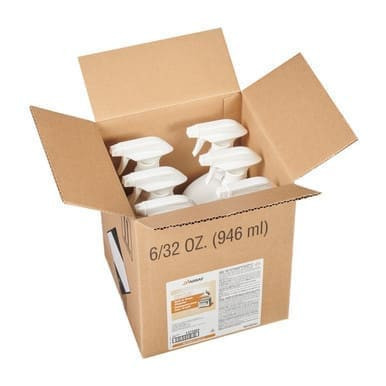
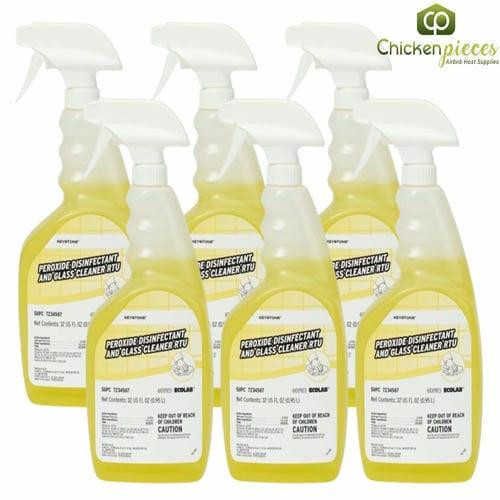
Keystone Cleaner Disinfect Peroxide Ready To Use  946 ML/2 LBS (6/Case)
Keystone Cleaner Disinfect Peroxide Ready To Use 946 ML/2 LBS (6/Case)
Bleach-free peroxide disinfectant · ready to use · 6 per case
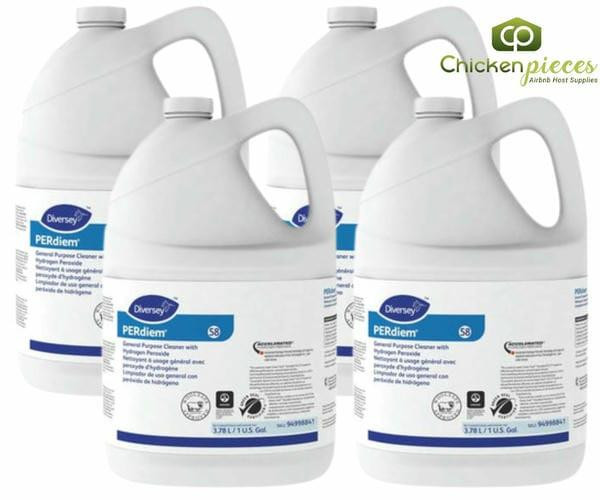
Diversey PERdiem General Purpose Cleaner with Hydrogen Peroxide, 3.78L/1 Gallon(4/Case)
Peroxide general-purpose cleaner · concentrate · 4 per case
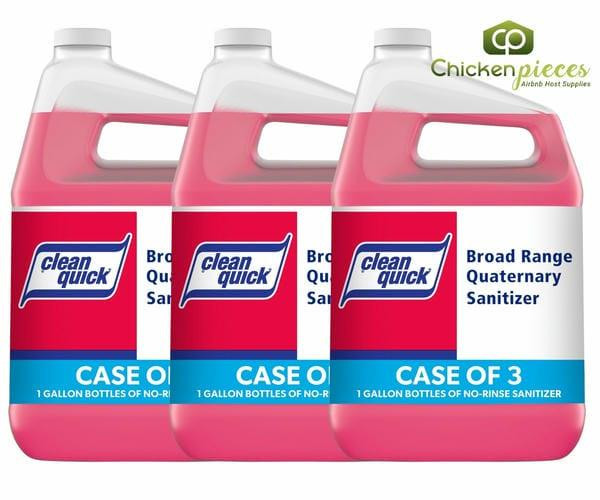
Clean Quick Broad Range Quaternary, 3.78L/1 Gallon (3/Case)
Quaternary sanitizer concentrate · 3 per case
Diversey Sanitizer Detergent, Food Surf Quaternary Ammon D10 · 2.5L/Unit, 2 Units/Case
Quat sanitizer detergent for food surfaces · 2 per case
Array Toilet Bowl Cleaner, Low Acid · 946ML/Unit, 6 Units/Case
Low-acid washroom cleaner · store away from all chlorine · 6 per case
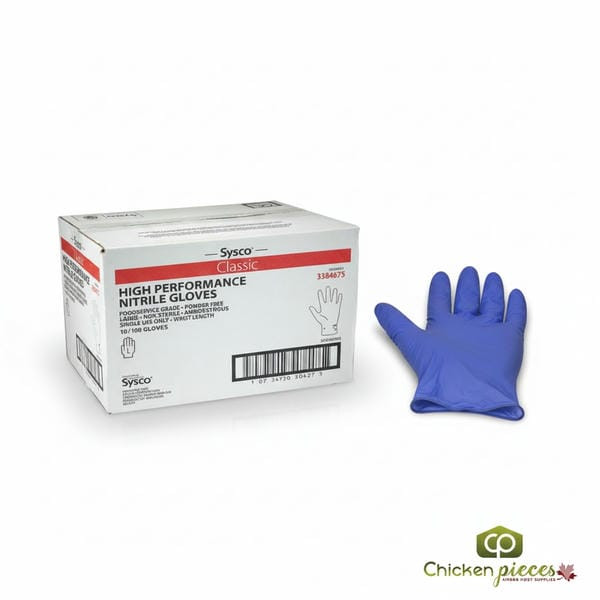
Sysco Classic Glove Nitrile Powder-Free Large 100 CT (10/Case)
Powder-free nitrile gloves, large · 100 count · 10 per case
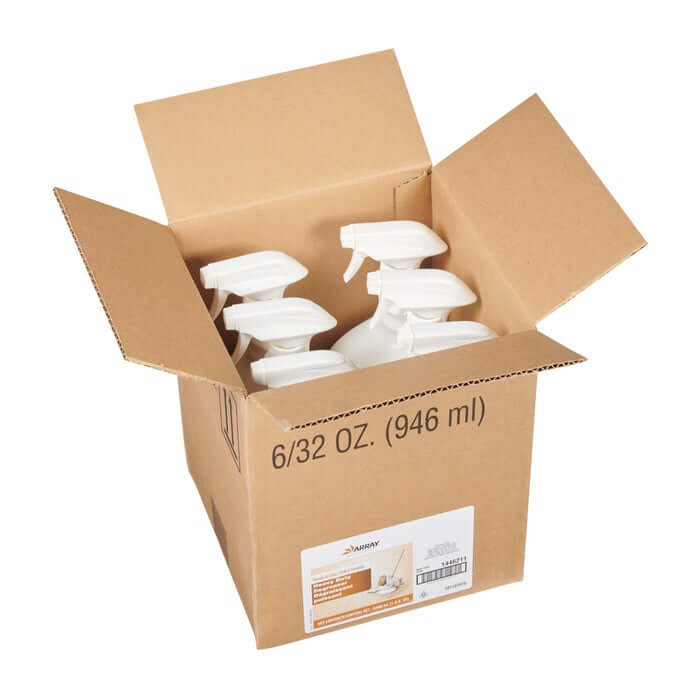
Array Heavy Duty Degreaser Cleaners Ready To Use 946ml-(6/CASE)
Heavy duty degreaser · ready to use · 6 per case
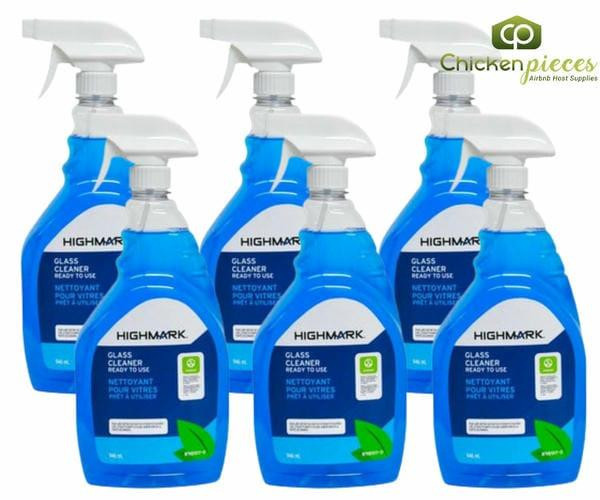
Highmark Glass Cleaner, Ready-to-Use Spray Bottle 946 mL/32 oz(6/Case)
Ready-to-use glass cleaner · 6 per case
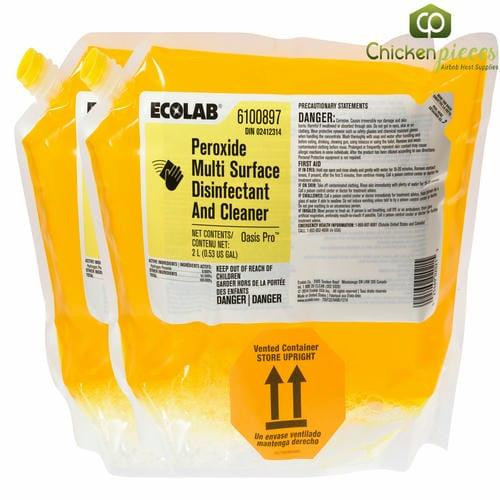
Ecolab Cleaner Disinfectant Peroxide Multi Surface 2 L/4.18 LBS (2/Case)
Peroxide multi-surface cleaner disinfectant · 2 per case
Array Oven And Grill Cleaner, Spray Bottle, Ready To Use · 950ML/Unit, 6 Units/Case
Oven and grill cleaner · ready to use · 6 per case
Reviews

What Canadian operators say

Buyers who rebuilt their chemical line around the system, not the product.

★★★★★

"We had six white spray bottles and nobody could tell you what was in three of them. Switched the whole washroom and kitchen line to colour coded bottles with printed workplace labels. Our next inspection took half the time it used to."

D
Devon M.
Operations Manager, three-site restaurant group — British Columbia
★★★★★

"After a near miss with a descaler we pulled chlorine out of general cleaning entirely and moved to the peroxide disinfectant. Same result on surfaces, and the incompatibility problem simply went away. Ordered one case first to test because there was no minimum."

P
Priya S.
Facilities Lead, long-term care kitchen — Ontario
★★★★★

"The thing that changed behaviour was the wall dispenser, not the safety talk. Staff stopped free-pouring overnight because there was nothing left to pour. Restock lands from Calgary in two days."

R
Réal T.
Owner-Operator, catering kitchen — Quebec
FAQ

Questions operators actually ask

Drawn from live operator forum threads and Canadian regulatory guidance.

Which cleaning chemicals should never be mixed?

Bleach with any acid, including descalers, delimers, toilet bowl cleaners, rust removers and vinegar, releases chlorine gas. Bleach with ammonia, including many glass cleaners, releases chloramine gas. Bleach with hydrogen peroxide, and any acid with hydrogen peroxide, both react. Two different degreasers or oven cleaners mixed together can also generate heat and splash. The safe rule is one chemical, one surface, one rinse, then the next.

Why is bleach plus acid so dangerous?

Sodium hypochlorite reacts with acid to release chlorine gas almost instantly. In a 2019 incident at a Buffalo Wild Wings in Burlington, Massachusetts, a chlorine based floor cleaner was applied where an acid based descaler had spilled. The mixture bubbled green, general manager Ryan Baldera was overcome trying to push it toward a drain, and he died. Thirteen other people were taken to hospital.

Does a spray bottle need a label in Canada?

Yes. Under WHMIS 2015, when a hazardous product is decanted into a spray bottle or any other secondary container, that container needs a workplace label carrying a product identifier that matches the safety data sheet plus safe handling information. The only exception is a container filled and used immediately by the same worker, which stays under that worker's control the whole time.

Is vinegar a safe alternative to bleach?

Vinegar is an acid, so it is one of the worst things to store near bleach. It is also a weak sanitizer and is not a registered hard surface disinfectant in Canada. If the goal is to get away from bleach, the working answer is a registered hydrogen peroxide or quaternary product, not a pantry acid.

What PPE does the crew actually need?

Chemical resistant gloves for every dilution and every application, splash rated eye protection for anything decanted or sprayed overhead, and ventilation before the first bottle is opened. Nitrile gloves are the practical default because they resist a wider range of cleaning chemicals than vinyl and avoid the latex allergy problem.

How do colour coded bottles prevent a mix?

A mix needs two unlabelled bottles that look the same. Assign a colour to a chemical class, keep the same colour across bottles, caps and cloths, and print the workplace label once. A new hire then has to ignore a colour and a label to make the mistake, instead of guessing between two identical white spray bottles.

Are ready to use products safer than concentrates?

For general crews, yes. Ready to use bottles remove the two riskiest steps: measuring a concentrate and decanting it. Concentrates remain the cheaper choice per litre where a wall mounted dilution dispenser locks the ratio and fills the labelled bottle directly.

What should staff do if a mix happens?

Leave immediately, take everyone with you, and do not try to clean it up, dilute it or push it toward a drain. That last instinct is what killed the manager in the Burlington incident. Ventilate from outside the space, call emergency services, and let them clear the room before anyone re-enters.

What paperwork does an inspector expect?

A current safety data sheet for every hazardous product on site and accessible to workers, supplier labels intact on original containers, workplace labels on every decanted container, and evidence that workers have been trained on the hazards and on safe handling. Missing labels on spray bottles is the most commonly written up gap.

How do you calculate shipping on bulk orders?

We calculate shipping on live carrier rates at checkout, not on flat or subsidized tiers. Every order is priced against real LTL, parcel, or pallet-freight quotes from our Calgary warehouse to your dock. That means you never absorb hidden shipping costs into product margins, and for bulk and pallet orders this typically runs 15-25% lower than competitors who bake shipping into their unit prices.

Why facilities buy cleaning chemicals from ChickenPieces

Four reasons a safety-driven chemical rebuild lands here.

No minimum order

Trial one case of a bleach-free disinfectant on a single site before you commit the whole group to a switch.

Canadian-owned, ships nationwide

Stock moves from our Calgary warehouse to any province on live carrier rates, with no border paperwork on your desk.

Registered products, documented

Disinfectants we list are registered for hard-surface use in Canada, and safety data sheets are available for every hazardous line we ship.

WHMIS 2015 supplier labelling · SDS on request
The whole system in one order

Disinfectant, sanitizer, degreaser, glass, washroom acid and nitrile gloves on a single purchase order, so the colour-coded line arrives together.

Get your chemical line reviewed for incompatible pairs

Send us the list of what is currently on your shelf. We will flag the pairs that must never meet, suggest bleach-free replacements where they make sense, and quote the colour-coded line as one order. Quotes include live freight from Calgary to your dock, no minimum order on any line.

Request a Quote
Sources

Sources & further reading