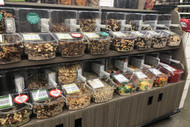
Purchasing bulk food can be a cost-effective and convenient option for businesses, homes, and Airbnb rentals. It allows you to stock up on a large quantity of non-perishable items at a lower price per unit, saving you time and money in the long run. However, there are several factors to consider before making a bulk food purchase to ensure that you are getting the best value for your money.
- Determine your needs: The first step in purchasing bulk food is to assess your needs. Consider the number of people you are feeding, any dietary restrictions or allergies, and the type of events or occasions that you will be using the bulk food for. For businesses, consider the expected volume of customers and the type of menu you will be offering. For homes and Airbnb rentals, consider the length of stay and the preferences of your guests. Having a clear understanding of your needs will help you determine the appropriate quantity and types of bulk food to purchase.
- Compare prices: Once you have a list of the bulk food items you need, it is important to shop around and compare prices from different suppliers. Look for bulk food stores or wholesalers in your area, as well as online retailers. Don't forget to factor in any additional costs such as delivery fees or membership fees. It is also a good idea to check the unit price of each item to ensure that you are getting the best deal.
- Consider the quality and freshness of the food: While price is important, it is also essential to consider the quality and freshness of the bulk food you are purchasing. Look for items that are in good condition, with no visible signs of spoilage or damage. For perishable items such as meat and dairy, make sure to check the expiration dates and choose products that will have a longer shelf life. It is also a good idea to research the supplier and their sourcing practices to ensure that you are purchasing ethically-sourced and sustainably-produced products.
- Think about storage: Proper storage is crucial to maintaining the quality and freshness of your bulk food. Consider the size and type of storage space you have available, as well as the shelf life of the products you are purchasing. Dry goods such as grains and nuts can be stored in airtight containers or bags in a cool, dry place. Perishable items such as meat and dairy should be stored in the appropriate temperature-controlled areas to prevent spoilage. It is also a good idea to label and date your bulk food items to keep track of their expiration dates and help you rotate through your stock.
- Plan for waste: While purchasing bulk food can be a cost-effective option, it is important to consider the potential for waste. Make sure to have a plan in place for using up your bulk food before it expires, whether it is through menu planning, composting, or donating to a food bank. This will help you avoid throwing away spoiled or unused products and ensure that you are getting the most value for your money.
- Look for bulk food discounts: There are several ways to save money on bulk food purchases. Many suppliers offer discounts for bulk orders, or you can join a bulk food discount club or membership program. You can also look for sales or coupons, or consider purchasing seasonal items when they are at their lowest price. Buying in bulk can also help you negotiate better prices with suppliers, as you are committing to a larger purchase.
In conclusion, purchasing bulk food can be a convenient and cost-effective option for businesses, homes, and Airbnb rentals. However, it is important to carefully consider your needs, compare prices, and think about storage and waste when making a bulk food purchase. By taking the time to research and plan ahead, you can ensure that you are getting the best value for your money and making the most of your bulk food supplies.
Frequently Asked Questions
Operator questions answered by real foodservice buyers. Sources include Reddit, Quora, and operator forums.
What should a Canadian restaurant or Airbnb operator check before buying food in bulk?+
Operators consistently run through the same checklist: storage capacity, shelf life, supplier minimum order, delivery cost to your region, and whether the price per unit is genuinely lower than the single-pack price after delivery. r/smallbusiness Canada threads flag that the cheapest bulk quote is often offset by a higher shipping fee, so the delivered price is what to compare. Packaging matters too — bulk rice in a 25 kg paper sack needs a sealed food-grade tote, not a cardboard box in a damp basement. ChickenPieces sells bulk dry goods, food-grade storage totes, and case-pack condiments for operator-level purchasing.
Source: [reddit] Restaurant/Food truck HELP: sourcing ingredients and operating costs - r/smallbusiness
How do I judge whether a bulk food price is actually a good deal?+
The standard test is unit price: divide the package price by the kilograms or litres, then compare to the same calculation on the regular-sized package at a typical grocery store. Operators warn that bulk deals can still be expensive if the unit size is small or the product has a short shelf life. r/Frugal threads point to Costco and Restaurant Depot as common benchmarks, but the real number is the delivered cost per edible serving, not the sticker price. ChickenPieces lists unit pricing on every bulk SKU and ships case-pack sizing that makes the math straightforward.
Source: [reddit] Cheapest way to buy groceries for a large family - r/Frugal
Is buying food in bulk worth it for a small Airbnb or B&B?+
For a single Airbnb, bulk is worth it for non-perishables — coffee, tea, sugar, salt, oil, breakfast cereal, snacks, and bottled water. Perishables are a different story: bread, milk, and fresh fruit do not survive long storage. A small B&B can split bulk orders with a neighbour to hit minimum order quantities without overstocking. Operators who set up a shared bulk-buy club with neighbouring Airbnbs report a 15 to 25 percent saving on consumables. ChickenPieces supports shared-order drop-shipping and case-pack sizing for very small operators.
Source: [reddit] Tips for bulk food purchases? - r/intentionalcommunity
What are the risks of buying food in bulk for a small business?+
The four risks operators cite are: storage space, spoilage if rotation is slow, cash flow tied up in inventory, and waste if demand changes. Restaurant threads on r/restaurantowners warn against buying a 25 kg bag of anything unless you can move through it in a defined period. A practical compromise is medium case-packs that match a typical weekly usage cycle, with a clear first-in-first-out rotation. ChickenPieces lists medium case-pack sizing, FIFO shelf labels, and vacuum-sealed bulk SKUs that reduce spoilage risk.
Source: [reddit] Best wholesale food suppliers? - r/restaurantowners
Where do Canadian foodservice operators usually buy bulk food?+
Sysco, Gordon Food Service, and Restaurant Depot (cash no-membership in some provinces) are the most-mentioned wholesale suppliers in r/smallbusiness. Smaller operators and Airbnb hosts often use Costco or local restaurant-supply cash-and-carry stores. For specialty items (single-origin coffee, condiments, gluten-free), direct-from-producer or specialty wholesalers are common. ChickenPieces runs a Canadian foodservice wholesale catalogue that competes on case-pack pricing for tallow, condiments, and disposables.
Source: [reddit] US Food Chef Stores sell bulk foods and don't require membership - r/Frugal
How do I store bulk food safely once it arrives?+
Dry bulk goods (rice, flour, sugar, pasta) belong in sealed food-grade containers off the floor in a cool, dry, dark space. Canned and bottled bulk goods rotate first-in-first-out. Refrigerated and frozen items need a separate cold-storage area with a calibrated thermometer. The biggest storage failure operators report is rodents and insects, which a sealed container program eliminates. ChickenPieces stocks food-grade stackable totes, FIFO shelf labels, and industrial pest-deterrent sachets in case-pack sizes.
Source: [other] 50 Bulk Food Shopping Tips to Save Time and Money - Cheapism
What is the best bulk food to start with as a new operator?+
The most common first bulk buys are cooking oil, salt, sugar, rice or pasta, all-purpose flour, ketchup and mustard, and bottled water. These are staples across almost every menu or amenity setup, and they have long shelf lives. r/smallbusiness threads recommend starting with two or three SKUs, validating your monthly usage, then expanding. ChickenPieces bundles a 'first bulk' operator starter pack of tallow, canola oil, condiments, and bottled water at case-pack pricing.
Source: [reddit] I tracked down the company ruining restaurants - r/restaurantowners
How does bulk buying affect food cost percentage for a small business?+
Most operators target 28 to 35 percent food cost as a percentage of revenue. Bulk purchasing can pull that down a few points for staple SKUs that you can store and rotate cleanly, but it cannot rescue a menu that is poorly priced. Operators who share a spreadsheet comparing cash-and-carry, broadline, and specialty wholesalers find the biggest wins on cooking fats, condiments, and paper disposables. ChickenPieces publishes a delivered cost-per-serving calculator for its tallow, condiments, and disposable SKUs to make the comparison fast.
Source: [reddit] Restaurant owners, how do you find suppliers in your area? - r/smallbusiness
Authoritative Sources
The following government and public-health sources informed the operator guidance above. Citations to Reddit, Quora, and operator forums appear in the FAQ block above.

 US Dollar