
Menu language like “reduced balsamic,” “pan sauce reduced,” or “demi-glace style reduce” points to a method, not a brand of thickener. Operators use reductions to build body and shine without relying only on flour or starch.
2026 Sep 30th
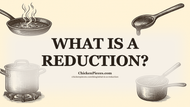
What Is a Reduction?
Canadian-Owned No MOQ Ships Canada-Wide Calgary Warehouse Food Safe Focus
Quick Answer
A reduction is a sauce or cooking liquid that has been simmered uncovered so water evaporates and flavor concentrates. The pan gets smaller in volume; the taste gets bigger. Chefs reduce stock, wine, vinegar, or pan juices until the liquid coats a spoon (nappé) or hits the thickness the menu needs.
Commercial Kitchen Method
What Is a Reduction?
Foodservice definition, step-by-step method, how it compares with roux, slurry, and braising, and the supplies that keep sauce work reliable on the line.
At a Glance
Key Takeaways
What a commercial kitchen needs to know before you start a reduce on the line.
Simmer uncovered — water leaves, flavor stays
A reduction concentrates by evaporation. Lid off. Volume down. Taste up.
Wide pan beats tall pot for the final reduce
More surface area means faster, cleaner concentration on the line.
Nappé is the spoon test
Stop when the liquid coats the back of a spoon or matches the recipe yield.
Not a roux. Not a slurry.
Those add a thickener. A reduction concentrates the liquid itself.
Season at the end
Salt and seasoning intensify as water leaves — finish late.
Supplies that support the method
Wide sauce pans, hotel pans, and lids for the reduce and hold — cookware for the technique, not poultry SKUs.
Introduction
Why reductions matter on a busy line
Field tip: Start with a flavorful liquid. Reducing a weak stock just makes a smaller amount of weak stock. Build flavor first, then concentrate.
Sauce Station
How a reduction works step by step
- Start with a flavorful liquid. Stock, wine, vinegar, tomato, or pan drippings plus aromatics.
- Simmer uncovered in a wide pan. More surface area evaporates faster than a tall stockpot for the final reduce.
- Skim foam or fat if needed. Keep the finish clean for the pass.
- Watch volume and the spoon. Stop when it coats the back of a spoon (nappé) or hits the marked yield.
- Season at the end. Salt concentrates as water leaves.
- Hold or finish. Mount with a little butter or oil if the menu calls for it; hold hot under food-safe rules.
Field tip: Mark the target yield on the prep label before you start. Guessing volume mid-reduce burns time and product.
On the Line
Why kitchens use it
What a reduction looks like in foodservice
A working reduce station may show:
- Wide sauce pans or rondeaus (not only tall stockpots for the final stage)
- Vigorous simmer with the lid off
- Glossy liquid that coats a spoon
- Smaller yield marked on the ticket or prep label
- Clean tasting spoons staged for checks
Hosts and catering teams use the same idea for make-ahead gravy bases and finishing sauces that reheat cleanly under the operation’s hot-holding plan.
- Bigger flavor without adding thickeners
- Built-in sauce from braising liquid, roast pans, or stock
- Control over body and shine at the pass
- Make-ahead mother liquids that finish fast on the line
Clarity
What a reduction is not
- Not thickening with a roux or cornstarch slurry alone. Those add a thickener; a reduction concentrates by evaporation. (You can still finish a reduced liquid with a thickener — the methods are different.)
- Not boiling until it scorches or burns dry. Watch heat and volume; a burnt reduce is waste, not sauce.
- Not the same as a braise. Braising cooks food in shallow liquid under a lid. Reducing is about concentrating the liquid itself.
- Not a guarantee of food safety. Time, temperature, and hold controls still follow the operation’s written plan and local requirements.
Comparison
Reduction vs roux vs slurry vs braise
| Factor | Reduction | Roux | Slurry | Braise |
|---|---|---|---|---|
| Main action | Evaporate water | Cook fat + flour | Mix starch + cold liquid | Cook food in shallow liquid under lid |
| Adds thickener? | No (concentrates) | Yes | Yes | No (method for the food) |
| Lid | Off | N/A | N/A | On (tight) |
| Typical goal | Stronger, thicker sauce | Stable body | Quick thicken | Tender food + cooking liquid |
| Season timing | Late (concentrates) | During sauce build | After slurry cook-out | During cook + finish |
Best use for a reduction: concentrate stock, wine, vinegar, or pan juices when you want flavor and body from the liquid itself.
Choose a roux or slurry when: you need added thickening without long evaporation time.
Choose braising when: the goal is tender food under a lid — then reduce the braising liquid separately for the sauce.
Canada note
Holding, labelling, and food-premise rules
Canadian operators should treat reduced sauces like other potentially hazardous ready-to-eat products once they leave the active cook: cool, label, date, refrigerate, reheat, and hot-hold under the site’s written food-safety plan and the applicable food-premise authority.
- Label and date reduced bases and finishing sauces clearly.
- Cool and store under approved time-and-temperature controls.
- Hot-hold finished sauces within the operation’s approved range.
- Clean and sanitize pans and utensils per the site’s food-contact procedures.
- Ask the local health authority or qualified food-safety lead when a process or hold time is uncertain.
See Health Canada — Food safety and CFIA — Food safety for industry. Always verify current local requirements for your licensed kitchen.
Supplies
Supplies that make reductions reliable
- Sauce pans / wide pans: Surface area for a clean, faster reduce.
- Hotel pans and lids: Hold finished bases under food-safe rules.
- Stock pot (upstream): Build flavourful liquid before the wide-pan final reduce.
- Ladle / tasting spoon: Check nappé and portion — no verified ladle PDP on chickenpieces.com yet, so not carded below.
Browse ChickenPieces.com for foodservice, hospitality, disposable, glove, and janitorial supplies. Chicken Pieces is a Calgary foodservice and hospitality supply company founded in 2018—not a poultry or meat distributor.
Shop the Range


Browse supplies for sauce work
Verified Chicken Pieces catalog links for sauce pans, hotel pans, lids, and stock pots used on a reduce. Technique cookware only — no sanitizer, gloves, or label SKUs. No invented URLs.
Thermalloy Stainless Steel Sauce Pan 2 Quart
Wide sauce pan for wine reductions, cream sauces, and small-batch finishes. Tri-ply base; NSF certified.
Aluminium Tapered Sauce Pan 1.5 Liters
Tapered aluminium sauce pan for efficient heat and surface area on the final reduce.
Browne & Co 4" Deep Full-Size Insert Pan
Anti-jam stainless hotel pan for holding reduced bases and finishing sauces under food-safe rules.
Browne & Co Full-Size Solid Pan Insert Cover
Solid cover for full-size insert pans — keep held sauces covered on the line.
Browne & Co 6" Deep Full-Size Insert Pan
Deeper full-size insert when batch reduced liquid needs more volume capacity.
Lagostina Stainless Steel Stock Pot with Lid, 7.5 L
Even-heat stock pot for building flavourful liquid before the wide-pan final reduce.
People Also Ask
People Also Ask
Questions operators search before they start a reduce.
What is a reduction in cooking?
A reduction is a liquid simmered uncovered until water evaporates and the remaining sauce is stronger, thicker, and more concentrated.
How do you know when a reduction is done?
Use volume and the spoon test. Many kitchens stop when the sauce coats the back of a spoon (nappé) or matches a marked recipe yield.
Is a reduction the same as a thickener?
No. A reduction concentrates by evaporation. A roux or slurry adds a thickener. Some sauces use both steps.
Can you reduce any liquid?
You can reduce many flavorful liquids — stock, wine, vinegar, tomato, pan juices. Weak or burnt liquid will not become a good sauce by reducing alone.
What pans work best for a reduction?
Wide sauce pans or rondeaus give more surface area than a tall stockpot for the final reduce, so concentration is faster and easier to control.
FAQ
Frequently asked questions
Why season a reduction at the end?
Salt and many seasonings intensify as water leaves. Seasoning early often makes the finish too salty.
How is a reduction different from braising?
Braising cooks food in shallow liquid under a lid. A reduction focuses on concentrating the liquid itself with the lid off.
Can you remount a broken or greasy reduce?
Skim fat, adjust heat, and follow the recipe’s finish. If the sauce is scorched, start over — burning cannot be fixed by more reducing.
How should reduced sauces be held for service?
Follow the operation’s written hot-holding and cooling plan and local food-premise rules. Label, date, and rotate like other ready-to-eat sauces. See Health Canada and CFIA.
Is “reduction” a Chicken Pieces meat product?
No. Chicken Pieces is a Calgary foodservice and hospitality supply company founded in 2018. This article explains a kitchen technique and the supplies that can support it; the company is not a poultry or meat distributor.
Why Partner With ChickenPieces
Canadian foodservice supplies for operators who need sauce pans, hotel pans, and cookware for sauce work — not a poultry or meat distributor.
Local Calgary Support
Based in Calgary, we understand regional operator needs and ship Canada-wide.
Wide Product Range
Source foodservice, disposables, gloves, janitorial, bar, and hospitality supplies from one supplier.
Competitive Pricing Structure
Access practical bulk pricing without a forced membership model.
Regulatory Compliance Focus
Chicken Pieces uses foodservice-focused, Health Canada- and CFIA-aware language where relevant. It is a foodservice and hospitality supply company founded in 2018—not a poultry or meat distributor.
Sources
Sources & further reading
- Health Canada — Food safety
- Canadian Food Inspection Agency — Food safety and hygiene
- Internal kitchen food-safety plan, recipe standards, and hot-holding procedures
- Culinary references for reduction / nappé as sauce method
Regulatory details vary by jurisdiction and operation. Verify current local requirements before publishing compliance-specific guidance.
Request Your Custom Quote Today
Need sauce pans, hotel pans, or stock pots for reduce work on the line? Call 1-833-462-8550 or shop chickenpieces.com.
Request a Quote