
2026 Aug 16th
Stop Auto-Packing Cutlery: The Hidden Cost in Every Takeout
Opt-in cutlery means customers must request disposable items rather than receiving them by default. Apps like Grubhub and Uber Eats now default utensils to off, cutting both waste and supply costs for operators who follow suit.
Stop Auto-Packing Cutlery: The Hidden Cost in Every Takeout Bag
For short-term rental hosts and facility operators, the cutlery you automatically toss in every bag quietly drains thousands from your annual budget.
Key Takeaways
Six practical points to help you decide whether opt-in cutlery fits your operation.
Cut Waste Volume
Grubhub reports forty billion plastic utensils hit landfills annually from food services. Opt-in removes unneeded items before they reach the bag.
Shrink Supply Bills
Postmates restaurants saved over three million annually by simply stopping automatic cutlery inclusion. Your operation can replicate this.
Meet Legal Standards
California AB 1276 mandates accessories only upon request. Similar laws are spreading. Opt-in keeps you ahead of compliance curves.
Appeal to Younger Guests
Millennial and Gen Z travellers actively prefer businesses that demonstrate environmental responsibility. Opt-in signals that commitment.
Simplify Order Tracking
Uber Eats displays disposable requests above special instructions on order cards and receipts. Clear visibility reduces packing errors.
Preserve Guest Choice
Customers can still request items via special instructions even if they skip the main toggle. Flexibility stays intact.
What Automatic Cutlery Really Costs You
Every pre-packed kit is money walking out your door unasked.
Automatic cutlery packing seems efficient until you count what guests actually use. Industry data shows the majority of delivered utensils are discarded untouched. For a property sending fifty meals daily, that is hundreds of unused forks, knives, and napkins weekly. The material cost compounds quietly because it hides inside routine supply orders.
The waste extends beyond your direct spend. Unused cutlery consumes storage space, adds weight to waste removal, and inflates your environmental footprint. Guests notice overflowing bins in rental kitchens and comment on excess packaging in reviews. The reputational drag is real even when the dollar impact is harder to trace.
Younger travellers increasingly screen properties for sustainability practices. A 2023 industry survey found environmental responsibility ranking among top five factors for millennial and Gen Z booking decisions. Automatic cutlery sends the opposite signal of what this demographic wants to see.
The Toggle System Major Apps Use
Leading delivery platforms have already built the model for you.
Grubhub and Uber Eats both default utensil requests to off. Customers must actively toggle to receive disposable items. This simple friction eliminates the majority of unneeded cutlery without denying anyone who wants it. The interface design matters: the toggle sits prominently, but the default protects restaurant margins.
When a customer does request items, the order displays this preference clearly. Uber Eats shows disposable requests at the top of order cards and printed receipts, positioned above special instructions. Restaurants with POS integration can access order APIs to build custom functionality, with technical account manager support available from the platform.
The system preserves flexibility. A customer might decline the main utensils toggle but still specify needs in special instructions. Your packing staff catches both signals because the platform surfaces them visibly. No request gets buried in fine print.
Where Laws Already Mandate Request-Only
California led the way; other provinces are watching closely.
California AB 1276 took effect January 2022 and requires food facilities to provide single-use accessories only upon customer request. The law covers utensils, straws, chopsticks, stirrers, condiment packets, and cups regardless of material. Plastic, bamboo, paper, and compostable items all fall under the same rule. No bundling or pre-packaging allowed if it prevents customer choice.
Exemptions exist for specific settings. Drive-throughs and airport food facilities can provide items when spillage prevention or eating capability requires them. Correctional institutions, hospitals, healthcare facilities, and school cafeterias are also exempt. Standard short-term rentals and commercial facilities face no such carve-out.
Canadian operators should track this trend. British Columbia and several municipalities have explored similar accessory-on-request frameworks. Adopting opt-in now positions your property ahead of potential compliance requirements rather than scrambling to catch up later.
How to Ask Without Annoying Customers
Framing the request as environmental care, not cost-cutting.
The wording on your booking confirmation or check-in message shapes response rates. Lead with environmental benefit, not operational convenience. Guests respond better to helping your property meet sustainability goals than to sensing a margin-protection move. Test two versions and track opt-in rates.
Timing matters. Ask at booking confirmation, again at pre-arrival, and once more at check-in. Each touchpoint catches a different attention state. Early asks plant the concept; later asks capture actual need. Space the messages at least forty-eight hours apart to avoid fatigue.
Make the opt-in physically easy. A simple checkbox on your digital welcome form works better than requiring email replies or app navigation. The lower the friction, the higher the completion rate. Follow Uber Eats model: visible toggle, default off, instant confirmation of selection.
Setting Up Opt-In at Your Property
A practical sequence for short-term rental and facility operators.
Audit your current cutlery flow first. Count what you order, what you pack, and what returns unused from guest units. This baseline proves your opportunity to stakeholders and gives you a metric to measure against. Most operators discover their waste ratio is higher than estimated.
Build your opt-in into existing touchpoints. Add the toggle to your booking confirmation email, your digital check-in form, and your guest app if you use one. Train cleaning staff to leave a small note in kitchens explaining the system and where to request items if needed. The physical reminder catches guests who skipped digital steps.
Track and refine. Measure opt-in rates weekly, guest satisfaction scores monthly, and supply orders quarterly. Adjust messaging if rates drop below fifteen percent or spike above sixty. Both extremes signal communication problems. Aim for a stable middle range that matches actual guest need.
Cutlery Solutions for Controlled Distribution
When guests do request items, send only what they need.
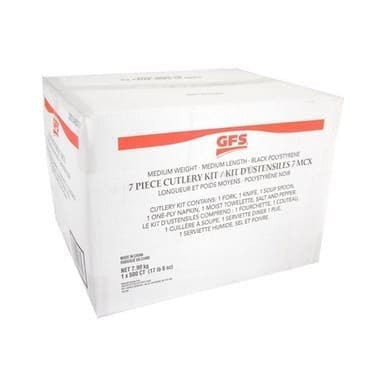
Pre-assembled kits make sense for high-volume operations where speed trumps customization. The six-piece and seven-piece Gordon Choice kits include fork, knife, napkin, wet nap, salt, and pepper. The seven-piece adds soup spoon. These suit properties with consistent meal profiles and predictable guest counts.
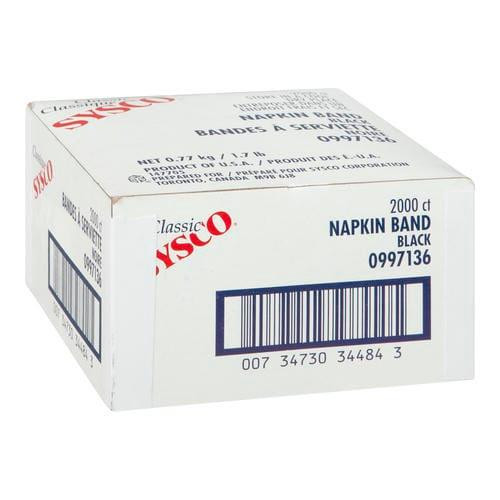
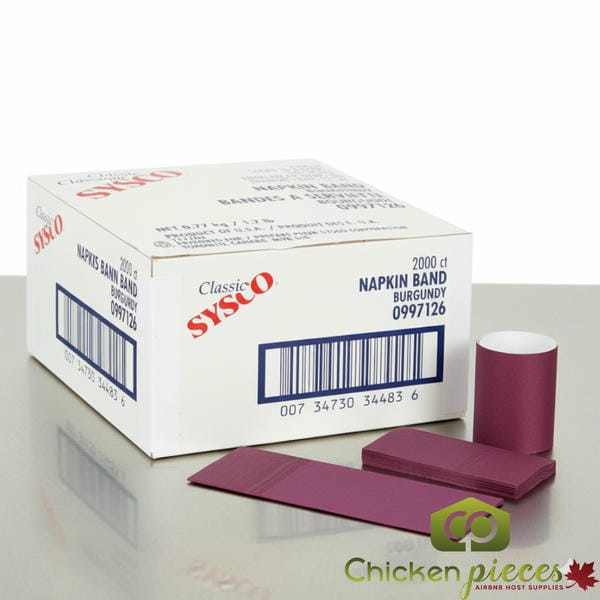
For more flexibility, band napkins allow on-the-fly assembly. Sysco bright white, black, and burgundy band napkins wrap exactly the utensils a guest requests. This approach cuts inventory complexity and reduces the risk of kit components going stale while waiting for use. You store fewer SKUs and assemble to order.
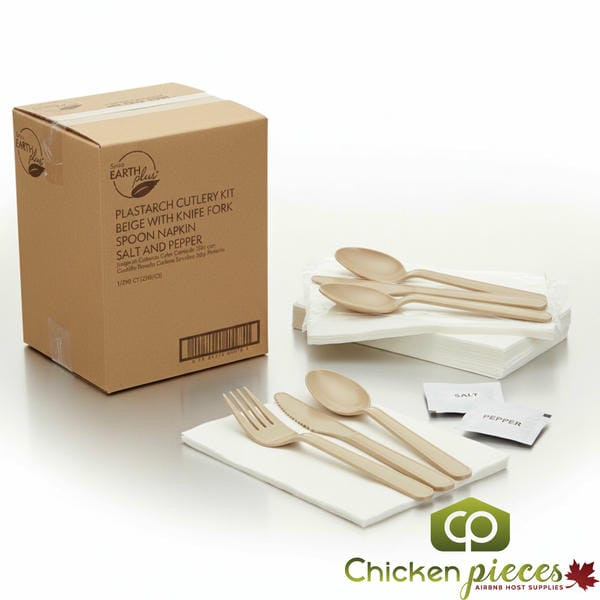
Plant-based alternatives exist for properties targeting sustainability credentials. The Sysco Earth Plus kit uses PSM beige material for knife, fork, spoon, napkin, salt, and pepper. Individually wrapped white six-in-one kits offer another compact option. Match your product choice to your guest demographic and your property positioning.
Cutlery Kit Comparison for Opt-In Operations
Match kit complexity to your typical guest request pattern.
| Kit Type | Piece Count | Best For | Storage Notes |
|---|---|---|---|
| Gordon Choice Black 6-Piece | 6 | Standard meals, moderate volume | Compact case, 250 units |
| Gordon Choice Black 7-Piece | 7 | Soup/salad menus, full service | Larger case, 500 units |
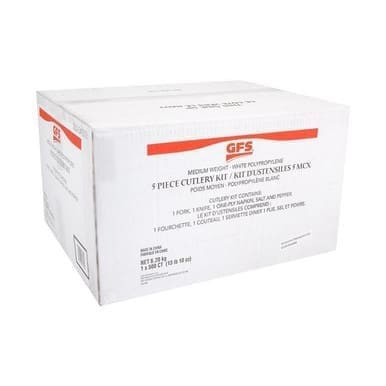
| Gordon Choice White 5-Piece | 5 | Simplified meals, cost focus | High-count case, 500 units |
| Hy Stix Black 3-Piece | 3 | Minimal requests, basic needs | Small footprint, 250 units |
| Sysco White Band Napkin | Wrap only | Custom assembly, flex menus | Bulk rolls, 2000 wraps |
| Sysco Black/Burgundy Band | Wrap only | Branded presentation | Colour-coded storage |
| Sysco Earth Plus PSM Kit | 6 | Sustainability positioning | Plant-based, 250 cases |
Cutlery Kits and Wrapping Solutions
Pre-assembled kits and band napkins for properties switching to guest-request distribution.




What Canadian property managers say
What Canadian operators say after switching to opt-in cutlery.
We stopped finding untouched plastic forks in our Calgary condo recycling bins. Guests actually read the sustainability note and opt in only when they need cutlery. Our quarterly supply order dropped noticeably.
The band napkins let our night staff wrap exactly what guests request instead of guessing. We used to throw out hundreds of pre-made kits monthly. That waste is basically gone now.
We added the opt-in checkbox to our booking flow and saw maybe one in ten guests actually request utensils. The rest are fine with the full kitchen we already provide. Simple change, real savings.
Opt-In Cutlery Setup: Frequently Asked Questions
The following operator questions are answered with cited sources. Every FAQ links to Health Canada, CFIA, Canada.ca, or another authoritative regulator.
Why do restaurants automatically include plastic utensils in takeout orders even when customers eat at home?
Source: Not including plastic utensils in takeout orders — r/unpopularopinion
How much does auto-packing cutlery cost restaurants, and can making it opt-in save money?
Source: You may not get plastic utensils and condiments in your takeout anymore — Time Out New York
What do customers actually want when it comes to getting cutlery with their takeout?
Source: When I order takeout, please don't fill the bag with plastic and napkins — r/unpopularopinion
Is making cutlery request-only a realistic option, and do customers carry their own?
Source: Does anyone bring their own utensils to places that give you plastic? — r/ZeroWaste
Why do some customers actually prefer and request disposable cutlery even for delivery?
Source: Why do certain people ask for plastic cutlery? — r/TalesFromYourServer
Is plastic cutlery actually recyclable, and what's the environmental impact of auto-packing it?
Source: Plastic cutlery cannot be recycled — learn how to avoid single-use plastic — Green Dining Alliance
Can making cutlery and condiments opt-in help restaurants cut plastic waste and save money?
Source: What New Jersey's 'Skip the Stuff' law means for takeout orders — Fox 29 Philadelphia
Why do so many plastic utensils get thrown away unused instead of being recycled?
Source: Can we all agree that using crazy plastic containers is a problem? — r/KitchenConfidential
Related guides from ChickenPieces
Why Operators Buy Cutlery from ChickenPieces
Calgary-based supply with Canada-wide reach for hospitality buyers.
Volume Flexibility
Order single cases for pilot programs or full pallets for portfolio rollouts. No forced minimums beyond case quantities.
Mixed Pallet Options
Combine cutlery kits, cleaning supplies, and guest amenities on one shipment. Reduce your vendor count and receiving time.
Hospitality-Focused Range
Products selected for rental turnover, not restaurant dining rooms. Packaging and counts match how properties actually operate.
Canadian Compliance
All food-contact items meet Health Canada safety standards for commercial use. Documentation available for facility audits and franchise requirements.
Sources & further reading
- Grubhub's #CutOutCutlery Initiative: How Delivery Apps Are Reducing Single-Use Plastic Waste — Grubhub
- Uber Eats Disposable Items Policy: Opt-In Single-Use Utensils and Napkins — Uber Eats
- California AB 1276: Single-Use Foodware Accessories and Condiments Law Implementation — California State Government (StopWaste)
Request Your Cutlery Quote
Tell us your property count and typical monthly volume. We will size a kit mix that matches your opt-in model and ship when you are ready.
Request a QuoteReferences: Health Canada — Food Packaging Materials CFIA — Food Allergen Labelling for Industry.
Authoritative References