

2026 Aug 16th
Stop Pouring Profits Down the Drain with Better Bar Control
Free pour spouts demand practiced rhythm and constant vigilance to hit standard measures. Measured pourers and jiggers remove guesswork entirely, giving managers predictable inventory and guests the same drink every visit.
Stop Pouring Profits Down the Drain with Better Bar Control
Built for Alberta hospitality operators who need reliable portion control behind every rail and service bar.
Key Takeaways
What Alberta bar managers should know before restocking their speed rails.
Count speed matters more than numbers
A four-count pour only yields one ounce when your rhythm holds steady at roughly one count per second. Rush-hour pressure breaks that rhythm fast.
Metal spouts outperform plastic
Metal speed pourers maintain consistent flow rates through temperature shifts and repeated use. Screened variants slow unpredictably and need more frequent replacement.
Jiggers protect inventory investment
Hourglass jiggers standardize every build across every shift. Managers reconcile purchases against sales without guessing where variance hides.
Chilled spirits pour differently
Viscosity changes with temperature and sugar content. Syrups and chilled liqueurs flow slower than room-temperature rail spirits, throwing off muscle memory.
Standard measures keep service legal
Precise pouring lets staff monitor alcohol consumption per guest. Consistent measures support responsible service obligations under provincial regulations.
Aeration changes wine service too
Adjustable aerating pourers soften younger wines without decanting time. Controlled oxygen contact smooths tannins tableside for by-the-glass programs.
What overpouring actually does to your liquor room
Variance between stock and sales rarely traces to one obvious leak.
Every ounce above standard measure leaves your shelf without matching revenue. Over a busy weekend, inconsistent four-counts compound into litres of unaccounted spirit. Managers reviewing Monday inventory face a choice: blame theft, blame waste, or recognize that free-pour discipline failed under pressure.
The European Bartender School notes standard free-pour flow at roughly ten millilitres per second without a speed pourer attached. Add a metal spout and that rate shifts. Add a screened spout and it shifts again. Bartenders who learned on one equipment set struggle when stations mix types. Your variance report becomes a map of equipment inconsistencies, not just human error.
Mashed reports that standard drink tracking helps managers spot problems from mistakes, unauthorized giveaways, or theft. But that tracking only works when pours start from a known baseline. Free pouring without verification builds sand on sand. Jiggers or measured pourers establish the baseline that makes variance meaningful rather than mysterious.
Free pour demands more than good intentions
Speed and showmanship tempt every bartender until the numbers come due.
VinePair explains that standard four-count technique yields approximately one ounce only when each quarter-second count equals one-quarter ounce poured. That sounds simple until Friday night volume rises, music changes tempo, and a regular asks for heavy pours. The count stretches. The ounce becomes one and a quarter. Multiply by a hundred cocktails and your rail bottle empties early.
Material matters. Plastic pourers deform with temperature cycling and pour faster as they wear. Metal spouts hold calibration longer. Screened spouts filter debris but add resistance that changes with syrup residue buildup. A bartender trained on worn plastic cannot smoothly switch to fresh metal and hit the same marks.
Bartender Training Canada confirms that rhythm determines total volume, not the numeric count alone. Muscle memory develops through repetitive practice measured against jiggers or calibrated tubes. Most bars skip this verification step. They hire experienced staff and assume experience equals accuracy. The inventory sheet usually disagrees.
Jiggers and measured pourers remove the gamble
Precision tools trade theatrical flair for repeatable results.
Jiggers deliver the same measure whether your bartender is six months in or six years deep. The European Bartender School emphasizes that jiggers minimize stock loss regardless of individual skill level. New hires pour to standard on shift one. Veteran bartenders cannot accidentally favor regulars. The tool enforces equality.
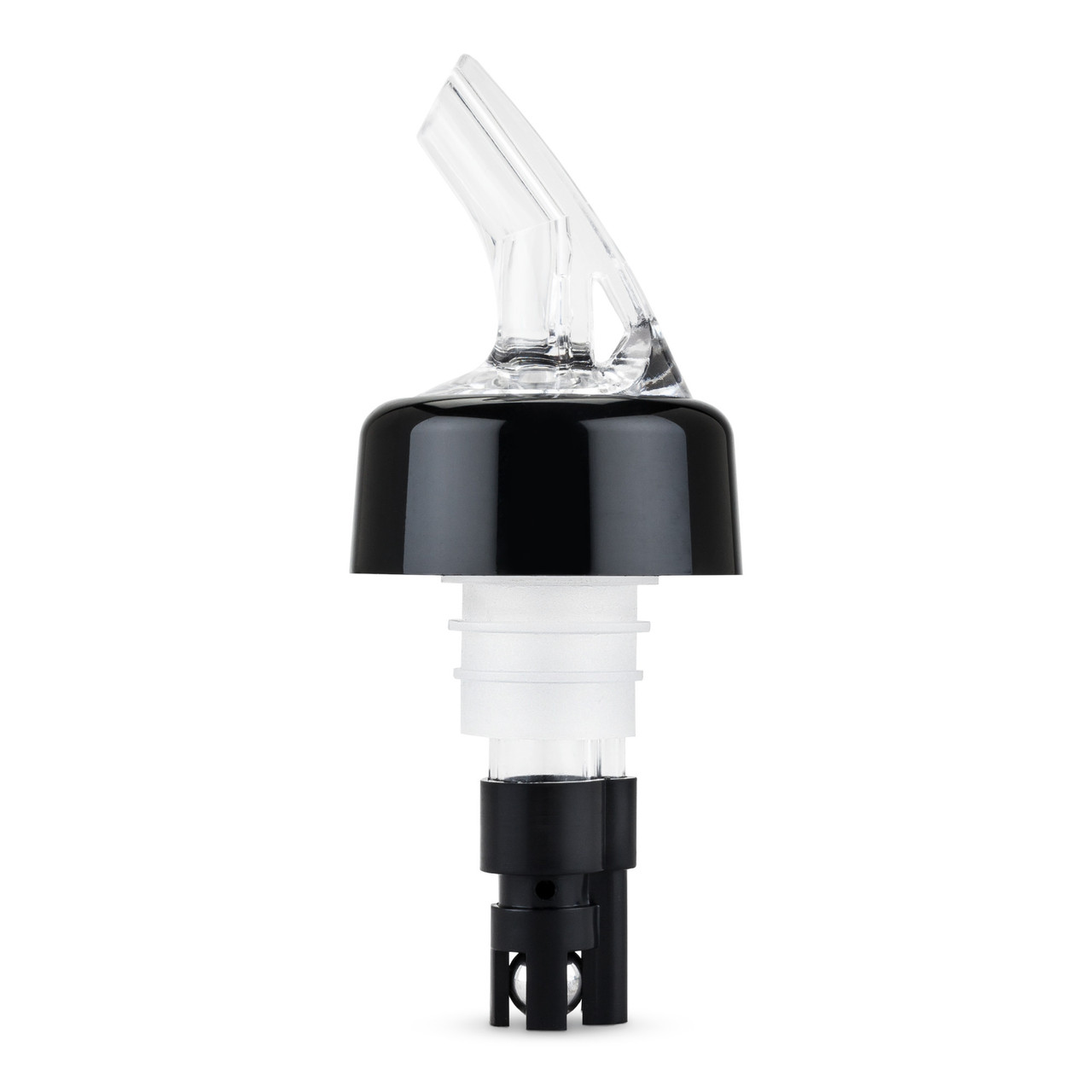
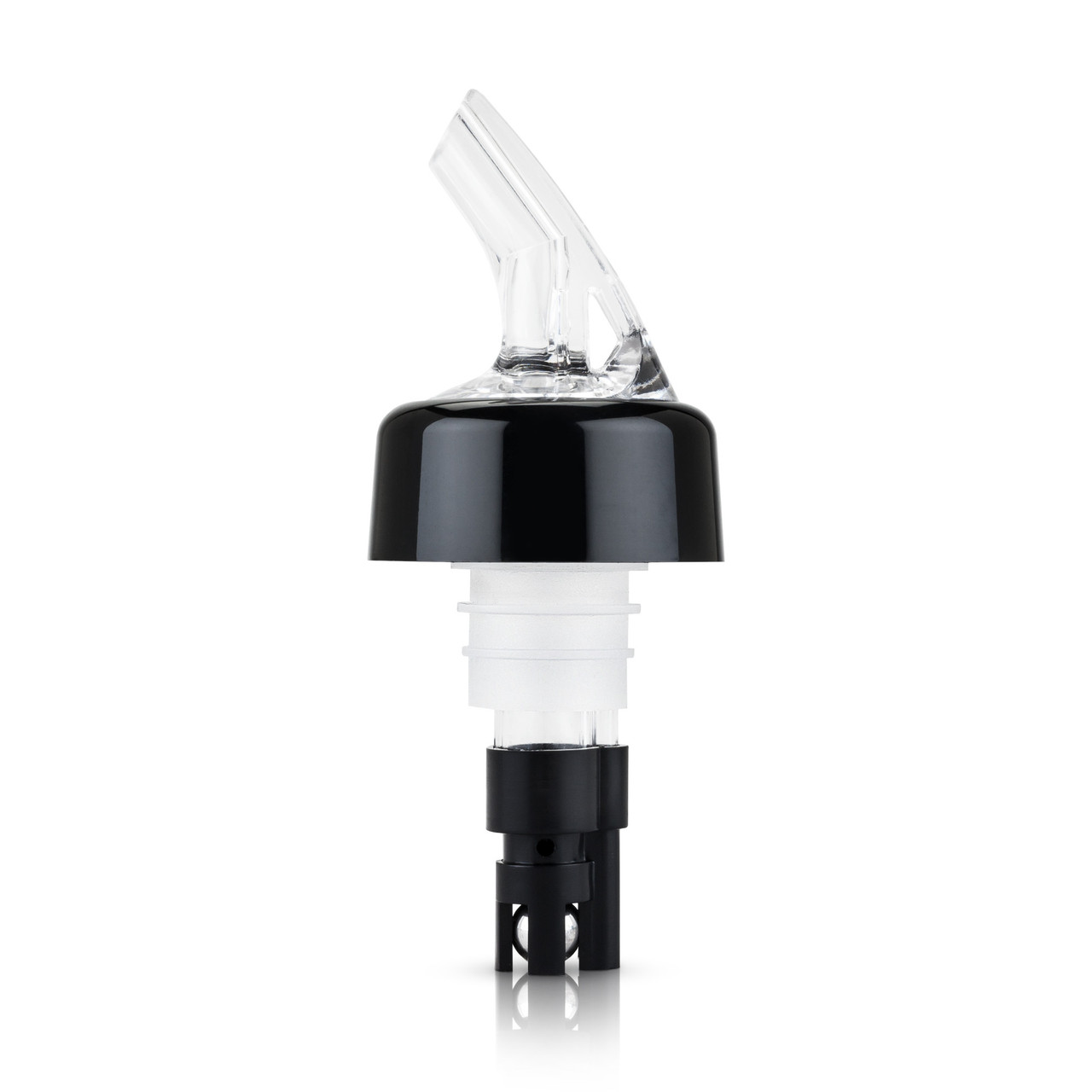
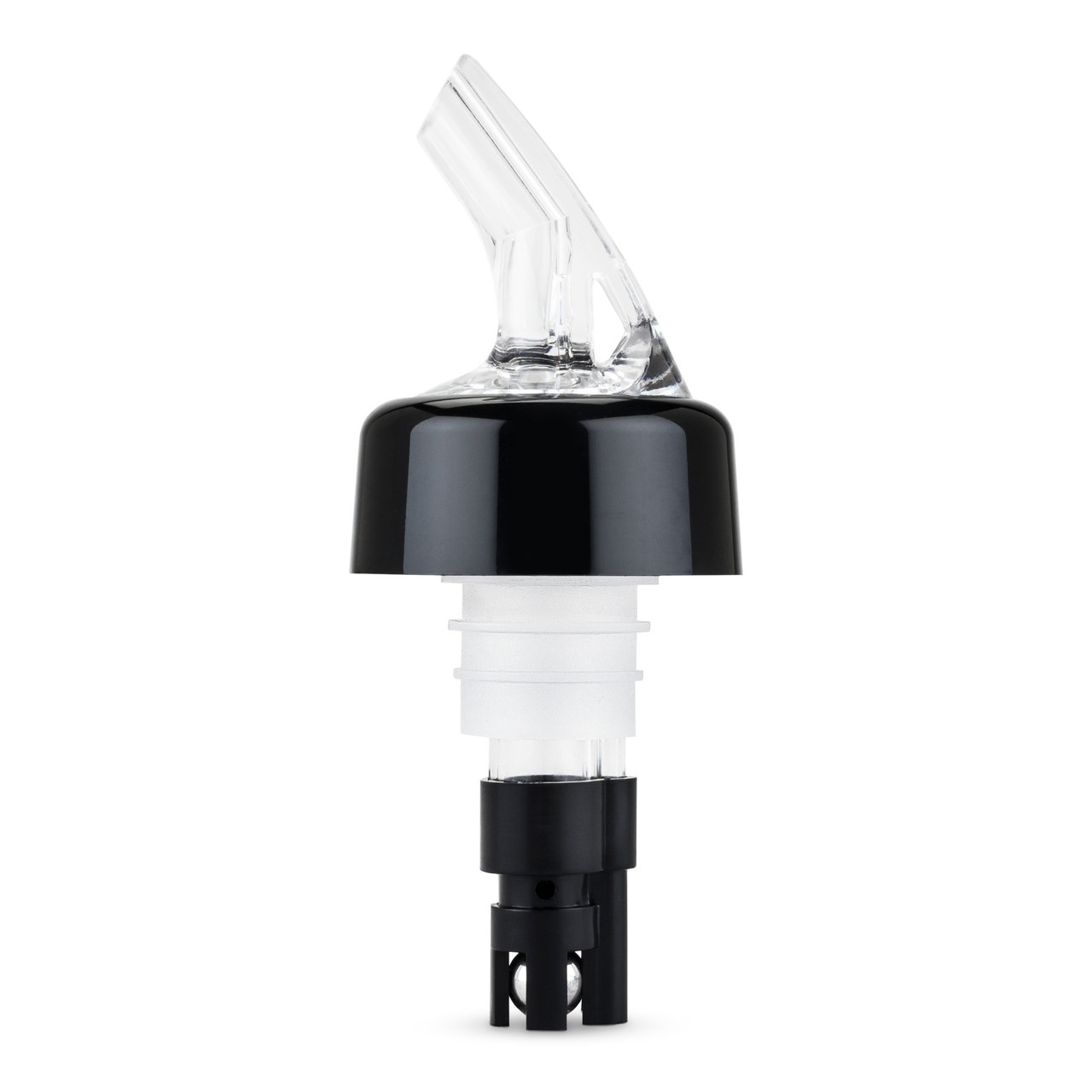
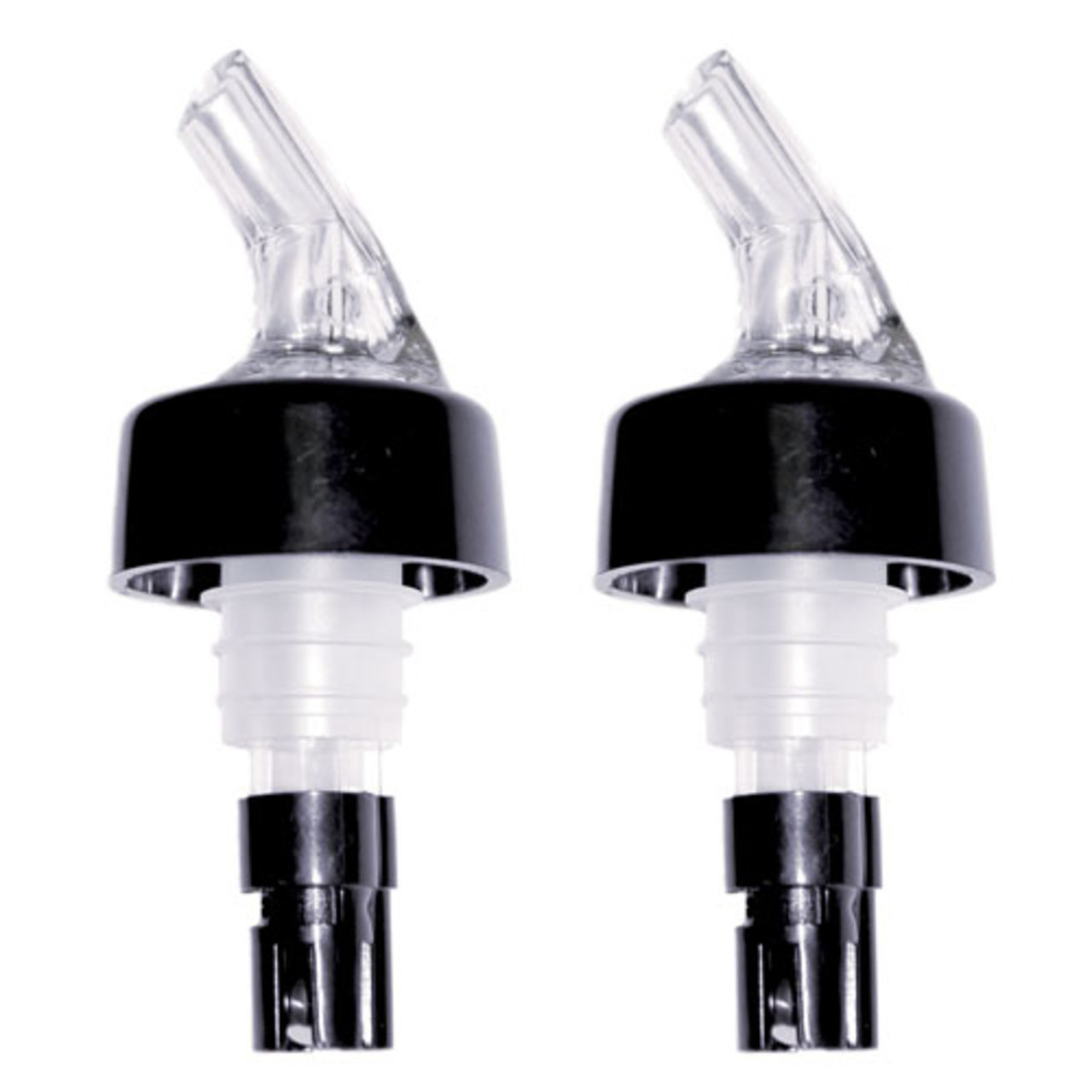
Measured pourers extend this logic to speed. An Ace 1-ounce or 2-ounce measured pourer stops flow mechanically at the set volume. Staff still present the bottle with flair, still engage guests, but the mechanism closes the valve. Overpouring becomes physically impossible rather than ethically discouraged.
Inventory reconciliation tightens dramatically. When every vodka soda contains exactly one ounce of spirit, expected usage matches sales records within rounding error. Discrepancies that remain point to genuine problems: a leaky tap, a comped round not entered, or actual shrinkage. Managers investigate efficiently instead of chasing phantom causes.
Build pour discipline that survives busy nights
Verification beats assumption for long-term bar consistency.
VinePair recommends training with music that provides steady beat reference. A metronome set to sixty beats per minute gives raw beginners the one-count-per-second rhythm that Bartender Training Canada identifies as standard. Practice without bottles first, then with water, then with cheap spirit measured after every pour. This investment pays back in reduced variance within weeks.
Verification must continue past training. Spot-checking free pours during service keeps honest bartenders honest and catches drift before it becomes habit. The check itself takes seconds: build one drink free-pour, build the next with a jigger, compare. Discrepancies over ten percent signal retraining need.
Documented standards protect everyone. When pour specs live in a shared binder, bartenders cannot claim ambiguity. When variance reports circulate weekly, staff see consequences. The tool enables the system, but the system sustains the result. Jiggers alone sitting in a drawer change nothing.
Aeration tools complete your pour control system
Portion discipline extends beyond spirits to by-the-glass programs.
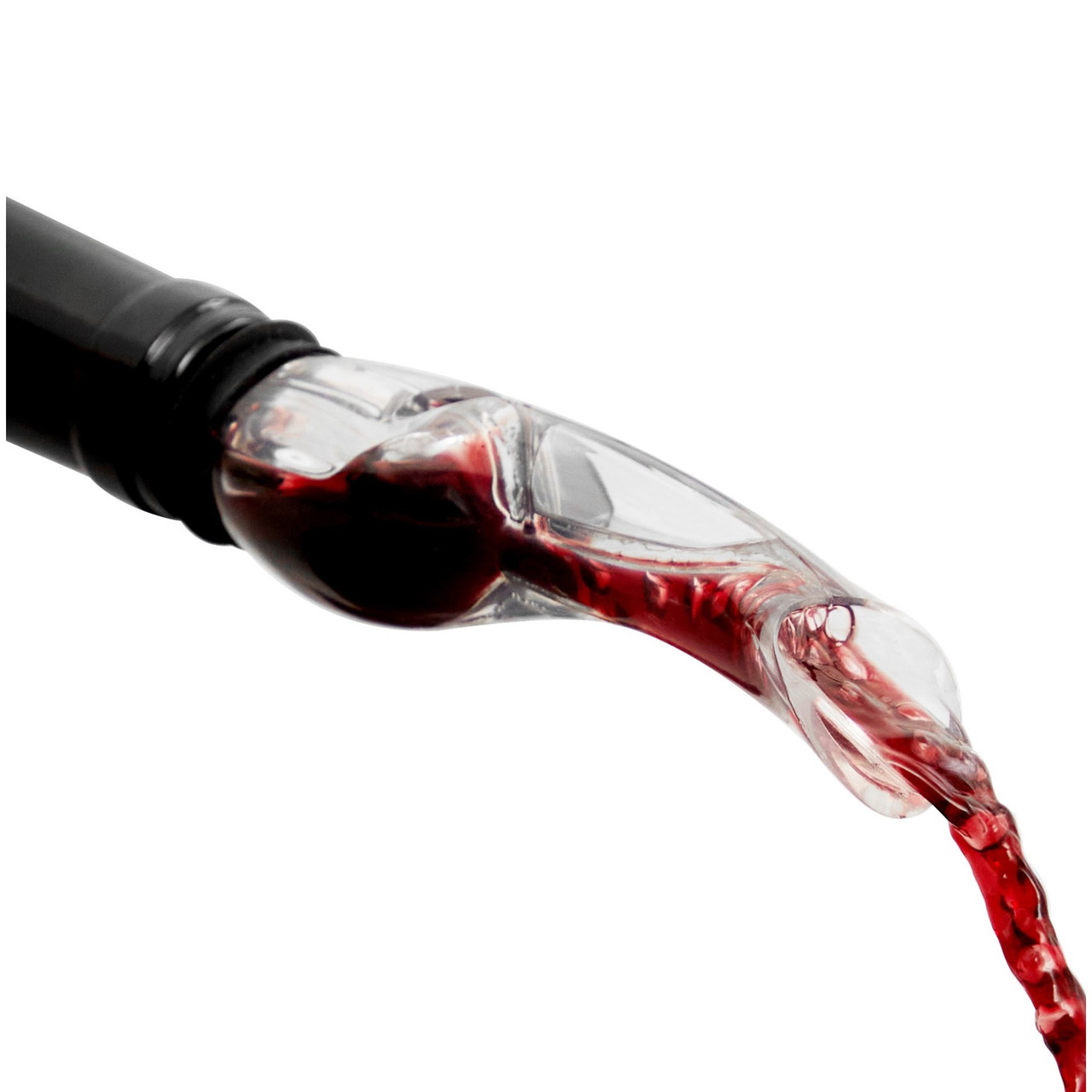
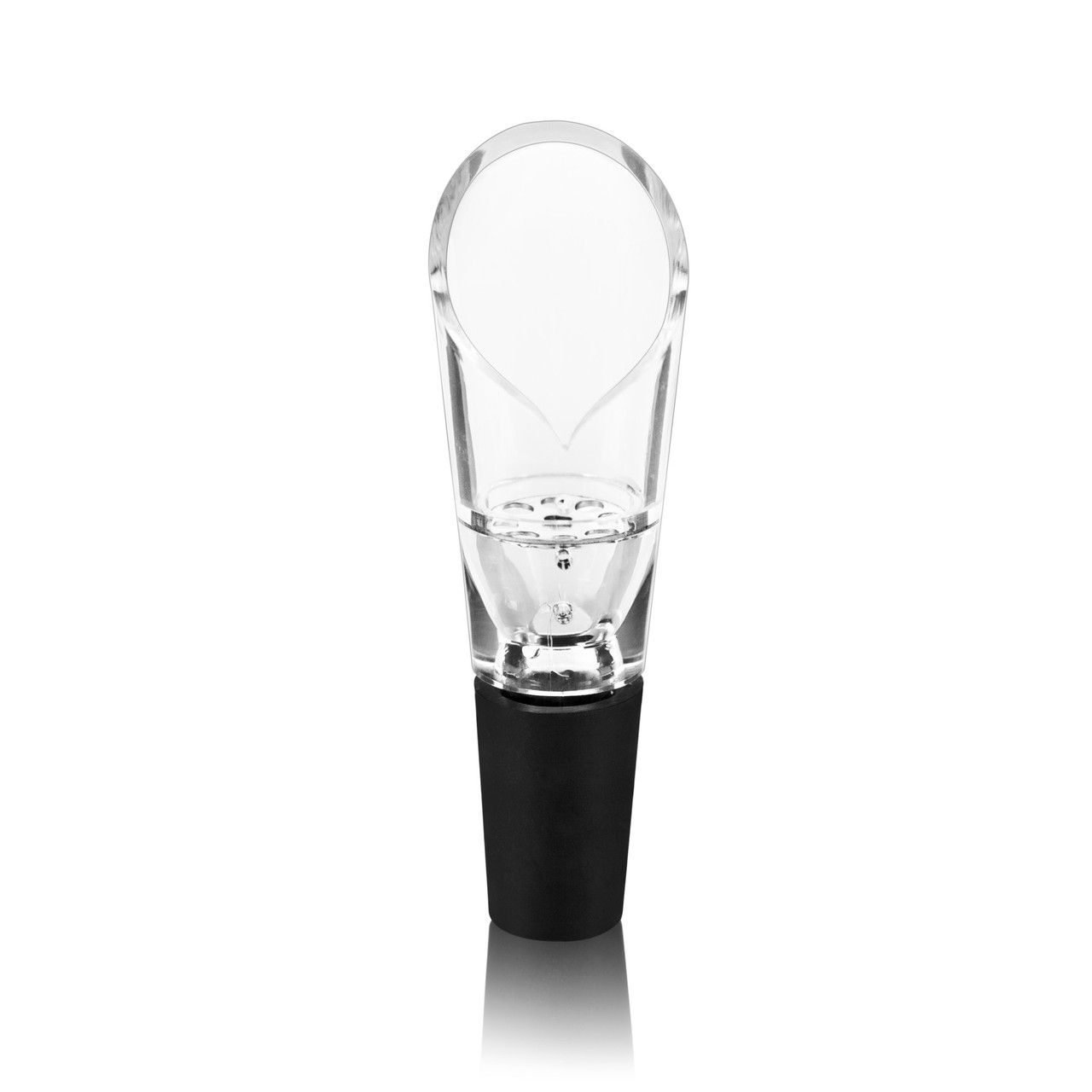
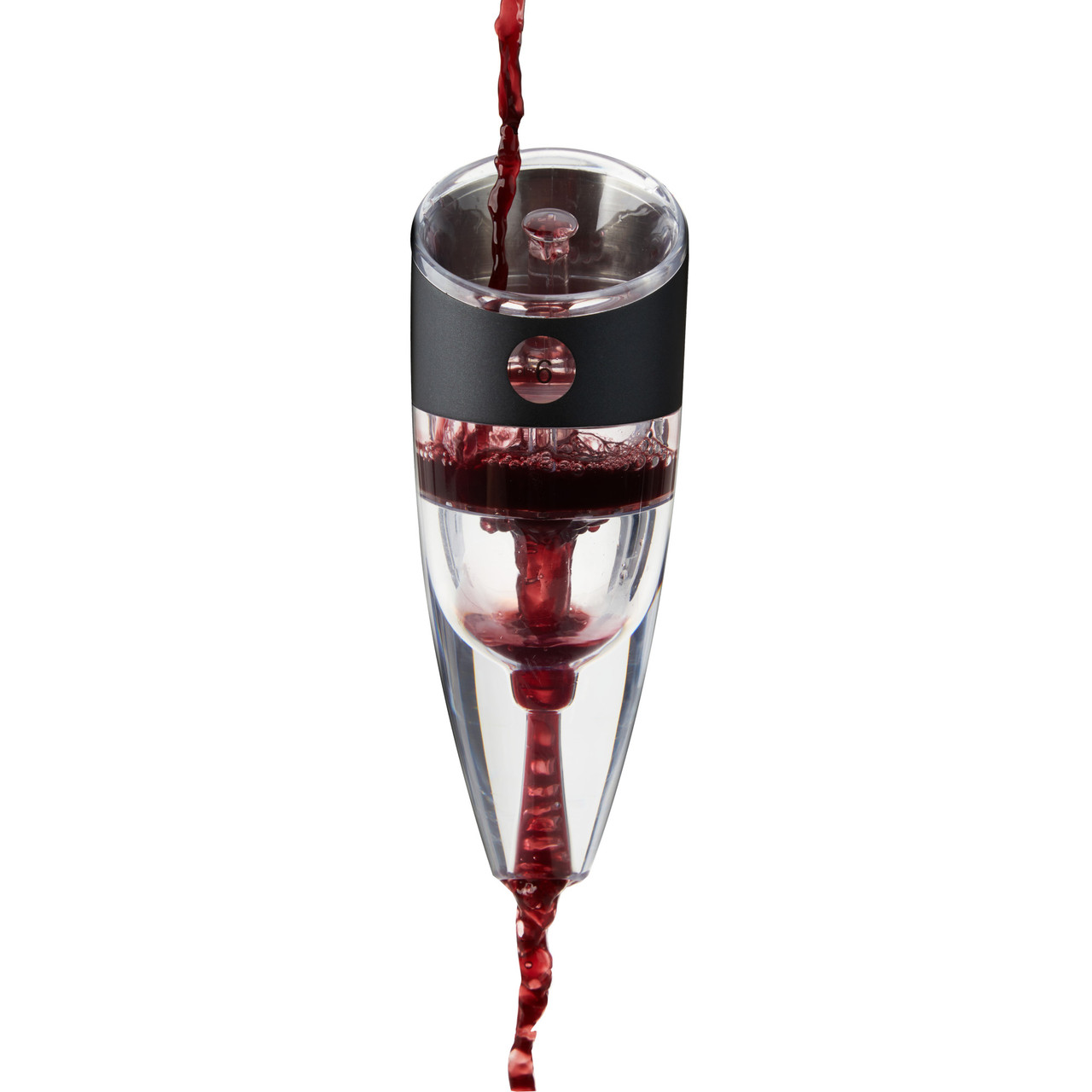
Wine by the glass faces the same consistency challenge as cocktails, with added spoilage risk. An opened bottle degrades after hours, not weeks. Aerating pourers like the Alchemi Adjustable model introduce controlled oxygen as wine leaves the bottle, softening aggressive tannins without decanting time that busy service cannot spare.
The Aerial Aerating Wine Pourer extends bottle life by limiting oxidation to poured volume rather than entire contents. Staff still control portion size with standard wine measures, but the guest experience improves. Young Cabernet drinks smoother. House red competes with higher-tier pours elsewhere in the city.
Aeration also signals care. Guests notice when staff take time to treat wine properly, even at moderate price points. Combined with measured spirit pourers, aerating wine tools complete a program of visible precision that supports pricing confidence and repeat visits.
Match pour tools to your actual bar conditions
Not every venue needs the same level of mechanical control.
High-volume cocktail bars with rotating staff benefit most from measured pourers. The mechanical stop overrides inexperience and prevents the heavy-handed pours that regulars sometimes pressure for. Ace measured pourers in half-ounce, one-ounce, and two-ounce sizes cover standard builds without staff math.
Established restaurants with stable bartender teams may prefer jiggers for craft credibility. The visible measure reassures guests who pay premium prices. Pair with metal speed pourers for consistent flow during free-pour elements like syrup or juice additions that jiggers do not handle elegantly.
Consider maintenance realities. Screened spouts need cleaning to prevent clogging. Measured pourers contain springs and seals that eventually wear. Budget replacement cycles into your annual equipment plan. The Barback Cap and Pour Spout Remover by True simplifies removal for cleaning, reducing the friction that makes staff skip maintenance.
Free pour, jigger, or measured pourer: what fits your bar
Use this comparison to match equipment choice to your staffing model and inventory priorities.
| Method | Accuracy level | Speed of service | Best for |
|---|---|---|---|
| Free pour with metal spout | High with practiced staff only | Fast once trained | Stable teams, low turnover |
| Free pour with screened spout | Moderate, flow varies with residue | Slower, needs clearing | Dusty storage conditions, outdoor bars |
| Free pour with plastic spout | Lower, degrades with wear | Fast initially | Temporary events, not permanent install |
| Hourglass jigger | Very high, manual skill required | Slower per drink | Craft cocktail focus, premium pricing |
| Measured pourer (1 oz) | Very high, mechanical stop | Fast after initial setup | High volume, standard builds |
| Measured pourer (2 oz) | Very high, mechanical stop | Fast, reduces double-pour steps | Neat pours, double cocktails |
| Aerating wine pourer | N/A, quality improvement tool | Standard wine pour speed | By-the-glass programs, younger vintages |
Pour control tools for Alberta bars
Measured pourers, jiggers, and aerating spouts from stock sized for hospitality volume.
What Canadian bar operators say
What bar operators across Canada say about switching to measured pouring.
We put Ace measured pourers on every rail bottle after our quarterly inventory showed four bottles of gin unaccounted for. Next quarter variance dropped to half a bottle. My accountant actually smiled.
Training new staff used to mean watching them overpour for weeks. With the one-ounce measured pourers, day-one hires hit spec. I spend my time on cocktail builds instead of damage control.
Switched from plastic to metal speed pourers and the flow difference was immediate. No more mid-service surprises when a worn spout suddenly gushes. Consistency across all eight stations.
Bar pour control: Frequently Asked Questions
The following operator questions are answered with cited sources. Every FAQ links to Health Canada, CFIA, Canada.ca, or another authoritative regulator.
How do I calculate my bar's pour cost and what percentage should I aim for?
Products referenced:
- jiggers
- liquor inventory spreadsheet
- pour spouts
Is free pouring better than using a jigger?
Products referenced:
- jiggers
- measured pour spouts
- cocktail jiggers
What is the quickest accurate way to take liquor inventory?
Products referenced:
- bar inventory scale
- inventory count sheets
- barcode scanner
Source: What's the quickest and or most accurate way to take liquor inventory - r/bartenders
How much beer do I actually get from a keg after waste?
Products referenced:
- half-barrel kegs
- draft beer system
- keg couplers
Source: How do you deal with the beer kegs that only have a little left - r/barowners
What bar inventory system do owners actually recommend for small bars?
Products referenced:
- bar inventory software
- POS system
- inventory count sheets
How do I stop my bartenders from over-pouring?
Products referenced:
- measured pour spouts
- jiggers
- pour test kit
Where can I buy draft beer line cleaning solution and supplies in Canada?
Products referenced:
- beer line cleaning solution
- line cleaning kit
- faucet brushes
Source: I clean beer lines, found this guy hanging out in there - r/KitchenConfidential
How often should a bar clean its draft lines?
Products referenced:
- draft line cleaning kit
- caustic beer line cleaner
- faucet housing brushes
Source: Contaminated beer lines one dead after ingesting - r/barrescue
How do I price drinks so my bar stays profitable?
Products referenced:
- jiggers
- liquor inventory sheets
- pour spouts
Source: My first year as an owner. What's step 2? - r/BarOwners
Is a beverage inventory service worth it or should I count in-house?
Products referenced:
- inventory scale
- count sheets
- jiggers
Related guides from ChickenPieces
Why Alberta bars buy pour control from us
Calgary-based stock with logistics built for Canadian hospitality procurement.
Hospitality-grade selection
We stock measured pourers, jiggers, and aerating spouts sized for commercial bars, not home cocktail kits. Volume packs available for multi-location operators.
Alberta-based support
Questions about flow rates or compatibility reach our team in Calgary, not an offshore call centre. We understand provincial liquor service requirements firsthand.
Bulk ordering simplified
Multi-case orders process through standard hospitality procurement workflows. Net terms available for established operators with trade references on file.
Regulatory alignment
All pour control products meet Health Canada food-contact material standards where applicable. CFIA guidelines inform our sourcing for items used in licensed food and beverage service environments.
Sources & further reading
- Ask a Bartender: How Do You Accurately Count Out a Free Pour? — VinePair
- Free pouring v jigger: which is best — European Bartender School
- Bars Use Standard Drink Measurements For More Reasons Than You'd Think — Mashed
- Bartending Counts to Ounces: Mastering the Art of Precise Pouring — Bartender Training Canada
Request a quote for your bar setup
Tell us your rail count and typical bottle mix. We will recommend measured pourer sizes and quantities to standardize your program. No minimum order for Alberta addresses.
Request a QuoteReferences: Health Canada — Food Chemical Contaminants CFIA — Food Safety for Industry.