2026 Nov 8th

How Much Does a Cheeseburger Plate Cost? (Canada & US)

Canadian-Owned No MOQ Ships Canada-Wide Calgary Warehouse Food Safe Focus
Canada & US Kitchen Costing
AK

Amani Khehra

Owner-operator · Chicken Pieces · Calgary, AB

How Much Does a Cheeseburger Plate Cost? (Canada & US)

From our Calgary operator’s desk: ingredient-only plate cost, food cost percentage and target menu pricing for Canadian and US kitchens. Keep CAD and USD separate and start with your own invoices.

Quick Answer

A cheeseburger with fries costs $4.60 CAD in Canada or $3.71 USD in the US for ingredients only in the illustrative examples below—not current market averages or Chicken Pieces prices. At a 30% food cost target, those examples imply pre-tax menu prices of about $15.33 CAD and $12.37 USD respectively; labour, rent and packaging are additional costs.

At a Glance

Key Takeaways

Ingredients only

Plate cost is not the total cost of running a restaurant.

Canada: CAD

The worked example totals $4.60 before GST/HST.

US: USD

The separate US example totals $3.71 before sales tax.

Target first

Divide plate cost by a decimal target such as 0.30.

Yield matters

Account for trim, cooking loss and discarded portions.

Invoice discipline

Re-cost your strongest sellers when ingredient costs change.

The Formula

What is plate cost, and how do you calculate it?

Plate cost is only the ingredients on one serving. Labour, rent and packaging come later. As an owner-operator in Calgary, I want the portion and invoice unit written down before I judge a menu margin; guessing either makes the food-cost percentage drift.

Batch cost = sum of (unit cost × quantity used)
Plate cost = batch cost ÷ plates in the batch
Menu price at target = plate cost ÷ target food cost %
Food cost % = plate cost ÷ menu price

Use a decimal for the target: 30% = 0.30. Multiply the final food-cost ratio by 100 to display a percentage. Unit cost and quantity must use the same unit: a 6 oz portion is 6 ÷ 16 = 0.375 lb.

Use the plate cost calculator to run the arithmetic while you type. It is labelled Canadian dollars, before GST/HST. For a USD worksheet, the arithmetic is the same, but keep every input and output in USD; it is not a currency converter.

Operator Targets

What does a good food cost percentage look like?

These are working rules of thumb for menu review, not an official Canadian or US industry standard or a guarantee of profit. Your labour model, sales mix, local market and contribution dollars still matter.

Food cost %What it usually means
Under 28%Often achievable for pasta, pizza and bowls built on starch; potentially healthy, subject to the rest of the cost structure.
28% to 32%A useful full-service planning target for a cheeseburger with fries—not a universal benchmark.
33% to 35%Watch it. May work on a higher-priced item with strong contribution dollars; riskier as a menu-wide average.
Over 35%Check under-pricing, over-portioning or an ingredient cost increase. Fix the cause rather than guessing.
Worked Examples

Cheeseburger plate cost: Canada vs US

Illustrative recipe-cost assumptions supplied for this guide, not live quotes, market averages or Chicken Pieces product prices. The two baskets are separate local-currency examples, not an exchange-rate comparison. We supply foodservice ingredients and essentials—not beef patties or other meat.

Each example is one classic cheeseburger and side fries. The patty is a 6 oz purchased-weight portion; measure cooked yield separately if your serving specification is cooked weight.

Canada (CAD, before GST/HST)

Ingredient / portionExample cost (CAD)
6 oz beef patty at $6.40/lb0.375 lb × $6.40 = $2.40
Cheese slice$0.42
Brioche bun$0.55
Lettuce, tomato, onion, pickle and sauce$0.48
Side fries$0.75
Total plate cost$4.60

At a 30% target: $4.60 ÷ 0.30 = $15.33 CAD (rounded). At a $16.50 CAD menu price: $4.60 ÷ $16.50 × 100 = 27.9%, or about 28%.

United States (USD, before sales tax)

Ingredient / portionExample cost (USD)
6 oz beef patty at $5.20/lb0.375 lb × $5.20 = $1.95
Cheese slice$0.32
Brioche bun$0.42
Lettuce, tomato, onion, pickle and sauce$0.40
Side fries$0.62
Total plate cost$3.71

At a 30% target: $3.71 ÷ 0.30 = $12.37 USD (rounded). At a $13.50 USD menu price: $3.71 ÷ $13.50 × 100 = 27.5%.

Rounding note: $15.33 CAD is slightly below the exact 30% threshold; round up to $15.34 CAD if you must stay at or below 30.00%. Ingredient margin is not net profit.

Packaging isn’t in plate cost, but it adds up per order.

What to Do

Make plate costing part of the receiving routine

  • Cost with the weight that actually hits the plate after trim and waste, not just the catalogue weight. Convert the purchased unit into usable yield before pricing a cooked-weight portion.
  • Use the unit you buy in: per lb, per kg, per case or per bag. Convert the recipe quantity to that same unit.
  • Log the invoice price when it arrives so a later increase re-costs the plate in your maintained recipe system. The calculator computes from what you enter; it does not import invoices automatically.
  • Set the target per item. A $16 burger and a $32 steak do not need the same percentage; compare contribution dollars as well.
  • Check the top five sellers first. Those plates can have an outsized effect on the month; confirm their share using your own sales report.

If one case yields fewer usable servings than expected, the cost per serving rises even when the invoice is unchanged. Keep ingredients, packaging, labour and overhead on separate lines so nothing disappears from your pricing decision.

Shop the Range

Condiments for burger and fry service

Verified available in our catalogue when this guide was prepared. These are optional condiment formats, not a recreation of the example basket; compare the format your service actually uses.

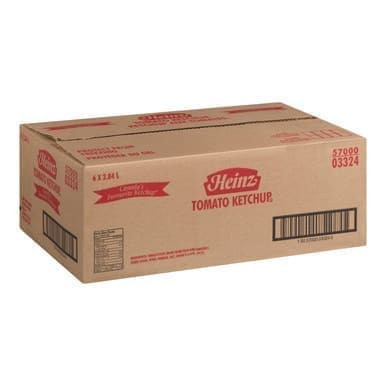
Heinz Big Red Ketchup, Plastic | 2.84L/Unit, 6 Units/Case

Item ID 6010857740787. Check the pack size and portion used when costing condiments.

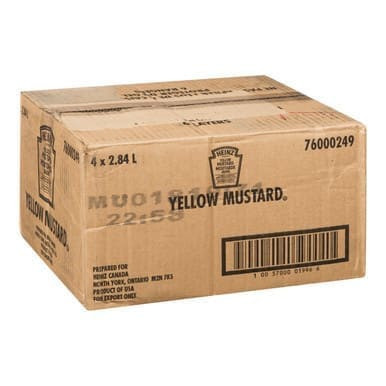
Heinz Yellow Mustard, Big Plastic | 2.84L/Unit, 4 Units/Case

Item ID 6010857770746. Check the pack size and portion used when costing condiments.

Heinz Mustard, Upside Down Bottle | 375ML/Unit, 24 Units/Case

Item ID 6010856747718. Check the pack size and portion used when costing condiments.

Hellmann's Mayonnaise, Pail | 4L/Unit, 2 Units/Case

Item ID 6010857444418. Check the pack size and portion used when costing condiments.

SUNSPUN Kosher Style Whole Dill Pickles With Garlic 20L | Premium Quality Pickles

Item ID 6010857088001. Check the pack size and portion used when costing condiments.

Browse Condiments and Sauces →

Burger packaging and food-prep disposables

iEco 8” x 8” Hinged Bagasse Hinged Containers - 100/case, Microwavable, Compostable

Item ID 829381419528. 100 containers/case (2 packs of 50). Use the hinged 8 × 8-inch format for burger takeout; check the fit of your assembled burger.

Bagcraft Paper Trays, Food Boat Grease Resist Natural 2Lb | 1000UN/Unit, 1 Unit/Case

Item ID 6010855390342. 1,000 boats/case; 2 lb format. Portion fries consistently and cost one boat per order.

HFA Foil Foil Sheets, Wrap Sheet Popup 12 X 10.75In | 500UN/Unit, 6 Units/Case

Item ID 6010854388340. 6 packs × 500 sheets = 3,000 sheets/case; 12 × 10.75 inches. Count each wrap sheet separately when costing takeaway orders.

Basicgard Glove Glove Vitrile Foodservice Powder Free Black Large 100 CT (10/Case)

Item ID 6018101283226. 10 packs × 100 gloves = 1,000 gloves/case; large. Foodservice, powder-free disposable gloves; allow for glove changes in your operating costs.

FAQ

Frequently asked questions

What is included in a cheeseburger plate cost?

The ingredients in one burger and its side fries: patty, cheese, bun, toppings, sauce and fries. Labour, rent, packaging and other overhead are excluded here; add them separately before judging profitability.

How much does a cheeseburger plate cost in Canada and the US?

In our illustrative examples, $4.60 CAD before GST/HST in Canada and $3.71 USD before sales tax in the US. These are recipe assumptions, not surveyed averages, Chicken Pieces prices or an exchange-rate conversion.

How do I calculate food cost percentage?

Divide ingredient plate cost by the pre-tax menu price, then multiply by 100. A $4.60 CAD plate sold for $16.50 CAD has a food cost percentage of 27.9%, or approximately 28%.

What menu price gives a 30% food cost?

Divide plate cost by 0.30. The examples give $15.33 CAD and $12.37 USD after rounding. Round the Canadian result up to $15.34 CAD if you need food cost at or below exactly 30%.

Is 28% to 32% a rule for every restaurant?

No. This guide uses it as a working planning range, not a universal or official benchmark. Evaluate labour, overhead, sales mix and contribution dollars; a higher-priced item may work at a different percentage.

Should I use raw weight or cooked weight?

Match the portion specification to the costing basis. These examples use 6 oz purchased weight. If you specify cooked serving weight, measure trim and cooking yield and calculate the purchased quantity needed to deliver it; do not price 6 oz cooked as though it always required only 6 oz raw.

Can I use the plate cost calculator for USD?

The calculator is labelled CAD before GST/HST. Its formula also works for a separate USD worksheet if all values are USD, but it does not convert currencies or change its tax labels. Do not mix CAD and USD inputs.

Where can I monitor Canadian and US food price trends?

Statistics Canada’s monthly Consumer Price Index table provides Canadian consumer price context. USDA ERS Food Price Outlook explains US food price trends and distinguishes consumer from producer prices. Neither provides the exact wholesale invoice or local cheeseburger recipe cost for your kitchen; use your actual invoices.

Does a 30% food cost mean 70% profit?

No. It leaves 70% of pre-tax menu revenue after ingredients only. Labour, rent, packaging, utilities, payment fees and other operating costs still have to come out of that remainder.

How do you calculate shipping on bulk orders?

We calculate shipping on live carrier rates at checkout, not on flat or subsidized tiers. Every order is priced against real LTL, parcel, or pallet-freight quotes from our Calgary warehouse to your dock. That means you never absorb hidden shipping costs into product margins — what we charge is what the carrier charges us, plus a small handling pass-through. For bulk and pallet orders this typically runs 15–25% lower than competitors who bake shipping into their unit prices, because the rate is transparent and tied to the actual shipment weight and distance.

Sources & Method

What supports this guide?

Recipe figures and planning bands are illustrative operator inputs, not claims from the external sources. Arithmetic was checked using the stated portions and costs. Sources accessed November 8, 2026:

General operating guidance, not tax or accounting advice. For tax treatment and recoverable input taxes, use your accountant’s guidance.

Our Approach

Why Partner With ChickenPieces

Canadian ingredients support, operator-first costing

I want operators to compare usable portions and case formats—not guess at a margin. Our Calgary team supports foodservice ingredient purchasing with clear product pages and Canadian context.

Canadian-Owned

Owner-operated from Calgary, Alberta.

Calgary Warehouse

A Canadian starting point for ingredient supply.

Ships Canada-Wide

Serving operators across Canada; confirm order-specific delivery at checkout.

Food Safe Focus

Read current labels and allergen information before choosing ingredients.

Next Step

Cost your own cheeseburger plate

Use your invoices, not our example numbers

The calculator does the maths while you type and shows the menu price for your target. Keep one currency per worksheet and account for the rest of your operating costs separately.

Open the Plate Cost Calculator