
 US Dollar


2026 Jun 26th
Canada's 2026 Front-of-Package 'High In' Label: A Bulk Buyer's Guide
Canada's front-of-package (FOP) nutrition symbol became mandatory on January 1, 2026. It is a black-and-white magnifying glass printed on the front of most prepackaged foods that exceed threshold levels of sugars (15 g), saturated fat (3 g) or sodium (345 mg) per serving. For bulk buyers and foodservice operators: the symbol appears on sauces, spice blends, sugar bags and processed-food cases you buy — not on the restaurant meals you serve. Understanding which products carry it, which are exempt, and how the small-portion rule works helps you read supplier labels accurately and manage purchasing decisions in 2026.
Key takeaways
- Mandatory on most prepackaged foods sold in Canada as of January 1, 2026 — products manufactured before that date can still be sold out while stocks last.
- Thresholds: 15% of the Daily Value per serving — roughly 15 g sugars, 3 g saturated fat, or 345 mg sodium.
- Small-portion foods (serving size ≤30 g or 30 mL): lower threshold of 10% DV applies.
- Exempt: raw single-ingredient meats/poultry, plain whole fruits & vegetables, whole eggs, plain nuts/seeds with no added salt, sugar or saturated fat, and very small packages (<15 cm² display surface).
- NOT exempt: white sugar, honey, maple syrup, agave syrup — all carry “High In Sugars.”
- Dairy: plain milk (liquid or powder, any animal) is conditionally exempt for all three nutrients; flavoured milks and most processed dairy are not automatically exempt.
- Restaurant and foodservice-prepared dishes are not subject — but the packaged bulk ingredients you buy may carry the symbol.
- Multiple “High In” symbols may appear on a single product if it exceeds more than one threshold.
What is Canada’s front-of-package nutrition symbol?
Health Canada introduced mandatory front-of-package (FOP) nutrition labelling as a core pillar of its Healthy Eating Strategy. The goal is straightforward: give Canadians a fast, visual signal at the point of purchase — before they open a Nutrition Facts table — that a product is high in saturated fat, sugars or sodium. These three nutrients are associated with chronic health conditions when consumed in excess, and the FOP symbol is designed to make the warning impossible to miss.
The symbol itself is a small, distinctive black-and-white magnifying glass. Inside or beside the glass appears the phrase “High In” followed by the specific nutrient: “High In Saturated Fat,” “High In Sugars,” or “High In Sodium.” The words “Health Canada / Santé Canada” appear at the bottom of the symbol, identifying it as a federal government standard. The symbol must appear on the principal display panel — the primary front face of the package that a consumer sees on a shelf — not buried on a side or back panel. This placement requirement is what makes it truly “front of package.”
The regulation took effect January 1, 2026, after a multi-year transition period that ended December 31, 2025. Manufacturers who had already updated their packaging before the deadline were compliant early; products manufactured before January 1, 2026, can continue to be sold through existing inventory. CFIA exercises no discretion for products manufactured after January 1, 2026 — compliance is mandatory. Many small-to-medium food producers are still working through packaging transitions; non-compliant product manufactured after the deadline is subject to enforcement action.
What are the exact thresholds that trigger each “High In” symbol?
The symbol is required when a food’s per-serving amount of a nutrient exceeds 15% of the established Daily Value (DV). The three DVs used are based on Health Canada’s reference amounts:
- Sugars DV: 100 g → 15% = 15 g per serving triggers “High In Sugars”
- Saturated fat DV: 20 g → 15% = 3 g per serving triggers “High In Saturated Fat”
- Sodium DV: 2,300 mg → 15% = 345 mg per serving triggers “High In Sodium”
These thresholds apply to most foods with serving sizes above 30 g or 30 mL. The serving size used is the one declared on the Nutrition Facts table — manufacturers cannot reduce a serving size purely to avoid triggering the symbol; Health Canada specifies reference amounts for common food categories.
| Nutrient | Daily Value (DV) | Standard threshold (≥15% DV) | Small-portion threshold (≥10% DV, serving ≤30 g/mL) |
|---|---|---|---|
| Sugars | 100 g | ≥15 g | ≥10 g |
| Saturated fat | 20 g | ≥3 g | ≥2 g |
| Sodium | 2,300 mg | ≥345 mg | ≥230 mg |
How the small-portion rule works
When a food’s declared serving size is 30 g or 30 mL or less, the threshold drops from 15% DV to 10% DV. In practice this means smaller servings need less sugar, saturated fat, or sodium per serving to trigger the symbol. The logic: a product consumed in a very small amount per use may still be significant to daily intake if it is used frequently or in concentrated form. Hot sauces, dipping sauces, concentrated condiments, and spice blends often have small declared serving sizes — this rule means they are assessed against the lower 10% threshold, making the symbol easier to trigger for these formats.
For bulk buyers, this matters most when purchasing condiment packs, dipping cups, or small-serving seasoning sachets. The per-serving nutrient amount listed on the Nutrition Facts table is what gets compared to the threshold — not the total package amount or how much your kitchen actually uses per dish. A commercial kitchen may use three times the declared serving size per portion, but the FOP determination is made at the declared serving size.
Which packaged foods are completely exempt from the FOP symbol?
Health Canada specified a clear list of exempt categories. The exemption only applies when nothing has been added — the moment a fat, sweetener or salt is introduced, the exemption typically disappears. For foodservice buyers, the following guide covers the most relevant categories:
- Raw, single-ingredient meats and poultry — unprocessed, with no marinades, brines, seasonings or added solutions
- Plain whole fruits and vegetables — no added sugar, fat or salt (a sauce-coated frozen vegetable blend or a marinated artichoke is not exempt)
- Whole eggs
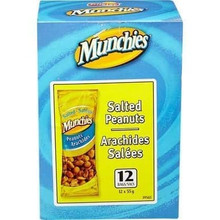
- Plain nuts, seeds and legumes with no added salt, sugar or saturated fat (roasted-and-salted peanuts are not exempt)
- Very small packages with a total display surface of less than 15 cm²
- Milk from any animal in liquid or powdered form — conditionally exempt for all three nutrients. Plain whole, 2%, skim, goat, sheep and powdered milk qualify; flavoured milk products do not automatically qualify
- Certain refillable-glass-container dairy products: whole, partly skimmed and skimmed cow’s or goat’s milk sold in refillable glass containers
- Foodservice-only and shipping containers not intended for retail sale to consumers
| Product type | Symbol required? | Notes |
|---|---|---|
| Bottled sauces & marinades (high sodium) | Yes, typically | Most exceed 345 mg sodium per serving |
| Table sugar, raw honey, agave syrup, maple syrup | Yes — “High In Sugars” | Pure sweetening agents are NOT exempt |
| Low-sodium spice blends (small serving size) | Often no | Small serving size keeps sodium below threshold in many cases |
| Plain cow’s milk (liquid or powder) | Conditionally exempt | Exempt for all 3 nutrients; flavoured varieties are not exempt |
| Raw single-ingredient meats/poultry | Exempt | No added marinades, brines or sauces; must be single-ingredient |
| Whole eggs | Exempt | Single-ingredient exemption |
| Plain nuts/seeds (no added salt) | Exempt | Roasted-and-salted or flavoured nuts: not exempt |
| Imported food sold in Canadian retail | Yes | No imported-food exemption; importer is responsible for compliance |
Are sweeteners like sugar, honey and maple syrup exempt?
No — and this is one of the most common misconceptions. Many buyers assume that “natural” sweeteners or single-ingredient products like honey would be treated like plain fruit or vegetables. They are not. Under Health Canada’s regulation, pure sweetening agents — including white sugar, brown sugar, agave syrup, corn syrup, honey, maple syrup, table syrup, and molasses — are required to carry the “High In Sugars” symbol because they exceed 15 g of sugars per serving by definition. The exemption for plain fruits and vegetables does not extend to concentrated sweeteners derived from those fruits.
For bulk buyers this is practically significant: a 20 kg bag of granulated sugar, a large-format honey container, and commercial maple syrup will all carry the “High In Sugars” symbol. This does not change the products or how you use them — it simply means that label is now present. Seeing “High In Sugars” on a bag of sugar is not a surprise; it is the label working as intended. Browse sugar and sweeteners at ChickenPieces.com for current bulk options.
What about dairy products — milk, yogurt, cheese?
Dairy has a nuanced treatment under the regulation. Plain milk from any animal (cow, goat, sheep) in liquid or powdered form is conditionally exempt for all three nutrients — meaning no “High In” symbols appear on plain whole, 2%, or skim milk, whether fluid or powdered. This exemption was designed to avoid deterring consumption of a nutrient-dense whole food. However, the exemption has clear limits that matter for foodservice buyers:
- Flavoured milk (chocolate milk, strawberry milk, vanilla-flavoured milk) is not automatically exempt and may trigger “High In Sugars.”
- Yogurt is not automatically exempt. Plain yogurt has naturally occurring lactose sugars; sweetened or flavoured yogurts may exceed the sugars threshold. Full-fat yogurts may also approach the saturated fat threshold.
- Cheese is not automatically exempt. Hard cheeses like aged cheddar typically exceed the 3 g saturated fat per serving threshold and will carry “High In Saturated Fat.”
- Butter and cream will typically carry “High In Saturated Fat.” This is expected and does not indicate any change in the product.
- Processed dairy products (cream soups, dairy-based dips, processed cheese products) are assessed on their actual nutrient content and are not blanket-exempt.
For foodservice buyers who purchase large-format cheese, cream, or dairy-based sauces, it is worth reviewing your most frequently ordered items against the saturated fat threshold of 3 g per serving — which butter and high-fat cheeses easily exceed.
Do very small packages need the FOP symbol?
Packages with a total display surface of less than 15 cm² are fully exempt from the FOP symbol requirement. This recognises that tiny packages do not have enough physical space to include the symbol in a legible way. Single-serve condiment packets, espresso capsules, small tea bags, and very small single-use sachets may fall below this threshold.
The exemption applies to the display surface area of the package — not the package volume, weight or number of servings. A slim tall bottle could be large in volume but meet the small-package exemption based on its narrow front-face area. If you are unsure whether a specific SKU qualifies, the manufacturer or CFIA guidance can confirm the measured display surface. This exemption is primarily relevant for portion-control and single-use items, not standard retail or bulk commercial packaging.
Does the FOP rule apply to imported foods?
Yes. The FOP nutrition symbol requirement applies equally to imported prepackaged foods sold in Canada. There is no “imported food” exemption. Importers and distributors are responsible for ensuring that foods they bring into the Canadian market comply with labelling rules, including the FOP symbol. International suppliers must either update their packaging for the Canadian market or provide compliant label overlays. Products manufactured abroad and sold in Canadian retail after the compliance deadline must carry the symbol if they exceed the relevant thresholds.
For bulk buyers sourcing internationally — whether specialty sauces, pastes, or processed ingredients from overseas suppliers — it is worth confirming with your importer or supplier that their packaging for Canadian distribution is compliant. Non-compliant product on a Canadian shelf is the retailer’s and importer’s liability, and CFIA enforcement can require product removal.
Can a product carry more than one “High In” symbol?
Yes. A single food product can carry all three “High In” symbols simultaneously if it exceeds the thresholds for sugars, saturated fat, and sodium at the same time. This is not uncommon for heavily processed snack foods, certain sauces, or flavoured convenience products. The symbols appear side by side on the principal display panel. There is no limit to how many symbols appear — the rule is simply: one symbol for each nutrient that meets or exceeds its threshold.
For buyers, a product with three symbols is not prohibited — it is simply one where three nutrients hit the threshold. Your purchasing decision depends on how the product is used in your kitchen, portion sizes in your finished dish, and your customers’ dietary needs. A heavily seasoned sauce used in a 15 mL drizzle over a dish contributes a different sodium load than 100 mL used as a base.
How the “sugar grouping” rule affects ingredient lists
Alongside the FOP symbol, Health Canada also introduced changes to how sugars are declared in ingredient lists. When a food contains multiple added-sugar ingredients, manufacturers may be required to group them together in a single entry (e.g., “Sugars: glucose-fructose, sugar, honey”). This makes it easier for consumers to see the total sugar contribution without scanning an entire ingredient list for alternative sugar names.
Hidden sugar names — such as agave syrup, pear juice concentrate, rice syrup, dextrose, isomaltose, maltodextrin with sugar, and cane juice — are captured in this grouping approach, making it harder for manufacturers to bury sugar contributions by using small quantities of many different sweeteners. For bulk buyers, ingredient lists on reformulated products may look slightly different in 2026 due to this grouping; the overall composition has not changed, just the way it is declared.
What does the FOP label mean for foodservice and restaurant operators?
Prepared dishes you serve to customers across a counter or plate from your kitchen are not subject to FOP labelling. Health Canada’s rule covers prepackaged retail foods, not made-to-order or bulk-prepared foodservice dishes. Your house sauce, your fried chicken, your custom spice rub applied in-kitchen — none of these require a “High In” symbol for your customers.
However, the bulk-sized prepackaged ingredients you purchase to make those dishes will increasingly carry the symbol as manufacturers update their packaging. A 4-litre jug of teriyaki sauce, a 20 kg bag of sugar, a case of chicken stock base, a commercial spice blend — these are prepackaged commercial foods and may carry the FOP symbol on their packaging. As a buyer, you don’t need to do anything differently — but understanding what the symbol means helps you read supplier invoices and product sheets accurately, and makes it easier to source lower-sodium or lower-sugar options when that matters for your operation.
Practical tips for bulk buyers navigating FOP-labelled products
Seeing the “High In” symbol on a product you have been ordering for years does not mean the product changed — it means the label now accurately reflects what was always true about its nutrient content. Here are practical approaches for foodservice buyers in 2026:
- Use the FOP symbol as a quick-scan tool when comparing two similar products side by side, but always confirm with the Nutrition Facts table for exact numbers that matter to your operation.
- For care homes, long-term care facilities, schools or dietitian-guided operations, the FOP symbol is a useful procurement filter. For most commercial foodservice kitchens, it is informational rather than prescriptive.
- Reduced-sodium and lower-sugar alternatives are increasingly available — especially in sauces, bases and seasoning lines. Browse bases & broths and sauces & marinades for current options.
- Track your most-frequently-ordered high-sodium or high-sugar SKUs and ask your supplier or ChickenPieces.com account team if a lower-threshold alternative exists in the same product line.
How it works in Canada
ChickenPieces.com stocks over 21,000 SKUs of pantry, grocery and foodservice supplies, shipped Canada-wide from Calgary with no membership. As suppliers update packaging to the January 2026 rules, you will increasingly see the FOP symbol on sauces, sweeteners and processed food products in your orders. Browse all grocery & pantry, compare Canadian-made options, and explore reduced-sodium choices in bases & broths. For baking and bulk preparation, see sugars & sweeteners and spices & seasonings.
Stock up at ChickenPieces.com


Frequently Asked Questions
What does the Canadian front-of-package nutrition symbol look like?
When did the FOP nutrition label become mandatory in Canada?
How many grams of sugar trigger the High In Sugars symbol?
How many grams of saturated fat trigger the High In Saturated Fat symbol?
How many milligrams of sodium trigger the High In Sodium symbol?
What is the small-portion rule and when does it apply?
Does the FOP label apply to restaurant meals or foodservice dishes?
Is plain white sugar or honey exempt from the FOP label?
Are dairy products like milk, yogurt and cheese exempt from the FOP label?
What foods are completely exempt from the FOP label?
Do imported foods sold in Canada need the FOP symbol?
Does natural fruit sugar in juice or concentrate count toward the sugars threshold?
Where on the package must the High In symbol appear?
Can a food product carry more than one High In symbol?
Where can bulk buyers in Canada read the full FOP label regulation?
Browse Bulk Pantry, Sauces & Sweeteners at ChickenPieces.com
21,000+ SKUs shipped coast-to-coast from Calgary. No membership, free shipping on most orders over 199 CAD.
Grocery & Pantry · Sugars & Sweeteners · Sauces & Marinades · Bases & Broths · Canadian-Made Sourcing
This article is informational for foodservice and bulk buyers, not dietary or medical advice. Threshold figures are based on Health Canada's FOP regulation mandatory as of January 1, 2026. For dietary planning in care settings, consult a registered dietitian. Sources: Health Canada — Front-of-Package Nutrition Symbol · Health Canada — FOP Industry Labelling Guide · CFIA — FOP Nutrition Symbol Compliance · CFIA — Implementation of FOP Regulations · Justice Laws — Food and Drug Regulations