Can You Bake Cookies From Frozen? The Baker's Guide
The question
Baking from frozen?
Answered by Amani Khehra, Chicken Pieces (Calgary)
The short answer
Yes, and most cookie doughs actually bake better from frozen.
Here in Canada, a tray of dough in the freezer is the closest thing my kitchen has to a pause button. The trick is to do the shaping first. Scoop or slice the dough, freeze it solid on a tray, and then bake it straight from the freezer with no thawing. Just add a minute or two to the bake time.
Because the dough goes in cold, it holds its shape longer in the oven. You get a thicker cookie with less spread, and the edges still set properly. If your cookies keep coming out thin and wide, this one change fixes it.
The following operator questions are answered with cited sources. Every FAQ links to the community thread, buyer guide, or regulator page it was researched from.
Should I freeze cookie dough as round balls or as flat discs?
Shape your dough into small, thick discs rather than round balls before freezing, because a flat puck holds its size in the oven instead of rolling outward into a puddle. Set the discs onto your baking sheet while the oven is still cold so they can start to soften as the oven heats. You end up with thicker, more even cookies and far less spread than you would get from frozen spheres.
Products referenced:
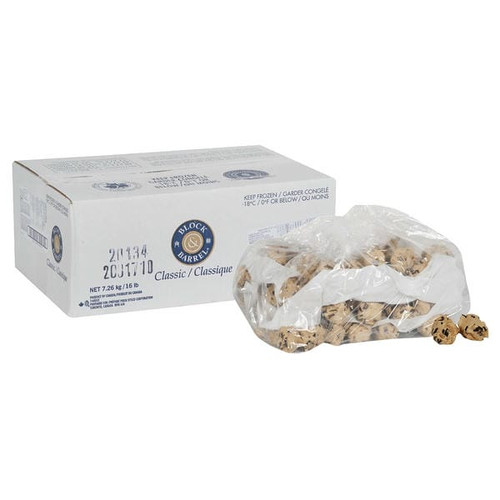
Cookie Dough Balls, Frozen, 57 g, 128 Count Case
Half Size Aluminum Bun / Sheet Pan, 13 x 18 in, 12/Case
How long do you bake cookie dough that comes straight from the freezer?
Portion your dough with a scoop, freeze it on a cookie sheet, store it in the freezer until you need it, then bake it straight from frozen at 375 F for about 17 minutes. Do not thaw it first, because thawed dough spreads flatter and bakes faster, which is how you end up with thin, over-browned cookies. The extra couple of minutes covers the cold centre and the batch comes out right every time.
Products referenced:
Cookie Dough Balls, Frozen, 43 g, 170 Count Case
Full Size Aluminum Bun / Sheet Pan, 18 x 26 in, 12/Case
Do I need to add extra baking time for cookies made from frozen dough?
Add a minute or two to your normal bake time when the dough goes into the oven frozen, since the centre is still well below room temperature when it hits the heat. Keep the oven temperature where your recipe calls for it and let the timer absorb the difference instead of cranking the heat up. The frozen centre holds the shape while the edges set, so your cookies come out taller and chewier than the same recipe baked from fresh dough.
Products referenced:
Full Size Aluminum Bun / Sheet Pan, 18 x 26 in, 12/Case
Aluminum Sheet Pan with Footed Cooling Rack, 18 x 26 in, 12/Case
How do I stop frozen cookie dough from spreading too much in the oven?
Flatten the tops of your scooped dough a little before it goes into the freezer, because a wider base leaves the cookie less room to spread outward. Then bake it straight from frozen at your usual temperature with a couple of extra minutes on the clock. Cold dough melts more slowly, so the cookie sets before it can puddle on the pan.
Can you bake cookie dough straight from the freezer without thawing it?
Yes. Portion your dough, freeze it, and put it into the oven straight from the freezer with no thawing step at all. Frozen portions hold their shape better in the oven, which is exactly what you want for thick, bakery-style cookies. If you would rather have flatter, thinner cookies, thaw the portions in the refrigerator overnight instead.
How do I freeze cookie dough balls so they do not stick together?
Line a sheet pan with parchment, place your portioned dough balls on it, and freeze them uncovered until they are firm enough not to stick to each other. Transfer the frozen balls into a sealed freezer bag or airtight container, pushing out as much air as you can. Freezing them solid on the tray first is what lets you pull out only the number you need for a single bake.
Should I let frozen cookie dough sit out before baking, or lower the oven temperature?
If the dough is still too hard to handle, let it sit at room temperature for 10 to 15 minutes and lower your oven a few degrees to 325 F, and you will not run into problems with the bake. Be aware that dough frozen as perfect spheres is the hardest case to work with, so flatten the balls a little before freezing. In a warm kitchen, work in short stretches and return the rest to the freezer.
Should frozen cookie dough come to room temperature before baking?
No. Slice the dough or arrange the portions on your baking sheet and put them straight into the oven, because cold dough spreads far less than dough that has warmed up on the counter. The butter stays solid longer in a hot oven, so the cookie holds its shape and spreads less than it would fresh. Add a minute or two to your bake time to account for the cold centre.
Products referenced:
Half Size Aluminum Bun / Sheet Pan, 13 x 18 in, 12/Case
How long should frozen cookie dough thaw before baking?
Preformed balls and pucks do not need to thaw at all, so bake those straight from the freezer. If you froze a tub or a rolled log of dough instead, let it soften just enough to scoop or slice, which takes roughly 15 to 30 minutes for a small log and longer for a large chunk. It never has to reach room temperature, and dough that is still slightly chilled will spread less in the oven.
Can I portion out frozen cookie dough without thawing the whole tub?
Yes, you can carve out just the amount you need from a frozen tub without thawing all of it. Use a sharp-edged scoop or a knife to shave off thin slices from the frozen mass, rotating the tub as you go, and dip the knife in hot water between cuts so it does not drag and crumble the dough. Working in layers this way keeps the rest of the tub frozen and ready for a later bake.
We calculate shipping on live carrier rates at checkout, not on flat or subsidized tiers. Every order is priced against real LTL, parcel, or pallet-freight quotes from our Calgary warehouse to your dock. That means you never absorb hidden shipping costs into product margins — what we charge is what the carrier charges us, plus a small handling pass-through. For bulk and pallet orders this typically runs 15–25% lower than competitors who bake shipping into their unit prices, because the rate is transparent and tied to the actual shipment weight and distance.