
2026 Aug 16th
What Your Glove Box Number Means for Pinhole Protection
AQL stands for Acceptable Quality Limit. It predicts how many pinholes are statistically allowed in your glove lot before the batch fails inspection. Lower numbers mean tighter quality control and fewer defects reaching your staff.
What Your Glove Box Number Means for Pinhole Protection
For property managers and facility operators, that small printed code on every glove box is your first line of defence against hidden defects.
Key Takeaways
Here is what the research means for your purchasing decisions.
Lower AQL, fewer defects
AQL 0.65 demands stricter limits than AQL 2.5. Surgical tasks need the tightest control; general tasks can accept slightly looser standards.
Water test reveals pinholes
ASTM D5151 fills gloves with one litre of water and hangs them for two minutes. Any visible seepage means the glove failed.
Temperature affects results
Tests run at 23 degrees Celsius plus or minus two degrees. Labs that skip this step produce unreliable batch reports.
Sample size scales with lot
A ten-thousand-unit lot at inspection level one needs eighty random gloves tested. Larger lots need proportionally larger samples.
One pinhole equals failure
The test is pass-fail per glove. A single hole renders that glove unusable, regardless of hole size or location.
ISO tables drive acceptance
ISO 2859-1 statistical tables set the sample size and defect threshold. No guesswork enters the calculation.
How labs actually find glove pinholes
Understanding the procedure helps you evaluate supplier claims.
ASTM D5151 is the current standard for detecting holes in medical gloves that allow water penetration. The procedure is straightforward but exacting. A glove is filled with precisely one thousand millilitres of water, plus or minus fifty millilitres. The glove hangs vertically for two full minutes while an inspector watches for seepage at both the start and end of the period.
Temperature control matters more than most buyers realize. The standard specifies twenty-three degrees Celsius plus or minus two degrees. Labs that run tests in uncontrolled warehouse conditions produce numbers you cannot trust across batches. This is why ISO 17025-accredited laboratories exist in Utah, Ohio, New York and elsewhere across North America.
The test is purely visual and qualitative. No instruments beyond a graduated cylinder and water source are required. Any visible water escape during observation means failure for that individual glove. Air leakage is a separate test entirely, so do not confuse the two when comparing product specifications.
Decoding the numbers on your box
That printed code predicts defect rates in plain statistical terms.
AQL stands for Acceptable Quality Limit. It defines the maximum defective items allowed in a sample before the entire lot gets rejected. The system uses ISO 2859-1 statistical tables that account for shipment quantity, inspection level and your chosen tolerance for defects.
Critical defects always carry an AQL of zero. These are safety or compliance failures with no tolerance. Major defects typically use AQL 1.5, which permits up to three defects in an eighty-glove sample. Minor defects may use AQL 2.5 or higher, allowing up to five defects in the same sample size. The lower the AQL number, the stricter the quality control.
For a ten-thousand-unit lot at inspection level one, the standard sample is eighty gloves pulled at random. This scaling matters for large facilities. A property manager ordering fifty thousand gloves for multiple buildings needs confidence that the sample size grew proportionally, not capped at eighty regardless of order size.
When stricter standards matter most
Different tasks demand different defect tolerances.
Surgical gloves carry the tightest AQL requirements because failure carries the highest consequences. AQL 0.65 is common for surgical applications, meaning fewer than one defect per sample batch in most practical calculations. Examination gloves, used for non-invasive patient contact, typically accept AQL 1.5.
General cleaning and facility maintenance tasks can use AQL 2.5 without meaningful risk increase. The key is matching the standard to the actual exposure hazard, not defaulting to the strictest number for every application. Overspending on surgical-grade inventory for toilet cleaning wastes budget without improving outcomes.
Facility operators should audit their glove usage by task category. Colour-coding by AQL level prevents staff from grabbing the wrong box under pressure. Green nitrile for high-risk tasks, black vitrile for general service, orange latex for heavy-duty scrubbing. The box number becomes part of your safety protocol.
How sample sizes scale with orders
Bigger shipments need bigger samples to maintain accuracy.
ISO 2859-1 provides three general inspection levels. Level one uses smaller samples and carries higher risk of missing defect clusters. Level two is standard for most commercial applications. Level three provides the most protection but costs more in testing overhead. Your supplier should document which level they applied.
The sample size grows with lot size but not linearly. A ten-thousand-unit lot at level one needs eighty gloves. Double the lot to twenty thousand and the sample only increases to one hundred and twenty-five. This diminishing ratio means very large orders carry proportionally less inspection coverage unless you negotiate level two or three.
Smart buyers specify inspection level in purchase agreements. Without this detail, suppliers default to the cheapest option. For critical applications, require level two minimum and include the right to witness testing or review lab reports before shipment release.
Checking lab credentials and reports
Not every test result comes from a qualified source.
Multiple laboratories across North America hold ISO 17025 accreditation for ASTM D5151 testing. These include facilities in Utah, Ohio and New York. Accreditation means the lab meets international standards for competence, not merely that they own testing equipment.
Ask suppliers for actual test reports, not summary letters. A proper report shows the lot number, sample size, inspection level, AQL applied, defect count and individual pass-fail results. Vague certificates with gold seals and no data are marketing materials, not evidence.
Cross-check accreditation status through the ISO database or the Standards Council of Canada. Accreditation expires and lapses. A lab that was qualified three years ago may have lost its status through non-compliance. This due diligence belongs in your vendor qualification process, not as a one-time checkbox.
Matching glove grade to real facility tasks
The right AQL saves money without sacrificing protection.
Facility operators face pressure to standardize on one glove type. This is efficient for purchasing but dangerous for safety. A housekeeping team cleaning guest bathrooms after illness exposure needs AQL 1.5 minimum. The same team doing lobby dusting can use AQL 2.5 without concern.
Property managers with mixed portfolios should segment by building type. Senior care and medical office tenants need the strictest standards. Standard residential and commercial spaces can operate comfortably at mid-tier levels. Industrial and groundskeeping tasks use the loosest acceptable controls.
Document the rationale for each tier in your purchasing policy. This protects against audit questions and helps staff understand why certain boxes are restricted. Training should include how to read the AQL print on each box, not just which colour to grab. Informed staff make fewer substitution errors.
AQL levels for common facility tasks
Use this to match glove grade to actual risk exposure in your operation.
| Task type | Typical AQL | Defect limit per 80 gloves | Best glove match |
|---|---|---|---|
| Surgical or sterile procedures | 0.65 | 1 or fewer | 511 Large Green Nitrile |
| Patient examination, bodily fluid risk | 1.5 | 3 or fewer | 511 Large Green Nitrile |
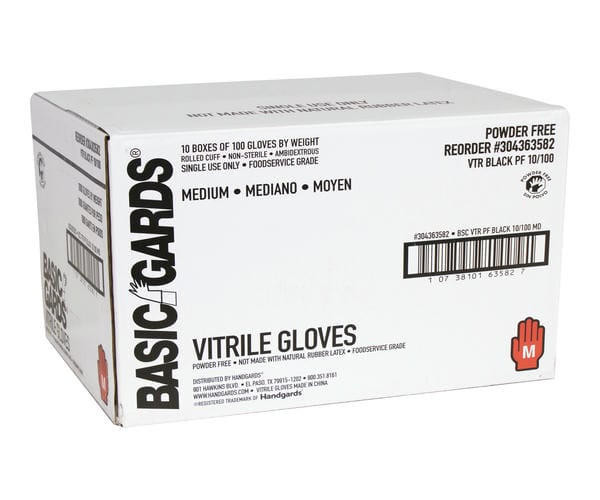
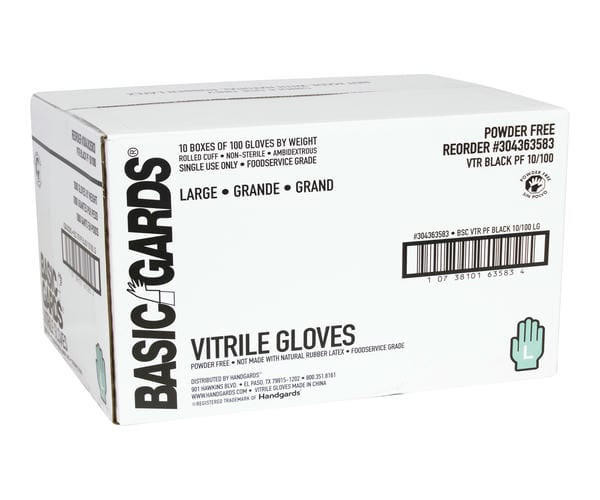
| Food service, direct contact | 1.5 | 3 or fewer | Basicgard Vitrile Black Medium or Large |
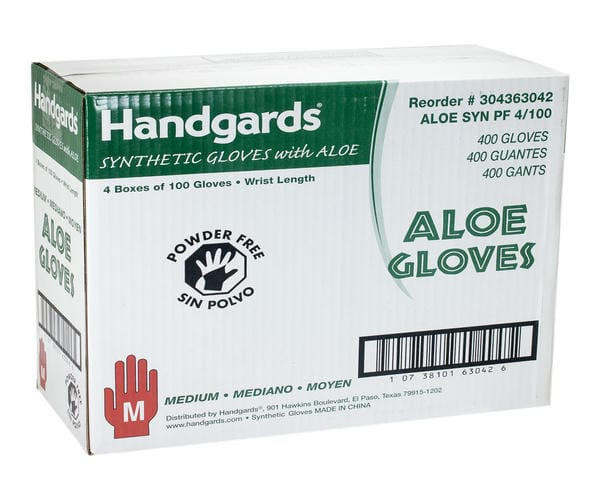
| General cleaning, guest bathrooms | 1.5 | 3 or fewer | Handgard Synthetic Aloe Medium |
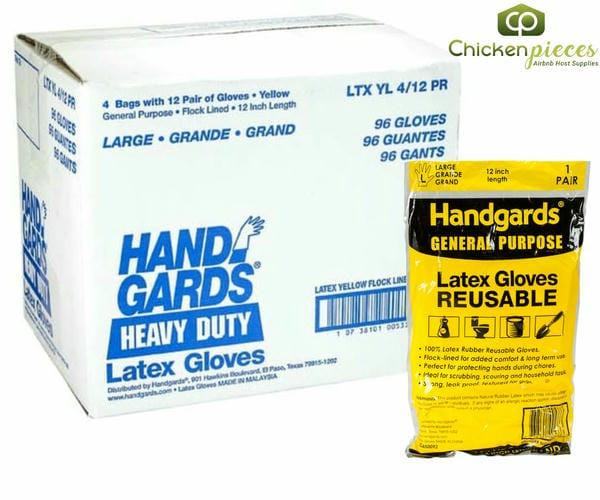
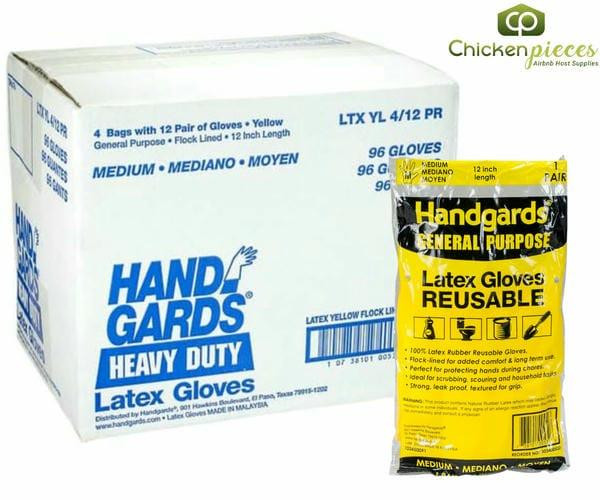
| Heavy-duty scrubbing, chemicals | 1.5 | 3 or fewer | Handgard Latex Flock Lined Yellow |
| Pot washing, hot water immersion | 2.5 | 5 or fewer | Handgard Nitrile Pot & Sink Green |
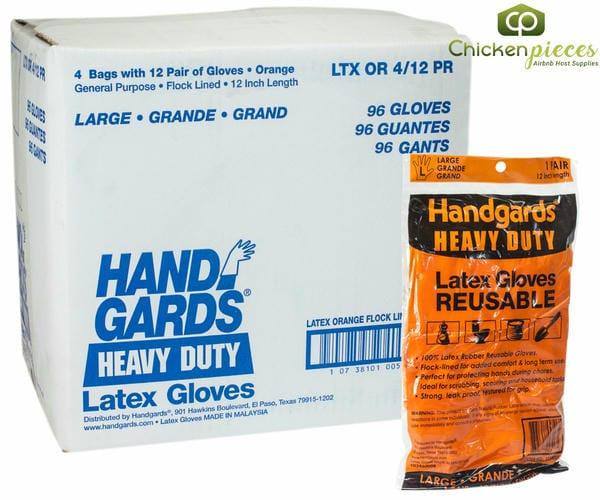
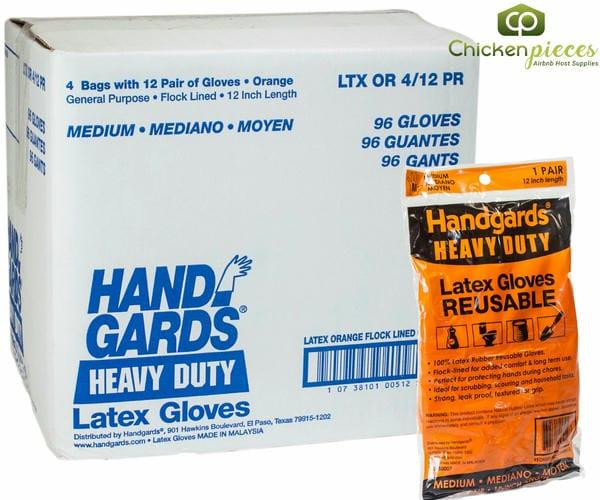
| Landscaping, maintenance, outdoor | 2.5 | 5 or fewer | Handgard Latex Heavy Duty Orange |
Gloves by task and AQL grade
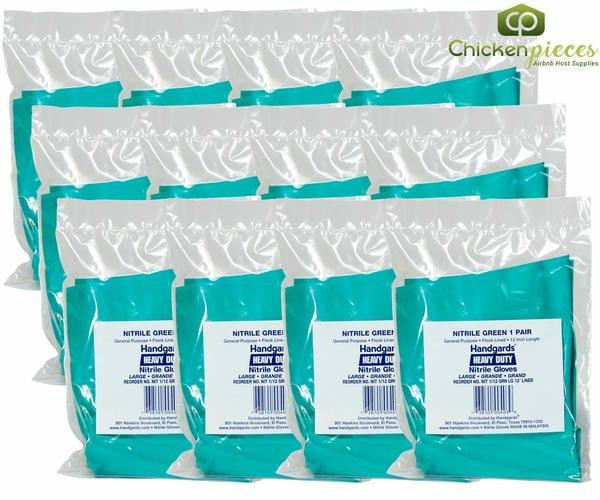
Our range covers single-use to reusable, from surgical-grade nitrile to heavy-duty latex for demanding facility work.

What Canadian facility operators say
Facility operators across Canada rely on these specifications for their teams.
I finally understood why our old supplier's 'medical grade' gloves kept failing. Switched to AQL 1.5 documented in writing. Zero complaints from housekeeping in six months.
We colour-coded by AQL level after reading this. Staff stopped grabbing the wrong box. Our incident reports from glove tears dropped by half immediately.
The water test explanation convinced me to ask our supplier for actual lab reports. They could not produce them. We changed vendors that week.
AQL and glove quality: Frequently Asked Questions
The following operator questions are answered with cited sources. Every FAQ links to Health Canada, CFIA, Canada.ca, or another authoritative regulator.
Which nitrile glove brands hold up best in a busy kitchen?
Products referenced:
- nitrile gloves
- Kirkland nitrile gloves
- Adenna gloves
- Midknight gloves
Where can I buy nitrile gloves in bulk at a good price?
Products referenced:
- nitrile gloves cases
- wholesale club bulk gloves
- foodservice distributor gloves
Source: Best black gloves that have stretch to them? - r/TattooApprentice
Are thicker gloves really worth the extra cost?
Products referenced:
- 6 mil nitrile gloves
- 8 mil nitrile gloves
- heavy-duty disposable gloves
Source: To those that use disposable nitrile gloves... - r/CNC
Why do my nitrile gloves keep ripping at the cuff?
Products referenced:
- powder-free nitrile gloves
- stretch nitrile gloves
Source: Anyone else have a favorite nitrile glove? - r/labrats
How much does a case of nitrile gloves cost?
Products referenced:
- nitrile glove cases
- nitrile gloves box of 100
Source: To those that use disposable nitrile gloves... - r/CNC
Is nitrile better than vinyl for food prep?
Products referenced:
- nitrile gloves
- vinyl gloves
How do I know if my gloves have pinholes?
Products referenced:
- nitrile gloves
- double gloving
Source: Anyone else have a favorite nitrile glove? - r/labrats
What do tattoo artists look for in black nitrile gloves?
Products referenced:
- black nitrile gloves
- 5-6 mil nitrile
- 8-9 mil nitrile
Source: Best black gloves that have stretch to them? - r/TattooApprentice
Do nitrile gloves expire?
Products referenced:
- nitrile gloves
- glove storage
Source: Anyone else have a favorite nitrile glove? - r/labrats
How many boxes of gloves should a small restaurant order at a time?
Products referenced:
- nitrile glove cases
- powder-free nitrile gloves
Source: To those that use disposable nitrile gloves... - r/CNC
Related guides from ChickenPieces
Why facility teams choose ChickenPieces
Calgary-based supply with specifications you can verify, not promises you cannot.
Documented AQL grades
Every glove listing shows the tested AQL level. No guessing, no marketing-only claims about quality.
Task-matched range
From single-use nitrile to reusable heavy-duty latex, our selection covers the full spectrum of facility work.
Alberta-based account support
Local representatives understand Canadian facility standards and regional compliance requirements firsthand.
Health Canada aligned sourcing
Our medical-grade gloves meet Health Canada requirements for distribution to Canadian healthcare and facility operators.
Sources & further reading
- ASTM D5151 Medical Glove Hole Detection Testing | Water Leak Test — Infinita Lab
- Understanding AQL For Gloves — Halyard Health
- ASTM D5151 - 19(2023): Standard Test Method for Detection of Holes in Medical Gloves — CDC/NIOSH PPE-Info Standards
- Acceptable Quality Limit, AQL | Sampling Chart and Calculator — QIMA (Quality Inspection)
Request your glove specification sheet
Send us your task list and staff headcount. We will map AQL levels to actual duties and recommend the right mix. No minimum order pressure.
Request a QuoteReferences: Health Canada — PPE Standards FDA — Medical Glove Guidance.