

2025 Dec 30th
Smart Business Guide in Canada: 2026 Wholesale Buyer Guide
Smart Business Guide: Wholesale Cleaning Supplies Canada for Canadian Shops
Sourcing wholesale cleaning supplies in Canada isn't just about ordering soap. It's about building a smart, reliable supply chain that keeps your restaurant, facility, or janitorial team running smoothly without blowing the budget. Get this first step right, and everything that follows—from safety to cost control—becomes a whole lot easier.
Building Your Smart Sourcing Strategy
Whether you're running a busy Toronto restaurant or managing a massive Calgary warehouse, a solid sourcing plan is your first line of defence against surprise shortages and overspending. This isn't just about making a shopping list; it's about creating a blueprint for intelligent, cost-effective purchasing.
And make no mistake, this is a big deal. The Canada Household Cleaning Products Market, which gives us a great snapshot of commercial trends, was valued at a whopping USD 27.24 billion in 2024. It's projected to hit USD 40.7 billion by 2033. That explosive growth tells you just how seriously businesses and consumers are taking hygiene. You can get more details on this trend over at deepmarketinsights.com.
Create Your Master Product List
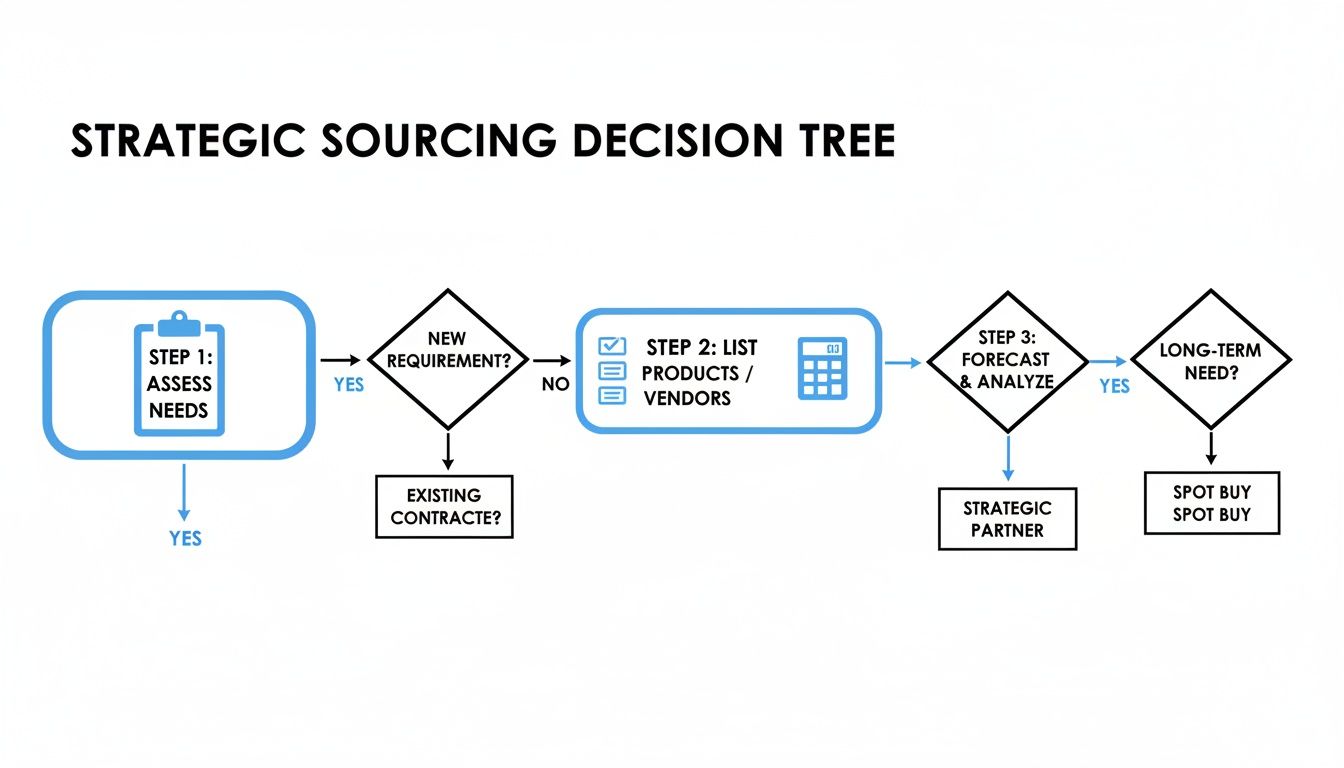
Before you even think about calling a supplier, you need to do a full audit of your own space. Literally walk through your entire facility, clipboard in hand, and make a note of every single cleaning task that happens. This simple exercise is the key to separating your absolute must-haves from the "nice-to-haves."
Break your master list down into a few key categories:
- Daily High-Use Items: These are your workhorses—the products you burn through constantly. Think all-purpose surface cleaners, hand soap for the washrooms, and paper towels. For a café, a reliable go-to like our Ecolab All-Purpose Cleaner would fall squarely in this category.
- Periodic Deep-Cleaning Solutions: This is the stuff for weekly or monthly tasks. We're talking floor strippers, heavy-duty degreasers for the kitchen hoods, or that concentrated window cleaner that makes the front of your shop sparkle.
- Specialized or Task-Specific Products: Here's where you list the niche items. That potent oven cleaner for a restaurant kitchen, the stainless steel polish that keeps your appliances looking brand new, or specific hospital-grade disinfectants for a healthcare setting.
Here's a pro tip: Avoid the temptation to buy products for "just-in-case" scenarios that almost never happen. Stick to what your operational data tells you that you actually use. This keeps your cash from being tied up in slow-moving inventory and prevents chemicals from expiring on the shelf.
Forecast Your Consumption Rates
Got your list? Great. Now, figure out how fast you go through everything. And please, don't guess. Pull out your past purchase orders or, if you're just starting out, track your usage like a hawk for a solid month.
A busy restaurant, for instance, might tear through a case of paper towels every single week but only use one bottle of that heavy-duty oven cleaner per month. Knowing these real-world consumption rates is the secret to accurate forecasting. It's what stops you from running out of hand soap on a busy Friday night and also prevents you from ordering a pallet of degreaser that will sit collecting dust for a year. This data is the foundation of any smart, cost-effective buying plan.
Selecting the Right Products for Your Business Needs
Once you have your shopping list mapped out, it's time to dive into the market for wholesale cleaning supplies in Canada. This can feel like a lot to take in at first, but you can cut through the noise by focusing on three key things: safety, certifications, and what's truly right for your specific operation. It's not just about what cleans, but what cleans safely, efficiently, and in line with Canadian regulations.
The first skill to master is decoding product labels. In Canada, every single commercial cleaning product must have a Safety Data Sheet (SDS), which you might remember as an MSDS. This document is non-negotiable. It breaks down the product's ingredients, proper handling procedures, potential hazards, and what to do in an emergency. Your team needs immediate, easy access to the SDS for every chemical on-site.
Think of it this way: a bustling café in Montreal needs a food-safe sanitizer for its counters and espresso machine wands. A janitorial crew servicing a downtown Toronto office tower, on the other hand, needs a heavy-duty floor stripper for high-traffic areas. The SDS for each will look completely different, which is exactly why a one-size-fits-all approach is not only ineffective but potentially dangerous.
Understanding Concentrations and Certifications
One of the biggest decisions you'll face is choosing between ready-to-use (RTU) formulas and concentrates. Concentrates almost always deliver significant long-term savings and drastically cut down on packaging waste. However, they absolutely require precise dilution and proper staff training to be used safely and effectively.
RTU products offer pure convenience and consistency, making them a fantastic starting point for smaller teams or businesses where staff turnover might be higher.
Beyond the mandatory SDS, keep an eye out for third-party certifications that align with your brand's values. In Canada, the most recognized environmental seal of approval is EcoLogo. Products carrying this mark have been independently verified to have a reduced environmental impact—a detail that more and more customers are paying attention to. For any business that prides itself on sustainability, stocking EcoLogo-certified products is a powerful, tangible way to back up that claim.
Product Category Needs Assessment for Different Businesses
To help you get started, this table outlines the essential product categories for different types of Canadian businesses. Think of it as a cheat sheet for your first big wholesale order.
| Business Type | Essential Cleaners & Degreasers | Sanitizers & Disinfectants | Paper Products & Dispensers | Specialty Products |
|---|---|---|---|---|
| Restaurants & Cafés | Food-safe all-purpose cleaners, heavy-duty kitchen degreasers, floor cleaners. | Food-contact sanitizers for surfaces, bar glass sanitizers, powerful washroom disinfectants. | Hand towels, toilet tissue, napkins, dispenser systems for high-traffic areas. | Oven cleaner, drain maintainer, stainless steel polish, espresso machine cleaner. |
| Janitorial Services | Neutral pH floor cleaners, glass cleaners, multi-surface cleaners in bulk. | Hospital-grade disinfectants for high-touch points, washroom bowl cleaners, sanitizing wipes. | High-capacity toilet paper and paper towel rolls (Jumbo, etc.), hand soap refills. | Floor stripping & waxing chemicals, carpet spot removers, graffiti remover, odour neutralizers. |
| Office Facilities | Versatile All-Purpose Cleaners, spray-and-wipe surface cleaners. | Disinfectant sprays for desks and doorknobs, hand sanitizer stations. | Standard-roll Paper Products, facial tissues, hand soap. | Whiteboard cleaner, electronics wipes, air freshener systems. |
| Retail Stores | Floor cleaners appropriate for the flooring type (e.g., polished concrete), glass cleaner for storefronts. | Disinfectants for washrooms, fitting rooms, and checkout counters. | Washroom paper products, hand soap, hand sanitizer for customers. | Chewing gum remover, scuff mark remover, all-weather floor mat cleaners. |
This assessment helps you align your purchasing directly with your operational reality, preventing you from overspending on products you don't need or, worse, under-equipping your team for the tasks at hand.
Aligning Products with Your Day-to-Day Operations
Now you can translate all this knowledge into a practical shopping list. By combining your list of needs with a solid understanding of safety, concentrations, and certifications, you can confidently choose products that fit your workflow like a glove.
- For Foodservice: Your world revolves around food-safe sanitizers, powerful degreasers for grills and fryers, and effective All-Purpose Cleaners for the front-of-house. Any product that might even indirectly touch a food surface must be approved for that specific use. No exceptions.
- For Facilities and Janitorial: Your needs are much broader. You'll be stocking everything from neutral pH floor cleaners for daily mopping to potent Disinfectants for washrooms, elevator buttons, and every other high-touch surface imaginable.
- For Every Business: Some things are universal. Reliable hand soap, toilet tissue, and paper towels are the bread and butter of any facility. You can explore a full range of Paper Products and Dispensers to find options that match your usage rates and budget.
By matching the product's specifications directly to the task at hand, you do more than just get a better clean. You protect your staff, your customers, and your equipment from damage caused by using the wrong chemical for the job. This careful selection process is the hallmark of a professional and responsible operation.
Unlocking Real Savings with Bulk Ordering
Let's be honest, buying wholesale cleaning supplies in Canada is all about protecting your bottom line. But the operators who really get ahead know that true savings aren't just about snagging the lowest price on a case of chemicals. It's about a smarter way of purchasing that squeezes every drop of value out of your budget.
This means shifting your focus from the sticker price to the actual cost-per-use. This is where concentrates absolutely demolish their ready-to-use (RTU) counterparts.
The Power of Concentrates: A Real-World Scenario
Picture a busy 150-room hotel up in Banff. They burn through disinfectant cleaning rooms every single day. They're looking at two options:
- Option A (Ready-to-Use): A case of 12 one-litre spray bottles runs them CA 60. Each bottle is good for about 15 rooms, so the whole case cleans 180 rooms. Simple math puts the cost per room clean at roughly CA 0.33. Not bad, right?
- Option B (Concentrate): A single four-litre jug of concentrate costs CA 80. Seems pricier upfront, but its dilution ratio is 1:256. That one jug creates over 1,024 litres of usable disinfectant, enough to clean a staggering 15,000+ rooms. The cost per room clean? It drops to just over CA 0.005.
The concentrate costs more at the checkout, but the cost-per-use savings are massive. It also slashes plastic waste and frees up precious storage space—two operational headaches that have a real cost. You can see how this works by checking out a range of concentrated disinfectants and sanitizers.
Once you start thinking in terms of "price per task" instead of "price per container," you unlock a whole new level of savings. This mindset is the difference between just managing a budget and truly mastering it.
Smart Strategies for Maximizing Your Budget
Figuring out your cost-per-use is just the first step. Next, it's time to leverage your buying power. Canada's Janitorial Supplies Market isn't small potatoes—it hit USD 2.61 billion in 2024 and is expected to climb to USD 3.60 billion by 2030, according to Grand View Research. For any business in this space, strategic bulk purchasing isn't just a small tweak; it can cut supply costs by up to 40%.
Here's how you can stretch your procurement budget further:
- Actually Negotiate with Suppliers: Don't be shy. If you can commit to consistent, high-volume orders, ask for better pricing. Building a solid relationship with your supplier often leads to preferential treatment and better terms down the road.
- Take Advantage of Loyalty Programs: Many distributors have rewards or rebate programs for their regulars. These perks might seem small at first, but they add up to real savings over the course of a year.
- Time Your Purchases: Keep an eye out for seasonal sales or those end-of-quarter deals when sales reps are trying to hit their targets. Planning your big stock-up orders around these events can lead to some serious discounts.
- Balance Bulk Savings with Cash Flow: Sure, that pallet of paper towels comes with a tempting discount. But do you have the space for it? And more importantly, does it tie up cash that you need for payroll or other immediate expenses? The goal is to find that sweet spot between a great deal and healthy cash flow.
Streamlining Your Shipping and Inventory Management
You've found a great price on your wholesale cleaning supplies in Canada—that's a huge win. But those savings can evaporate fast if you don't have a solid plan for getting them to your door and onto your shelves. Nailing your shipping and inventory management is what turns a good deal into a genuinely efficient, cost-effective operation. It's the difference between a logistical headache and a smooth, predictable part of your business.
Whether your business is tucked into a busy Toronto neighbourhood or sits in a remote corner of the Maritimes, shipping will play a big role. Most large wholesale orders are sent via LTL (Less-Than-Truckload) freight. It's smart to be proactive here—always clarify shipping costs upfront and ask specifically about fuel surcharges. And if you don't have a loading dock, you'll need to confirm if a liftgate service is required so there are no surprises.
When the truck pulls up, don't just scribble your signature and let them leave. Stop and inspect the delivery right away. Match the shipment against your purchase order, checking for damaged boxes, verifying the quantities, and making sure you actually got the right products. Something as simple as a hand truck or dolly can make moving heavy cases from the pallet to your storage area much safer and faster. If anything is off, report it immediately.
Implementing Smart Inventory Control
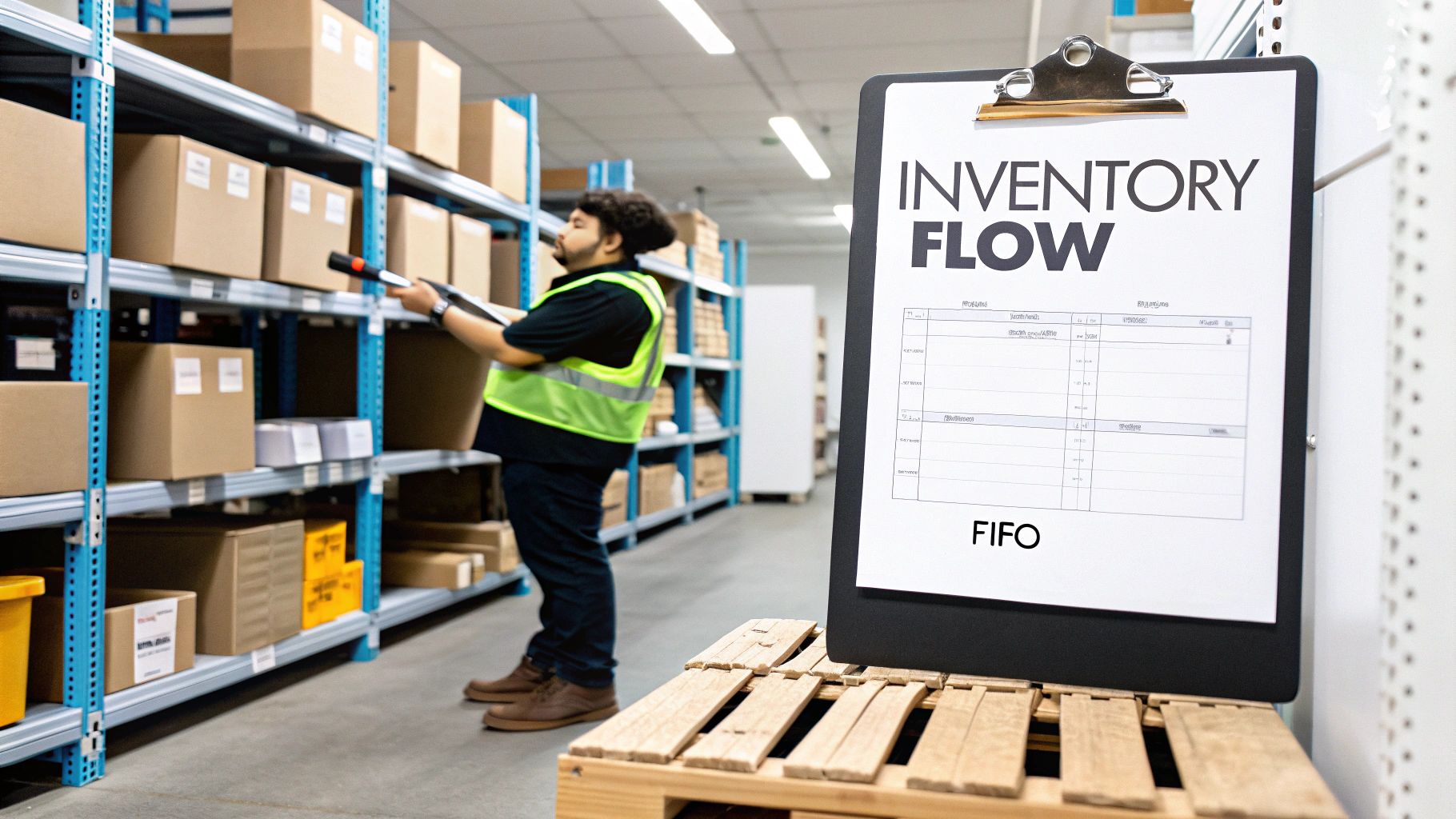
Once the supplies are inside, how you manage them is critical to preventing waste. For cleaning products, the best system is easily First-In, First-Out (FIFO). This simple method ensures you use your oldest stock first, which is non-negotiable for products with expiry dates like disinfectants and sanitizers.
Putting FIFO into practice is straightforward:
- Set up a clear receiving area. All new stock should land here first, every time.
- Rotate products when you restock. Pull the existing items to the front of the shelf, then slide the new delivery in behind them.
- Label cases with the delivery date. A quick scribble with a marker saves a ton of guesswork down the road.
This little bit of organization prevents that painful moment when you discover a case of expired, unusable chemicals in a back corner—which is basically just throwing cash in the bin.
Safe and Compliant Chemical Storage
Proper storage isn't just about being tidy; it's a legal requirement in Canada. Workplace Hazardous Materials Information System (WHMIS) regulations lay out very specific rules for storing chemicals to keep everyone safe and help you avoid some pretty hefty fines.
Your chemical storage area needs to be well-ventilated, secure from unauthorized access, and ready with proper spill containment kits. Never, ever store chemicals in unmarked containers. And make sure the Safety Data Sheets (SDS) are easily accessible right near the storage area, not locked away in a back office.
A critical storage rule is to never store acids and bases together. For example, acidic toilet bowl cleaners should be kept completely separate from alkaline degreasers like our Ecolab Greasestrip Plus. If one leaks or spills into the other, you could have a dangerous chemical reaction on your hands. Segregating incompatible chemicals isn't just a good idea—it's a non-negotiable safety practice.
Maintaining a Safe and Compliant Workplace
Getting the right wholesale cleaning supplies in Canada to your loading dock is really only half the job. Knowing how to use them safely is what separates a truly professional operation from a disaster waiting to happen.
Commercial-grade products are powerful for a reason—they get incredible results. But that power demands respect and a serious commitment to safety protocols. This isn't just about protecting your team; it's about keeping your business compliant with Canadian regulations like WHMIS and avoiding costly fines or shutdowns.
Your team's safety is your most valuable asset. A robust training program isn't just a box to tick on a form; it's the bedrock of a healthy, productive, and accident-free workplace. The goal is simple: make sure every single employee understands the products they're handling, from concentrated degreasers to hospital-grade disinfectants.
This intense focus on safety and compliance is a big reason why professional wholesalers are so dominant. The B2B distribution channel for commercial cleaning gear and supplies is a massive USD 51.07 billion market in 2024. That growth is fuelled by businesses in hospitality, healthcare, and janitorial services that simply can't afford to take shortcuts on safety. You can dive deeper into the numbers by checking out the full market analysis from Data Bridge Market Research.
Building Your Chemical Safety Program
A strong safety program starts with clear, accessible information. Every single person who handles cleaning chemicals needs to be trained on a few core pillars of workplace safety. Forget long, boring lectures; this needs to be practical and easy to remember.
Your program should absolutely cover:
- Understanding Safety Data Sheets (SDS): It's not enough to just have them in a binder somewhere. Every team member must know where to find the SDS for each chemical and how to quickly pull critical info—like hazard warnings, first-aid measures, and proper handling instructions.
- Proper Dilution of Concentrates: This is where so many operations go wrong. Using too little concentrate makes it useless, wasting time and money. Using too much can create hazardous fumes, damage surfaces, and burn through your budget. Training needs to be hands-on, showing them exactly how to use your specific dilution control systems.
- Correct Use of Personal Protective Equipment (PPE): This is non-negotiable. Make sure your team knows precisely when to use gloves, eye protection, or masks, and that the right gear is always available and easy to find. Keeping a well-stocked inventory of disposable gloves and other essential PPE isn't an option, it's a requirement.
Proper chemical handling isn't just about following rules; it's about fostering a culture of safety. When your team feels confident and protected, they can perform their duties effectively, ensuring your products deliver a truly clean and safe environment for everyone.
From Training to Daily Practice
The best training doesn't just happen in a classroom—it's reinforced every day in the cleaning closet. You need to make safety a seamless part of your daily operational routine.
Clearly label every single spray bottle with the product name and WHMIS symbols. Post simple, visual guides right next to dilution stations to remind staff of the correct ratios.
When you integrate safety directly into the workflow like this, compliant practices stop being a chore and start becoming second nature. This proactive approach is what minimizes risks, prevents costly accidents, and shows your employees that you are genuinely committed to their well-being.
Got Questions About Buying Wholesale in Canada? We've Got Answers.
Jumping into the world of wholesale cleaning supplies in Canada can feel like learning a new language. You'll hear terms like "MOQs," wonder if those "green" products actually work, and try to figure out how a pallet of paper towels is going to get to your door.
Don't worry, these are the exact same questions we hear all the time. Let's clear up a few of the most common ones.
What's a Typical Minimum Order for Wholesale?
This is the big one, and the answer is: it depends. The minimum order quantity, or MOQ, varies wildly from one supplier to the next.
Some modern online wholesalers in Canada have no MOQ at all. This is a game-changer for a small café that just needs a case of sanitizer and a few mops, not a whole pallet. It lets you get the benefits of wholesale pricing without tying up a ton of cash in inventory you don't have the space for.
On the other hand, more traditional, large-scale distributors might set the bar at several hundred dollars or require you to buy full cases of everything. For a large janitorial company servicing multiple buildings, hitting these minimums is easy and unlocks the best possible pricing. Before you get too far with any supplier, just ask what their policy is—it'll save you a headache later.
Are Green Wholesale Cleaning Products Actually Effective?
Absolutely. The old stereotype of eco-friendly cleaners being weak and ineffective is long gone. Thanks to huge leaps in green chemistry, today's plant-based solvents and enzyme cleaners can cut through serious grease and grime just as well—and sometimes even better—than their conventional counterparts.
The trick is to look for proof. Anyone can slap a leaf on a label.
To be sure you're getting a product that performs, look for legitimate third-party certifications like Canada's EcoLogo or Green Seal. These certifications don't just verify a product's environmental claims; they test its cleaning power, too.
While a green concentrate might have a slightly higher price tag upfront, you often come out ahead. They're usually super-concentrated, meaning your cost-per-use is surprisingly low. For instance, our Ecolab All-Purpose Cleaner is a green-certified concentrate that saves money in the long run while creating a much safer space for your staff and customers.
How Does Shipping Work for Heavy, Bulky Stuff?
When you're ordering cases of chemicals or stacks of paper products, you're not dealing with a standard courier. Most Canadian wholesale suppliers use freight shipping, often called LTL (Less-Than-Truckload), for these big orders.
Before you click "confirm," make sure all shipping costs are crystal clear. One surprise fee to watch out for is the "liftgate service." If you don't have a proper loading dock, you'll need a truck with a liftgate to lower the pallet to the ground. Ask if this is included to avoid an unexpected bill.
A lot of suppliers (including us) offer free shipping once you hit a certain order value. Planning your purchases to meet that threshold is one of the smartest ways to save money, especially when you're buying heavy items. It also pays to find a distributor in your province, as that can slash both shipping costs and delivery times.
What's the Real Difference Between a Sanitizer and a Disinfectant?
Knowing the difference here isn't just trivia—it's critical for safety and health code compliance. They are not the same thing.
- Sanitizer: This is what you use on food-contact surfaces. Its job is to reduce bacteria to a safe level, usually by 99.9%. Think restaurant tables, kitchen counters, and cutting boards.
- Disinfectant: This is the heavy hitter. It's formulated to kill a much broader spectrum of microorganisms, including specific viruses and fungi.
Here's the key thing to remember in Canada: all legitimate disinfectants must have a Drug Identification Number (DIN) from Health Canada. This DIN proves the product has been tested and does what it claims.
So, you'd grab a food-safe sanitizer for your prep station but reach for a powerful, DIN-registered disinfectant for high-touch, high-risk areas like washroom door handles, sinks, or a medical clinic's waiting room. Using the wrong one can put people at risk and get you in trouble during a health inspection.
Ready to simplify your supply orders with a Canadian partner who gets it? At Chicken Pieces, we've got a massive selection of commercial-grade cleaning supplies with no membership fees and fast, reliable shipping across Canada.
Explore Our Full Range of Janitorial and Sanitation Supplies Today!
Frequently Asked Questions
The following operator questions are answered with cited sources. Every FAQ links to Health Canada, CFIA, Canada.ca, or another authoritative regulator.
Where can I buy wholesale cleaning supplies for my restaurant in Canada?
Source: Source
What cleaning supplies does every Canadian restaurant kitchen need?
Source: Source
How much do wholesale cleaning supplies cost for Canadian restaurants?
Source: Source
What Health Canada regulations apply to commercial cleaning products?
Source: Source
What's the difference between sanitizer and disinfectant for restaurant use?
Source: Source
Can I save money by buying cleaning supplies in bulk for my Canadian restaurant?
Source: Source
What are the best eco-friendly cleaning supplies for Canadian restaurants?
Source: Source
How often should I order cleaning supplies for my Canadian restaurant?
Source: Source
What cleaning supplies do I need to pass a Canadian health inspection?
Source: Source
Where do Canadian food trucks buy cleaning supplies?
Source: Source
Authoritative Sources
The following government and public-health sources informed the operator guidance above. Citations to Reddit, Quora, and operator forums appear in the FAQ block above.