
2026 Aug 16th
Monthly Restock Guide for Alberta and Ontario Treatment
Monthly supply costs depend on patient volume, room count and surface type. Most Alberta and Ontario clinics budget for intermediate-level disinfectant wipes, surface cleaners and linen protocols based on College standards that mandate cleaning between every single patient.
Monthly Restock Guide for Alberta and Ontario Treatment Clinics
For physiotherapy, massage therapy and chiropractic clinic operators who need reliable, compliant surface disinfection between every patient appointment.
Key Takeaways
Here is what clinic managers should know before placing a monthly restock order.
Clean Before Disinfect
Alberta and Ontario Colleges require visible soiling removal before any disinfection step. Skipping this voids product effectiveness regardless of contact time.
Match Wipes to Surfaces
Treatment plinths, exercise equipment and shared tools each need compatible chemistries. Manufacturer instructions and College standards both apply.
Verify DIN Every Time
Health Canada assigns Drug Identification Numbers only to reviewed products. Staff must confirm DIN status before use on patient contact surfaces.
Contact Time Is Fixed
One minute is common for intermediate-level disinfectants, but only the specific product label governs. Temperature and concentration also affect results.
Linen Protocols Run Parallel
Sheets, face cradle covers and blankets need fresh laundering per appointment. This runs alongside surface disinfection, not instead of it.
Document Your Process
Ontario physiotherapists must retain reprocessing records. Alberta operators should maintain equivalent logs for audit readiness.
What Provincial Colleges Require Between Patients
Alberta and Ontario regulators agree: no exceptions for surface cleaning frequency.
The College of Physiotherapists of Alberta mandates that non-critical reusable patient care items be cleaned and disinfected between every patient without exception. Intermediate-level disinfectants must achieve their kill claim in one minute on treatment plinths and exercise equipment. High-touch surfaces need daily attention, with increased frequency during outbreak periods. Virucidal products require Health Canada DIN approval with verified pathogen claims.
Ontario's College of Massage Therapists extends this to tables, face cradles and all surfaces touched by either client or therapist. Equipment tools including hot stones, ultrasound devices and myofascial release cups need the same post-appointment treatment. Linens and covers must be freshly laundered per client, with safe handling procedures to prevent cross-contamination. Public Health Ontario environmental cleaning recommendations apply directly.
The College of Physiotherapists of Ontario adds manufacturer specification compliance and documentation requirements. All spaces and equipment must be ready before each patient arrives. Point-of-care risk assessment determines hand hygiene, respiratory hygiene and PPE needs. Provincial Infectious Diseases Advisory Committee recommendations must be followed by region.
Choosing Wipes for Different Clinic Surfaces
Not every wipe suits every treatment room task.
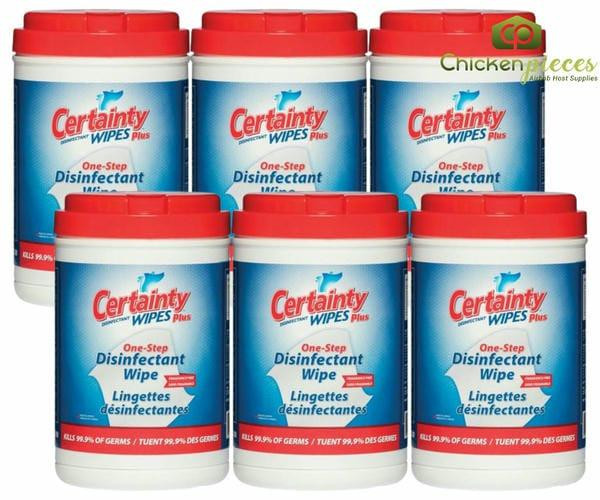
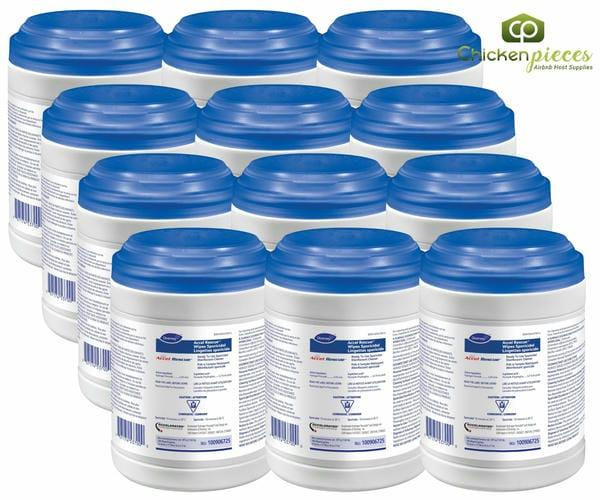
Canister formats suit fixed cleaning stations near treatment plinths. Staff grab single wipes between patients without fumbling with packaging. The Certainty Medical TB and Oxivir TB options both package 160 wipes per canister with twelve canisters per case, supporting high-volume practices. Canisters seal adequately for product stability but require counter space.
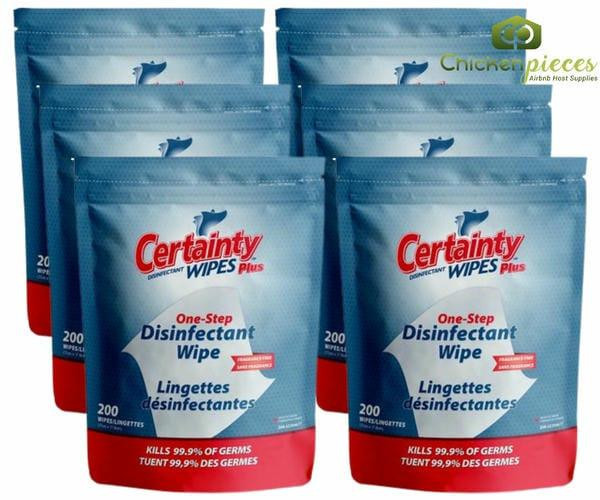
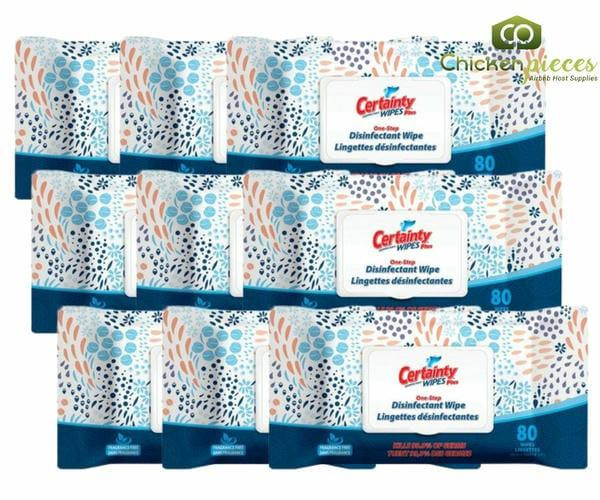
Flat packs and pouches travel better for mobile practitioners or multi-room facilities. The Certainty Plus Fragrance-Free line offers both formats, with flat packs at eighty wipes and pouch versions for field kits. Reduced fragrance matters in small treatment rooms where patients remain for extended periods. Massage therapists particularly notice residual chemical smells during relaxation-focused appointments.
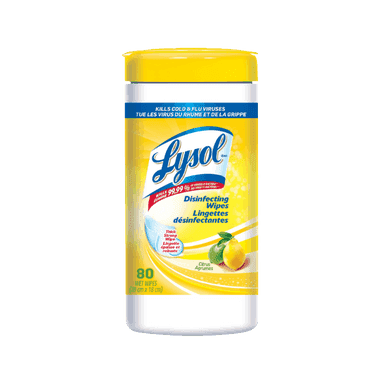
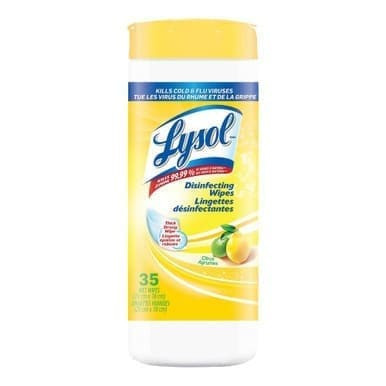
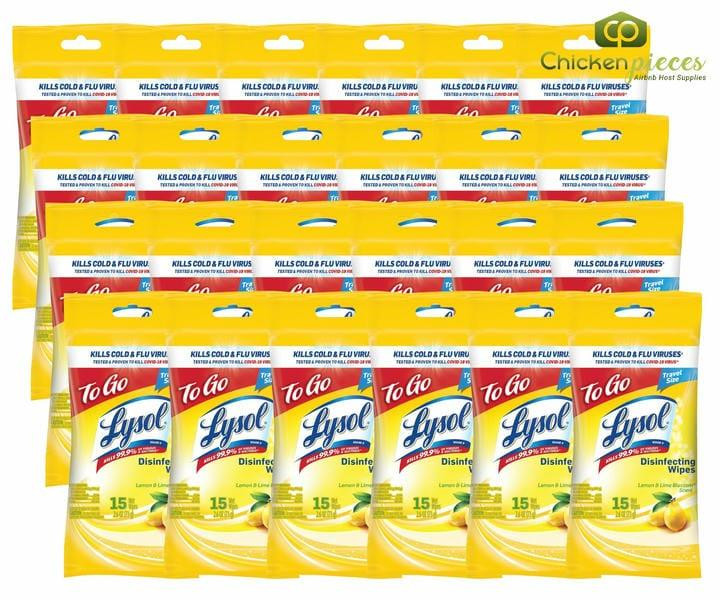
Small-format retail packs serve reception areas, washrooms and staff kitchens where clinic-grade disinfection still matters. Lysol On-The-Go packs fit drawers and supply carts. Citrus-scented options from both Lysol and Certainty lines mask chemical notes without adding synthetic perfume intensity. Match the environment to the wipe size to reduce waste from oversized single uses on small surfaces.
Estimating Usage for Your Patient Schedule
Build restock quantities from actual appointment patterns, not guesswork.
Start with daily patient count and room turnover. A physiotherapy clinic seeing forty patients across three rooms uses at minimum forty plinth wipes, plus equipment wipes for exercise stations, plus reception and washroom touches. Massage practices with longer appointments generate fewer per-room turnovers but require complete linen changes each time. Chiropractic adjustments often add adjustment table wipes plus any modality equipment.
Factor in staff habits and learning curves. New employees use more product while building efficient motion patterns. Some practitioners double-wipe out of caution. Others miss edges and need correction. Build ten to fifteen percent buffer into first orders, then tighten based on actual consumption tracked over two full months. Seasonal variation matters: flu season brings stricter protocols and higher surface attention.
Case quantities exist for a reason. Individual canisters purchased repeatedly cost more in administrative time than in product. Most Alberta and Ontario clinics ordering through ChickenPieces.com consolidate monthly into case lots. The twelve-canister Oxivir TB case or six-canister Certainty Plus cases align with typical mid-sized clinic burn rates. Review quarterly whether case size still matches actual flow.
Keeping Disinfectant Wipes Effective on Site
Product performance depends on storage conditions, not just formulation.
Health Canada DIN requirements include specific storage guidance on every approved label. Temperature matters: extreme heat accelerates chemical breakdown, while freezing can separate active ingredients from substrate. Most clinic environments stay within acceptable ranges, but storage closets near HVAC equipment or exterior walls may drift. Check actual conditions with a simple thermometer during seasonal extremes.
Open canisters present the biggest practical risk. Staff rush between patients, lids crack or warp, and wipes begin drying within hours. Assign someone to verify seal integrity during opening and closing routines. Flat packs reduce this risk by design but introduce different handling mechanics. Train everyone on the specific closure type in their assigned rooms.
Inventory rotation prevents expired product accumulation. Health Canada-approved disinfectants carry expiry dates based on stability testing. Using expired wipes violates College standards regardless of apparent physical condition. First-in-first-out shelving with clear date marking takes minutes to establish and prevents compliance gaps during inspections.
Building Consistent Cleaning Habits
Protocol only works when every team member follows it every time.
Alberta and Ontario Colleges place responsibility on regulated professionals, but day-to-day execution falls to support staff and assistants. Written protocols posted at cleaning stations reduce variation. Visual guides showing proper wipe technique for plinths versus equipment versus non-patient surfaces reinforce verbal training. Update these when switching product lines, as different wipes need different contact times.
The two-step decontamination requirement sounds simple but fails in practice. Staff see a clean-looking surface and skip to disinfection. Or they clean adequately but remove disinfectant before full contact time elapses. Build timing into room turnover: wipe clean, apply disinfectant, set timer, complete documentation while waiting, return to wipe or air-dry per label. This rhythm becomes automatic with repetition.
Competency verification matters for audit trails. Ontario physiotherapists already document reprocessing details. Extend this concept to all clinical staff with simple checklists signed per shift. Not punitive: protective. When a patient infection concern arises, thorough records demonstrate due diligence. Absent records invite assumptions of negligence regardless of actual practice quality.
Simplifying Your Monthly Restock Workflow
Reliable supply prevents the risky shortcuts of running low.
Most clinics settle into predictable monthly patterns after tracking two to three ordering cycles. Build a simple spreadsheet: product name, case size, current stock, typical monthly use, reorder point. Share access between clinic manager and whoever places orders. This prevents the all-too-common scenario where one person knows usage patterns but another handles purchasing.
Consolidate suppliers where possible. Multiple vendor relationships multiply administrative overhead and increase odds of incompatible products arriving. ChickenPieces.com stocks multiple Health Canada-approved lines under one account, simplifying invoice reconciliation and return handling. Compare total cost including time, not just unit product comparison.
Review quarterly whether your selections still match actual needs. Patient volume changes, staff preferences shift, new products enter the market. Annual review is too infrequent for consumables that affect compliance. A fifteen-minute discussion at existing team meetings keeps supply strategy current without dedicated planning sessions. Document decisions so turnover does not reset progress.
Clinic Wipe Comparison
Match wipe format and chemistry to your treatment room workflow.
| Product | Format | Wipes Per Case | Best For |
|---|---|---|---|
| Certainty Medical TB | Canister, 160 wipes | 960 (6 canisters) | Fixed stations, high volume |
| Certainty Plus Fragrance-Free | Canister, standard size | Varies by canister count | Scent-sensitive environments |
| Certainty Plus Fragrance-Free Pouch | Flexible pouch | 6 pouches | Mobile kits, field visits |
| Certainty Plus Fragrance-Free Flat Pack | Flat pack, 80 wipes | 960 (12 packs) | Drawer storage, quick access |
| Citrus Disinfectant Cleaner | Unit packs, 80 wipes | 480 (6 units) | Reception, non-critical areas |
| Diversey Accel Rescue | Canister, 160 wipes | 1,920 (12 canisters) | Sporicidal needs, specialized use |
| Lysol Citrus / On-The-Go | Small retail packs | 420-840 | Staff areas, patient washrooms |
Health Canada-Approved Disinfectant Wipes
Browse canister, flat pack and travel formats for Alberta and Ontario clinic compliance.


What Canadian clinic operators say
Clinic operators across three provinces describe their restock experience.
Switched from buying retail packs at the pharmacy to case lots through here. My receptionist spends fifteen minutes ordering instead of an hour driving around. Wipes show up with DIN numbers clearly marked.
The fragrance-free Certainty line changed our massage rooms. Clients stopped commenting on chemical smells during relaxation sessions. We track usage monthly and case orders land right on schedule.
Our physio practice runs four rooms with shared exercise equipment. Having twelve-canister cases of Oxivir means we are not scrambling mid-week. Product stays sealed until needed.
Monthly Clinic Restock: Frequently Asked Questions
The following operator questions are answered with cited sources. Every FAQ links to Health Canada, CFIA, Canada.ca, or another authoritative regulator.
How often should physio, chiro, and RMT clinics restock disposable supplies like gloves and disinfectant wipes?
Products referenced:
- disposable gloves
- disinfectant wipes
Source: Officially Unable to Restock Clinics with Supplies - Reddit r/medicine
What are the typical monthly supply costs for a physiotherapy or massage therapy treatment room?
Products referenced:
- massage oils
- massage lotions
- massage creams
- linens
- disposable face cradle covers
Source: Therapy is too expensive and is a luxury for the rich - Reddit r/TalkTherapy
Where can Canadian clinics buy gloves, disinfectant wipes, and sanitizer in bulk?
Products referenced:
- disposable gloves
- hand sanitizer
- alcohol wipes
- disinfectant wipes
Source: With things reopening and safety guidelines in place - Reddit r/smallbusiness
What treatment room supplies run out fastest in physio, chiro, and RMT clinics?
Products referenced:
- disposable gloves
- disinfectant wipes
- face cradle covers
- massage lotion
Source: Reducing Glove Overuse in Outpatient Specialty Clinics: Cost and Environmental Impact - NIH/PMC
What are the essential disposable supplies every treatment room should keep in stock?
Products referenced:
- disposable gloves
- disinfectant wipes
- face cradle covers
- hand sanitizer
- ultrasound gel
- electrode pads
- gauze
- tissues
Source: 10 Essential Physiotherapy Supplies Every Canadian Clinic Needs - Therapy Supply Canada
How should a clinic manage inventory for disposables like linens, lotions, and cleaning products?
Products referenced:
- linens
- massage lotion
- disinfectant wipes
- disinfectant spray
- face cradle covers
Source: What kind of massage lotion do you guys recommend? - Reddit r/massage
How much can a clinic save by buying treatment room supplies in bulk quantities?
Products referenced:
- disinfectant wipes
- massage lotion
- massage oil
- hand sanitizer
Source: Buy Wholesale Disinfecting Wipes - Bulk Savings Guide - Wipes.com
How often should treatment room linens and face cradle covers be changed between clients in Ontario and Alberta?
Products referenced:
- face cradle covers
- massage sheets
- disposable sheets
- towels
- blankets
Source: Washing vs Sanitizing vs Disinfecting - Reddit r/CleaningTips
Related guides from ChickenPieces
Why Clinic Operators Choose ChickenPieces.com
Straightforward supply sourcing for regulated health environments.
DIN-Verified Stock
Every disinfectant wipe in our catalog carries current Health Canada Drug Identification Numbers. You verify once at purchase, not at delivery.
Case Quantities Ready
Order by the case for clinical volumes, not consumer packs. Consolidated invoices simplify month-end reconciliation for multi-location practices.
Cross-Province Familiarity
We stock products referenced by both Alberta and Ontario College guidance documents. One supplier serves your locations in either province.
Compliance Built In
Our product data includes Health Canada registration details and label guidance. Your audit trail starts with accurate documentation, supporting CFIA-aligned facility standards where applicable.
Sources & further reading
- Infection Prevention and Control Guide — College of Physiotherapists of Alberta
- Infection Prevention and Control Standard of Practice — College of Massage Therapists of Ontario
- Infection Control Standard — College of Physiotherapists of Ontario
- Drug Identification Number (DIN) Requirements for Disinfectants — Health Canada
Request Your Monthly Restock Quote
Send your clinic's room count and patient volume. We will size case quantities to your actual workflow. No minimum order pressure, no speed promises, just accurate supply matching.
Request a QuoteReferences: Health Canada — Food Chemical Contaminants CFIA — Food Safety for Industry.