

2026 Aug 16th
Medical glove sizing for your whole team: the fit chart
Proper glove sizing starts with two measurements: hand circumference below the knuckles and hand length from middle fingertip to palm base. Match these to EN ISO 21420:2020 standard sizes 6/XS through 11/XXL. Poor fit wastes time, causes fatigue and compromises barrier protection.
Medical glove sizing for your whole team: the fit chart clinics actually need
Airbnb hosts, property managers and facility operators in Calgary and across Canada need consistent glove fit to protect staff and maintain operational standards without disruption.
Key Takeaways
Six points to get your team's glove sizing right from the start.
Measure two dimensions
Hand circumference and hand length determine your size. Circumference is primary; length confirms the fit. Both take ten seconds with a cloth tape.
Oversized gloves snag
Loose gloves catch on equipment, reduce tactile feedback and tear more easily. Staff work slower and less precisely.
Tight gloves cause pain
Undersized gloves restrict movement, create muscle fatigue and limit how long staff can work comfortably.
Hand-specific beats ambidextrous
Left-right fitted gloves reduce force on hands compared to ambidextrous styles, cutting fatigue during longer procedures.
Check EN 455 standards
Leak tightness, tensile strength, biological safety and shelf life are all certified under this four-part framework.
Train donning and removal
Even perfect-fit gloves fail if staff apply or remove them incorrectly. Proper technique preserves barrier protection.
Poor glove fit costs more than comfort
Sizing errors directly hit productivity and safety in clinical settings.
Research on surgical glove fit shows clear performance gaps. When gloves fit well, perforation risk sits at 71%. That risk climbs to 100% with incorrect sizing, meaning every poorly fitted glove becomes a potential breach in infection control. For facility operators managing multiple staff across shifts, this is not a marginal concern.
Oversized gloves impair dexterity and tactile feedback for everyone on the team, from experienced staff to new hires. The extra material bunches, catches and reduces precision. Undersized gloves create the opposite problem: hand pain, restricted finger movement and muscle fatigue that builds over a shift.
One finding surprises many managers. Undersized gloves actually enhance tactile sensitivity for experienced users because the material stretches thinner. But the trade-off is sharp: increased discomfort and pain limit how long staff tolerate wearing them. The net result is more frequent changes, more fatigue and higher risk of staff skipping gloves altogether.
How to measure hands for proper glove size
Two simple measurements replace guesswork with standardized sizing.
The primary measurement is hand circumference. Wrap a flexible measuring tape around the widest part of the palm, just below the knuckles, excluding the thumb. This single number maps directly to EN ISO 21420:2020 size categories from 6/XS through 11/XXL. Keep the tape snug but not tight; the hand should be relaxed.
The secondary measurement is hand length. Run the tape from the tip of the middle finger to the base of the palm where it meets the wrist. This confirms whether a circumference-based size will actually fit finger length. Someone with broad palms but short fingers may need a different approach than the chart suggests.
Record both numbers for each team member. Sizes vary between dominant and non-dominant hands, so measure both. For mixed teams with rotating staff, keep a reference sheet accessible. When ordering for a whole facility, size distribution matters: most teams cluster around medium and large, but outliers at XS and XXL need coverage too.
EN 455 and what it means for your glove stock
Four standards govern whether gloves actually protect your team.
EN 455-1 tests leak tightness. Gloves are inflated while submerged; any hole means failure. The AQL threshold of 1.5 sets the bar for acceptable quality. Below this, gloves provide reliable barrier protection. Above it, the risk of undetected breaches rises sharply.
EN 455-2 specifies physical requirements. Nitrile and latex gloves must withstand minimum tensile force of 6 Newtons; vinyl requires 3.6 Newtons. This prevents rupture during normal use and donning. The standard also defines exact dimensions for surgical versus examination gloves, so matching the right type to your application matters.
EN 455-3 covers biological evaluation, requiring clear material labeling. Powder content cannot exceed 2 milligrams per glove. EN 455-4 sets shelf life: maximum five years from manufacture, verified through either accelerated aging tests or real-time storage protocols. Track lot dates and rotate stock accordingly.
Choose glove material and weight by work type
Different roles need different combinations of durability and sensitivity.
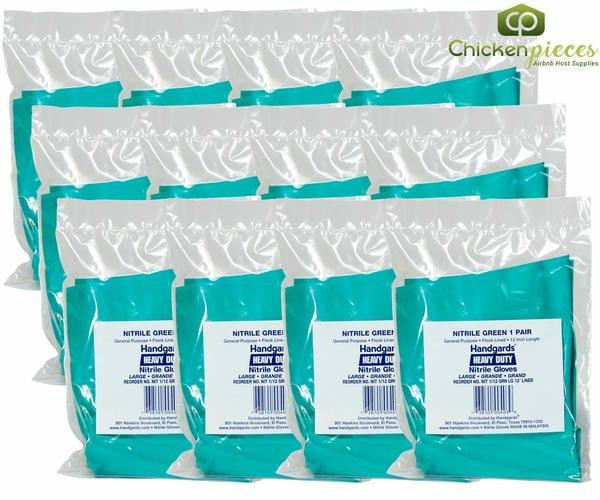
Nitrile offers strong chemical resistance and puncture protection without latex proteins. It works for examination, cleaning and light maintenance tasks. The 511 Large Green Nitrile and Handgard Pot and Sink Green Heavy Duty options cover both single-use and repeated-use scenarios in facility operations.
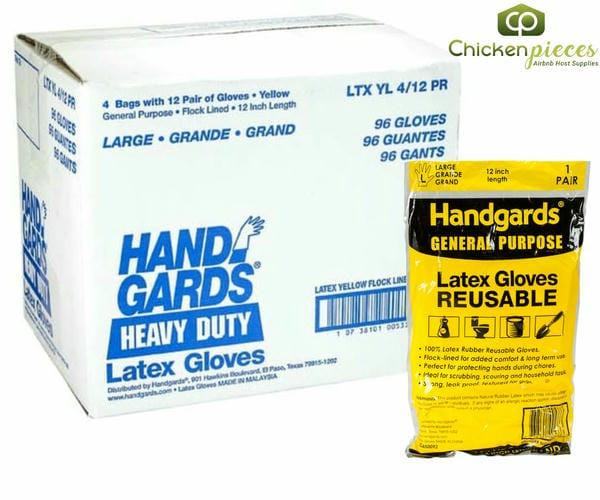
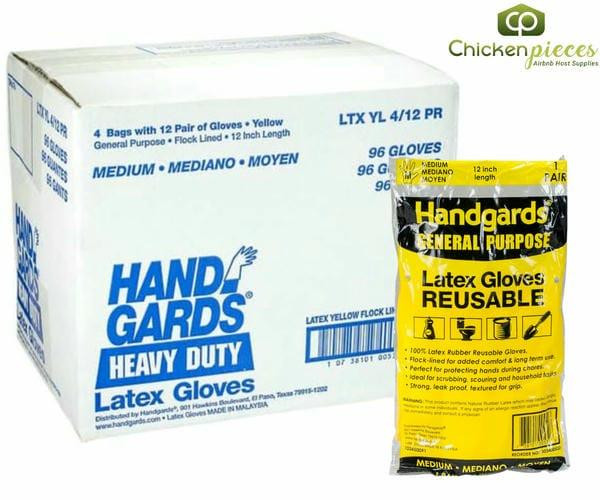
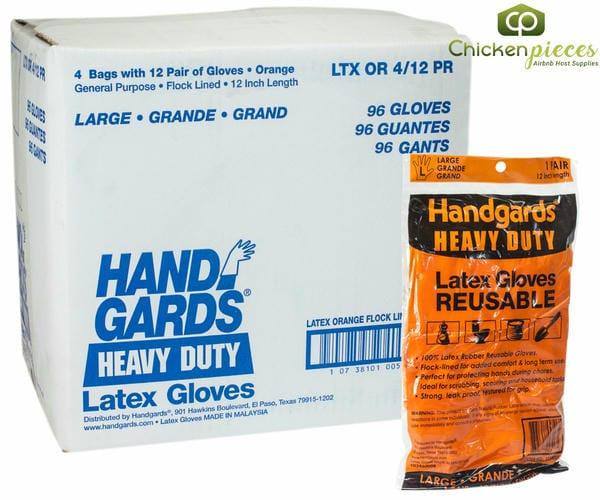
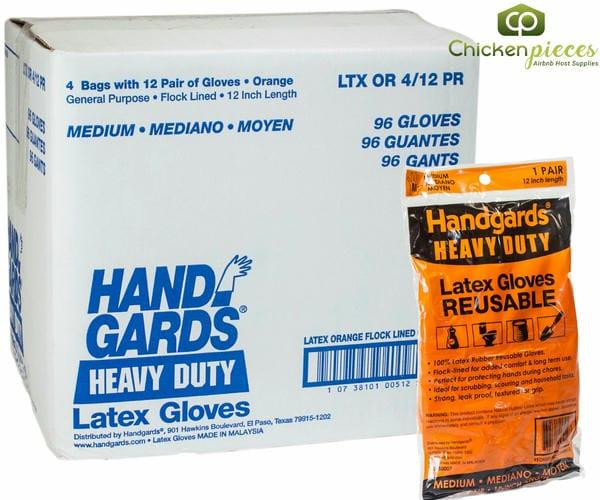
Latex provides superior elasticity and tactile sensitivity for precision tasks. Flock-lined reusable styles like the Handgard Yellow series extend service life for janitorial and kitchen work. The textured grip matters on wet surfaces. Heavy-duty orange variants add thickness for abrasive tasks.
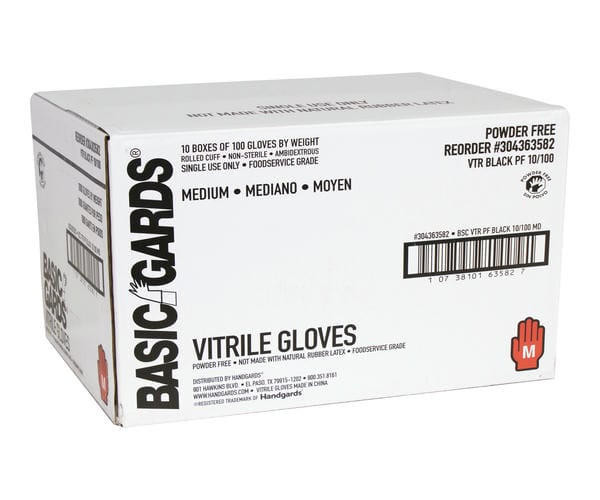
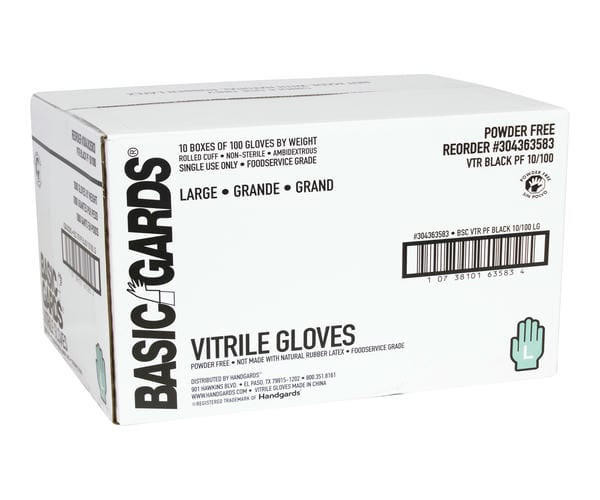
Vitrile blends suit foodservice and general facility maintenance where nitrile cost or latex allergy concerns apply. The powder-free black Basicgard line handles these settings. Match cuff orientation to WHO guidance: cuffs should open toward the wearer to prevent fluid channeling and ensure wrist coverage.
Build a sizing mix that covers your whole roster
Multi-size facilities need planning, not impulse buying.
Most clinical and facility teams follow a bell curve: heavy concentration in medium and large, tapering to small and extra-large. But verify this. A dental clinic with mostly female staff may skew smaller. A maintenance crew with broader hand variation needs wider coverage. Audit current staff or survey during onboarding.
Consider role-based differentiation. Kitchen staff handling hot water and chemicals need reusable heavy-duty options in their sizes. Housekeeping turning over units quickly needs single-use nitrile in volume. Patient-facing roles may need examination-grade with confirmed AQL ratings. One size range does not fit all applications.
Store by size and material, not mixed together. Mis-stocked gloves get grabbed in wrong sizes, creating the fit problems this guide aims to prevent. Label shelves clearly. Include a printed measurement guide at the issue point so new or temporary staff can self-size without hunting down a supervisor.
Proper technique preserves protection
Fit fails if staff don or remove gloves incorrectly.
Correct donning starts with dry hands. Wet or lotioned hands stick and distort fit. Pinch the cuff, not the fingers, to avoid stretching the material before it even goes on. Roll down smoothly without trapping air. Check for visible tears or holes before starting tasks.
Removal technique matters as much as fit. Grasp the outside of one glove near the wrist, peel away from the hand turning the glove inside out. Hold the removed glove in the gloved hand. Slide fingers of the bare hand under the remaining cuff, peel off enclosing the first glove. Dispose without skin contacting the outer surface.
Regular refresher training prevents drift into sloppy habits. Post illustrated steps at glove stations. Observe periodically. Even well-fitted gloves become contamination risks when staff snap them off casually or reuse single-use pairs. The time invested in training returns in fewer incidents and less stock waste from improper handling.
Compare glove types for your facility
Match material, durability and sizing to the tasks your team performs daily.
| Glove type | Best for | Sizing notes | Durability |
|---|---|---|---|
| 511 Green Nitrile | Examination, light cleaning | Large, single-use | Standard, 6N tensile |
| Basicgard Vitrile Black M/L | Foodservice, general facility | Medium or large, powder-free | Moderate, blend material |
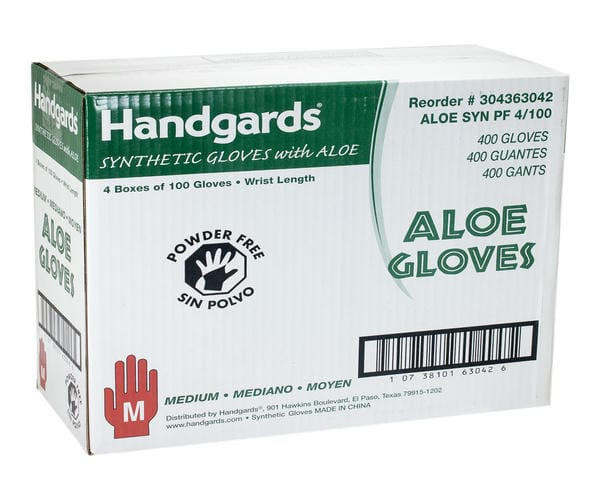
| Handgard Synthetic Aloe | Sensitive skin, frequent changes | Medium, powder-free | Standard, comfort-focused |
| Handgard Latex Flock Lined M/L | Wet grip tasks, repeated use | Medium or large, textured | Reusable, 12-pair packs |
| Handgard Latex Heavy Duty M/L | Abrasive cleaning, hot water | Medium or large, thick | Reusable, extended life |
| Handgard Nitrile Pot & Sink | Kitchen, chemical exposure | Large, green, heavy duty | Reusable, chemical-resistant |
| Ambidextrous vs. fitted | General vs. precision tasks | Hand-specific reduces fatigue | Same material, better ergonomics |
Gloves sized for your full team
Single-use and reusable options from medium to large, with heavy-duty variants for demanding tasks.

What Canadian facility operators say
What facility operators say about getting glove sizing right.
We used to order all large and call it a day. Half my team had red marks, the other half fumbled with loose fingertips. Proper measurement cut our glove waste by a third.
The heavy-duty reusable line lasts through our kitchen and housekeeping rotations. Sizing chart was spot on for our mixed crew. No more guessing between medium and large.
Switching from ambidextrous to hand-specific fit reduced complaints about hand fatigue during longer shifts. Staff noticed the difference within a week.
Glove sizing: Frequently Asked Questions
The following operator questions are answered with cited sources. Every FAQ links to Health Canada, CFIA, Canada.ca, or another authoritative regulator.
How do I figure out what size nitrile gloves to order for my whole team?
Products referenced:
- nitrile exam gloves
- glove size chart
- sample size pairs
Source: Glove sizes - r/nursing
Are nitrile gloves better than vinyl gloves for food prep?
Products referenced:
- nitrile gloves
- vinyl gloves
- food-safe gloves
Why do my nitrile gloves keep ripping, and should I size up?
Products referenced:
- nitrile exam gloves
- heavy-duty nitrile gloves
Is it safe to use nitrile gloves for food prep?
Products referenced:
- food-safe nitrile gloves
- powder-free exam gloves
Which glove types do professional kitchens actually keep on hand?
Products referenced:
- nitrile gloves
- vinyl gloves
- chemical-resistant gloves
- latex-free gloves
Should I buy one glove size in bulk or multiple sizes for my staff?
Products referenced:
- small nitrile gloves
- medium nitrile gloves
- large nitrile gloves
Source: Switching to vinyl gloves is a mistake - r/wholefoods
How much do bulk nitrile gloves cost compared to buying retail boxes?
Products referenced:
- nitrile glove cases
- vinyl gloves
What thickness of nitrile glove should a kitchen order?
Products referenced:
- 4-mil nitrile exam gloves
- 6-mil heavy-duty nitrile gloves
Can the same disposable gloves cover prep, cleaning, and front-of-house tasks?
Products referenced:
- exam-weight nitrile gloves
- chemical-resistant gloves
- disposable gloves
Related guides from ChickenPieces
Why buy from ChickenPieces
Calgary-based supply with Canadian compliance and direct service.
Measured fit guidance
We provide sizing resources based on EN ISO 21420 standards, not generic small-medium-large guesses that fail your team.
Role-matched range
From examination nitrile to heavy-duty reusable latex, stock covers patient contact, foodservice, janitorial and maintenance tasks.
Case quantities
Order by the case for operational scale without managing dozens of small retail packs. Consistent lot numbers simplify tracking.
Health Canada aligned
Products meet relevant standards for Canadian healthcare and facility use, with material labeling and shelf-life documentation that supports your compliance records.
Sources & further reading
- Hands Deserve Better: A Systematic Review on Surgical Glove Fit and Provider Performance — NIH/NCBI Public Health Research
- Consensus-Based Guidelines for Best Practices in the Selection and Use of Examination Gloves in Healthcare Settings — NCBI/Government Health Research
- Understanding EU Standards for Disposable Gloves: ISO 21420:2020 & EN 420:2003+A1:2009 — Shield Scientific/Standards Education
- EN 455, 374, and ISO 21420 for Gloves: Medical Device Standards Explained — European Standards Information
Get a quote for your team
Send your size distribution and monthly usage. We will confirm stock availability and prepare a case-based quote with no delivery-speed claims that do not hold up.
Request a QuoteReferences: Health Canada — PPE Standards FDA — Medical Glove Guidance.