
2026 Jul 30th
2026 Matcha Shortage: How Canadian Cafes Keep Matcha on t...

In 2026 the global matcha pipeline is under genuine structural pressure. Ceremonial-grade prices have climbed roughly 170% since 2024, and wholesale waits for some Canadian cafés now stretch to six months. This is no passing dip — worldwide demand multiplied about eight times in five years, while Japan’s tencha-leaf production capacity expands on a decade-long cycle and took fresh damage from the record 2025 heatwaves. For Canadian café operators the playbook is: blend with culinary-grade, put hojicha on the menu, secure supply through annual allocation contracts, and learn to tell genuine ceremonial grade apart from the mislabelled product now flooding Western markets.
The key points
Between 2024 and mid-2026, ceremonial-grade matcha prices climbed roughly 170%; over the same span, Kyoto tencha leaf trading prices rose about 265%.
The shortage runs deep: global demand multiplied roughly eight times in five years, yet a tencha bush needs 5+ years to reach full production.
Kyoto’s tea-growing regions endured record 40°C+ heatwaves in summer 2025, dealing fresh damage to the shade-grown tencha crop.
Roughly 53,000 Japanese tea farmers retired between 2000 and 2020 with little replacement — a structural production constraint that compounds the supply problem.
Wholesale markups of up to 40% and reseller markups of up to 150% were reported by Vancouver cafés (CBC B.C., 2026).
Expect the shortage to tighten month by month until August 2026, when the spring harvest sets next year’s allocation pool.
What caused the matcha shortage of 2026?
Behind the 2026 matcha shortage sits a supply-demand mismatch that started building in 2023 and accelerated sharply through 2024 and 2025. Demand tells one half of the story: TikTok-fuelled “matcha everything” content, a “clean caffeine” pitch that struck a chord with health-conscious drinkers, and mainstream adoption by café chains worldwide pushed consumption to roughly eight times its 2019 level inside five years.
Supply tells the other half. The raw ingredient is tencha — a shade-grown tea leaf grown almost entirely in a handful of Japanese regions, chiefly Nishio (Aichi Prefecture) and Uji (Kyoto Prefecture). Farming tencha demands extraordinary labour: bushes sit under shade cloth for weeks before harvest to stress the leaves and drive chlorophyll production, after which the leaves are hand-picked, dried on traditional tana racks, and stone-ground into powder. From planting, a tencha bush needs five or more years to reach full production, so supply cannot answer price signals quickly no matter how high they climb. Acreage planted after the 2023 demand spikes will not deliver meaningful volume before 2028 at the earliest.
Layered on top is Japan’s long-running farm-labour crisis. Approximately 53,000 tea farmers retired between 2000 and 2020, and younger workers have barely replaced them. The surviving farms already run at or near capacity, and even with capital available there is no labour buffer to bring uncultivated land into production. (Sources: One With Tea, 2026; Ooika, 2026; Perfect Daily Grind, 2025.)
How did the 2025 climate damage deepen the problem?
Record heatwaves swept Japan’s tea-growing regions in the summer of 2025. Kyoto Prefecture — the spiritual home of Uji matcha — logged temperatures above 40°C right through what should have been the critical tencha growing window. Few tea varieties are as heat-sensitive as shade-grown tencha: the shading exists to mimic the cool, overcast conditions that concentrate L-theanine and chlorophyll in the leaf. Once ambient temperatures push past 35°C — even beneath shade cloth — the leaves respond to stress with reduced yield and degraded quality. The 2025 crop therefore arrived smaller and inconsistent, just as global demand had already outrun available supply.
That 2025 shortfall flows straight into 2026 wholesale availability. Most matcha sells from harvest-year inventory on rolling allocation, so what Japanese farms produced in 2025 directly caps the volume reaching Canadian importers in 2026. Look for the shortage to tighten month after month through August 2026, when the 2026 spring harvest has been fully processed and ready to allocate — fixing next year’s supply pool. (Source: One With Tea, 2026.)
How far have matcha prices climbed for Canadian cafés?
Reporting by CBC News (B.C.) in 2026 documents Vancouver cafés absorbing wholesale markups of up to 40% and reseller markups of up to 150% against pre-shortage pricing. Worldwide, ceremonial-grade matcha gained roughly 170% in price between 2024 and mid-2026. Kyoto tencha auction prices climbed about 265% across the same window, with individual lots at the 2025 Kyoto auctions clearing at triple their historical benchmarks.
In practical terms: 30 g of premium ceremonial tencha that cost roughly CA11 to import in 2023 ran closer to CA19–22 by early 2026. For a café pouring 80 matcha lattes a day at a standard 3 g ceremonial portion, that means a real per-drink cost increase with no way to use less product. The math leaves operators three moves: raise menu prices, shift most drinks to culinary-grade, or do both. (Sources: CBC News B.C.; Riching Matcha, 2026; First Agri B2B, 2026.)
The shortage at a glance
| Metric | Pre-shortage (2023) | Mid-2026 |
|---|---|---|
| Ceremonial-grade price movement | Baseline | ~+170% |
| Tencha leaf trading price (Kyoto) | Baseline | ~+265% |
| Wholesale markup, B.C. cafés (Canada) | — | Up to +40% |
| Reseller markup in Canada | — | Up to +150% |
| Typical wait time on café orders | 1–2 months | Up to 6 months |
| Hojicha growth on Google Trends | Baseline | +173% globally; +54.6% since early 2025 |
| Projected recovery | — | Late 2026 / early 2027 (gradual; prices likely 30–60% above pre-2025) |
Sources: CBC News B.C.; One With Tea, 2026; Riching Matcha, 2026; Google Trends via Ooika, 2026; First Agri B2B, 2026.
Mislabelled “ceremonial grade”: the parallel problem
A parallel problem has grown alongside the shortage, and Canadian café operators should know about it: culinary-grade matcha is increasingly passed off as “ceremonial grade” in Western markets — Canada included — at ceremonial-grade prices. True ceremonial-grade matcha is made only from the youngest first-flush tencha leaves, stone-ground to a fine powder of 2–10 microns, with a distinctive bright green colour, smooth texture, umami sweetness and minimal bitterness. It is meant to be whisked with water alone — no milk, no sweetener — because the flavour stands on its own.
Culinary-grade matcha comes from older leaves in later harvests, often with stems included, and is sometimes ground to a coarser particle size. Its flavour is deliberately more pronounced and bitter, which is exactly what holds up under mixing with milk, sweeteners and ice. In a latte or blended drink, culinary-grade performs well and costs significantly less per 100 g than genuine ceremonial grade.
Here is where mislabelling enters: as true ceremonial-grade tencha grows scarce and expensive, some suppliers relabel culinary-grade product to capture the premium price. Café operators paying premium prices while receiving culinary-grade product are overpaying — and risk misleading customers who specifically ask for ceremonial-grade preparation. Warning signs of mislabelled matcha: a yellower or more olive-toned colour (genuine ceremonial is vivid green), noticeable bitterness even in a small amount dissolved in warm water, and a coarser texture that will not dissolve smoothly when whisked. (Sources: Ooika, 2026; Perfect Daily Grind, 2025.)
Hojicha explained: does it work as a matcha alternative?
Hojicha — a Japanese roasted green tea — has stepped forward as the leading commercial substitute for matcha during the 2026 shortage. Where matcha begins with tencha, hojicha is made from later-harvest bancha or kukicha (stem tea) leaves roasted at high temperature — a practice that started in Kyoto in the 1920s as a way to use lower-grade leaves that could not be sold as sencha. Roasting turns the leaves amber-brown and builds the distinctive toasty, caramel and nutty profile that separates hojicha from green tea or matcha.
Behind the bar, hojicha powder (finely ground roasted leaves) behaves almost identically to matcha powder: whisk it with hot water into a concentrated base, then add steamed milk and sweetener for a latte. The finished drink pours warm amber rather than vivid green, tasting roasted and lightly caramelised, with a natural sweetness from the roasting that means many customers need less added sugar than in a matcha latte.
Flavour: Toasty, caramel and nutty vs grassy and vegetal
Caffeine: ~20 mg per 100mL vs ~70-80 mg per serving
Supply: Stable and available vs constrained, 6-month waits
Price trend: Holding steady vs +170% since 2024
Caffeine is where hojicha differs most from matcha — a finished drink carries roughly 20 mg of caffeine per 100 mL, far below matcha’s much heavier load. That makes hojicha a natural fit for evening service and for caffeine-sensitive guests (parents with young children, people avoiding afternoon caffeine, older customers) who currently have no way to order a matcha latte late in the day.
The tencha shortage does not touch hojicha. It draws on an entirely different harvest tier and supply chain. While matcha wholesale waits stretch to six months, hojicha has stayed broadly available at stable prices through mid-2026. Google Trends shows hojicha searches up 173% globally and 54.6% since early 2025 — evidence of genuine consumer interest rather than forced substitution. Starbucks Japan keeps hojicha lattes as permanent menu items, and UK operators such as Farmer J and numerous London independents have added it as a permanent offering rather than a seasonal special. (Sources: Ooika, 2026; Google Trends, 2025–2026.)
Tier your matcha use to soften the shortage’s impact
Operationally, the smartest response to the shortage is to stop treating every matcha application as if it needs ceremonial grade. A tiered approach saves money, stretches supply and — crucially — hands customers a better drink in most blended applications:
- 1. Blend with culinary-grade matcha. These drinks are exactly what it is formulated for. Where ceremonial grade turns muted under milk and sweetener, culinary grade’s stronger, more bitter profile holds its own. It also costs 30–60% less per 100 g than genuine ceremonial.
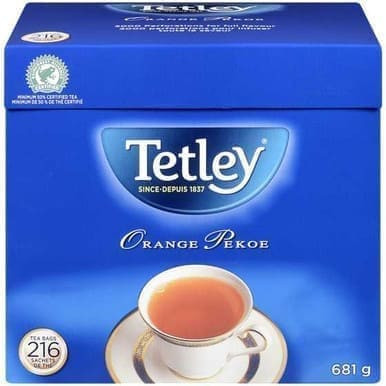
- 2. Make hojicha a permanent menu item. Treat it as genuine menu expansion, not a “matcha shortage emergency measure”. Evening service slot, lower caffeine, distinct flavour, dependable supply. See Tetley Orange Pekoe Black Tea.
- 3. Secure supply with an annual allocation contract. Sign during the July–August post-harvest window, when suppliers can see the coming year’s volume. Annual contracts with direct Japanese exporters or established Canadian importers typically save 20–30% against rolling spot buys and guarantee a minimum allocation even when supply tightens.
- 4. Build iced refreshers on loose-leaf green tea. A concentrate of steeped Japanese sencha or bancha gives iced green tea drinks the “Japanese green tea” positioning without any matcha powder. It is available, affordable and pairs naturally with fruit syrups. See TAZO Earl Grey Tea Bags Bulk.
- 5. Never run out silently. Running low on matcha? Flag “availability limited” on the menu item instead of letting it vanish without warning. An unexpected outage erodes customer habit faster than an honest availability note. Regulars with a daily matcha habit are surprisingly forgiving when you communicate early and offer a compelling alternative.
B2B contract strategy: securing supply for 2026–2027
For operators moving real matcha volume, contract strategy is 2026’s most financially consequential decision. First Agri B2B wholesale pricing data for 2026 shows a clear volume-tier structure: orders of 10–25 kg earn roughly 10–15% off sample-tier pricing, while 100 kg or more reaches distributor-equivalent volume with 15–25% off. In a constrained market, though, volume alone is not enough — allocation priority carries equal weight.
The single most valuable clause in any 2026 matcha wholesale contract is a written allocation priority clause. It defines what happens when a supplier cannot fill every customer order — precisely the scenario that played out in 2024–2025. A standard allocation formula sets each buyer’s share of constrained supply as a percentage of prior-year purchase volume, with a minimum allocation floor of 75–85% of contracted annual volume. Skip this clause and your order may be pushed behind larger buyers when supply runs tight.
10–25 kg: about 10–15% off sample-tier pricing
100 kg+: about 15–25% off (distributor-equivalent)
Annual contract pricing: 20–30% under the rolling spot market
Timing matters: put annual allocation contracts in place during the July–August post-harvest window. That is when Japanese exporters have full visibility into the year’s production volume and can commit to contract quantities with confidence. Signing then typically locks both price and volume for the following 12 months, and a year-ahead allocation contract with a direct Japanese exporter or established Canadian importer can run 20–30% below rolling spot market buys all year. (Source: First Agri B2B, 2026.)
Is a matcha latte price increase justified right now?
For most operators the answer is yes — a modest increase is justified, and the market broadly accepts it. Framing is what matters. A sudden unannounced price jump feels arbitrary to customers with a daily matcha habit. An increase framed around sourcing quality — “our matcha is single-origin ceremonial grade; prices have increased with the global shortage” — is transparent and understood by the matcha-aware customers who tend to order matcha lattes in the first place. Many of these customers already know about the shortage from social media and may be braced for a price adjustment.
Losing matcha altogether — quietly pulled from the menu — erodes customer habit far faster than a CA0.50–CA1.00 adjustment explained clearly. A twice-weekly matcha latte regular who finds the drink gone without notice will take that habit to a competitor. A regular who sees a modest increase plus an honest explanation has a reason to stay.
When does the matcha shortage ease?
Do not expect a quick recovery. A tencha bush needs five or more years from planting to mature, so acreage added in response to 2023–2025 demand spikes will not deliver commercially meaningful volume before 2028 at the earliest. Japan’s structural farm-labour shortage keeps capping expansion too.
Under the most optimistic scenario — a favourable 2026 growing season and steady demand growth — gradual improvement begins in late 2026 or early 2027, with prices likely holding 30–60% above pre-2025 levels through the back half of 2026. A second poor growing season in 2026 (the 2026 harvest is judged from the spring flush) would push the shortage deeper into 2027. Even in the optimistic case, ceremonial-grade pricing is not expected to return to 2023 levels; the market has permanently repriced the scarce end of the spectrum. (Sources: One With Tea, 2026; Riching Matcha, 2026.)
Ordering in Canada
ChickenPieces.com carries tea, drink bases, syrups and café supplies for Canadian operators, shipping Canada-wide from Calgary with no membership required. Browse Tetley Orange Pekoe Black Tea, TAZO Earl Grey Tea Bags Bulk, and Bossen Cherry Bursting Boba Pearls for bases and powders that round out a Japanese-inspired drinks menu. Add syrups & mixes for hojicha latte programs, green tea refreshers or dirty chai alternatives. Coast-to-coast shipping, no membership needed, free shipping on most orders over CA199.
Order these at ChickenPieces.com


Hear it from Canadian operators
"ChickenPieces shipped to our Calgary cafe inside 48 hours — pricing beat our previous supplier on the bulk shortening line. Already reordered."
CP Buying Desk — Alberta · Alberta (Calgary)
"Switched our Mississauga commissary to CP for syrups and cleaners. Spec sheets arrive with the order, no chasing. Solid for GTA foodservice."
Giselle R. — Ontario · Ontario (Toronto)
"Vancouver hotel pantry switched to CP bubble-tea and concession supplies. No membership, transparent pricing, Canada-wide delivery worked for us."
Front-of-house buyer — BC · British Columbia (Vancouver)
Shop these products
Frequently Asked Questions
Each operator question below is answered with cited sources, linking to Health Canada, CFIA, Canada.ca or another authoritative regulator.
Is the 2026 matcha shortage genuine, and will it reach my cafe?
Products referenced:
- culinary grade matcha powder
Source: The 2026 Matcha Shortage: Current Status, Root Causes, and Buyer Guidance
During the shortage, where can cafes source matcha in bulk?
Products referenced:
- bulk matcha powder
- wholesale matcha
With supply tight and prices up, how do I keep matcha on my menu?
Products referenced:
- culinary grade matcha powder
- matcha latte
If matcha runs out or gets too expensive, what can I serve instead?
Products referenced:
- matcha powder
- green tea
- hojicha
What pushed my matcha wholesale price so high in 2026?
Products referenced:
- culinary grade matcha powder
- premium matcha
Source: Matcha Shortage, Hoarding and Over Consumption r/barista
Can a coffee-focused cafe skip matcha altogether?
Products referenced:
- matcha powder
- matcha latte
If matcha prices keep climbing, will customers still pay?
Products referenced:
- matcha latte
- matcha powder
Source: Would you stop drinking matcha if it reached a certain price level? Quora
For a new cafe owner, what matters when sourcing matcha wholesale?
Products referenced:
- bulk matcha powder
- wholesale matcha
Source: What are things I should know when starting a business in matcha tea? Quora
Through 2026, how can a cafe defend its matcha supply and margins?
Products referenced:
- culinary grade matcha powder
- premium matcha
Source: The 2026 Matcha Shortage, Explained, and How Cafés Can Protect Their Margins