
2026 Aug 16th
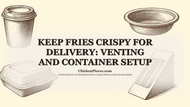
Keep Fries Crispy for Delivery: Venting and Container Setup
Vented containers with lid airflow and bottom channels let steam escape while keeping heat in. Separate fries from other items. Choose coated products and add reheating instructions. This setup preserves texture through standard delivery windows.
Keep Fries Crispy for Delivery: Venting and Container Setup
For Airbnb hosts and facility operators who need fried sides to survive transport without turning limp, here is what packaging science and field testing show.
Key Takeaways
Six practical points to protect fried-food texture from kitchen to customer.
Vent steam, not heat
Small lid openings release humidity without rapid cooling. Raised airflow channels underneath maintain convection that keeps food warm and crisp.
Anti-fog lids stop drips
Condensation that forms on cooler lid surfaces falls back onto food. Anti-fog venting integrated into lids reduces this visible moisture and prevents texture degradation.
Separate during packing
Fries packed beside burgers or sauced items absorb transferred steam and cross-flavours. Use compartment containers to isolate fried sides from other menu items.
Coatings extend hold time
Starch-based outer layers on fries act as thermal seals that lock interior heat and moisture inside the chip, resisting sogginess longer than uncoated cuts.
Grease-resistant lining matters
Oil seeping through cardboard or thin containers weakens structure and creates soggy contact points. Specified grease-resistant materials maintain container integrity.
Add reheating guidance
A brief note on refreshing cooled fries for 10-20 seconds restores crispness without ruining texture. This sets customer expectations and reduces complaints.
Why sealed containers ruin crispness
Understanding moisture dynamics explains why standard clamshells fail fried foods.
Hot fried food releases water vapour immediately after cooking. In a sealed container, this vapour has nowhere to go. It rises, hits cooler lid and wall surfaces, and condenses into droplets. Those droplets fall back onto the food surface. Within 10 to 15 minutes, this cycle penetrates coatings and turns crisp exteriors limp. The food itself creates the humid microenvironment that destroys its own texture.
Temperature differences between hot food and cooler ambient air accelerate this process. The lid is typically the coldest surface, so condensation forms there first. Water vapour also penetrates breading and batter layers, reaching the interface between coating and product. As it cools, the moisture re-liquifies and soaks into the crispy layer. This is why even short holds in sealed containers produce noticeable texture loss.
Delivery windows compound the issue. Third-party transport periods often run 30 to 60 minutes, far exceeding the time sealed containers can maintain acceptable quality. During this extended hold, the humid interior becomes increasingly saturated. By the time the customer opens the package, the condensation cycle has completed multiple times. Packaging selection becomes integral to product quality, not merely a convenience consideration.
How airflow channels maintain crispness
Engineered venting creates controlled escape paths for moisture.
Vented containers use strategically placed openings, typically at lid corners or integrated into closure mechanisms. These openings are sized precisely: small enough to retain heat, large enough to let humidity escape during transport. The result is a gradual pressure equalization that releases steam without significant temperature drop. This balance matters because rapid cooling also degrades texture, just through a different mechanism.
Bottom airflow channels add a second dimension to the design. Raised ridges or patterned bases hold food slightly elevated, creating space underneath for convection cross-flow. This circulating air pulls moisture away from the food surface while maintaining temperature throughout the container. The combination of lid venting and base channels creates an environment where fried foods resist sogginess during extended holding periods.
Anti-fog elements in transparent lids address the visibility problem directly. Standard clear lids fog with condensation, obscuring the product and indicating moisture accumulation. Anti-fog treatments reduce surface tension so water forms a thin sheet rather than discrete droplets. This prevents the large drips that fall back onto food. The customer sees the product clearly, and the food avoids the concentrated moisture deposits that cause localized sogginess.
Matching container type to fried items
Different products need different venting and compartment configurations.
Fried foods, baked items, roasted dishes, and breaded products all benefit from vented packaging, but the specific configuration varies. Fries and similar long cuts need length-appropriate bases that prevent stacking and crushing. Compartment containers keep sauces and wet sides physically separated, preventing condensation transfer and cross-flavour contamination. The lid must seal sufficiently to prevent spills while still permitting venting function.
Material selection affects performance beyond venting. Polypropylene containers tolerate the temperature range of hot fried foods without warping. Grease-resistant linings prevent oil migration through walls, which would otherwise create soggy exterior contact points and weaken structural integrity. Kraft paper alternatives provide breathability and heat insulation for shorter holds, though they lack the rigid venting features of engineered plastic designs.
Size matching matters for heat retention. Overly large containers allow excess air circulation that cools food faster. Undersized containers force stacking, which traps steam between pieces and creates pressure points where condensation collects. The ideal fill leaves modest headspace above the food, allowing the venting system to exchange air without exposing the product directly to ambient conditions.
Building a delivery-ready packing station
Consistent procedures protect the investment in quality containers.
The packing station should organize containers by size and venting type, with visual cues that match common menu configurations. Compartment containers for combo meals, single-compartment for solo sides, sauce cups with separate lids. This reduces decision friction during peak periods when staff might otherwise grab whatever is closest. Labels or colour-coding reinforce the system without requiring constant retraining.
Timing coordination between kitchen and packing prevents premature container sealing. Fries should go into vented containers as close to dispatch as practical, not held closed during the final preparation window. If staging is necessary, leave lids ajar or use temporary covers that allow steam escape. Only seal for transport when the driver is confirmed and the route is active. This minimizes the trapped-humidity period before transit even begins.
Include a brief reheating instruction card when the order contains fried items. Customers receiving cooled fries often assume quality is lost permanently. Informing them that 10 to 20 seconds of microwave refreshment restores crispness without degrading texture changes their perception of the delivery experience. Operators who add this guidance report significant reductions in complaints about quality and texture, independent of any packaging changes.
How fry coatings extend delivery hold time
Specialized exterior layers add thermal and moisture protection.
Coatings made from tapioca starch, rice flour, and potato starch create an outer layer that functions as a thermal seal. This seal locks interior heat inside the fry while simultaneously presenting a moisture-resistant exterior. The result is a product that stays warm and maintains crisp structure longer than uncoated alternatives. For delivery-focused operations, this extends the acceptable hold window substantially.
The coating acts as a protective barrier during both holding and transport. It slows moisture migration from the interior potato to the exterior surface, which is where sogginess becomes perceptible. The insulating layer also reduces rapid heat loss from the core during delivery windows. This dual function means the product arrives closer to service temperature, with the exterior texture intact.
These coatings are specifically formulated for quick-service, takeaway, and delivery applications. They resist the sogginess that develops during standard transport periods while enhancing the crunch perception that customers expect from fried items. The specification change from uncoated to coated product is independent of packaging selection, but the two work together. Coated fries in vented containers represent the most resilient combination for extended delivery windows.
Testing your setup before full rollout
Controlled trials prevent costly inventory commitments to unsuitable systems.
Before committing to bulk container purchases, verify performance under your actual conditions. Prepare orders as you would for real customers, using your standard cooking and packing procedures. Have testers open packages at intervals matching your typical and worst-case delivery times. Score texture on a simple scale, noting where sogginess first appears and whether it is uniform or localized. This identifies whether your venting is sufficient or if additional measures are needed.
Test across menu variations, not just fries in isolation. Combined orders with burgers, sauces, and drinks create different humidity loads and physical packing constraints. The compartment configuration that works for fries alone may fail when adjacent items release additional steam. Document which combinations produce the most problems, and adjust container selection or packing sequence accordingly.
Incorporate customer feedback into ongoing refinement. Even with optimized packaging, some texture degradation is inevitable over extended delivery windows. Monitor whether reheating instructions are being followed and whether customers who use them report improved satisfaction. This feedback loop distinguishes between packaging problems and expectation problems, guiding further investment toward the highest-impact improvements.
Container features for crispy delivery
Compare how each design element contributes to fried-food texture protection.
| Feature | How it works | Best for | Limitation |
|---|---|---|---|
| Corner lid vents | Small openings release humidity without heat loss | Standard delivery windows | Can clog with heavy condensation |
| Raised base channels | Creates airspace underneath for convection flow | Fries and long-cut items | Requires rigid container material |
| Anti-fog clear lids | Prevents droplet formation and visibility loss | Customer-facing presentation | Does not replace venting for steam escape |
| Compartment designs | Physically isolates fried items from moist sides | Combo meals with sauces | Fixed configurations limit menu flexibility |
| Grease-resistant lining | Blocks oil migration through container walls | High-fat fried foods | Adds cost over unlined alternatives |
| Polypropylene construction | Maintains shape across hot-food temperature range | Extended holds and reheating | Heavier than paper alternatives |
| Starch-based coatings | Seals interior moisture, protects exterior crispness | Delivery-optimized fry specs | Requires supplier specification change |
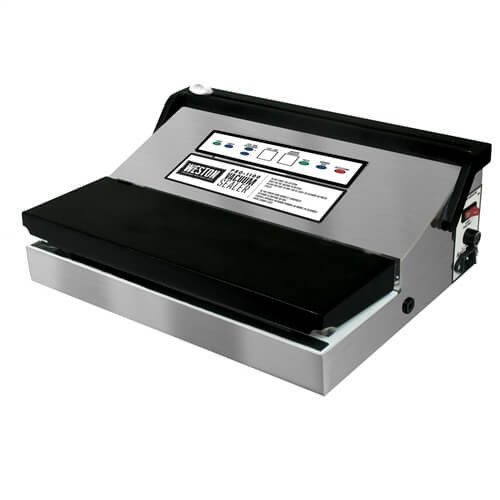
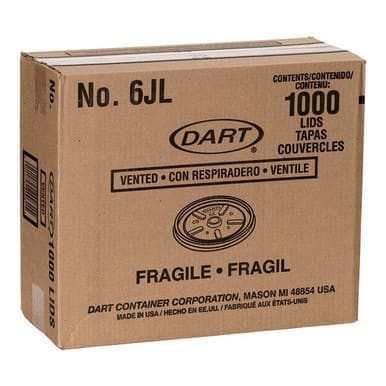
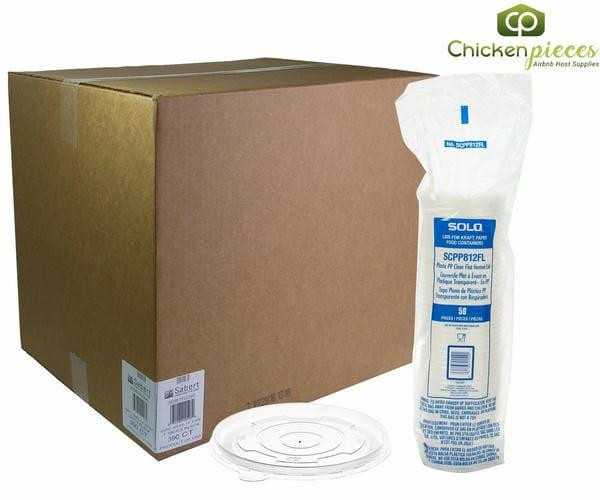
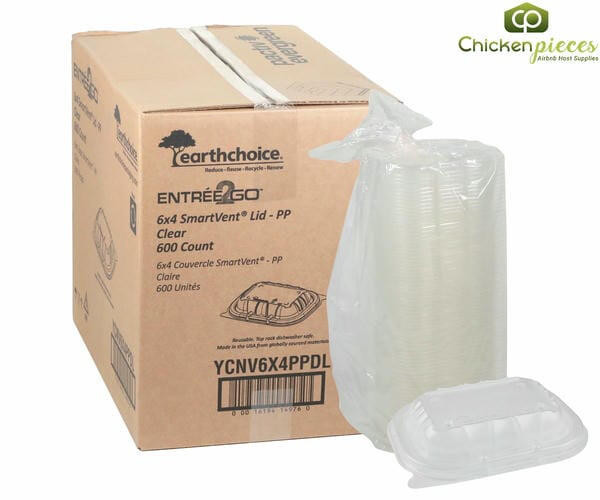
Vented containers and sealing supplies
Browse hinged containers, vented lids, and sealing equipment selected for delivery-focused operations.


What Canadian Airbnb hosts say
Operators across Canada who switched to vented packaging report what changed for their customers.
We switched to the Earth Choice vented lids for our short-term rental breakfast packs. Guests stopped mentioning soggy hash browns in reviews entirely. The compartments keep fruit separate too.
The Dart vented lids fit our existing cups so we did not need to overhaul inventory. Fry texture complaints dropped by half in the first month of use.
We package staff meals for remote industrial sites. The 3-compartment Earth Choice containers survive two-hour transport and the vented lids actually work, not just marketing.
Crispy delivery setup: Frequently Asked Questions
The following operator questions are answered with cited sources. Every FAQ links to Health Canada, CFIA, Canada.ca, or another authoritative regulator.
Why do fries get soggy during delivery?
Products referenced:
- Vented To-Go Containers, Bulk
- Paper Fry Cups, Bulk
Source: How to keep fries from getting soggy during delivery? - r/restaurantowners
What containers keep fries crispy for delivery?
Products referenced:
- Vented Clamshell Containers, Bulk
- Paper Fry Cups, Bulk
- Portion Sauce Cups with Lids, Bulk
Do vented containers actually work, or should I just poke holes in the lid?
Products referenced:
- Vented To-Go Containers, Bulk
- Paperboard Fry Boxes, Bulk
Are foam containers bad for crispy fries?
Products referenced:
- Vented Paperboard Containers, Bulk
- Foam Clamshell Containers, Bulk
How do restaurants keep fried food crispy until it reaches the customer?
Products referenced:
- Vented To-Go Containers, Bulk
- Fry Baskets, Bulk
Source: How do restaurants keep their fried food crispy until it reaches the customer? - Quora
How long do fries actually stay crispy after they leave the fryer?
Products referenced:
- Vented To-Go Containers, Bulk
- Paper Bags, Bulk
Source: The quest for french fries crisp enough to withstand delivery - Marketplace
Is a paper bag better than a closed box for fry delivery?
Products referenced:
- Paper Bags, Bulk
- Paper Fry Cups, Bulk
Source: LPT: If you get french fries to-go, leave the paper bag open - r/LifeProTips
Should fries be served in paper cups or closed cartons for takeout?
Products referenced:
- Paper Fry Cups, Bulk
- Vented Paperboard Fry Boxes, Bulk
Source: You Know What's Bullshit? French fry containers - r/rant
Where can I buy vented fry containers and takeout packaging in bulk in Canada?
Products referenced:
- Vented To-Go Containers, Case Pack
- Paper Fry Cups, Case Pack
- Paper Bags, Case Pack
How do I keep takeout crispy without sealing all my containers shut?
Products referenced:
- Vented To-Go Containers, Bulk
- Portion Sauce Cups with Lids, Bulk
Source: How to keep take out from getting soggy? - r/restaurant
Related guides from ChickenPieces
Why operators buy packaging from ChickenPieces
Calgary-based inventory, straightforward specifications, and compliance-ready documentation.
Local stock holding
We warehouse vented containers and sealing supplies in Calgary for consistent availability without cross-border lead time uncertainty.
Volume flexibility
Order single cases for trial or pallet quantities for rollout. No forced tier commitments that lock you into untested specifications.
Technical support
Our team confirms lid-base compatibility and venting specifications before you order, preventing mismatched inventory.
Health Canada aligned
All food-contact materials meet Health Canada and CFIA compliance standards with documentation available for your records.
Sources & further reading
Request a packaging sample pack
Compare vented container sizes and lid fits against your current setup before committing. Send your product details and we will recommend configurations matched to your menu.
Request a QuoteReferences: Health Canada - Food Chemical Contaminants CFIA - Food Safety for Industry.