
 US Dollar (USD)


2026 Apr 4th
How to Set Up a Self-Serve Ice Cream Topping Bar in Your
How to Set Up a Self-Serve Ice Cream Topping Bar in Your Canadian Restaurant (2026)
Written by James — ChickenPieces.com, supplying Alberta food service professionals since 2017.
A self-serve ice cream topping bar in a Canadian restaurant works best with 8–12 toppings in covered dispensers or containers — a mix of bulk candy toppings (TOPPERS Snickers, M&M's, Nerds), wet sauces (Lynch or McLean chocolate, caramel, butterscotch in 4L pump dispensers), and dry toppings (sprinkles, cookie crumble, Oreo pieces) — arranged at counter height with portion scoops, sneeze guards, and CFIA-compliant labels for allergens. With the right setup, you'll spend less labour time on dessert service and watch dessert attachment rates climb.

If you've watched a dessert station sit dormant while servers sprint through dinner service, you already know the problem: ice cream upsells die when they require extra steps from already-slammed BOH staff. A self-serve topping bar flips the script. Guests build their own sundaes, labour drops off the dessert line entirely, and the visual theatre of the bar does the selling for you. This guide covers exactly how to set one up in a Canadian food service context — from layout and topping selection to CFIA labelling, storage, and the specific products that hold up in high-volume environments.
| Topping Category | Best Products (In Stock) | Format / Size | Best For |
|---|---|---|---|
| Wet Sauces | Lynch Chocolate Fudge, Caramel, Butterscotch, Strawberry | 4 L jug (pump-ready) | Restaurants, hotel banquets, buffets |
| Candy Toppings | TOPPERS Snickers 10lb, Reese's Pieces 10lb, Nerds 10lb, Whoppers 10lb | 5 lb / 10 lb bags | Ice cream shops, cafeterias, Airbnb hosts |
| Cookie Crumbles | Dutch Treat Chocolate Cookie, Nabisco Oreo 25 lb | 4.53 kg / 25 lb | LTC/senior care, schools, catering |
| Sprinkles | Bakery Essentials Rainbow 3kg, Berthelet Rainbow 2.75kg, Dutch Treat Mint Sprinkles 4.5kg | 2.75–4.5 kg canisters | Kids' events, Airbnb hosts, campgrounds |
| Topping Dispensers | Cal-Mil Four Drawer Dispenser, Cal-Mil Stackable Holster | 4-drawer unit / modular | Food service, self-serve stations |
Why Are Self-Serve Topping Bars Profitable for Canadian Restaurants?
The maths here is simple, even if your dessert program hasn't been. Every ice cream scoop you sell without any topping upsell is leaving revenue in the bowl. A topping bar converts passive dessert orders into active customisation moments — and the data from both independent operators and QSR chains in Canada consistently shows that when guests build their own dessert, average dessert spend increases meaningfully.
The operational angle is just as compelling. Traditional plated dessert service ties up a cook or server for 3–4 minutes per table. A self-serve station handles dozens of guests simultaneously, with zero labour touch after setup. For restaurants running lean crews — which is basically every restaurant in Canada right now — that labour reallocation matters.
There's also a perception play. A well-stocked topping bar signals generosity and abundance. Guests photograph it. They post it. You don't pay for that marketing.
What Equipment Do You Need to Set Up an Ice Cream Topping Bar?
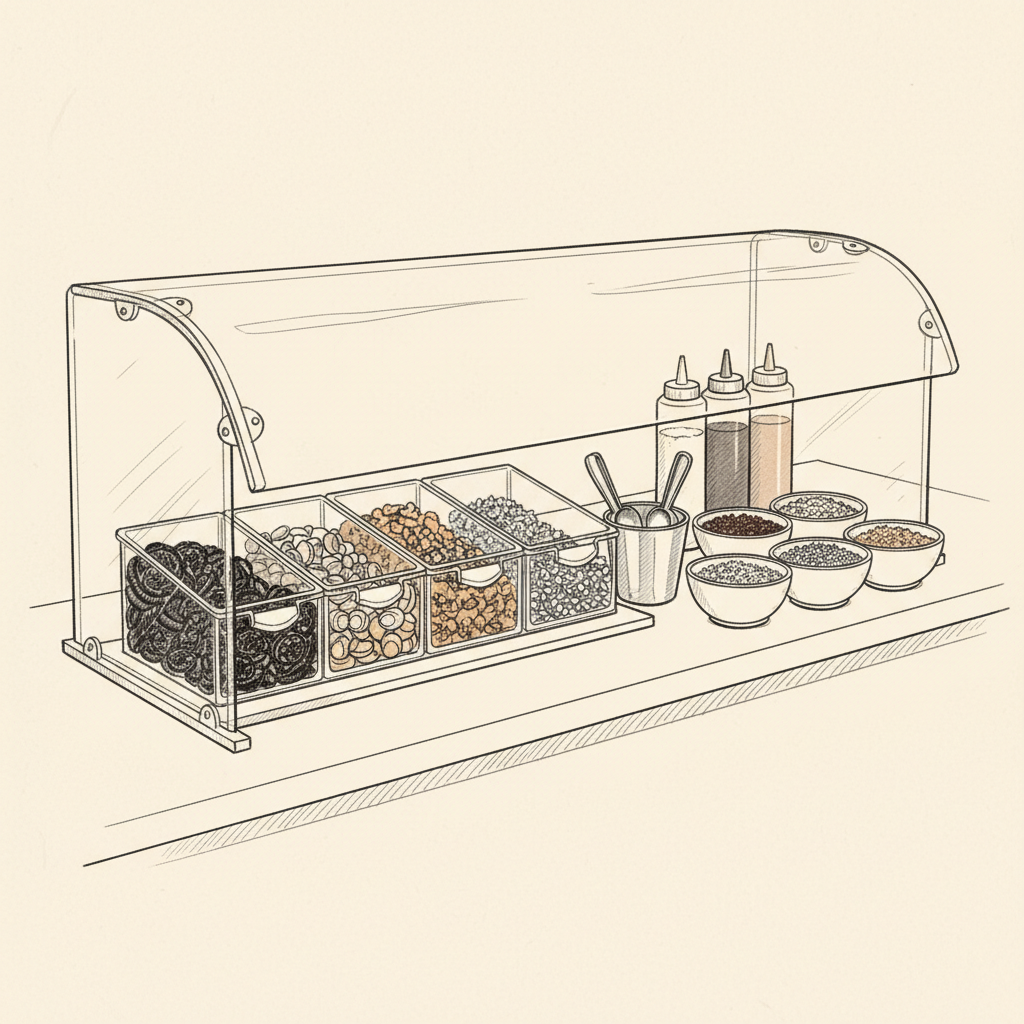
Start with the physical infrastructure before you think about what goes in it. The equipment choices you make at setup determine how much time your staff spends maintaining the station every service.
Dry topping dispensers: The Cal-Mil Four Drawer Topping Dispenser is purpose-built for this. Four separate drawers, portion-controlled releases, clear sides so guests (and staff) can see fill levels at a glance. The Cal-Mil Stackable Holster Dispenser gives you a modular alternative if you want to expand the station over time without committing to a single unit footprint. Both are in stock at ChickenPieces.com and ship Canada-wide from Calgary.
Wet sauce dispensers: Lynch and McLean sauces come in 4L jugs. For self-serve stations, you want a pump system — either a dedicated pump-top fitted directly to the jug, or a squeeze bottle setup if volume is lower. Hotels running breakfast buffets often prefer the pump-to-bowl pour-and-reset approach: dispenser sits on a heated surface, guests pump their own sauce. Restaurants with higher throughput should stick to pump dispensers with drip trays underneath.
Sneeze guards: Non-negotiable in any CFIA-compliant food service environment. Exposed toppings without guards will fail a health inspection. Standard sneeze guard units are available from restaurant supply companies; your local health authority will have minimum height specifications for counter-top units.
Portion scoops and spoons: Provide a dedicated scoop for every dry topping bin. Cross-contamination between toppings is an allergen risk. Label each scoop to its bin.
Labels: Every topping needs a label. Not just the name — the full allergen declaration. TOPPERS Snickers contains peanuts, tree nuts, milk, wheat. Reese's Pieces contains peanuts. Oreo pieces contain wheat and milk. If you're running a mixed environment where nut-allergic guests might come through, that labelling isn't optional — it's liability protection.
How Do You Choose Which Toppings to Include in Your Station?
You don't need 30 toppings. You need the right 10–12. Here's how to think about the selection:
The wet layer: Always include a chocolate sauce, a caramel, and at least one fruit option. Lynch stocks all major flavours — Chocolate Fudge, Chocolate, Caramel, Butterscotch, and Strawberry — all in 4L jugs. McLean runs the same core flavours: Chocolate, Caramel, and Butterscotch. Pick one brand and stay consistent; don't mix Lynch and McLean in the same station because the viscosities differ and guests will notice inconsistent pours.
The crunch layer: This is where TOPPERS products earn their keep. The 10 lb bag of TOPPERS Snickers, Reese's Pieces, Nerds, or Whoppers fills a Cal-Mil dispenser drawer completely and provides approximately 150–200 individual portions depending on how guests scoop. The 5 lb versions — Snickers 5lb, Reese's Pieces 5lb, Nerds 5lb, M&M's 5lb — are practical for lower-volume stations or Airbnb hosts running occasional events.
The cookie/crumble layer: Dutch Treat Chocolate Cookie Topping and Vanilla Cookie Base Topping (4.53 kg each) or the Nabisco Oreo Small Cookie Pieces in a 25 lb case for high-volume operations. The 25 lb Oreo case is the workhorse of hotel breakfast buffets — it refills the station roughly twice a week even at busy properties.
The colour/fun layer: Bakery Essentials Rainbow Sprinkles (3 kg) or Berthelet Rainbow Sprinkles (2.75 kg) for kids' menus, school cafeterias, and family dining. Dutch Treat Chocolate Mint Sprinkles for something a bit more grown-up. Halloween Autumn Candy Dessert Sprinkles (10 lb) for seasonal rotations during fall events.
The premium layer: REESE'S PIECES Chopped Ice Cream Topping at 4.54 kg goes beyond the TOPPERS version — it's a denser, more intensely peanut-buttery option for stations targeting dessert-focused concepts.
? Jamie's Calgary Tip
During Calgary Stampede (July), Western Canada food service operators see a significant spike in dessert volume — particularly at family-style restaurants and concession-adjacent operations. Operators who set up self-serve topping bars ahead of Stampede week report that the stations handle the dessert rush without adding staff. Stock up on TOPPERS candy toppings and Lynch Caramel at least two weeks ahead — the 10 lb TOPPERS bags and 4L Lynch jugs are the fastest movers. Order early; summer ice cream topping demand across Alberta compresses supply windows.
How Much Product Do You Need to Stock for a Restaurant Topping Bar?
This depends on your daily cover count and how prominently the station is positioned, but here's a practical baseline for a restaurant doing 100–150 covers per dinner service:
Wet sauces: A single 4L Lynch jug at full pump yields approximately 100–120 standard portions (30–40 ml each). For a busy dinner service, plan on 1–1.5 jugs per sauce per shift. Weekly order: 8–10 jugs across your sauce selection.
Candy toppings: A TOPPERS 10 lb bag fills a Cal-Mil dispenser drawer fully and yields approximately 150–180 portions at a standard 25–30g scoop. For a moderate-volume topping bar, a 10 lb bag of each candy topping lasts roughly 1–2 weeks. Weekly order for active stations: 2–3 bags per topping across your full selection.
Sprinkles: The Bakery Essentials 3 kg canister yields 600-plus portions at 5g per serving. Monthly refill is realistic for most stations.
Cookie crumbles: The Dutch Treat 4.53 kg box yields approximately 180 generous dessert portions. The Nabisco Oreo 25 lb case is the bulk option for hotel breakfast buffets or high-frequency dessert programs — the per-serving cost drops dramatically compared to retail Oreo bags.

What Are the CFIA and Health Code Requirements for Self-Serve Stations in Canada?
This is the friction point that stops a lot of operators from setting up topping bars. Here's the honest picture:
Allergen labelling: Under Canada's Food and Drug Regulations (enhanced allergen labelling rules, fully in effect January 1, 2026), all Priority Food Allergens must be declared. For a self-serve station, every topping bin needs a label identifying any of the 14 priority allergens present: peanuts, tree nuts, wheat, milk, eggs, sesame, mustard, fish, crustaceans, shellfish, soy, sulphites. Use adhesive labels directly on each dispenser or laminated tent cards cleaned at every service reset.
Temperature zones: Wet sauces like Lynch and McLean are shelf-stable in sealed jugs; once opened in dispensers, monitor temperature as your health authority requires. Many Alberta health inspectors treat pump dispensers as open containers requiring temperature monitoring. Ask your local Alberta Health Services environmental health officer for municipality-specific language.
Cross-contamination controls: Dedicated utensils per bin, sneeze guards above 45 degrees, and clear guest flow design. If you have a nut-free menu offering, your nut-containing topping bins need physical separation — not just labelling separation.
Date labelling on opened product: Once a bulk bag of TOPPERS candy toppings is open and loaded into dispensers, it's a food service product. Label with the opened date and the manufacturer's best-before date. Keep original packaging accessible for inspection.
How Do Airbnb Hosts and Event Operators Set Up a Topping Bar at Home?
You don't need a commercial kitchen to run a great topping bar. Airbnb hosts, vacation rental operators, event hosts, and home bulk buyers source the same products restaurants use — the difference is scale.
The TOPPERS 5 lb bags are the sweet spot. A 5 lb bag of TOPPERS Snickers, M&M's, Reese's Pieces, or Nerds handles a family reunion, a kids' birthday party, or a summer rental turnover event with room to spare. Store remainder in the original sealed bag in a dry, cool spot and it stays fresh for months.
For the wet sauce, Lynch 4L jugs serve exactly the same product that restaurants use — because they are the restaurant product. For Airbnb hosts running summer bookings, having a full jug on hand means you're never scrambling for sauce during a busy weekend turnover.
What Are the Most Common Mistakes When Setting Up a Topping Bar?
Across r/KitchenConfidential, r/restaurant, and r/SmallBusinessCanada, the same operational problems surface from operators who've tried topping bars and abandoned them:
Too many toppings, not enough structure. Operators load 20 options and create a chaotic station guests can't navigate. The sweet spot is 10–12 toppings in clear categories: wet sauces, candy toppings, cookie crumbles, sprinkles. A guest should make their choices in under 60 seconds.
No restocking protocol. A half-empty topping bar looks worse than no topping bar. Assign a specific staff member to check and restock every 30 minutes during service. If it's not assigned, it doesn't happen.
Wrong product sizes for volume. Running a 5 lb bag on a high-volume station means constant restock interruptions. Scale up to the 10 lb TOPPERS bags for stations doing 100-plus desserts per service. Conversely, buying the 25 lb Nabisco Oreo case for a low-volume station means product sitting open for weeks.
Ignoring cross-contamination flow. Use colour-coded scoops or scoops with different handle lengths so guests intuitively use the right tool. A small design decision with major allergen management implications.
No waste tracking. Keep a simple tally sheet at the station — which toppings got refilled, how many times, during which service. After two weeks you'll know exactly what to order and in what quantities.
In stock at ChickenPieces.com: Lynch and McLean 4L sauce jugs, the full TOPPERS candy topping line in both 5 lb and 10 lb, Dutch Treat cookie crumbles, Bakery Essentials and Berthelet sprinkles, Nabisco Oreo 25 lb, Cal-Mil topping dispensers, and specialty seasonal sprinkles. B2B accounts get case-quantity access with consistent supply — which matters when you're running a station that empties fast.
How Do Long-Term Care Homes and Schools Set Up Dessert Topping Stations Safely?
LTC homes, retirement residences, school cafeterias, and hospital food service operate under stricter procurement and allergen protocols than independent restaurants.
For these environments, the topping selection skews toward lower-allergen options: Bakery Essentials Rainbow Sprinkles (verify each batch's allergen declaration), Dutch Treat Vanilla Cookie Base Topping, and wet sauces used in controlled portions. The Cal-Mil drawer dispensers work well in supervised self-serve setups common in retirement residence dining rooms.
A chocolate topping bar with no nut-containing options is achievable with Lynch Chocolate Fudge (verify current allergen declaration), McLean Butterscotch, and Berthelet Rainbow Sprinkles, giving residents choice without peanut or tree nut exposure.
How Do You Calculate the Cost Per Serving for a Topping Bar?
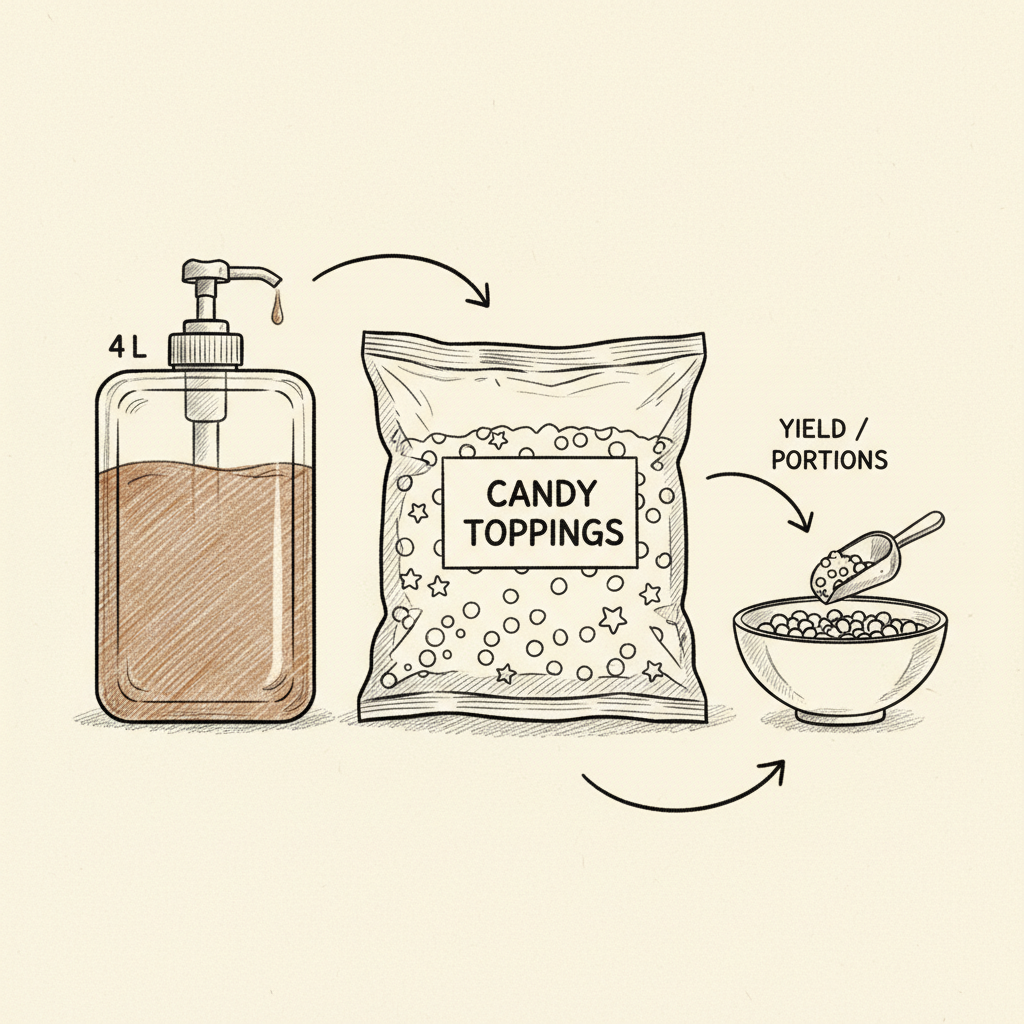
Wet sauces (Lynch 4L jug): A 4L jug yields approximately 100–120 standard 30–40 ml dessert portions. At that yield, the per-serving sauce cost is a fraction of the guest-facing dessert price. Every pump is profit-positive.
TOPPERS candy toppings (10 lb bag): A 10 lb bag contains approximately 4,535g of product. At a standard 25g portion scoop, that's approximately 181 portions per bag. The per-serving cost differential between bulk TOPPERS and retail candy is dramatic — you're paying a fraction of retail per portion.
Sprinkles (Bakery Essentials 3 kg): At 5g per standard sprinkle portion, a 3 kg canister yields 600 portions. The cost per sprinkle portion is negligible — but it's the visual pop that justifies the sundae price to the guest.
Cookie crumbles (Dutch Treat 4.53 kg): A 4.53 kg box yields approximately 180 generous 25g portions. The bulk format costs a fraction of what you'd spend sourcing individual cookies and crushing them in-house — and the consistent grind size is better for topping bar presentation.
Combined: the ingredient cost per dessert stays low, the guest-perceived value is high, and the attachment rate on upsell toppings adds margin that a plain scoop-and-go operation can't access.
Frequently Asked Questions
How many toppings should a restaurant topping bar have?
Do I need a sneeze guard for a self-serve topping bar in Canada?
What allergen labelling is required on a self-serve topping station in Canada?
How long do bulk ice cream toppings last once opened?
What is the best topping dispenser for a restaurant self-serve station?
Can an Airbnb host set up a topping bar for guests?
Which Lynch ice cream sauce flavour sells best on a topping bar?
How do you prevent a topping bar from becoming a cross-contamination risk?
What toppings work best for a school or kids' cafeteria ice cream station?
How do I calculate how much topping to order for a new station?