
2026 Jul 7th
Buying High-Protein Shakes in Canada: A GLP-1 Muscle Loss Guide
Clinical trials of GLP-1 therapies show that lean tissue accounts for approximately 26–40% of total weight shed. You don't have to accept muscle loss as a given. It isn't inevitable. Studies recommend consuming around 1.2–1.6 g of protein per kg of body weight each day, distributed over multiple meals, alongside resistance exercise. When your appetite is suppressed, a high-protein shake packs that protein into a compact, manageable serving. Always verify your personal target with a dietitian.
Buying High-Protein Shakes in Canada: A GLP-1 Muscle Loss Guide
Taking Ozempic, Wegovy, Mounjaro, or a similar GLP-1 and concerned about shrinking muscle mass? We break down what the science says about protein needs, plus the bulk shakes and powders Canadians rely on, complete with up-to-date pricing.
Why GLP-1 Weight Loss Can Cost You Muscle
GLP-1 receptor agonists such as semaglutide, along with dual GLP-1/GIP options like tirzepatide, primarily curb appetite, leading people to eat far less and drop weight quickly. The downside: rapid weight reduction from any source tends to strip away some muscle along with fat. Analyses of published GLP-1 trials have found that lean soft tissue represents approximately 26–40% of the total weight lost.
Muscle underpins strength, balance, blood-sugar regulation, and lasting independence. The good news: that loss is not unavoidable. Two evidence-backed strategies stand out: consuming sufficient protein and giving your muscles a reason to stick around through resistance training. This guide lays out the numbers and the products. From there, you and your care team make the call.
What to Know Before You Buy
Protein Is the Priority
Published research and clinical guidelines typically recommend around 1.2–1.6 g of protein per kg of body weight daily to help maintain lean mass during weight loss, distributed across meals rather than crammed into a single one.
Shakes Solve the Appetite Problem
By design, GLP-1 medications dampen appetite, which is precisely why reaching a protein goal gets tough. A shake or instant mix packs a substantial protein dose into a compact, easy-to-finish serving.
Whey or Plant Both Work
Dairy-based whey blends absorb efficiently. Pea and soy proteins, plus mixed plant blends, are ideal for anyone steering clear of dairy. What matters most is hitting your daily total consistently. Pick what you tolerate and like.
Protein Plus Resistance Training
The best outcomes come from pairing higher protein intake with regular resistance exercise, not from diet alone. Protein provides the raw materials. And training tells your body to hold on to the muscle.
How to Choose a Protein for a GLP-1
Before hitting add to cart, work through these five questions. They'll keep you from overspending and help you actually meet your target.
- 1 What's your daily protein target? Calculate it with a dietitian using the 1.2–1.6 g/kg research range. That number determines how much powder you'll consume.
- 2 Dairy or plant-based? Whey offers a complete amino-acid profile and solid absorption. If dairy is off the table or you're lactose intolerant, pea, soy or a blended plant protein is the way to go.
- 3 Flavoured or unflavoured? Unflavoured blends into soups, oatmeal and coffee. Flavoured options are more convenient as a standalone shake when sitting down for a meal feels like a chore.
- 4 How fast will you use it? A single-person household might do well with a 2 kg bag. A care facility or large family will likely get more value from a bulk tub. Verify the best-before date on the packaging.
- 5 Any medical constraints? Kidney disease and certain other conditions alter protein requirements. Run your plan past a physician or dietitian before settling into a routine.
Whey vs Plant vs Instant Mix
Three formats cover most GLP-1 routines. Each one fills a different niche.
Whey & Dairy Blends
Best for: anyone who handles dairy well and wants a complete, efficiently absorbed protein.
Whey concentrate has long been a go-to protein after weight loss. It delivers a full amino-acid profile and is easy to use in shakes, smoothies or baking. Unflavoured versions are the most flexible since they vanish into hot or cold dishes without altering taste.
Pea, Soy & Blended Plant Protein
Best for: vegans and the lactose intolerant, or anyone who finds plant protein gentler on digestion.
Pea and soy isolates are rich in branched-chain amino acids. Blends (pea + rice + hemp) fill in the remaining amino-acid gaps. Flavoured plant options work nicely as a ready-to-drink shake when building one from scratch isn't appealing.
Instant / Unflavoured Fortifiers
Best for: anyone with low appetite, including seniors in care environments where protein needs to be hidden in everyday food.
An instant, unflavoured protein stirs into soup, mashed potatoes, hot chocolate, or a smoothie without shifting flavour or texture. A sensible way to bolster meals when a full shake is more than you can manage. And check the label for grams of protein per scoop.
Illustrative Daily Protein Targets
These values are straightforward multiplications of the 1.2–1.6 g/kg research range against body weight. Think of them as rough estimates, not a prescription. And your actual number should be confirmed with a dietitian or physician.
| Body Weight | At 1.2 g/kg | At 1.4 g/kg | At 1.6 g/kg |
|---|---|---|---|
| 60 kg (132 lb) | ~72 g | ~84 g | ~96 g |
| 75 kg (165 lb) | ~90 g | ~105 g | ~120 g |
| 90 kg (198 lb) | ~108 g | ~126 g | ~144 g |
Illustrative only. Protein ranges are drawn from published GLP-1 and older-adult nutrition research. Individual needs vary and should be set with a registered dietitian or physician, especially for anyone with kidney disease.
High-Protein Powders & Shakes at ChickenPieces.com
Real-time Canadian inventory and pricing, dispatched from our Calgary warehouse. No minimum order. Prices are in CAD as of July 7, 2026. Verify the latest on each product page.


GLP-1 Protein Questions, Answered
Here are common questions from people working to manage protein while on a GLP-1. General information only. Not a replacement for your clinician's guidance.
Does Ozempic or Wegovy cause muscle loss?
Weight loss driven by GLP-1 medications can involve some lean tissue, not exclusively fat. Published trials indicate that roughly 26–40% of total weight lost shows up as lean soft tissue. Muscle loss isn't inevitable. Adequate protein combined with resistance training can help safeguard it. Talk through your situation with your prescriber.
How much protein should I aim for on a GLP-1?
Research and clinical advisories generally point to roughly 1.2–1.6 g of protein per kg of body weight per day to preserve lean mass during weight loss, spread across meals. It's a range. Your individual target hinges on your weight and kidney function. Medical history matters too, so confirm it with a doctor or registered dietitian.
Why are protein shakes useful when I'm barely hungry?
GLP-1 medications suppress appetite, which makes getting enough protein from whole foods a real challenge. A high-protein shake or instant mix condenses a significant protein dose into a small, tolerable volume. Often the easiest path to your target when a full meal is more than you can face.
Is whey or plant protein better on a GLP-1?
Both are viable. Whey and blended dairy proteins absorb well and are complete. Pea and soy proteins, along with blended plant options, are solid picks for anyone staying away from dairy. The key factor is consistently hitting your daily protein total. Go with whichever you tolerate and enjoy, and consult a dietitian if you're uncertain.
Do I still need exercise if I hit my protein target?
Yes. Current evidence indicates the strongest muscle protection comes from pairing higher protein with regular exercise, especially resistance training, rather than relying on diet alone. Protein supplies the raw materials. Resistance training signals your body to retain the muscle. Begin any exercise program with guidance suited to your fitness and health.
Can too much protein be a problem?
For most healthy adults, the ranges discussed here are considered reasonable. However, individuals with kidney disease or certain other conditions may need to restrict protein. Since personal circumstances vary, set your protein target with a physician or registered dietitian instead of assuming that more is always better.
What about fibre and hydration?
GLP-1 therapy and lower food intake can trigger digestive issues like constipation. Pairing your protein with enough fibre and fluids can ease this. Many people incorporate fibre-rich foods or a fibre supplement alongside shakes. Check with your care team about what's right for you.
How many grams of protein are in a typical shake?
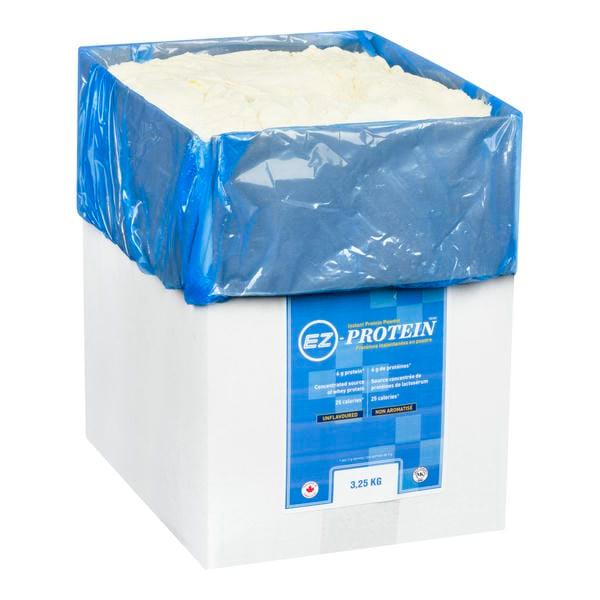
It depends on the product and scoop size. For reference, among the products in this guide, the Vega vanilla powder lists about 21 g of protein per scoop, while an instant fortifier like Berthelet EZ-Protein lists about 6 g per 7 g scoop for stirring into food. Always check the label for grams per serving so you can map out your daily target.
What's the difference between an isolate and a concentrate?
An isolate undergoes additional processing to strip out most fat and carbs. In the case of whey, lactose goes too, yielding a higher protein percentage per gram. A concentrate keeps a bit more of the original food. Both supply protein. Isolates can be a smart choice for lactose sensitivity or when you want maximum protein per scoop. Compare the nutrition panels to decide.
Are these proteins suitable for lactose intolerance or a vegan diet?
Plant-based options such as pea and soy proteins, along with blended plant powders, are dairy-free and work for vegan and lactose-intolerant diets. Whey is derived from dairy and isn't appropriate for those avoiding it. Always review the ingredient list and allergen statement on the specific product, and select what aligns with your dietary requirements.
Are these products regulated in Canada?
In Canada, foods and supplements fall under Health Canada regulation, and Dietitians of Canada (UnlockFood.ca) is a trustworthy source of consumer nutrition information. This article is general information only. For personalized advice, speak with your physician or a registered dietitian.
Can I get volume or wholesale pricing on bulk protein?
Yes. ChickenPieces.com ships bulk protein across Canada from Calgary with no minimum order, and larger volumes may qualify for volume pricing. Use the Request Volume Pricing link to inquire about your quantity, or explore the Medical Food & Drinks range to compare current options.
Why Buy from ChickenPieces?
Calgary Warehouse
Genuine Canadian inventory. Stored and dispatched from Calgary. Not drop-shipped from the US.
No Minimum Order
Grab a single bag or a full pallet. No minimums, no membership fees.
Ships Canada-Wide
Processing takes 2–3 business days. We deliver to every province and territory.
21,000+ SKUs
Protein, medical nutrition, grocery, and home-care. One order, one invoice.
Health Canada Registered
We're a Canadian supplier meeting Canadian standards. Real human support.
Secure Checkout
SSL-encrypted payments. Volume pricing available for qualified accounts.
Stocking Protein for a GLP-1 Routine?
Browse whey and plant-based protein in bulk, shipped Canada-wide from Calgary with no minimum order. Reach out about volume pricing for households, clinics and care homes.
Frequently Asked Questions
The following operator questions are answered with cited sources. Every FAQ links to Health Canada, CFIA, Canada.ca, or another authoritative regulator.
Does Ozempic or Mounjaro cause muscle loss, and how much muscle do people typically lose?
How much protein should I eat daily on GLP-1 medications to preserve muscle mass?
What are the best protein shakes for people on Ozempic or Mounjaro who can't eat enough?
Source: Best Protein Powder While On Mounjaro — Countess of Shopping
Is protein alone enough to prevent muscle loss on GLP-1 medications, or do I need resistance training too?
Source: How to avoid muscle loss on a GLP-1 — Radical Health
Are there Canadian-specific protein shake brands recommended for GLP-1 users?
Source: Fairlife Protein Milkshakes for Mounjaro — Countess of Shopping
What is the GLP-1 'muscle loss trap' and why is it dangerous?
Source: On Mounjaro or Ozempic? The Muscle-Loss Trap — Pete Gawtry
What does the latest research say about GLP-1 medications and long-term muscle health?
Source: The GLP-1 Aftermath: What the Science Says About Muscle Loss — Harvard Science Review
Are there Health Canada guidelines for protein supplements sold to GLP-1 medication users?
Source: Composition and Labelling of Meal Replacements — Canada.ca