

2026 Aug 15th
Commercial Baking Mixes That Scale Without Guesswork
Commercial baking mixes combine pre-measured flour, leavening and salt so your kitchen staff get consistent texture without weighing ingredients per batch. The right mix eliminates the substitution errors and measurement drift that ruin cakes and pancakes at volume.
Commercial Baking Mixes That Scale Without Guesswork
Airbnb hosts, property managers and facility operators across Western Canada need batters that perform the same on batch one and batch fifty.
Key Takeaways
Six practical points to guide your mix selection and kitchen workflow.
Leavening Already Balanced
Baking powder and soda are pre-calibrated in quality mixes. Your staff skip the chemistry guesswork that causes flat or sunken results.
Weigh, Don't Scoop
Volume measuring with cups drifts fast at scale. Commercial mixes list metric weights so one person can prep while another runs the line.
Gluten-Free Without Cross-Contamination
Dedicated gluten-free bulk bags let you serve celiac guests without running a separate flour silo or risking substitution errors.
Buttermilk Built In
Dry buttermilk powder in the mix means no spoiling liquid cartons. Add water, milk or a quick vinegar curdle depending on your pantry state.
Bubble Timing Tells You When
Properly leavened pancake batter forms surface bubbles at roughly ninety seconds. Your cook flips on visual cue, not guesswork, across every griddle.
Fruit Integration Simple
Stable batters accept fresh or frozen add-ins without collapsing. Fold berries in at the end to keep gluten development under control.
Why Home Recipes Fail at Scale
Small-batch precision disappears when one person quadruples a recipe from memory.
Facility kitchens and short-term rental properties run on speed, not pastry-chef patience. When your overnight cleaner becomes your breakfast prep cook, they do not have time to spoon-level flour or check if baking powder expired three months ago. Commercial mixes exist because the failure modes at volume are predictable and expensive.
The density problem starts with flour itself. All-purpose flour contains gluten proteins that activate with agitation and liquid contact. Over-mix a single birthday cake and it toughens. Over-mix twelve litres of muffin batter with a drill-mounted whisk and you have rubbery muffins for forty guests. Pre-blended mixes distribute fat and leavening evenly, so the window for error widens.
Substitution errors compound the damage. A cook swaps in whole wheat for all-purpose without adjusting liquid, or uses baking soda when the recipe needed powder. Each substitution changes hydration, acidity and rise time. Commercial mixes lock the formula. Your staff add wet ingredients, mix to specified time, and portion. The result is the same on Tuesday as Saturday.
How Mixes Control Rise and Texture
Bubbles make pancakes airy and cakes tender; leavening source matters.
Single-acting leavening begins reacting the moment it contacts liquid. Double-acting leavening waits for heat as well. The best commercial pancake mixes include both types so your batter holds bubbles while waiting for griddle space, then springs fully once poured. This matters when your cook is running six orders across two surfaces.
The acid source completes the reaction. Dry buttermilk powder provides consistent acidity without the spoilage risk of liquid cultured buttermilk. In a pinch, milk with a splash of vinegar curdles into a usable substitute, but the proportion must match what the formulator expected. Pre-balanced mixes remove that variable.
Cake and muffin mixes follow the same principle at different ratios. Cakes need finer, more uniform bubbles for even crumb. Muffins tolerate some irregularity. Pancakes want maximum surface bubble formation for the flip cue. A mix designed for its application bakes true to type rather than approximating across categories.
Running Celiac-Safe Without a Separate Kitchen
Cross-contamination ruins gluten-free claims faster than wrong flour.
The Canadian Celiac Association estimates roughly one in 133 Canadians has celiac disease, with higher undiagnosed rates. For property managers and facility operators, offering verified gluten-free breakfast options is a booking differentiator. Doing it wrong is a liability exposure. A shared scoop dipped in wheat flour then a gluten-free bin contaminates the whole batch.
Dedicated gluten-free pancake mixes eliminate the sourcing ambiguity. The supply chain is controlled from field to bag. Your kitchen still needs clean utensils and surfaces, but the mix itself is not the failure point. Bulk twenty-five kilogram bags let you commit to the option without ordering retail-sized packages weekly.
Texture historically plagued gluten-free batters. Rice and starch blends without protein structure produced gummy interiors. Modern formulations balance multiple flours and add binding ingredients that mimic gluten's structure. The result pancakes and cakes closer to wheat-based expectations, which means fewer guest complaints and less waste.
Matching Bag Size to Your Operation
Case counts and unit weights should fit your storage, not fight it.
Small Airbnb operations with two to four units do not need pallet quantities. Six-case configurations of five-pound bags keep product fresh, reduce lifting strain, and fit standard kitchen shelving. The trade-off is unit cost versus spoilage risk. Opened baking mix absorbs moisture and odors. Unused portions past date get discarded.
Mid-size property managers running ten to twenty units with shared central kitchens benefit from twenty-five kilogram bulk bags. One bag covers multiple properties per week. The packaging is typically multi-ply paper with moisture barrier, designed for commercial storage not home pantries. Decant into sealed bins for daily use.
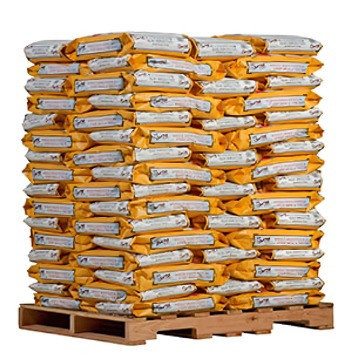
Large facility operators and institutional accounts move to palletized sixty-bay configurations. The logistics simplify receiving and reduce per-kilogram handling labor. Storage requirements scale accordingly: dry, off-floor, away from aromatic chemicals. Rotation discipline matters more at volume. First-in-first-out prevents stale stock at the bag bottom.
Training Staff for Consistent Output
Mixes reduce skill dependence but do not eliminate technique.
Even with pre-measured dry ingredients, your staff control final texture through liquid addition, mixing duration, and cooking surface management. Too much liquid thins batter and spreads pancakes wide and flat. Too little leaves dry pockets in muffins. Post the target batter viscosity on your prep sheet, not just the weight.
Mixing technique differs by product. Pancake batter should stay lumpy; gluten development makes them tough. Muffin batter needs uniform moisture distribution but minimal beating. Cake batter typically requires more aeration for fine crumb. Train specifically per mix, not generically for all baking.
Griddle and oven calibration complete the system. A griddle running twenty degrees cool extends cook time and dries pancakes before they rise fully. Ovens with hot spots produce lopsided cakes. Mixes forgive minor variation, not major equipment neglect. Quarterly calibration checks protect your ingredient investment.
What Wholesale Partners Actually Deliver
Product is only part of the equation; supply continuity matters.
Running out of pancake mix on Sunday morning with forty guests arriving is an operational failure, not a cooking problem. Wholesale suppliers should provide inventory visibility and predictable replenishment cycles. Ask about lead times, seasonal demand spikes, and whether your account has allocation priority during tight supply periods.
Product range breadth simplifies procurement. One supplier for pancake, muffin, cake and specialty batter mixes means one purchase order, one delivery appointment, one invoice reconciliation. Fragmenting across vendors gains marginal product specificity at cost of administrative overhead. Most high-volume kitchens prefer consolidated sourcing.
Documentation requirements vary by facility type. Hotels and institutional accounts often need allergen statements, lot tracking, and nutritional panels in specific formats. Confirm your supplier provides compliant documentation before the first order, not retroactively after an audit request. Canadian facilities should verify Health Canada and CFIA alignment.
Commercial Pancake Mix Comparison
Match your operation size and dietary needs to the right format.
| Mix Option | Pack Size | Best For | Key Feature |
|---|---|---|---|
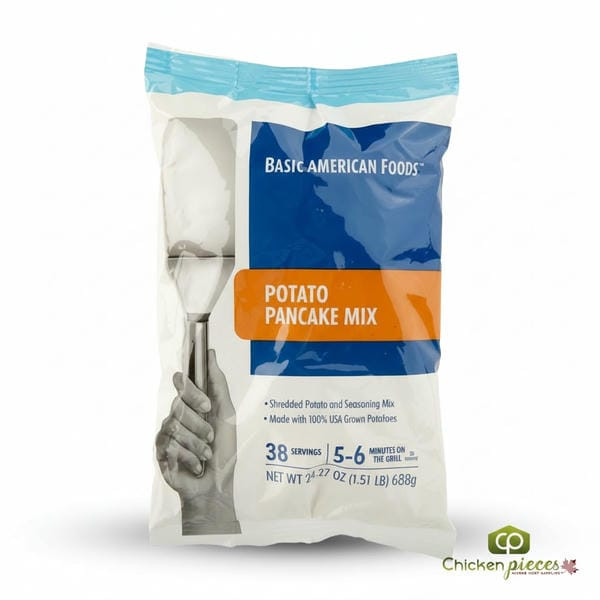
| Basic American Foods Potato Pancake Mix | 24.27 oz bag | Small batches, specialty menus | Crispy latke texture, easy prep |
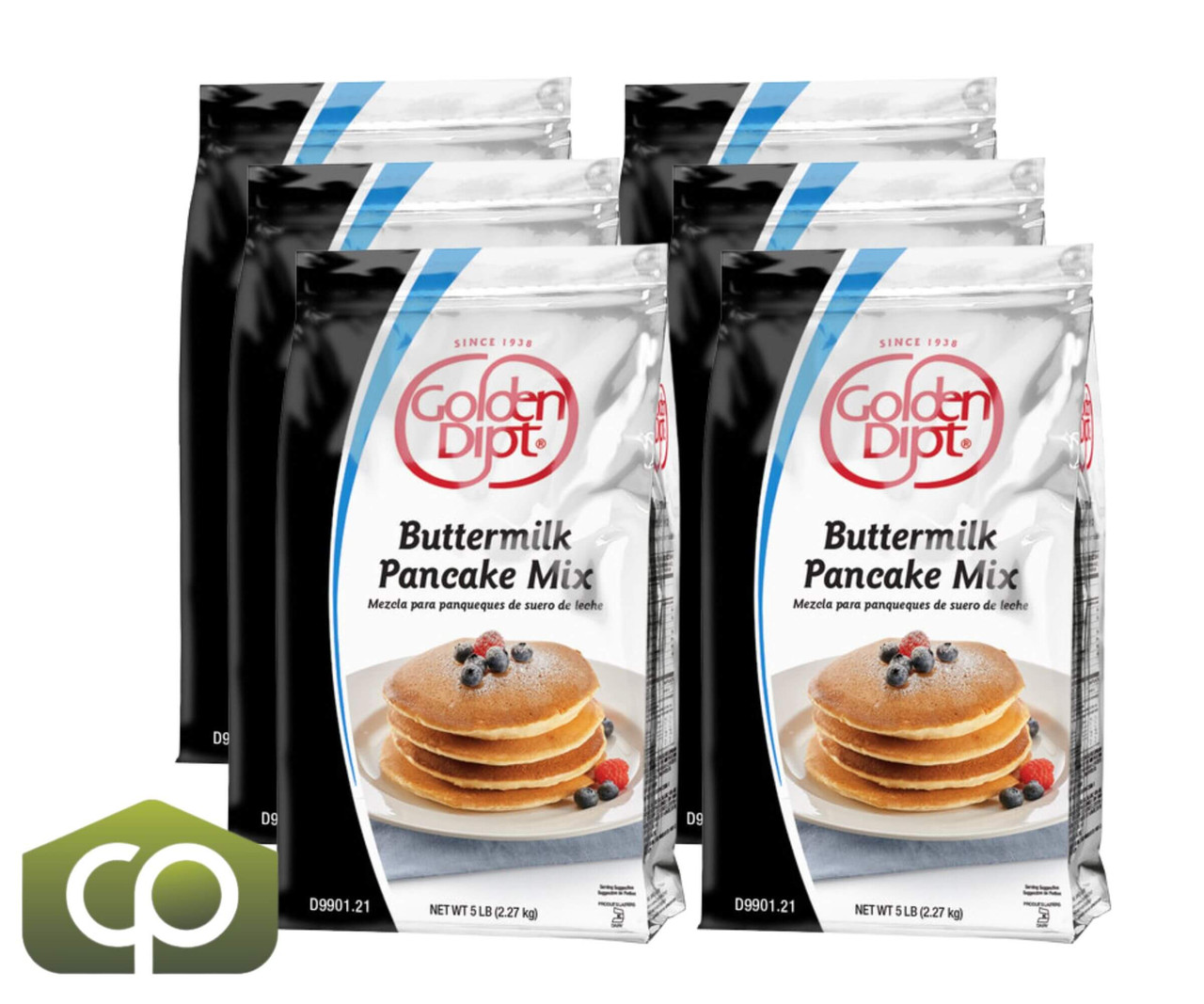
| Golden Dipt Buttermilk Pancake Mix | 5 lb bag, 6/case | Mid-volume kitchens, rotation | Fluffy texture, buttermilk base |
| Gordon Choice GFS Classic | 2 kg bag, 6/case | Multi-property operators | Flexible case size, standard formula |
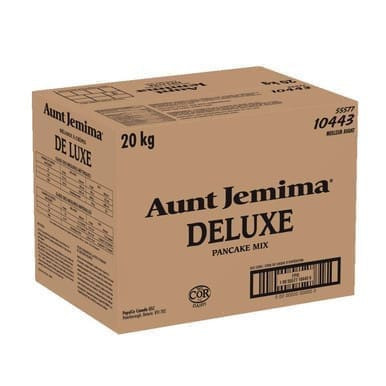
| Gordon Choice GFS Classic | 20 kg single bag | Central kitchen, high output | Minimal packaging per kg |
| Krusteaz Buttermilk | 4.53 kg bag | Consistent griddle programs | Proven foodservice brand |
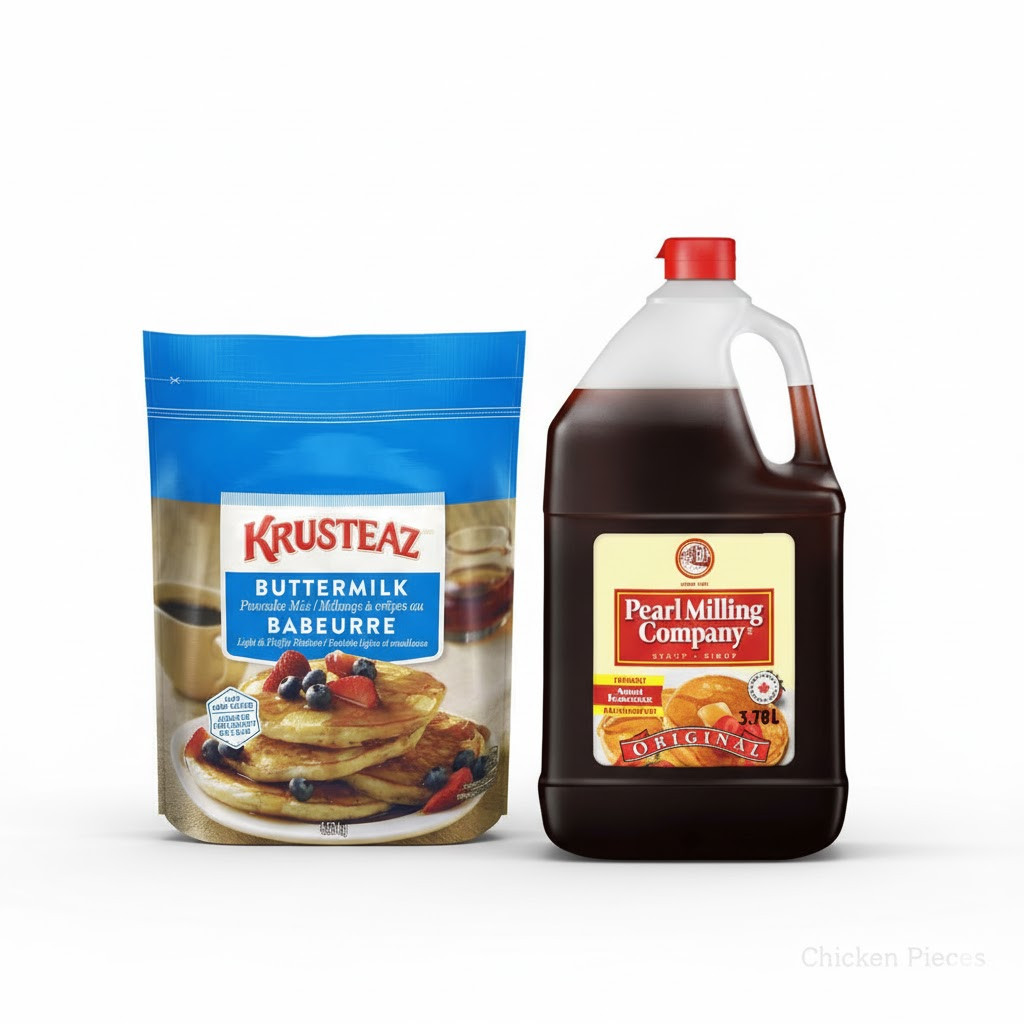
| Krusteaz Bundle with Syrup | 4.54 kg mix + 3.78 L syrup | Complete breakfast setup | Coordinated ordering, matched volumes |
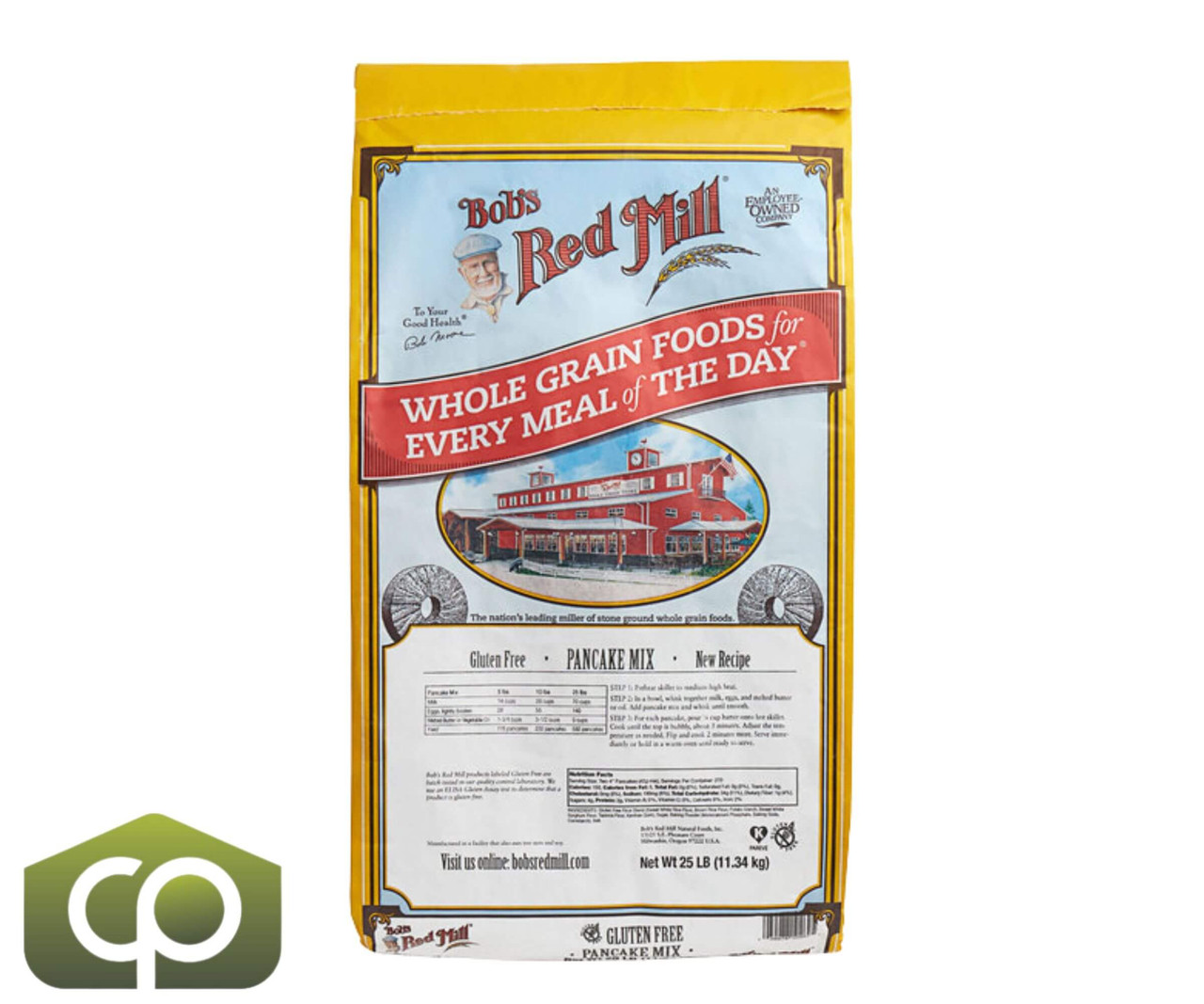
| Bob's Red Mill Gluten-Free | 25 kg bag or 60/pallet | Celiac-safe menus, bulk storage | Dedicated facility, no cross-contact |
Browse Commercial Baking Mixes
Pancake, muffin, cake and batter mixes in case, bag and pallet quantities.



What Canadian facility operators say
What kitchen operators across Canada say about switching to wholesale mixes.
We used to buy retail flour and measure everything per batch. Switched to the twenty-kilogram GFS bags for our twelve-unit portfolio. Breakfast prep time dropped by half and guests stopped sending back dense pancakes.
The gluten-free bulk option let us add a celiac-safe menu without rebuilding our kitchen. One guest cried happy tears. That review brought us three more bookings that month alone.
I run a seniors' residence with rotating kitchen staff. The pre-balanced mixes mean new hires cannot mess up the chemistry. We track waste weekly and it dropped forty percent since switching from scratch.
Baking Mix Selection: Frequently Asked Questions
The following operator questions are answered with cited sources. Every FAQ links to the community thread, buyer guide, or regulator page it was researched from.
Do professional bakeries really use cake mixes?
Products referenced:
- boxed cake mix
- commercial cake mix
- buttercream
Source: Is it common for bakeries to use box mix for their cakes? - r/AskBaking
How do I make box cake mix taste like bakery cake?
Products referenced:
- boxed cake mix
- dry pudding mix
- cake batter
Is scratch baking or baking mixes cheaper for a business?
Products referenced:
- baking mixes
- cake flour
- butter
- baking ingredients
Source: The Mix-And-Match Guide to Bakery Products: Scratch vs. Cake Mixes - Meal Mastermind
Can home bakers sell cakes made from boxed mix?
Products referenced:
- boxed cake mix
- tiered cake supports
- scratch baking ingredients
Source: Home baker - boxed cake mix or from scratch? - r/AskBaking
What pancake and waffle mix works for high-volume breakfast service?
Products referenced:
- buttermilk pancake mix
- waffle mix
- foodservice baking mix
Source: Buttermilk Pancakes for a Crowd - Cooking For An Army
How do bakeries keep results consistent when scaling up batches?
Products referenced:
- commercial bakery scales
- bread flour
- bakery mixes
Source: Baker's Percentages: The Fastest Way to Scale Bread Recipes - Epic Baker
What gluten-free baking mix works for restaurants?
Products referenced:
- Bob's Red Mill gluten-free flour
- gluten-free brownie mix
- gluten-free muffin mix
Source: Bob's Red Mill Natural Foods - Gluten Free Mixes and Blends
Should a bakery mix everything from scratch or use bulk mixes?
Products referenced:
- bulk bakery mixes
- batter stabilisers
- bread flour
Source: A push in the market to move away from bulk bakery mixes - British Baker
What equipment helps a cafe produce consistent baked goods daily?
Products referenced:
- commercial stand mixer
- digital bakery scale
- dough sheeter
- baking mixes
Related guides from ChickenPieces
Why Operators Source from ChickenPieces
Calgary-based wholesale supply with Western Canada coverage.
Alberta Warehouse
Inventory held in Calgary, not drop-shipped from distant distribution centres. Replenishment cycles match your operational rhythm.
Account Consistency
Dedicated rep learns your property count, menu rotation, and seasonal spikes. Orders arrive configured to your specs, not generic defaults.
Range Breadth
Pancake, muffin, cake, specialty and batter mixes alongside your other kitchen staples. Consolidated purchasing reduces administrative load.
Regulatory Alignment
All products meet Health Canada and CFIA labelling and safety standards. Documentation provided for audit readiness and allergen management.
Request Your Mix Quote
Tell us your weekly volume and property count. We will recommend package sizes and configurations that fit your storage and staff workflow. No minimums for first orders.
Request a QuoteReferences: Health Canada - Food Chemical Contaminants CFIA - Food Safety for Industry.