
 US Dollar (USD)




Description
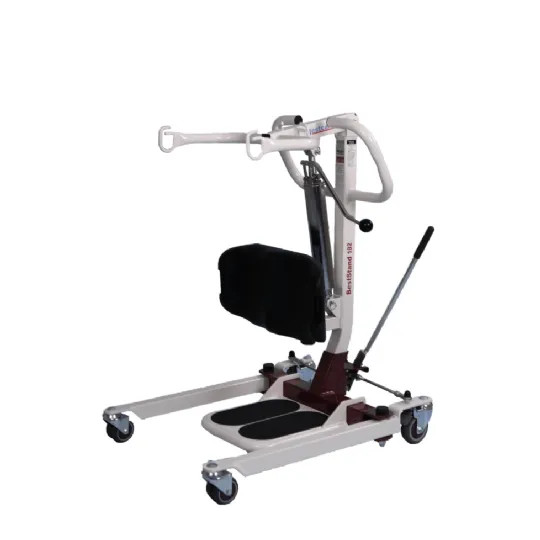
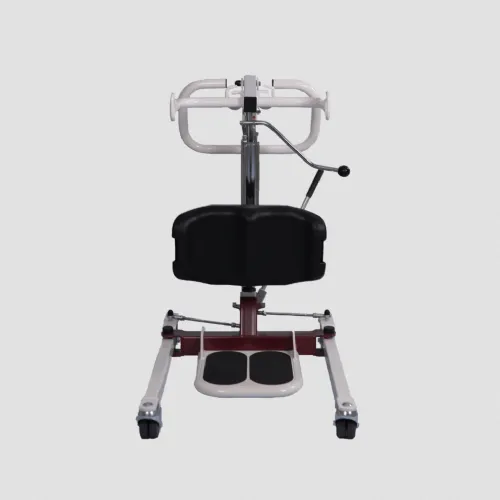
The BestStand Hydraulic Sit-To-Stand Home Bariatric Lift from Bestcare LLC is a compact, durable solution for bariatric patients with partial weight-bearing ability. This lightweight aluminium frame device, featuring a padded knee pad, is specifically designed for physical therapists and caregivers managing transfers in confined spaces.
BEST FOR:
- Bariatric patient sit-to-stand transfers
- Rehabilitation therapy for partial weight-bearing individuals
- Home care assistance in confined spaces
- Fall prevention during transfers
- Post-operative mobility support
- Caregiver injury reduction
CLINICAL NOTE: When performing transfers in confined spaces, fully close the base for initial positioning. Once positioned, slightly open the internal legs to maximize stability before initiating the lift. This provides a secure footprint while maintaining maneuverability.
Why It Works
- Hydraulic Mechanism: The manual hydraulic pump provides smooth, controlled lifting, ideal for patients who can bear some weight. It ensures a consistent transfer speed without reliance on electrical power.
- Compact Design: The BestStand Hydraulic Sit-To-Stand Lift features a lightweight aluminium frame and a closed base width of 24.9 inches. This allows for effective maneuverability in tight home environments or clinic spaces.
- Adjustable Support: A padded knee pad offers 4.5 inches of length extension and a 22-inch height range. This accommodates various patient leg lengths, promoting proper biomechanics and comfort during the stand assist.
- Bariatric Capacity: Available in two models, the SA182H supports up to 400 lbs, and the SA228H supports up to 500 lbs. This ensures appropriate equipment selection for Bestcare Bariatric Lift Canada applications.
Clinical Applications
- Bed to Wheelchair Transfer: Position the BestStand Hydraulic Sit-To-Stand Lift, engage the patient with the padded knee pad, and use the hydraulic pump to assist them to a standing position for pivot transfer to a wheelchair.
- Toilet Transfer Assistance: The compact base and dual casters allow for positioning close to a toilet. The detachable footplate can be removed to facilitate direct foot placement for optimal positioning.
- Gait Training Initiation: Utilize the BestStand SA182H Lift or SA228H Lift to bring a patient to a supported standing position. This allows for initial weight-bearing practice and pre-gait activities with caregiver support.
- Therapeutic Exercise: Employ the lift for controlled sit-to-stand repetitions as a therapeutic exercise. This strengthens lower extremity muscles and improves balance for patients with partial weight-bearing ability.
- Fall Prevention During Transfers: The secure sling attachment and stable base provide a safe, controlled environment for transfers, significantly reducing the risk of falls for both patient and caregiver.
- Post-Surgical Mobility: For patients recovering from bariatric or orthopedic surgery, the Home Sit-To-Stand Lift Bariatric facilitates early mobilization, promoting recovery and preventing complications.
Revenue Opportunity: Rehabilitation clinics can expand bariatric patient services, increasing billable therapy hours for safe transfers and mobility training. This enables clinics to serve a broader patient demographic, potentially increasing referrals from bariatric surgery centres or specialized medical practices.
Product Specifications
- Brand: Bestcare LLC
- Format: Lightweight aluminium frame, padded knee pad
- Key Ingredients/Materials: Steel frame, hydraulic pump mechanism, padded knee pad, dual casters, detachable footplate
- Allergens: N/A
- Storage: Store in a dry, temperature-controlled environment. Ensure base is closed to minimize footprint when not in use.
- Shelf Life: N/A
- Origin: N/A
- Certifications: N/A
- Recommended Usage: BestStand Hydraulic Sit-To-Stand Lift for bariatric patient transfers and rehabilitation in home care and clinical settings.
Storage & Handling
Store the BestStand Hydraulic Sit-To-Stand Home Bariatric Lift in a dry, temperature-controlled environment to maintain optimal function of the hydraulic system and materials. When not in use, close the base fully to reduce its footprint, allowing for storage in smaller spaces. Regularly inspect all components for wear and tear, and clean surfaces with a mild disinfectant.
Frequently Asked Questions
Anyone using the BestStand Hydraulic Sit-To-Stand Lift for bariatric patients at home? How does it handle tight turns in a standard bathroom?
We've used the SA228H model in several home care setups. The compact base (24.9" closed width) and 3" dual casters make it surprisingly maneuverable. You'll need to plan your turns, but it generally fits in standard accessible bathrooms. The adjustable base helps get around toilets or sinks.
For OTs: What's your experience with the BestStand's knee pad adjustability for patients with varying leg lengths? Is it truly effective?
The knee pad is quite versatile. It has a 4.5" length extension and 22" height range. We find it accommodates most clients well, from shorter individuals to taller bariatric patients. Proper adjustment is key for patient comfort and preventing knee hyperextension during the stand.
PTs, how reliable is the hydraulic pump on the BestStand for frequent use in a busy clinic? Any common issues to watch for?
The hydraulic pump on the BestStand is generally robust for clinic use. We've had ours for over a year with daily transfers and no major issues. Just ensure consistent, smooth pumping action. Like any hydraulic system, check for fluid leaks occasionally, but it's built for 24/7 operation.
Caregivers: Is the detachable footplate on the BestStand lift easy to remove and reattach for cleaning or patient positioning?
Yes, the footplate is designed for easy detachment. It slides off without tools, which is helpful for cleaning or when you need to position a patient's feet directly on the floor for gait training. It clicks securely back into place.
Considering the BestStand SA182H for a patient who is 380 lbs. Is that cutting it too close to the 400 lbs capacity, or is there a good safety margin?
For a patient at 380 lbs, the SA182H (400 lbs capacity) is close to its limit. While there's typically a safety factor built in, for daily use and peace of mind, especially with bariatric patients, I'd strongly consider the SA228H (500 lbs capacity). It provides a much larger buffer and reduces stress on the equipment over time.
What's the best way to maneuver the BestStand under a low bed frame? The base height is 4.9 inches, but some frames are even lower.
With a 4.9" base height, it fits under most standard hospital beds and many home frames. For lower frames, you might need to slightly elevate the bed using risers or ensure the casters are completely clear of any obstacles. Always approach slowly and check clearance before pushing the lift fully under.
Any tips for optimizing transfers for patients with fluctuating partial weight-bearing ability using the BestStand?
Focus on consistent communication and pre-transfer checks. Ensure the patient understands their role. Adjust the knee pad and sling height to provide optimal support without over-assisting, encouraging them to bear as much weight as safely possible. The controlled hydraulic lift helps manage their effort.
Does the BestStand lift require any special electrical outlets or charging? Or is it purely hydraulic and manual?
The BestStand Hydraulic Sit-To-Stand Lift is purely hydraulic and manually operated. It does not require any electrical outlets or charging. This makes it very flexible for use in any room without concern for power access.
What is the weight capacity of the BestStand Hydraulic Sit-To-Stand Lift?
The BestStand lift is available in two models: the SA182H accommodates up to 400 lbs (182 kg), and the SA228H supports up to 500 lbs (228 kg). Select the model appropriate for your patient's specific needs.
Is this lift suitable for patients with limited mobility or only partial weight-bearing ability?
Yes, this lift is specifically designed for partially weight-bearing patients. It facilitates secure sit-to-stand transfers, enhancing patient mobility and independence while providing necessary support.
```