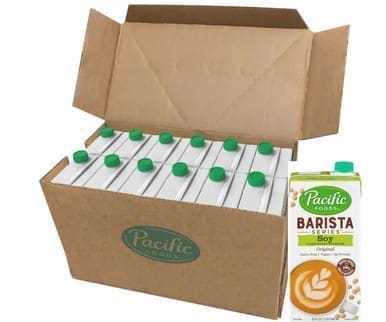
Pacific Foods Barista Series Soy Original 946mL — 60-Case Pallet, 720 Cartons
⚡ Quick Answer
Pacific Foods Barista Series Soy Original 946ml is a barista-grade soy milk with extra fat and protein so it microfoams to a silky, latte-art-stable texture without breaking in hot espresso. Each case holds 12 shelf-stable 946ml cartons. Cafés, coffee chains, and bakery cafés use it for lattes, flavoured syrup drinks, and pastry glazing; ChickenPieces.com ships Pacific Barista Soy Canada-wide from Calgary.
By the Numbers
- Servings per case: ≈63 (15 mL pour)
- Shipping: Ships Canada-wide from our Calgary warehouse; orders $199+ ship free
- Canadian stock: Sold in CAD from Canadian inventory — no cross-border duty or brokerage on delivery
⚡ Quick Answer Pacific Foods Barista Series Soy Original 946mL cartons, 12 cartons/case × 60 cases = 720 cartons per pallet. Ambient shelf-stable storage until opened.
720
Cartons per pallet
(12/case × 60 cases)
Per 946mL carton
at pallet pricing
Full pallet price
60 cases total
Pacific Foods Barista Series Soy Original is formulated specifically for the demands of professional espresso bar applications. The barista-grade soy milk is engineered with a higher fat and protein composition than standard consumer soy milk, giving it the steaming characteristics baristas need: it microfoams to a silky texture, holds latte art, and maintains stable emulsion without breaking in hot espresso drinks. Standard consumer soy milk is not a substitute — it separates, produces thin foam, and delivers inconsistent results in high-volume café operations.
For a high-traffic coffee shop averaging 100+ plant-based drinks per day, a full pallet represents approximately 2-4 months of barista soy supply delivered once, stored shelf-stable in ambient conditions, and opened carton by carton as needed.
Pallet Advantage - 720 cartons of barista-grade soy in one delivery — multi-month supply for high-traffic café operations
- Barista Series formulation steams and microfoams consistently — no substituting consumer soy that breaks in espresso
- Shelf-stable until opened — no refrigerated warehouse required, no cold-chain freight cost
- Pallet pricing locks in cost against retail price fluctuations on a staple plant-based milk SKU
A
Amani's Take · Bulk Procurement Lead @ ChickenPieces
"720 cartons of barista soy is serious café volume. If you're running multiple locations or a high-traffic shop, pallet pricing on Pacific Barista is where you lock in your margins on plant-based drinks. The alternative is buying case by case at retail premium — which costs more and creates supply gaps at the worst times."
Frequently Asked Questions
Which soy milk is best for baristas?
For espresso bar work, the barista-grade versions win because they're formulated to steam, not just to pour over cereal. Pacific Foods Barista Series Soy Original is engineered with extra fat and protein so it microfoams to a silky texture and holds emulsion in hot espresso, unlike consumer soy milk that separates and produces thin foam. The same applies to Pacific's almond and oat barista lines, which many Canadian cafés carry alongside the soy to give customers a choice. If you're running a high-volume plant-based menu, the practical move is to stock the barista soy as your default and rotate almond or oat as a secondary option.
Pacific Barista Soy Milk where to buy?
For Canadian buyers, Pacific Foods Barista Series Soy Original is available through ChickenPieces.com, which stocks it both by the case and by the pallet and ships Canada-wide from its Calgary warehouse. If you're running one shop, a case of 12 cartons is a normal starting order; if you're running multiple locations or a high-traffic café doing 100+ plant-based drinks a day, the 60-case pallet (720 cartons) is the practical format. You can order the pallet here or the single 12-case SKU if you want to test first. Orders ship from Calgary, so Alberta and Western Canada typically see the fastest transit.
How many servings will one case of Pacific Foods Barista Series Soy Original yield?
One case holds 12 cartons of 946ml, which is 11.35 litres of barista soy per case. At a typical café pour of 6 to 8 oz of steamed soy per latte, that's roughly 48 to 60 drinks per carton, or about 575 to 720 drinks per case. A full pallet of 60 cases lands somewhere between 34,000 and 43,000 plant-based drinks depending on pour size. Most high-traffic cafés plan on 1.5 to 2 cases per week per location as a working average.
What is the shelf life of Pacific Foods Barista Series Soy Original sealed and after opening?
Sealed aseptic cartons are shelf-stable for months when stored in a cool, dry place, check the best-before date printed on each carton. Once opened, the carton should be refrigerated and used within a few days, most cafés aim to finish an opened carton within 24 to 48 hours to keep foam quality consistent. This is why barista soy is normally opened carton by carton on the bar rather than batch-poured. Ambient storage is a real advantage for cafés, no refrigerated warehouse or cold-chain freight needed for the pallet.
What allergens and certifications does Pacific Foods Barista Series Soy Original carry?
Pacific Foods Barista Series Soy Original contains soy, that's the primary allergen to flag for staff and customers, and the full statement is on the carton label. Soy milk is naturally dairy-free, lactose-free, vegan, and cholesterol-free, which is why it's a default plant-based option in Canadian cafés. Certifications vary by production run, so verify the specific carton for kosher, organic, or non-GMO claims rather than assuming. When in doubt, the label is the authority for allergen and certification declarations.
Can Pacific Foods Barista Series Soy Original be stored at room temperature?
Yes, sealed cartons are shelf-stable and can be stored ambient in a cool, dry place, which is a big part of why pallet purchasing makes sense for cafés and distributors. You don't need refrigerated warehouse space or cold-chain freight for the 60-case pallet, just dry storage. Once the carton is opened, refrigerate it and use it within a few days. Keep stock rotated so older cartons get used first, and don't stack pallets near heat sources or direct sun.
Is Pacific Foods Barista Series Soy Original suitable for schools, hospitals, and institutional food service?
Yes, it fits institutional menus well because it's dairy-free, vegan, shelf-stable, and handles high-volume steam wands without breaking. School districts, hospital cafeterias, and government procurement teams often stock it as the default plant-based milk for cafés and tray-line beverage stations. The pallet format (720 cartons) also simplifies procurement, one delivery covers a multi-month supply for a large site. Confirm allergen protocols with your dietitian or food safety lead, soy is the allergen to flag, and follow Health Canada and CFIA labelling guidance for menu boards.
How should a café plan volume when buying barista soy by the pallet?
Start with your daily plant-based drink count, a shop doing 100 soy drinks a day uses roughly 2 cases per week, so one 60-case pallet is about 2 to 4 months of supply. Multi-location groups often pool a pallet and split cases by store. If you're new to barista soy, order one 12-case to dial in your steam technique, then move to the pallet once your weekly draw is consistent. Event and festival operators should size pallets against the peak day, not the average day.
Which other Pacific Foods Barista Series milks pair well with the soy for a full plant-based menu?
Soy, oat, and almond are the usual trio, and each covers a different customer need: soy for the creamiest microfoam, oat for the closest texture to dairy, and almond for a lighter nutty profile. ChickenPieces.com stocks the Pacific Foods Oat Milk Creamer Barista Edition in 946ml 12-packs and the Pacific Foods Barista Series Almond Original in 12-case format, so you can build one supplier order across all three. Running all three lets cafés avoid turning away customers with soy or nut preferences. Check each carton label for allergens before advertising any of them as a specific dietary option.