
2025 Nov 22nd
The Essential Guide to Equipment in Food Service for Canada
The sheer variety of food service equipment can leave even the most seasoned American operators searching for clarity. In a fast-paced culinary environment, everything from industrial mixers to advanced refrigeration systems plays a vital role in safety, quality, and efficiency. Equipment failures account for over 35 percent of unexpected downtime in restaurants, highlighting the importance of smarter choices. Understanding what counts as essential equipment, and why it matters, helps American food service operators build kitchens that serve both quality and reliability.
Table of Contents
- Defining Equipment In Food Service Operations
- Major Types Of Food Service Equipment
- Functions And Importance In Daily Operations
- Safety, Sanitation, And Regulatory Compliance
- Cost, Maintenance, And Efficiency Considerations
- Key Takeaways
Key Takeaways
| Point | Details |
|---|---|
| Comprehensive Equipment Range | Food service equipment includes cooking, refrigeration, preparation, storage, and service tools essential for culinary operations. |
| Investment in Efficiency | Choosing the right equipment enhances productivity and reduces operational costs, while integrating advanced technologies and energy-efficient designs. |
| Safety and Compliance | Maintaining proper sanitation and regulatory compliance is crucial for food service operations, requiring systematic cleaning protocols and regular equipment inspections. |
| Long-term Cost Considerations | The total cost of ownership includes initial investment, energy efficiency, and maintenance, making strategic equipment selection critical for profitability. |
Defining Equipment in Food Service Operations
Food service equipment represents the comprehensive suite of tools, machines, and infrastructure that enable food preparation, service, storage, and operational efficiency across various culinary environments. These essential assets range from industrial-grade kitchen appliances to specialized handling systems that transform raw ingredients into served meals.
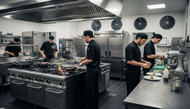
food prep equipment
In the context of food service operations, equipment can be categorized into several critical functional domains:
- Cooking Equipment: Ranges, ovens, fryers, grills, steamers
- Refrigeration Systems: Commercial refrigerators, walk-in coolers, freezers
- Preparation Equipment: Mixers, slicers, food processors, cutting stations
- Storage Solutions: Shelving units, food containers, organizational systems
- Service Equipment: Warmers, display cases, serving stations, utensils
For Canadian food service professionals seeking comprehensive equipment insights, our Complete Guide to Commercial-Grade Equipment offers an in-depth exploration of selecting, maintaining, and optimizing culinary infrastructure. Understanding equipment goes beyond mere purchasing decisions—it encompasses strategic investments that directly impact operational productivity, food quality, and overall business performance.
The selection of appropriate food service equipment requires careful consideration of multiple factors including kitchen layout, menu complexity, production volume, staff expertise, and budgetary constraints. Restaurants, catering services, hotels, and institutional food providers must evaluate equipment not just for immediate needs but for long-term scalability and adaptability. Modern food service equipment increasingly integrates smart technologies, energy-efficient designs, and modular configurations that allow businesses to optimize their operational workflows while maintaining high standards of food safety and quality.
Major Types of Food Service Equipment
Food service equipment encompasses a diverse range of specialized machinery and tools designed to support culinary operations across various professional environments. According to the FDA's Food Code, these equipment categories are not just functional assets but critical components that directly impact food safety, operational efficiency, and regulatory compliance.
Infographic comparing cooking, refrigeration, and preparation equipment
The primary categories of food service equipment include:
Cooking Equipment
- Commercial ranges and ovens
- Industrial fryers and grills
- Steamers and combi-ovens
- Specialized cooking platforms
Refrigeration Systems
- Walk-in coolers
- Commercial refrigerators
- Blast chillers
- Freezer units
Preparation Equipment
- Industrial mixers
- Food processors
- Cutting and slicing machines
- Weighing and portioning systems
Storage and Handling Equipment
- Stainless steel shelving
- Temperature-controlled storage units
- Food transport containers
- Organizational rack systems
For Canadian food service professionals looking to explore equipment options for specific operational needs, our Starting a Concession Stand: Complete Equipment & Supply Guide provides comprehensive insights into selecting the right tools for various culinary environments.
Understanding the nuanced requirements of each equipment category is crucial. Modern food service operations demand not just functional machinery, but systems that integrate advanced technologies, promote energy efficiency, and maintain rigorous food safety standards. From compact commercial kitchens to large-scale institutional food preparation facilities, the right equipment can significantly enhance productivity, reduce operational costs, and ensure consistent food quality across diverse culinary settings.
Functions and Importance in Daily Operations
Food service equipment plays a critical role in transforming raw ingredients into perfectly prepared meals while maintaining operational efficiency, food safety, and consistent quality. These sophisticated tools are not merely mechanical assets but integral components that directly influence a food service operation's productivity, profitability, and reputation.
Key Functional Domains of food service equipment include:
- Production Efficiency: Accelerating food preparation processes
- Temperature Management: Ensuring precise cooking and storage conditions
- Food Safety: Maintaining hygienic preparation and storage environments
- Quality Control: Supporting consistent portion sizes and cooking standards
- Workflow Optimization: Streamlining kitchen operations and reducing manual labor
The strategic selection and integration of equipment can dramatically transform a kitchen's operational dynamics. Modern food service professionals recognize that equipment is an investment in productivity, not just a cost center. For instance, a high-efficiency commercial steamer can reduce cooking times by up to 40%, while advanced refrigeration systems can extend ingredient shelf life and minimize waste.
Operational performance hinges on understanding how different equipment types interact and complement each other. For Canadian food service operators seeking comprehensive equipment insights, our guide on bulk food items and supply strategies provides strategic perspectives on maximizing equipment utilization. From small cafes to large institutional kitchens, the right equipment ecosystem enables smoother workflows, faster service times, enhanced food quality, and ultimately, improved customer satisfaction. Successful food service operations view their equipment not as isolated tools, but as an interconnected system designed to deliver exceptional culinary experiences consistently and efficiently.
Safety, Sanitation, and Regulatory Compliance
Safety and sanitation represent the foundational pillars of food service operations, where equipment plays a critical role in maintaining stringent health standards and meeting complex regulatory requirements. Food service professionals must navigate a complex landscape of guidelines that demand meticulous attention to equipment cleanliness, maintenance, and operational protocols.
Key Compliance Considerations include:
- Surface Hygiene: Preventing cross-contamination
- Temperature Control: Maintaining safe food storage conditions
- Material Compatibility: Using food-grade equipment materials
- Regular Maintenance: Ensuring equipment remains in optimal condition
- Documentation: Tracking cleaning and maintenance procedures
Proper sanitation goes beyond basic cleaning. It requires a systematic approach that integrates specialized cleaning protocols, regular equipment inspections, and comprehensive staff training. Modern food service operations increasingly rely on advanced sanitization technologies and chemical solutions that effectively eliminate potential biological hazards while maintaining equipment integrity.
For professionals seeking comprehensive cleaning insights, our guide on cleaning supplies offers strategic perspectives on maintaining impeccable hygiene standards. Regulatory compliance is not just about avoiding penalties, but about creating a safe, trustworthy environment that protects both customers and staff. Successful food service operations understand that equipment sanitation is a continuous process requiring commitment, knowledge, and proactive management to ensure the highest standards of food safety and operational excellence.
Cost, Maintenance, and Efficiency Considerations
Food service equipment represents a substantial financial investment that extends far beyond initial purchase prices. Smart operators recognize that total cost of ownership encompasses not just the upfront expense, but ongoing maintenance, energy consumption, repair costs, and potential productivity gains that quality equipment can generate.
Key Financial and Operational Factors include:
- Initial Capital Investment: Upfront equipment purchase costs
- Energy Efficiency: Long-term electricity and utility expenses
- Maintenance Requirements: Regular servicing and potential repair costs
- Depreciation: Equipment value reduction over operational lifecycle
- Productivity Impact: Potential labor and time savings
Modern food service professionals approach equipment selection as a strategic financial decision. High-quality equipment might represent a larger initial investment, but can deliver significant long-term benefits through reduced downtime, lower repair frequencies, and enhanced operational efficiency. For instance, energy-efficient commercial refrigeration units can reduce electricity consumption by up to 30%, translating into substantial annual cost savings.
For Canadian food service operators seeking comprehensive insights into bulk purchasing and equipment strategies, understanding the nuanced economics of equipment selection becomes crucial. Successful operations view equipment not as an expense, but as a strategic asset that directly influences productivity, quality, and ultimately, bottom-line performance. Comprehensive maintenance planning, proactive equipment management, and strategic investment in high-quality, efficient tools can transform equipment from a cost center into a competitive advantage.
Elevate Your Food Service Operations with the Right Equipment and Supplies
Managing equipment challenges like selecting energy-efficient machines and maintaining strict food safety can feel overwhelming. This guide highlights key concerns such as production efficiency, sanitation, and cost management that every food service professional faces. Don’t let equipment decisions hold back your kitchen’s potential or affect the quality and consistency your customers expect.
Discover practical solutions and essential bulk groceries, culinary equipment, and cleaning supplies designed to enhance your operation’s workflow and compliance. Canada’s source for bulk groceries and culinary essentials has you covered with the right tools to reduce downtime, improve safety, and lower costs.
https://www.chickenpieces.com
Ready to transform your food service setup with reliable, efficient equipment and trusted supplies? Explore how you can boost productivity and maintain high hygiene standards by visiting ChickenPieces now. Make your next move a smart investment in your kitchen’s future.
Frequently Asked Questions
The following operator questions are answered with cited sources. Every FAQ links to Reddit, Quora, PAA, or a public regulator.
What should a Canadian foodservice buyer compare first when choosing between new and used commercial equipment?
Source: r/restaurantowners: New restaurant owner here, buying equipment online vs local
How can a buyer verify that a piece of commercial kitchen equipment will actually fit through their door and on the electrical panel?
Source: r/restaurant: What do you look for when buying restaurant equipment online
Which commercial equipment categories are worth buying online versus through a local dealer?
How should a small operator decide whether to lease or buy commercial kitchen equipment?
What equipment surprises drive the most unexpected cost in a new Canadian commercial kitchen buildout?
Source: r/restaurantowners: What is your experience with purchasing used equipment
Which pieces of commercial equipment should a Canadian operator buy used and which should always be new?
Source: r/restaurantowners: Has anyone had experience buying commercial equipment online
How can a Canadian buyer tell when a piece of used restaurant equipment has reached end of service life?
Source: r/refrigeration: Buying a new commercial fridge thoughts on what to look for
What refrigeration capacity should a Canadian operator size for the busiest service window?
Source: r/SmallBusinessCanada: Researching cost of building a small commercial kitchen
Authoritative Sources
The following government and public-health sources informed the operator guidance above. Citations to Reddit, Quora, and operator forums appear in the FAQ block above.