Foodservice definition of the five classic French base sauces, what each one is made of, the small sauces built from them, and the pans that keep a sauce station organized.
Mother sauces are the five classic French base sauces that most other sauces are built from: béchamel, velouté, espagnole, tomato, and hollandaise. Learn what liquid and thickener each uses, and you can finish dozens of small sauces from them and scale a whole sauce station.
At a Glance
Key Takeaways
Five bases build the rest
Most menu sauces are small sauces finished from one of five mothers.
Three use a roux
Béchamel (white), velouté (blond), and espagnole (brown) are roux-thickened.
One is an emulsion
Hollandaise is a warm emulsion of egg yolk and clarified butter with acid.
Tomato stands on its own
A tomato sauce base, often with aromatics. Some kitchens use a light roux.
Finish to order
Cheese, wine, herbs, mustard, or a stock reduction turn a mother into a small sauce.
Pans that support the system
Sauce pans, stock pots, and labelled hotel pans with lids for the build and the hold.
Definition
Five bases, dozens of sauces
Mother sauces are the five classic French base sauces that most other sauces are built from. The system is credited to Escoffier and is used in culinary school and many professional kitchens.
Learn the five, what liquid and thickener each uses, and the line can derive dozens of “daughter” or small sauces from a handful of bases.
The Five
The five mother sauces and what they are made of
Béchamel. Milk thickened with a white roux.
Velouté. Light stock thickened with a blond roux.
Espagnole. Brown stock thickened with a brown roux, often with tomato.
Tomato. A tomato sauce base, often with aromatics. Some kitchens use a light roux.
Hollandaise. A warm emulsion of egg yolk and clarified butter with acid.
Field tip: Three of the five start with a roux. Get white, blond, and brown roux consistent across shifts and the béchamel, velouté, and espagnole follow.
Small Sauces
Daughter sauces from each mother
A small sauce is a mother sauce finished with added ingredients such as cheese, wine, herbs, mustard, or a stock reduction. One example from each:
Mornay from béchamel
Sauce vin blanc from velouté
Demi-glace from espagnole
Marinara variants from tomato
Béarnaise from hollandaise
Next time a menu lists mornay or béarnaise, you know which mother it came from.
Method
How the system works on the line
Name the five bases and the liquid and thickener each uses.
Build or pull the right mother for the ticket: cream, light stock, brown, tomato, or warm butter emulsion.
Finish into a small sauce with cheese, wine, herbs, mustard, or a stock reduction.
Hold under food-safe hot and cold rules. Hollandaise is time and temperature sensitive.
Label hotel pans so the station stays mise-ready.
What mother sauces are not
Not every sauce on the menu. Most menu sauces are small sauces derived from these.
Not a one-off reduction or pan sauce. Those can stand alone.
Not a product. Mother sauces are technique bases for any station.
On the Line
Mother sauces in foodservice
A working sauce station may show:
Labelled sauce pots or hotel pans: BÉCHAMEL, VELOUTÉ, ESPAGNOLE, TOMATO, HOLLANDAISE
Roux pans, ladles, a chinois, and immersion tools
Creamy white, blond stock, brown, red tomato, and pale-yellow hollandaise textures
A banquet steam table with sauce inserts, finished to order
Why kitchens use the system
Train once and derive dozens of sauces
Consistent texture and flavour across shifts
Scales for banquet and à la carte
Clear mise labels and supply needs: roux fat and flour, stocks, tomato, butter, eggs, ladles, and pans
Holding and labelling
Label and date each base and small sauce.
Cool, store, reheat, and hot-hold per the site’s written food-safety plan.
Ask the local health authority or your food-safety lead when a process or hold is uncertain.
See CFIA — Requirements for food businesses. Verify current local requirements for your licensed kitchen.
Supplies
Supplies for a mother-sauce station
Sauce pans: roux work, béchamel, velouté, and small-batch finishing.
Stock pots: the light and brown stocks behind velouté and espagnole, and batch tomato sauce.
Hotel pans and solid lids: hold labelled bases on the steam table and finish to order.
Ladles, whisks, and a chinois: needed for the method. No verified product pages for these on chickenpieces.com yet, so they are not carded below.
Browse ChickenPieces.com for foodservice and hospitality supplies. Chicken Pieces is a Calgary foodservice and hospitality supply company founded in 2018—not a poultry or meat distributor.
Comparison
The five mother sauces side by side
Mother sauce
Liquid or base
Thickener
Example small sauce
Béchamel
Milk
White roux
Mornay
Velouté
Light stock
Blond roux
Sauce vin blanc
Espagnole
Brown stock, often with tomato
Brown roux
Demi-glace
Tomato
Tomato, often with aromatics
Tomato itself; some kitchens use a light roux
Marinara variants
Hollandaise
Egg yolk and clarified butter with acid
Warm emulsion
Béarnaise
Three mothers are roux sauces, one is an emulsion, and tomato stands on its own. Know which family a ticket belongs to and the build is clear.
Shop the Range
Browse supplies for the sauce station
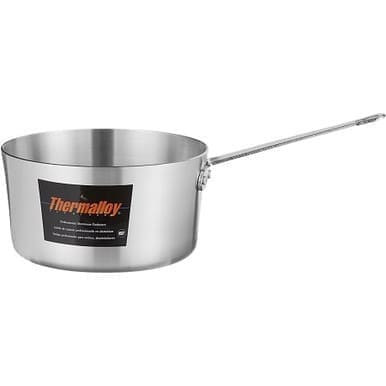
Thermalloy Stainless Steel Sauce Pan, 2 Quart
Stainless sauce pan for roux work and small-batch finishing.
Béchamel, velouté, espagnole, tomato, and hollandaise.
Who created the mother sauce system?
The five-sauce system is credited to Escoffier. It is the version taught in culinary school and used in many professional kitchens.
What is each mother sauce made of?
Béchamel is milk with a white roux. Velouté is light stock with a blond roux. Espagnole is brown stock with a brown roux, often with tomato. Tomato is a tomato sauce base, often with aromatics. Hollandaise is a warm emulsion of egg yolk and clarified butter with acid.
What is a small or daughter sauce?
A small sauce is a mother sauce finished with added ingredients such as cheese, wine, herbs, mustard, or a stock reduction.
What are examples of small sauces?
Mornay from béchamel, sauce vin blanc from velouté, demi-glace from espagnole, marinara variants from tomato, and béarnaise from hollandaise.
Which mother sauces use a roux?
Béchamel uses a white roux, velouté a blond roux, and espagnole a brown roux. Some kitchens also use a light roux in tomato sauce. Hollandaise uses no roux because it is an emulsion.
Is every sauce on a menu a mother sauce?
No. Most menu sauces are small sauces derived from the five. One-off reductions and pan sauces can also stand alone.
Why do kitchens train on mother sauces?
Training on five bases lets cooks derive dozens of sauces, keeps texture and flavour consistent across shifts, and scales for banquet and à la carte service.
How should mother sauces be held for service?
Label and date each base, then hold under the site’s written food-safety plan and local requirements. Hollandaise is time and temperature sensitive.
How do you calculate shipping on bulk orders?
We calculate shipping on live carrier rates at checkout, not on flat or subsidized tiers. Every order is priced against real LTL, parcel, or pallet-freight quotes from our Calgary warehouse to your dock. That means you never absorb hidden shipping costs into product margins — what we charge is what the carrier charges us, plus a small handling pass-through. For bulk and pallet orders this typically runs 15–25% lower than competitors who bake shipping into their unit prices, because the rate is transparent and tied to the actual shipment weight and distance.
Why Partner With ChickenPieces
Canadian foodservice supplies for operators who need sauce pans, stock pots, and hotel pans for a full sauce station — not a poultry or meat distributor.
Local Calgary Support
Based in Calgary, we understand regional operator needs and ship Canada-wide.
Wide Product Range
Source foodservice, disposables, gloves, janitorial, bar, and hospitality supplies from one supplier.
Competitive Pricing Structure
Access practical bulk pricing without a forced membership model.
Regulatory Compliance Focus
Chicken Pieces uses foodservice-focused, Health Canada- and CFIA-aware language where relevant. It is a foodservice and hospitality supply company founded in 2018—not a poultry or meat distributor.