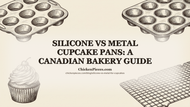
Silicone vs Metal Cupcake Pans: A Canadian Bakery Guide
The question
Silicone vs metal for cupcakes?
Answered by Amani Khehra, Chicken Pieces (Calgary)
The short answer
Same batter, split between the two pans, and you can see the difference the second they come out of the oven. It comes down to how each pan handles heat.
Metal conducts heat fast. The edges of the cupcake set quickly, so the batter in the middle has nowhere to go but up, and it domes.
Silicone insulates instead, so it heats much slower. The batter spreads a bit before it sets, and the cupcakes come out flatter on top.
That is the whole difference. One batter, two pans, two very different tops, and it is just heat doing it.
The following operator questions are answered with cited sources. Every FAQ links to the community thread, buyer guide, or regulator page it was researched from.
Why do my cupcakes dome up and crack while the middles stay pale?
That is the pan, not your recipe. Metal conducts heat fast, so the outer edge of the batter sets within seconds of hitting the oven and the middle has nowhere to go but up into a dome, which is why the rim splits. Silicone insulates instead, so it heats slower and the batter spreads into a flatter top. If your frosting pipeline needs a flat surface, fill the cups about three quarters full using a fixed scoop, or set the tray over a water-filled sheet to slow the edges.
Should I run metal or silicone cupcake pans for a high-volume service?
Run metal for standard cupcakes and keep silicone for shaped or frozen items. Metal gives you the oven spring and the set browned edge your operation expects, and it holds up to a commercial warewash where silicone is not worth the risk. Bakers with production lines repeatedly report that metal is far superior for both appearance and texture on cupcakes and muffins, and use silicone for egg bites, mini meat loaves and individual breakfast casseroles instead.
Products referenced:
Full Size 18 x 26 in, 19 Gauge Wire in Rim Aluminum Bun Pan / Sheet Pan, 12/Case
Do silicone pans really bake slower? I am losing time on every batch.
Yes, and the loss is real. Because silicone is an insulator rather than a conductor, batters cook from the top down instead of the outside in, and one baker testing the same muffin recipe in a new silicone pan needed roughly ten extra minutes before the centres were baked through. Another reported silicone cupcakes still raw in the middle after more than double the stated bake time. For a timed production run, budget extra minutes or change the pan material rather than fighting it.
Can silicone molds go through our dishwasher, and do they need a sheet pan under them?
Quality food-grade silicone generally survives a dishwasher, but hand washing is still the better call in a commercial kitchen. A professional pastry chef running a high-volume kitchen reports putting her silicone molds through the dishwasher without problems, though a hot soapy water wash on the rigid tray underneath is what keeps them stable. Always set the molds on a rigid sheet before loading them, because flexible molds will flex and spill if you load them directly.
Should I grease or spray the pan before lining it with cupcake cups?
Do not grease silicone. Spray and oil on silicone is unnecessary, is hard to clean off, and slowly degrades the material, which is why professionals reserve it for the few jobs that need it. On metal pans, greasing is required, and the pro habit is to brush on a pan grease with a pastry brush rather than aerosol, because overspray on the tin is what sends cupcakes climbing out of the cups and doming early.
Why are my cupcakes sticking to the paper cups even though they look baked?
Two causes are common. First, not every paper cup is parchment based, and cupcakes stick to anything that is not, so greaseproof parchment cups are the ones that actually release. Second, a wet batter loses its structural integrity and grips the paper as it cools. Spraying the outside of the cup does nothing because the grease sits on the tin, not the paper, so spray inside the liner instead. Let the cupcakes cool on a rack, because trapped steam softens the paper and welds it to the cake.
Products referenced:
Cup Baking Paper, White, 4.5 in, 1000 Count
Parchment Sheets, 16 x 24 in, 1000 Count
Half Size Aluminum Sheet Pan with Footed Cooling Rack, 13 x 18 in, 12/Case
How long should a commercial cupcake pan last before I replace it?
Heavy steel muffin and loaf tins in working bakeries have been in daily service for more than forty years, while thin aluminium cupcake pans start denting and bending in the middle within about three years and then have to be swapped out. Buy on weight, not gauge alone, and check the pan for flex and dents before you accept a delivery. Dented rims and bowed middles are what cause uneven browning and liners that will not sit square.
Products referenced:
Full Size 18 x 26 in, 19 Gauge Wire in Rim Aluminum Bun Pan / Sheet Pan, 12/Case
Half Size Aluminum Bun / Sheet Pan, 13 x 18 in, 12/Case
Can I use silicone liners inside my metal muffin pan?
Yes, and that is the compromise many kitchens settle on. Drop the flexible silicone cups into the metal wells and you get the release you want from the silicone with the browned base and faster bake that only the metal can deliver, since the pan is still conducting heat into the bottom of each cup. If you are ordering for volume, buy them by the case and confirm the cup diameter matches your pan well so they sit flat instead of sloshing.
Products referenced:
Deep Paper Baking Cups, 4.5 in, 500/Case
Quarter Size 9 1/2 x 13 in, 19 Gauge Wire in Rim Aluminum Bun Pan / Sheet Pan, 12/Case
What do Canadian food safety rules require for cleaning my bakeware and food contact surfaces?
Cleaning and sanitizing are separate, ordered steps. Cleaning removes dirt and debris by physical or chemical means, and sanitizing reduces microorganisms to a level considered safe, so it has to come after cleaning because it only works on a minimally soiled surface. An effective program reduces biological hazards, removes physical hazards such as glass, plastic or metal, and controls chemical hazards. Premises and equipment that present less risk, such as those used for packaged food, may not need sanitizing, but clean conditions are still required.
Products referenced:
Ready-To-Use Degreaser Cleaner, 946 mL, 6/Case
No Rinse Quaternary Sanitizer Concentrate, 3.78 L, 4/Case
Do I need documentation that my bakeware and liners are safe for food contact?
Yes, and the paperwork trail starts with the supplier. Food businesses are responsible for ensuring that construction materials, packaging materials and non-food chemicals are safe and suitable for their intended use, and they must meet the applicable Food and Drugs Act, Food and Drug Regulations and Safe Food for Canadians Act requirements. Accepted routes include keeping the product on the CFIA reference listing, holding a Letter of Acceptance, a Health Canada Letter of No Objection, or a Letter of Guarantee from the supplier, so ask for the documentation at ordering.
We calculate shipping on live carrier rates at checkout, not on flat or subsidized tiers. Every order is priced against real LTL, parcel, or pallet-freight quotes from our Calgary warehouse to your dock. That means you never absorb hidden shipping costs into product margins — what we charge is what the carrier charges us, plus a small handling pass-through. For bulk and pallet orders this typically runs 15–25% lower than competitors who bake shipping into their unit prices, because the rate is transparent and tied to the actual shipment weight and distance.