

2026 Apr 4th
Starting a Bubble Tea Business in Canada: Your 2026 Playbook
Starting a Bubble Tea Business in Canada: A 2026 Roadmap
⏱ 10-minute read
The Essentials at a Glance
- Before opening day, Canadian health rules demand full compliance with CFIA ingredient standards along with provincial food safety certifications.
- Buying ingredients from a domestic Calgary warehouse helps you sidestep the serious supply chain disruptions that come with international shipping.
- In a crowded market, premium ingredients such as Bossen taro powder and Cosine tapioca pearls are what build a loyal customer base.
- Our experience supplying boba shops throughout Alberta and BC shows that operators who standardize their recipes achieve noticeably stronger profit margins.
- A lean menu built around high-quality core flavours cuts inventory waste and makes staff training simpler during peak hours.
What This Guide Covers
- What Canadian Regulations Apply to Opening a Boba Shop?
- How Can You Establish a Dependable Bubble Tea Supply Chain?
- Which Core Ingredients Does Your Menu Need?
- Why Does Recipe Standardization Make or Break Profitability?
- How Should You Pick the Right Equipment for Your Cafe?
- Frequently Asked Questions

What Canadian Regulations Apply to Opening a Boba Shop?
Working through Canada's food safety rules is the first — and most critical — step in getting your business open. Provincial health authorities set strict facility requirements, staff certification rules, and ingredient compliance standards that must all be satisfied before you can legally serve your first customer.
Running any food and beverage operation in Canada means meeting a demanding set of standards built to safeguard public health. The Canadian Food Inspection Agency (CFIA) oversees the safety and labelling of the ingredients you import or purchase, but the day-to-day operation of your cafe answers to your provincial or territorial health authority. Alberta offers a clear example: Alberta Health Services (AHS) spells out exactly what commercial kitchens require, from the number of sinks to the surface materials allowed and the protocols for sanitizing equipment.
Facility rules are only part of the equation — your staff also need valid food handling certifications recognized by your province. These courses cover the essentials: preventing cross-contamination, controlling temperatures for perishables like milk and cooked tapioca pearls, and upholding personal hygiene standards. On top of that, every ingredient you use must satisfy CFIA regulations. That is exactly why a reputable domestic supplier matters so much; it guarantees that everything you serve, from Bossen Large Tapioca Boba Pearls 6.6lb 3kg 6/Case to flavoured syrups, complies with all Canadian safety and labelling laws.
How Can You Establish a Dependable Bubble Tea Supply Chain?
Every beverage business lives or dies by its supply chain. Depending on overseas shipments leaves operators exposed to unpredictable customs holdups and port strikes, which makes domestic sourcing through a centralized Canadian warehouse a strategic necessity for keeping inventory stocked.
Nothing derails a new bubble tea shop more often than running dry on core ingredients. When a customer walks in craving their usual taro milk tea and the Bossen Taro Bubble Tea Powder Mix 2.2lb 20/Case is gone, you lose far more than one sale — your brand's dependability takes the hit. Many new operators try buying straight from manufacturers in Asia to lock in the lowest invoice price, but that strategy frequently overlooks the hidden costs and enormous risks tied to international logistics.
Bringing food products into Canada means navigating complicated customs clearances, freight rates that never sit still, and the constant threat of port congestion. A single delay at the border can leave your cafe without tapioca pearls for weeks. Successful Canadian operators manage this risk by partnering with domestic wholesale distributors. Buying from a company that already holds inventory inside the country shifts the logistical burden off your shoulders and keeps supplies flowing steadily.
Having supplied boba shops across Alberta and BC from our Calgary warehouse, we've watched operators who consolidate purchasing with one dependable domestic partner run into far fewer stockouts. ChickenPieces.com serves as that essential bridge, importing premium brands like Bossen and Cosine in huge volumes and warehousing them locally. Independent cafes can then order exactly what they need, precisely when they need it, with fast, predictable shipping times nationwide.
A domestic supplier relationship also delivers welcome flexibility. As the business grows and the menu evolves, adjusting order volumes is easy — no renegotiating minimum order quantities with overseas factories. In a fast-moving beverage market, that agility is what lets you respond to seasonal trends and shifting consumer preferences.
Which Core Ingredients Does Your Menu Need?
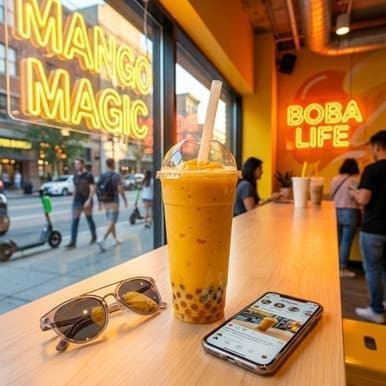
What goes into the cup determines what your customers taste. For operators aiming to build a loyal, repeat customer base, investing in premium tea bases, authentic flavour powders, and perfectly textured tapioca pearls is non-negotiable.
Today's bubble tea drinker is well-informed and picky. One sip separates a drink built on premium ingredients from one made with cheap, artificial substitutes. Competing in the Canadian market requires a menu anchored in high-quality components. The make-or-break element of any boba drink is, naturally, the tapioca pearls. Nailing the perfect “Q” texture — that ideal balance of soft and chewy — depends on sourcing superior boba, such as the Cosine Large Tapioca Boba Pearls 3kg.
Past the pearls, flavour powders and syrups give your menu its personality. Taro reliably ranks among the top-selling flavours nationwide, loved for its vivid purple colour and sweet, nutty profile. A high-grade mix like the Bossen Premium Taro Powder Mix 1kg 10/Case delivers the rich, creamy beverage that keeps customers returning. Operators who want to streamline prep can reach for all-in-one options such as the Bossen All-in-One Taro Milk Bubble Tea Powder 2.2lb 10/Case, which folds the flavour, creamer, and sweetener into one easy-to-use product.
Broadening your topping lineup matters just as much for maximizing sales. Traditional tapioca pearls are mandatory, but alternatives appeal to different texture preferences and dietary needs. Crystal boba — like the Bossen Taro Crystal Boba in Syrup 4.4lb 6/Case — delivers a satisfying crunch with no cooking required, a smart operational pick for busy cafes. Likewise, adding Bossen Sweet Diced Taro Topping 7.28lb 6/Case brings a premium, authentic texture that lifts standard milk teas.
Finally, tea bases must be strong enough to hold their own against milk, ice, and sweeteners without surrendering their distinct character. High-quality loose-leaf black, green, and oolong teas are fundamental. Brewing — where water temperature and steeping time are controlled — has to be managed carefully so you extract optimal flavour without pulling out bitterness.
Why Does Recipe Standardization Make or Break Profitability?
A professional beverage operation is defined by its consistency. Standardized recipes guarantee that every customer receives the identical high-quality drink no matter who is working the bar, while keeping ingredient waste under control at the same time.
In foodservice, inconsistency is profitability's worst enemy. A customer orders a taro milk tea on Tuesday, returns Friday, and gets something that tastes completely different — that business is likely gone for good. Absolute consistency demands rigorous recipe standardization. Every drink on the menu needs a precise, documented formula dictating exact measurements of tea, powder, syrup, ice, and toppings.
It starts with proper measuring tools. Eyeballing quantities or “free-pouring” ingredients is a guaranteed way to wreck your margins and frustrate your customers. Outfit every station with calibrated jiggers, digital scales, and standardized scoops. When a recipe specifies an amount of Bossen Taro Snow Ice Powder Mix 2.2lb 10/Case, staff must use the designated scoop to hit that exact quantity every single time.
Beyond customer satisfaction, standardization is the only reliable way to calculate food costs. If staff over-portion tapioca pearls or go heavy on flavour powder, actual costs will blow past theoretical projections and quietly erode your profits. Enforcing strict adherence to documented recipes gives you complete control over inventory usage, letting you price the menu strategically and maintain healthy margins.
Standardization also makes training new employees dramatically simpler. Turnover runs high in the bubble tea industry, so you'll regularly be onboarding fresh baristas. When every drink follows a clear, mathematical formula, new hires get up to speed quickly and confidently, easing the operational strain on your management team during peak service hours.
How Should You Pick the Right Equipment for Your Cafe?
Commercial-grade equipment demands serious capital, but a successful boba shop cannot handle its volume and pace without it. Cut corners on essential machinery and breakdowns — along with lost revenue during peak hours — are inevitable.
How efficiently your cafe runs traces directly back to equipment quality. Buying residential-grade appliances to save money during the startup phase is tempting, but it's almost always a false economy. A standard home blender burns out fast when it's crushing ice for hundreds of smoothies a day. Durable, commercial-grade machinery is a baseline requirement for long-term success.
No machine is more iconic in a boba shop than the cup sealing machine. It applies a tight plastic film across the top of the cup, preventing spills and letting customers shake their drinks before piercing the seal with a wide straw. A dependable automatic sealer moves the service line much faster than traditional plastic lids ever could. It also delivers the cleaner, more professional presentation customers expect from a modern bubble tea cafe.
Proper tea brewing and storage equipment matters just as much. Commercial tea brewers let you prepare large batches of base tea under precise temperature control, ensuring consistent flavour extraction. Once brewed, the tea belongs in insulated thermal dispensers, which hold temperature and freshness all day without letting the brew turn bitter. Quality commercial blenders with sound enclosures round out the setup, handling slushies and snow ice desserts without drowning the cafe in noise.
Last comes proper cooking and holding equipment for your tapioca pearls. Boba demands precise boiling and simmering times, followed by a resting period in sugar syrup. Commercial induction burners and dedicated boba cookers supply the consistent heat required for perfect texture. Once cooked, the pearls must sit in a specialized warmer at a safe, warm temperature so they don't harden before serving.
Frequently Asked Questions
Each operator question below is answered with cited sources. Every FAQ links to Health Canada, CFIA, Canada.ca, or another authoritative regulator.
What does it cost to open a bubble tea shop in Canada in 2026?
Products mentioned:
- CP-WEB-BOBA-STARTER
Cited source: r/boba - Boba Shop Starting Cost
Where can Canadian bubble tea shops buy supplies wholesale?
Products mentioned:
- CP-WEB-BOBA-SUPPLIES
Cited source: r/boba - Boba tea shop supplier recommendations
Which equipment is required to launch a bubble tea business in Canada?
Products mentioned:
- CP-WEB-BOBA-EQUIP
Cited source: r/bubbletea - Bubble tea supplier and equipment help
Should you franchise or open an independent bubble tea shop in Canada?
Products mentioned:
- CP-WEB-BOBA-FRANCHISE
Cited source: r/smallbusiness - Boba tea franchise analysis
How strong are the profit margins on bubble tea in Canada?
Products mentioned:
- CP-WEB-BOBA-INGREDIENTS
Cited source: r/EntrepreneurRideAlong - Boba tea bus profit discussion
Is a food license or health permit required to sell bubble tea in Canada?
Products mentioned:
- CP-WEB-BOBA-COMPLIANCE
Cited source: r/smallbusiness - Bubble Tea Business Consideration
Which bubble tea flavors sell best in Canada?
Products mentioned:
- CP-WEB-BOBA-FLAVORS
Cited source: r/boba - Flavor popularity discussions
How do you track down reliable bubble tea suppliers in Canada?
Products mentioned:
- CP-WEB-BOBA-SUPPLIES
Cited source: r/bubbletea - Finding bubble tea suppliers
Where should you open a bubble tea shop in Canada?
Products mentioned:
- CP-WEB-BOBA-LOCATION
Cited source: r/smallbusiness - Starting a bubble tea business advice
What does the timeline to open a bubble tea shop in Canada look like?
Products mentioned:
- CP-WEB-BOBA-STARTER
Cited source: r/boba - Opening timeline discussion
Regulatory reference: Commercial kitchen operations across North America follow the standards laid out in the FDA Food Code and Health Canada's food safety guidelines.
\n