
 US Dollar


2026 Aug 7th
Hand Sanitizer Buying Guide for Rental and Facility
Gel sanitizer clings to hands during application and works in pump bottles. Foam spreads quickly and pairs with sealed refill systems. Health Canada recommends at least 70 percent alcohol for effective germ reduction in commercial settings.
Hand Sanitizer Buying Guide for Rental and Facility Operations
Property managers and facility operators need reliable hand hygiene stations that guests actually use and staff can maintain without fuss.
Key Takeaways
Six practical points to guide your sanitizer selection.
Alcohol minimums matter
The CDC sets 60 percent alcohol as the floor for effective hand sanitizer. Health Canada guidance pushes higher for commercial environments where multiple people share stations.
Gel stays put longer
Gel formula does not run off hands before you finish rubbing. This matters in high-traffic spots where users might rush through application.
Foam covers faster
Foam expands on contact and spreads across skin quickly. Less product per use means refill intervals stretch longer in busy locations.
Pump bottles cost less upfront
Flip-top and pump bottles need no mounting hardware. They suit temporary setups, small rentals, or mobile cleaning carts.
Wall dispensers reduce waste
Sealed refill cartridges eliminate open bottles that tip or dry out. Staff swap refills in seconds without tools.
Non-alcohol has a narrow role
Alcohol-free foam suits areas with flammability concerns or users with skin sensitivities. It is not a direct substitute for alcohol-based products in health protocols.
Why Alcohol Percentage Sets Performance
The alcohol concentration determines whether sanitizer actually reduces germ transfer.
Denise from Homemaking with Denise explains that a two-to-one ratio of alcohol to aloe vera gel yields roughly 60 percent concentration, while three-to-one pushes closer to 75 percent. The CDC has long cited 60 percent as the minimum threshold for effective hand sanitizer against common pathogens. Health Canada aligns with stricter guidance for commercial and healthcare settings, pushing toward 70 percent for shared stations where multiple users contact the same dispenser.
ISSA Media's formulation specialists note that the pandemic shifted public awareness dramatically. Their research team, which has added dozens of hygiene products to commercial catalogues since 2006, emphasizes that concentration alone does not tell the whole story. The formula must also maintain stability across temperature swings in storage rooms and utility closets. A product that reads 70 percent on day one but degrades in an unheated Calgary warehouse loses its effectiveness before it reaches the guest bathroom.
NSF's public health specialists, drawing on decades of work with FDA and USDA guidelines, stress that material compatibility matters alongside chemical composition. The sanitizer must not degrade dispenser seals or wall mounts. Their food-processing facility guidelines highlight that products meeting strict contact-material standards reduce the risk of contamination spreading from the dispenser itself. For Airbnb hosts and facility managers, this translates to choosing products tested for use in commercial environments, not repackaged consumer bottles.
Gel or Foam: Format Differences in Practice
Each format behaves differently during application, storage, and refill.
Gel hand sanitizer pours or pumps as a viscous liquid. It stays where you put it, which helps in outdoor stations or mobile setups where wind or movement might blow lighter formulas away. The Avmor Gel Hand Sanitizer and Bioss Gel Hand Sanitizer both come in 500 mL pump bottles that sit flat on counters without tipping. Guests see the product, use it, and staff replace bottles when empty. No training required.
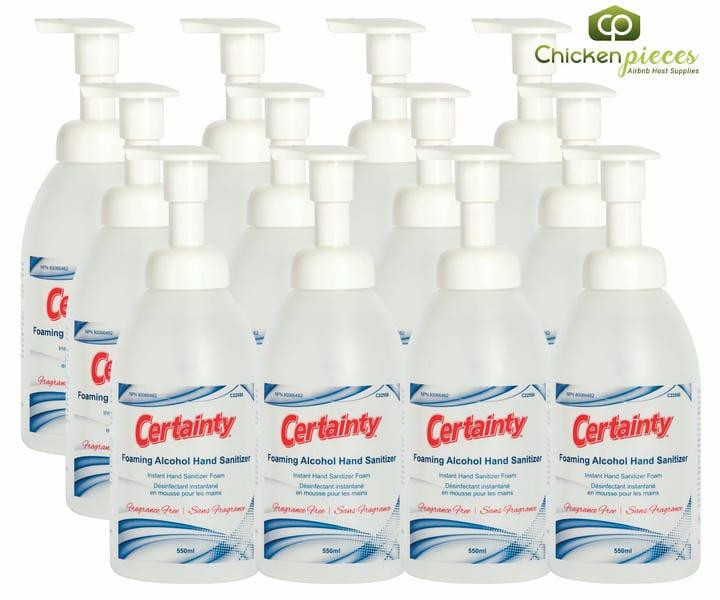
Foam hand sanitizer dispenses as a pre-lathered bubble that collapses into liquid on contact with skin. The Certainty Foaming Hand Sanitizer and Diversey Soft Care Foam lines use this chemistry. Foam covers hands faster with less volume, which stretches refill intervals. The trade-off is dispenser dependency: foam requires a specific mechanism to aerate the concentrate. You cannot pour foam formula into a gel pump and expect it to work.
The Certainty Non-Alcohol Foam Hand Sanitizer shows where foam fits a specific niche. Facilities with flammability restrictions, certain manufacturing sites, or childcare locations with alcohol exposure concerns use these formulas. The NSF framework for food-contact materials becomes relevant here, as non-alcohol options must still meet antimicrobial standards without relying on ethanol chemistry. Property managers should match format to use case, not default to whichever costs less per bottle.
Choosing Dispensers for Your Property Type
The right dispenser cuts refill labour and reduces product waste.
Pump bottles suit short-term rentals and small properties where installation is impractical. The Bioss Gel Hand Sanitizer with pump and the Avmor flip-top bottle need no wall space or tools. They also travel with staff: housekeeping carts, pop-up event tables, and outdoor dining setups all work with portable bottles. The downside is visibility. Bottles tucked behind decor get ignored. Bottles left out collect residue and need frequent wiping.
Wall-mounted dispensers signal permanence and encourage use. The Certainty Foam Black/chrome Hand Sanitizer Dispenser holds 1,000 mL and presents a clean line in washrooms and lobby areas. Refills lock into place, reducing theft and tampering. Diversey's Soft Care Foam Instant Hand Sanitizer Refills at 1.2 L fit matching wall units and suit high-volume locations like conference centres and fitness facilities. Staff swap refills without touching the product directly.
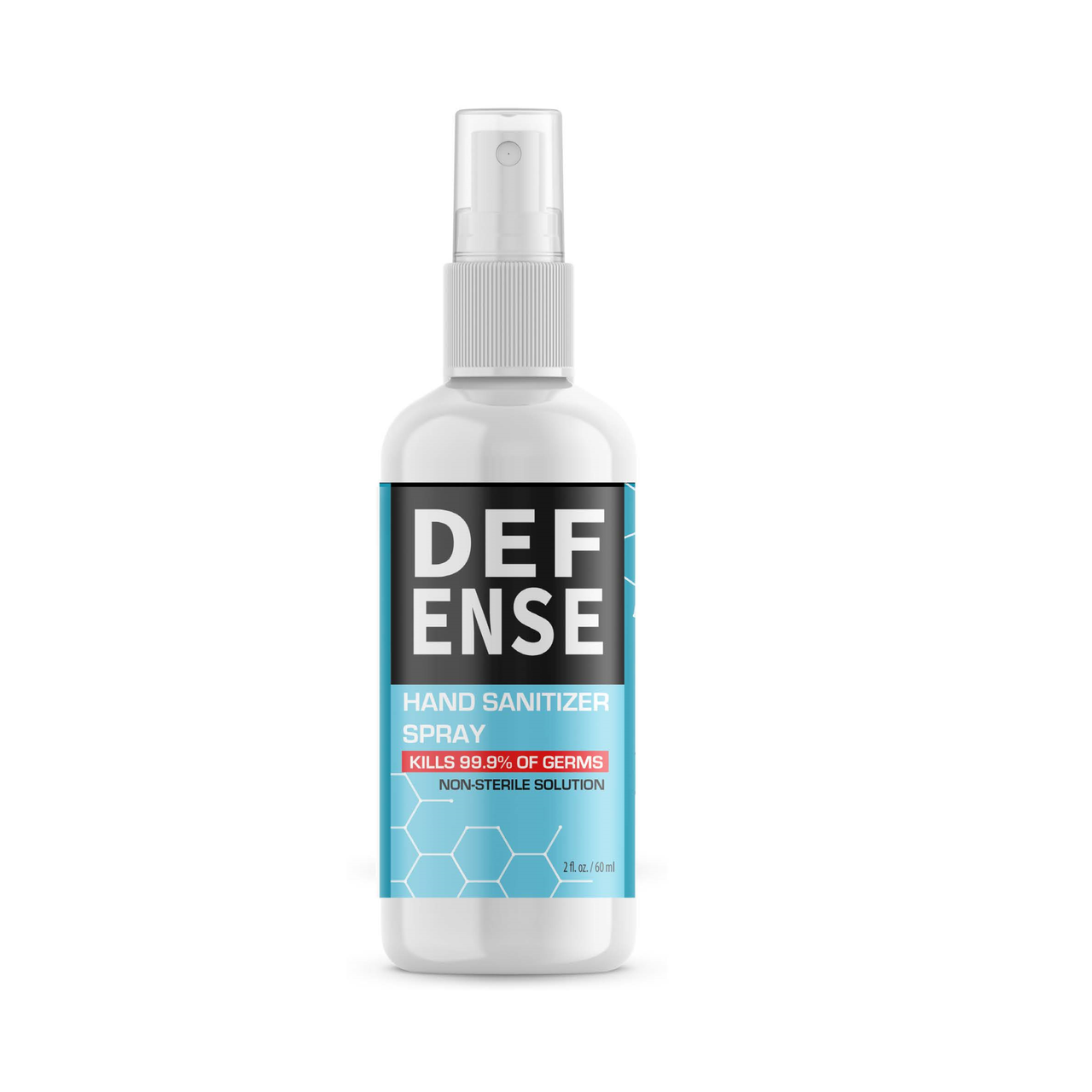
The hidden cost in dispenser selection is maintenance rhythm. A 2 oz Defense Hand Sanitizer bottle empties fast in a lobby. A 1.2 L Diversey refill lasts weeks but requires upfront investment in hardware. Property managers running multiple units should standardize on one dispenser family to simplify training and inventory. Mixed systems mean mixed refill SKUs and the risk of a mismatch during busy turnover days.
Matching Volume to Guest Traffic Patterns
Bottle and refill size should reflect actual consumption, not guesswork.
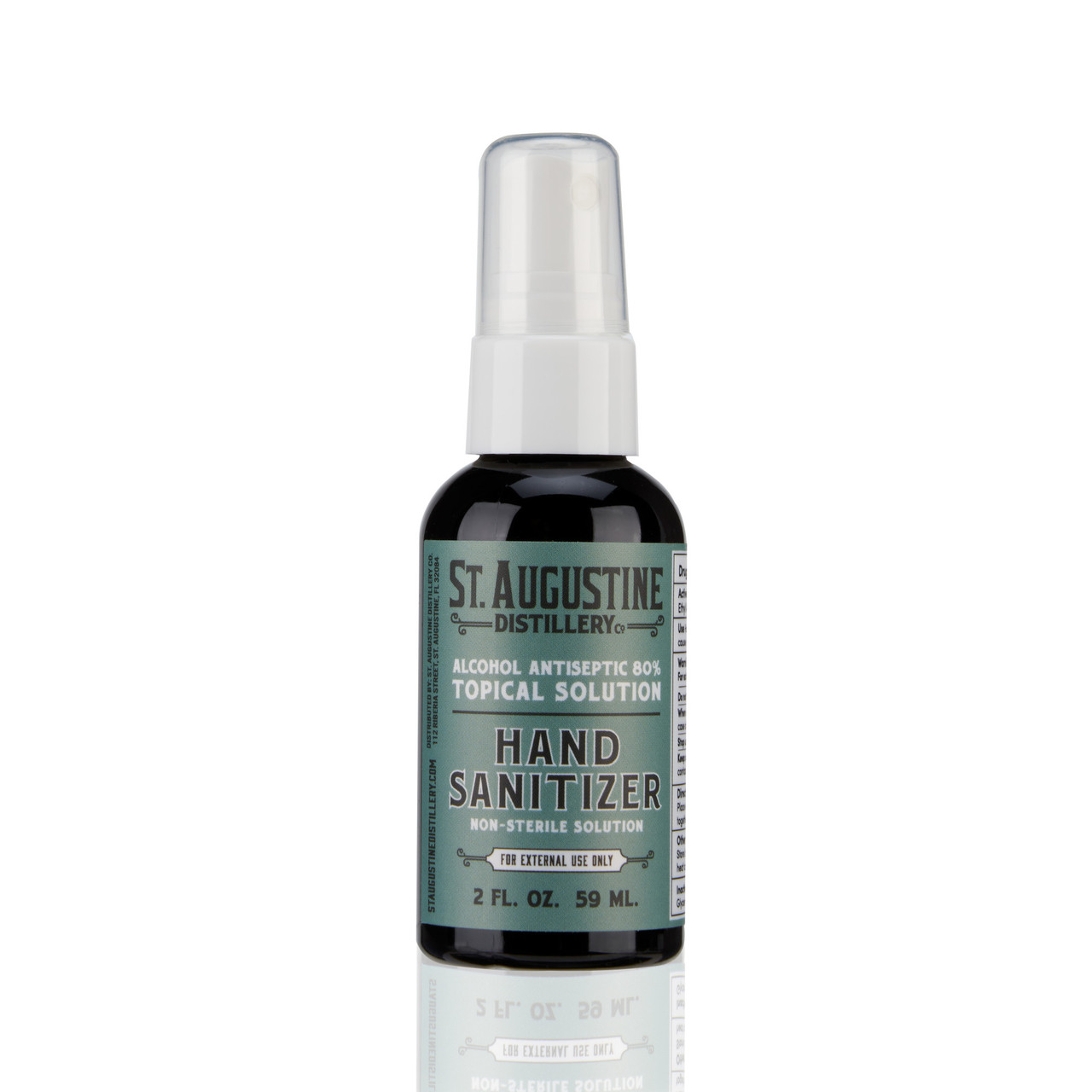
The 2 oz Distributed Spray Hand Sanitizer and 2 oz Defense Hand Sanitizer suit individual use: welcome baskets, in-unit amenities, or vehicle kits. At roughly 60 mL, these bottles deliver a handful of applications. They are not practical for lobby stations serving dozens of guests daily. Their role is personal, not shared. Airbnb hosts in Calgary's short-term rental market often include these in guest packages as a visible hygiene gesture.
The 500 mL to 550 mL range covers moderate shared use. The Avmor and Bioss gel bottles, plus the Certainty pump bottle at 550 mL, sit between personal and high-volume applications. A single bottle at a kitchen prep station or small office washroom lasts a week or two with typical traffic. These sizes also fit retail-style displays where guests help themselves. The 12-unit or 24-unit case packs let property managers stock a quarter or more without reordering monthly.
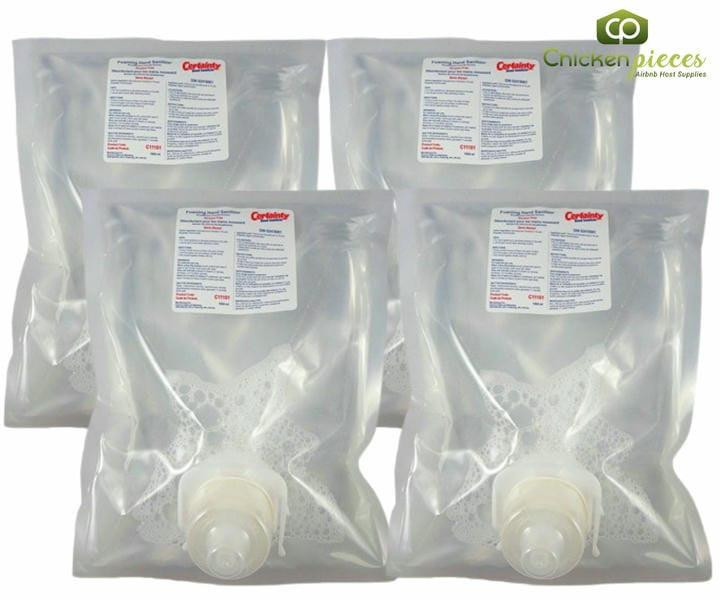
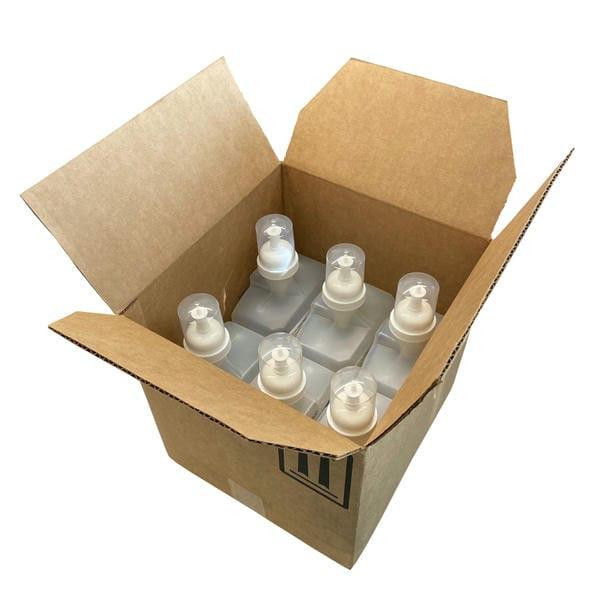
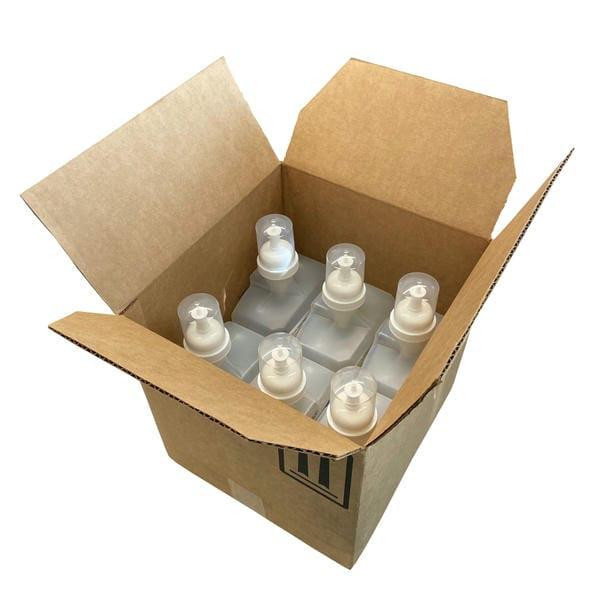
The 1,000 mL to 1.2 L refills address commercial load. Certainty's 1,000 mL foam refills and Diversey's 1.2 L foam systems serve airports, hospitals, and large multi-unit buildings. The 4-case or 6-case packaging reflects lower turnover but higher per-unit volume. Facility operators should track how fast their current size empties before scaling up. Buying 1.2 L refills for a station that gets three uses daily wastes shelf space and risks expiry before use.
Storing Alcohol-Based Products Safely
Concentrated alcohol products need controlled conditions to maintain potency.
Alcohol evaporates. Heat accelerates evaporation. A bottle stored on a windowsill in a south-facing Calgary rental loses alcohol content faster than one in a cool utility closet. The NSF guidelines for chemical compounds in food-handling facilities emphasize temperature-stable storage for exactly this reason. Sanitizer that drops below labelled concentration still smells like alcohol but does not perform to standard. Regular stock rotation, first-in-first-out, prevents this drift.
Foam and gel formulas face different separation risks. Gel with aloe vera components can settle if frozen and thawed. Foam concentrates rely on propellant chemistry that degrades with temperature swings. The ISSA formulation team's work on laundry and ware-wash products translates here: chemical stability matters across the supply chain, not just at manufacture. Property managers receiving winter deliveries should let cases acclimate indoors before opening, especially for foam systems.
The non-alcohol Certainty Foam option removes flammability and evaporation concerns but introduces others. These formulas rely on quaternary ammonium compounds or alternative antimicrobials that still degrade under UV exposure. All sanitizer types belong in original containers with intact labels. Decanting into decorative bottles, a temptation in upscale rentals, breaks the traceability chain and may violate local health inspection requirements.
Final Checklist Before Placing Your Order
Confirm these points to avoid mismatched products and restocking headaches.
First, verify alcohol content against your property's health protocol. Most commercial settings need 70 percent. Some jurisdictions or insurance requirements specify higher. The CDC's 60 percent floor is a baseline, not a target. Second, match format to dispenser. Gel in gel pumps, foam in foam mechanisms. The product details on ChickenPieces.com list format and compatibility. Third, calculate usage rate. A 12-unit case of 500 mL bottles at one bottle per station per week lasts three months for four stations. Scale accordingly.
Fourth, confirm refill cartridge fit if you use wall dispensers. Certainty and Diversey systems are not interchangeable. The Diversey Soft Care Impact Foam Instant Hand Sanitizer and its matching refills form a closed system. Mixing brands leads to leaks, waste, and guest complaints about sticky counters. Fifth, plan for seasonal demand. Calgary's festival season, ski tourism, and Stampede week spike short-term rental turnover. Stock ahead rather than reorder under pressure.
Finally, check compliance documentation. Health Canada regulates hand sanitizer as a natural health product or drug depending on claims and alcohol level. Products sold for commercial use should carry appropriate product identification. The why-buy section below covers how ChickenPieces.com handles this verification. For now, the key point: buying on price alone risks non-compliant product that fails inspection or guest expectation.
Hand Sanitizer Format Comparison
Match product type to your traffic level, dispenser setup, and maintenance capacity.
| Format | Best for | Alcohol range | Refill frequency |
|---|---|---|---|
| Gel, 500 mL pump bottle | Small rentals, mobile carts, temporary stations | 70% | Weekly at moderate use |
| Gel, 500 mL flip-top | Back-of-house, staff-only areas | 70% | As needed, easy to monitor |
| Foam, 550 mL pump bottle | Trial or backup in mixed-format properties | 70% | Weekly, lower volume per pump |
| Foam, 1,000 mL wall refill | Medium-traffic lobbies, shared washrooms | 70% or non-alcohol | Biweekly to monthly |
| Foam, 1.2 L wall refill | High-traffic commercial, conference facilities | 70% | Monthly or longer |
| Non-alcohol foam, 1,000 mL | Flammability-sensitive zones, childcare | 0% | Biweekly to monthly |
| Spray, 2 oz portable | Guest amenities, vehicles, individual kits | Varies | Per guest or per stay |
Browse Hand Sanitizer and Dispensers
Gel, foam, pump bottle, and wall-mount refill options for properties of every size.


What Canadian facility operators say
What facility operators and property managers say about stocking sanitizer through ChickenPieces.com.
Switched from bulk jugs to Diversey foam refills for our forty-unit building. Maintenance time dropped by half and guests stopped complaining about sticky lobby counters.
The Certainty dispensers look sharp in our renovated washrooms. Guests actually use them now instead of walking past the old pump bottles we had sitting out.
We send the 2 oz bottles home with conference attendees. Clean labeling, no leaks in luggage, and our event coordinator loves having one less thing to worry about.
Sanitizer selection: Frequently Asked Questions
What alcohol percentage does Health Canada recommend for commercial hand sanitizer?
Health Canada recommends at least 70 percent alcohol for hand sanitizer used in commercial and shared settings. The CDC sets a 60 percent minimum, but Canadian guidance for facilities serving multiple users pushes higher for reliable germ reduction.
Can I pour gel sanitizer into a foam dispenser?
No. Foam dispensers use a specific mechanism to aerate foam concentrate. Gel formula will not foam properly and may clog or leak the unit. Match formula to dispenser type as listed in product details.
How long does a 1.2 L foam refill last in a busy lobby?
Usage varies by traffic, but a 1.2 L foam refill typically lasts several weeks in a moderate-traffic lobby. Foam expands on dispensing, so each activation uses less volume than an equivalent gel pump.
Is non-alcohol sanitizer as effective as alcohol-based?
Non-alcohol foam sanitizer works against certain pathogens but is not a direct substitute for alcohol-based products in most health protocols. Use it where flammability or skin sensitivity rules out alcohol, not as a default replacement.
What is the difference between a pump bottle and a wall dispenser?
Pump bottles sit on counters and travel with staff. Wall dispensers mount in fixed locations and use sealed refills. Wall units reduce waste, theft, and drying out but require upfront hardware installation.
How should I store hand sanitizer in Calgary's climate?
Store in original containers away from direct sun and heat sources. Avoid unheated garages in winter; freezing can separate gel formulas and degrade foam chemistry. Stable indoor temperatures preserve alcohol content and formula integrity.
Do I need special dispensers for Diversey or Certainty refills?
Yes. Each brand designs refills for its own dispenser mechanism. Cross-brand compatibility is rare. Check product details for matching dispenser models before ordering refills.
Can I use 2 oz bottles for shared lobby stations?
No. Two-ounce bottles suit personal use, welcome baskets, or mobile kits. Shared stations need larger formats that staff can monitor and refill on a manageable schedule.
What should I check before placing a large sanitizer order?
Verify alcohol content against your protocol, confirm dispenser compatibility, calculate usage rate for your traffic, and ensure product labeling meets Health Canada requirements for your setting.
How do you calculate shipping on bulk orders?
We calculate shipping on live carrier rates at checkout, not on flat or subsidized tiers. Every order is priced against real LTL, parcel, or pallet-freight quotes from our Calgary warehouse to your dock. That means you never absorb hidden shipping costs into product margins — what we charge is what the carrier charges us, plus a small handling pass-through. For bulk and pallet orders this typically runs 15–25% lower than competitors who bake shipping into their unit prices, because the rate is transparent and tied to the actual shipment weight and distance.
Related guides from ChickenPieces
Why Operators Buy Sanitizer from ChickenPieces.com
We stock formats that fit real property workflows, not just shelf appeal.
Format-matched stock
Gel pumps, foam refills, and dispensers ship together so you do not hunt matching parts from separate suppliers.
Case quantities that scale
Order a single case for a small rental or pallet loads for multi-building contracts without mixing SKUs.
Alberta-based operations
Calgary warehouse staff understand prairie climate storage and seasonal demand spikes from tourism and events.
Health Canada compliance checked
Product documentation is verified for alignment with Health Canada natural health product regulations before listing.
Request a Quote for Your Property
Tell us your unit count, traffic pattern, and dispenser setup. We will recommend the right format and case quantity without overselling volume you do not need.
Request a Quote