
 US Dollar

2026 Aug 10th
Choose the Right Commercial Vacuum for Faster, Cleaner
Backpack vacuums cover ground roughly 230 per cent faster than 12-inch uprights and reduce back strain through better weight distribution. HEPA filtration traps particles down to 0.3 microns, which matters for guest allergies and indoor air quality in rental properties.
Choose the Right Commercial Vacuum for Faster, Cleaner Properties
For Airbnb hosts and facility operators who clean multiple units weekly, the right vacuum cuts labour time and keeps guests breathing easy.
Key Takeaways
Six points to shorten your search and protect your team's bodies.
Backpacks win on speed
A 14-inch backpack tool covers 230 per cent more area than a standard 12-inch upright in the same period, letting staff finish turnover cleans faster.
HEPA means 0.3 microns
True HEPA filters capture particles at or below 0.3 microns, the size of fine dust and allergen triggers that standard filters recirculate into rooms.
Runtime limits cordless
A 1,500 square foot unit needs more than 25 to 35 minutes of cordless runtime; corded models avoid mid-job stalls and small canister dumps.
Ergonomics reduce injury
Backpack weight sits on the hips and keeps the spine upright, while uprights force repetitive forward leaning that strains lower backs over shifts.
Wand flexibility matters
Tools with 360-degree reach and simple wand removal let operators clean under furniture and around corners without crouching or disassembling.
Filter access affects uptime
External HEPA media filters that collect 99.93 per cent of three-to-five-micron debris are easier to check and swap than buried internal cartridges.
Backpack vs Upright: What Moves Faster
The body position and tool width decide how many square metres one person covers.
Backpack vacuums keep the operator's back in an erect position because the motor and tank weight rest on the hips through a framed harness. That posture removes the forward lean that uprights demand, which accumulates strain across a multi-unit cleaning route. For operators doing three or more turnovers in a day, the difference in fatigue is noticeable by the second property.
The cleaning path width compounds the ergonomic advantage. A 14-inch backpack tool passes over more carpet per stroke than a 12-inch upright head, and the operator's feet stay planted while the wand pivots in a 360-degree radius around the body. Less walking backwards and fewer direction changes mean the job finishes with fewer steps and less joint wear.
Uprights still suit small storage closets and tight utility rooms where a backpack frame will not hang. They also tend to carry larger capacity bags or bins, which matters in high-shed environments with pet-friendly rentals. Match the machine to your typical unit size, not your largest or smallest outlier.
HEPA Ratings and Guest Air Quality
Filter specifications determine what stays in the bag and what returns to the room.
HEPA filtration is defined by its ability to stop particles at 0.3 microns, which sits near the most penetrating particle size for fibrous filters. Smoke tests use particles slightly larger than this threshold to verify seal integrity, because if a filter leaks at 0.3 microns, it will almost certainly leak at larger sizes. For properties advertising allergy-friendly stays, this specification belongs in your equipment notes.
Some commercial models advertise HEPA media or HEPA-type filters that capture 99.93 per cent of particles between three and five microns. That is a step above standard filtration but not equivalent to true HEPA. Read the micron rating printed on the filter frame, not the marketing wrapper, and replace media on schedule since loaded filters bypass debris around the seal.
Property managers with asthma-sensitive guests should pair true HEPA with sealed canister systems. A high-grade filter in a leaky body still expels fine dust through gaps in the housing. Check gasket condition during monthly maintenance, and keep replacement filter stock on hand rather than stretching intervals.
How Tool Width Translates to Labour Hours
Small differences in cleaning path add up across weekly turnover schedules.
The 230 per cent productivity figure compares a 14-inch backpack tool against a 12-inch upright, assuming similar suction power and operator skill. That gap shrinks if the upright carries a 15-inch head, but wider uprights become harder to push and manoeuvre around furniture legs. The backpack's wand keeps the wide tool agile because the operator steers with the wrist, not the whole body.
Cordless stick vacuums promise mobility, but their runtime and canister capacity create hard stops in units above 1,000 square feet. A 25-minute battery may cover a studio apartment if the guest left minimal debris, but furnished rentals with area rugs and upholstery duties will demand a mid-job recharge or dump. Corded machines trade outlet hunting for uninterrupted flow.
Productivity also includes tool-change speed. Wands that detach simply and hoses that flex without kinking let operators switch from carpet to crevice work in seconds. Models requiring screwdrivers or two-hand latches interrupt rhythm and extend the clean beyond scheduled block time.
What Keeps Machines Running Past Warranty
Commercial vacuums accumulate debris volume that home units never face.
Lifetime belts eliminate one common failure point in upright designs, but they still stretch and slip if the brush roll jams on cord fringe or curtain tassels. Check belt tension monthly by manually rotating the roll with the machine unplugged; resistance should feel even across the width. Squeaking or grinding means bearing wear that will soon seize.
Backpack models with external HEPA media filters allow faster inspection because the filter surface sits visible under a latch, not buried inside a canister cavity. Operators can spot loading by colour change and swap media without tools. Internal cartridge systems need disassembly that discourages frequent checks, so debris bypasses and motor life shortens.
Flexible hoses on wand systems pick up moisture and fine grit that abrade the tube interior. Replace hoses that feel stiff or show interior scoring before they crack mid-job. Keep a spare hose on the supply shelf rather than waiting for a shipment that pauses your cleaning schedule.
Protecting Staff Across Long Routes
Repetitive strain in cleaning crews drives turnover and workers' compensation claims.
Backpack harnesses distribute weight to the pelvis, which is structurally designed to load-bear, unlike the cervical spine that upright handles stress. The erect posture also opens the diaphragm, reducing the breathless complaints common when staff hunch over push machines. For operators cleaning five or more units in a shift, that respiratory ease compounds across the week.
Wand-based systems with side-to-side motion replace the forward-and-back stroke of uprights. The lateral sweep uses more core rotation and less lower-back flexion, which physical therapists identify as safer for repetitive work. Train staff to keep the wand close to the body rather than reaching, which converts the motion to shoulder strain instead of back protection.
Handle height adjustment matters on upright models; fixed handles force tall operators to stoop and short operators to overreach. Look for telescoping tubes or multiple handle mount points. A machine that fits one operator perfectly may injure another if your crew rotates through shared equipment.
Match Specs to Your Property Mix
Use this framework before adding machines to your capital equipment list.
Count your typical unit size in square metres and your weekly turnover volume. Properties averaging under 75 square metres with hard surfaces and low-pile rugs may run efficiently with compact uprights that store vertically. Larger furnished suites with wall-to-wall carpet and upholstered furniture need the coverage and attachment versatility that backpack or canister systems provide.
Inventory your electrical access. Older buildings with two-prong outlets or limited hallway circuits may limit corded machine selection unless you budget for adapter hardware or electrical upgrades. Cordless models remove that constraint but introduce the runtime and capacity limits already discussed; calculate whether your staff can work within those boundaries.
Plan for filter stock and service access. Machines with proprietary filter sizes or dealer-only belt systems create supply bottlenecks if your usual vendor stocks out. Standardised component sizes from established commercial lines let you source replacements from multiple Calgary-area suppliers and keep machines running without cross-town hunts.
Backpack, Upright, and Canister Comparison
Match your property type and staff size to the right configuration.
| Machine Type | Best For | Key Limitation | Filtration Check |
|---|---|---|---|
| Backpack (14-inch) | Large carpeted units, daily routes | Storage frame needs hook or shelf | Verify true 0.3 micron HEPA seal |
| Upright (12-14 inch) | Mixed surfaces, tight storage | Forward lean strains back over time | External media easier to inspect |
| Upright (15-inch+) | Open ballrooms, convention space | Heavy to push around furniture | Wide path needs strong suction motor |
| Canister with wand | Hard floors, stairs, upholstery | Hose abrasion from grit and moisture | Check hose integrity monthly |
| Cordless stick | Quick touch-ups, small studios | Runtime may not finish 1,500 sq ft | Often 3-5 micron, not true HEPA |
| Wet/dry | Renovation cleanup, garage units | Not for daily carpet maintenance | Separate filter sets for wet and dry |
| Central vacuum | New builds, permanent install | Retrofit cost in existing properties | Remote unit HEPA needs annual test |
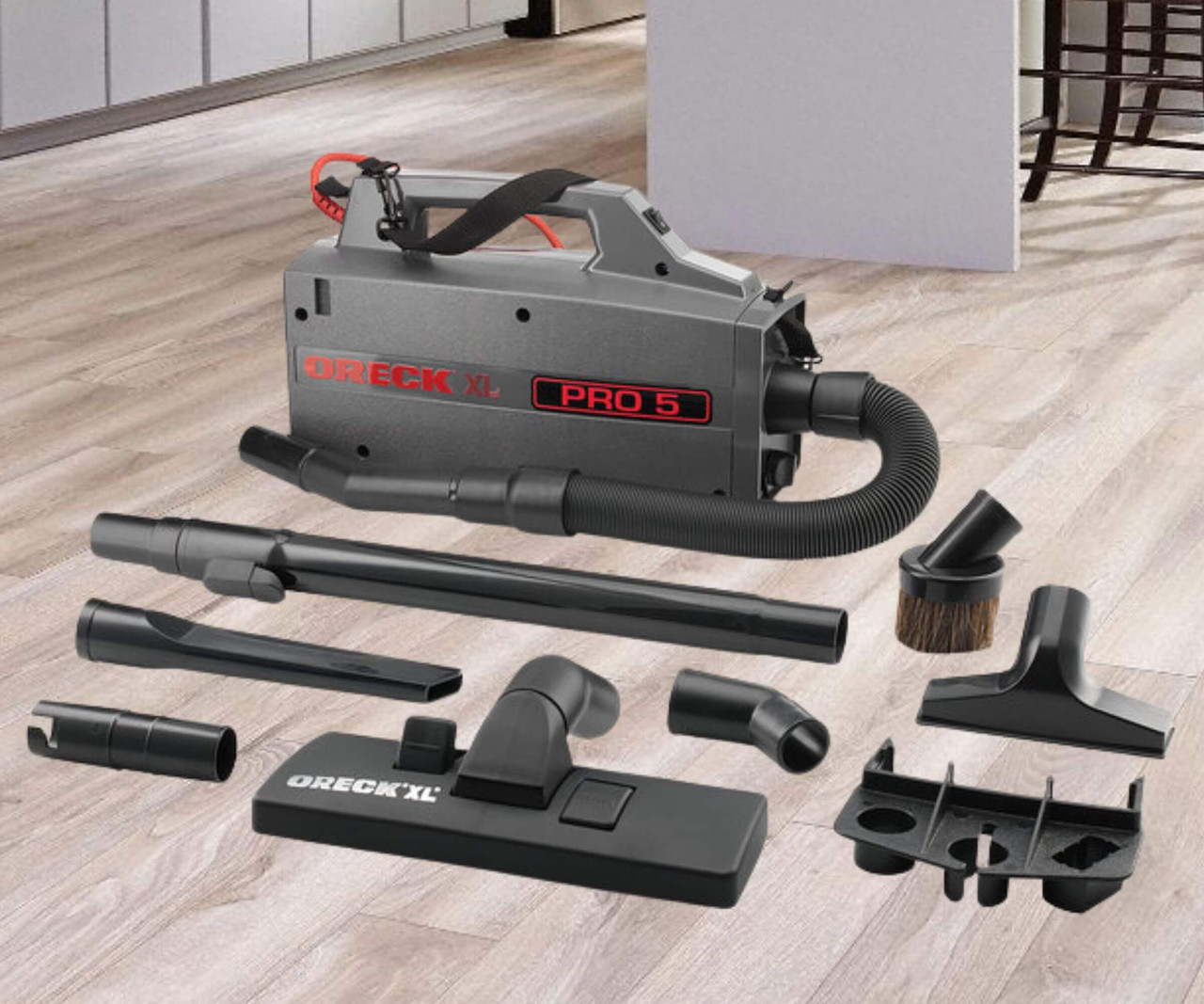
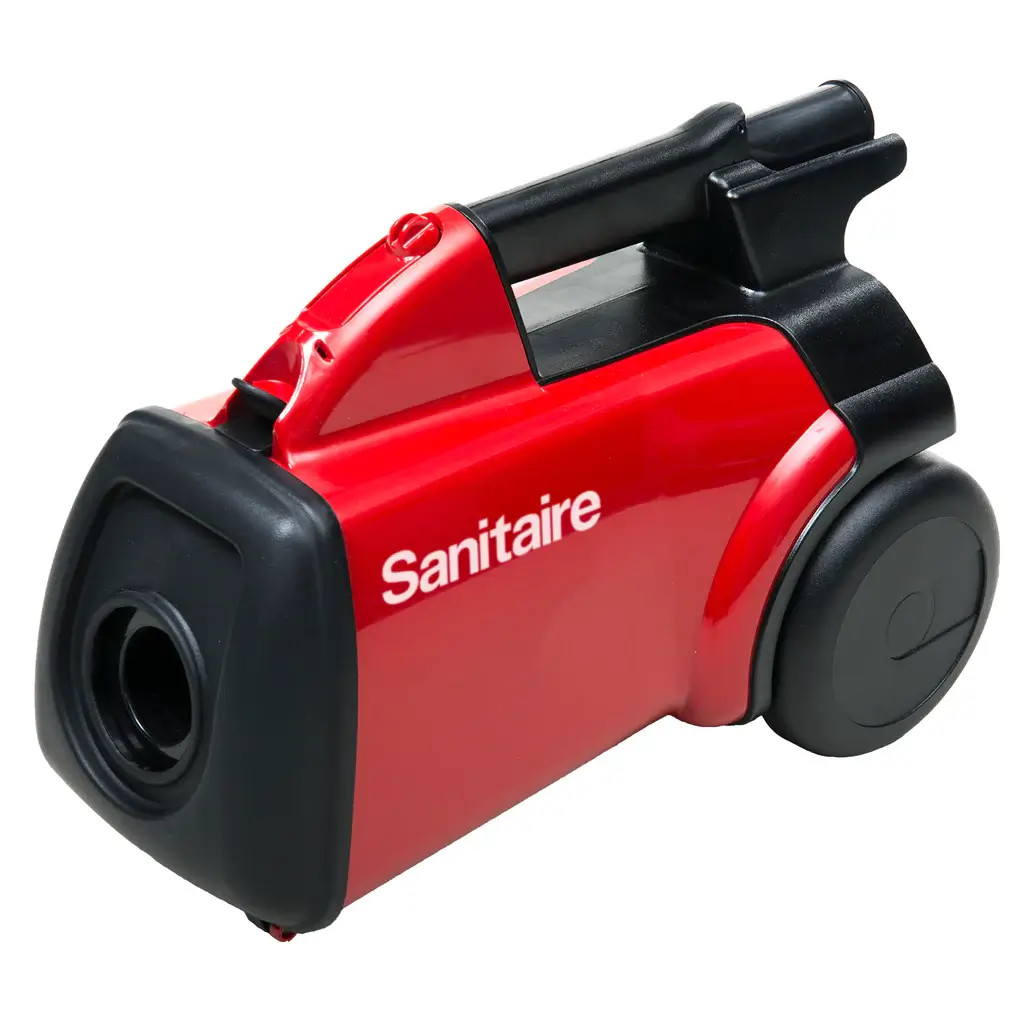
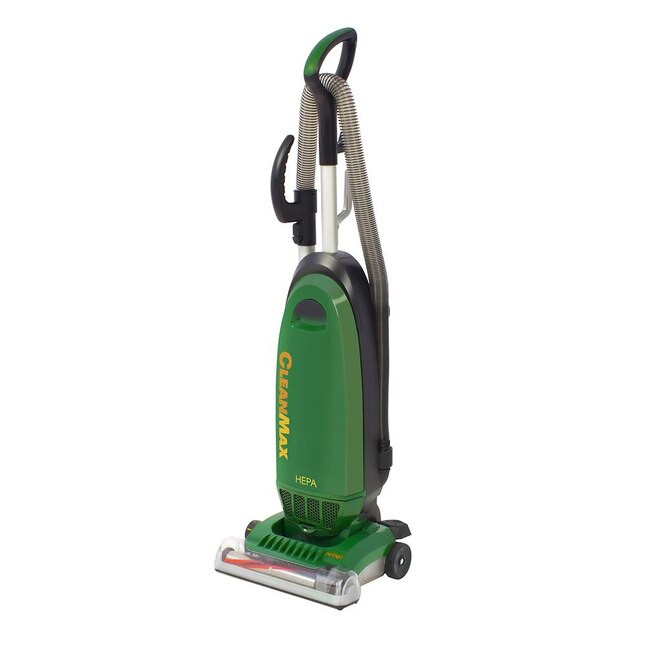
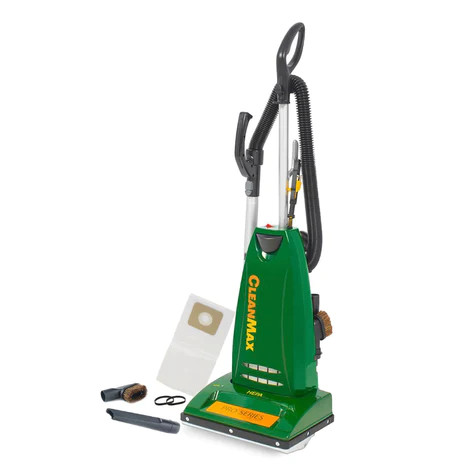
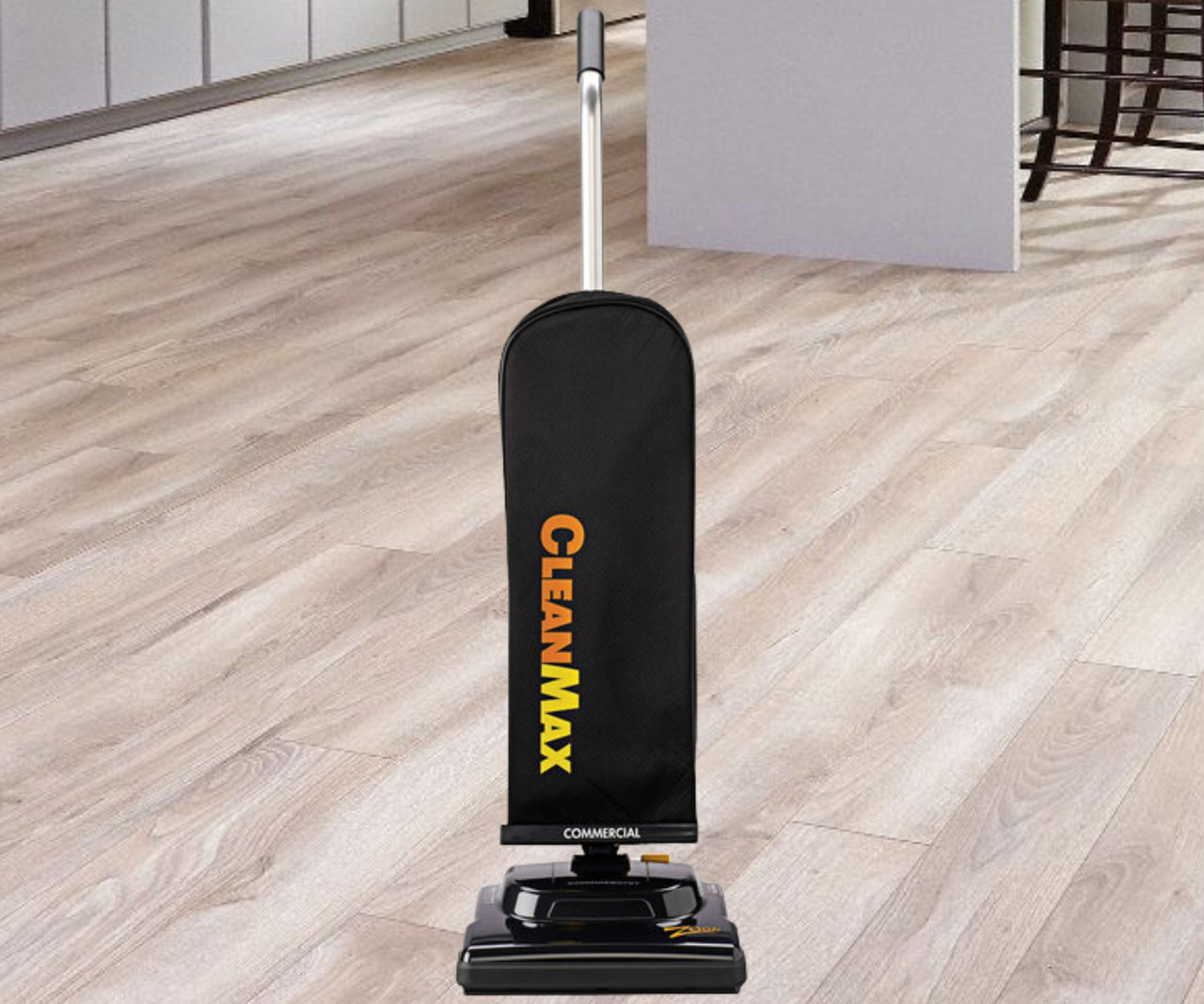
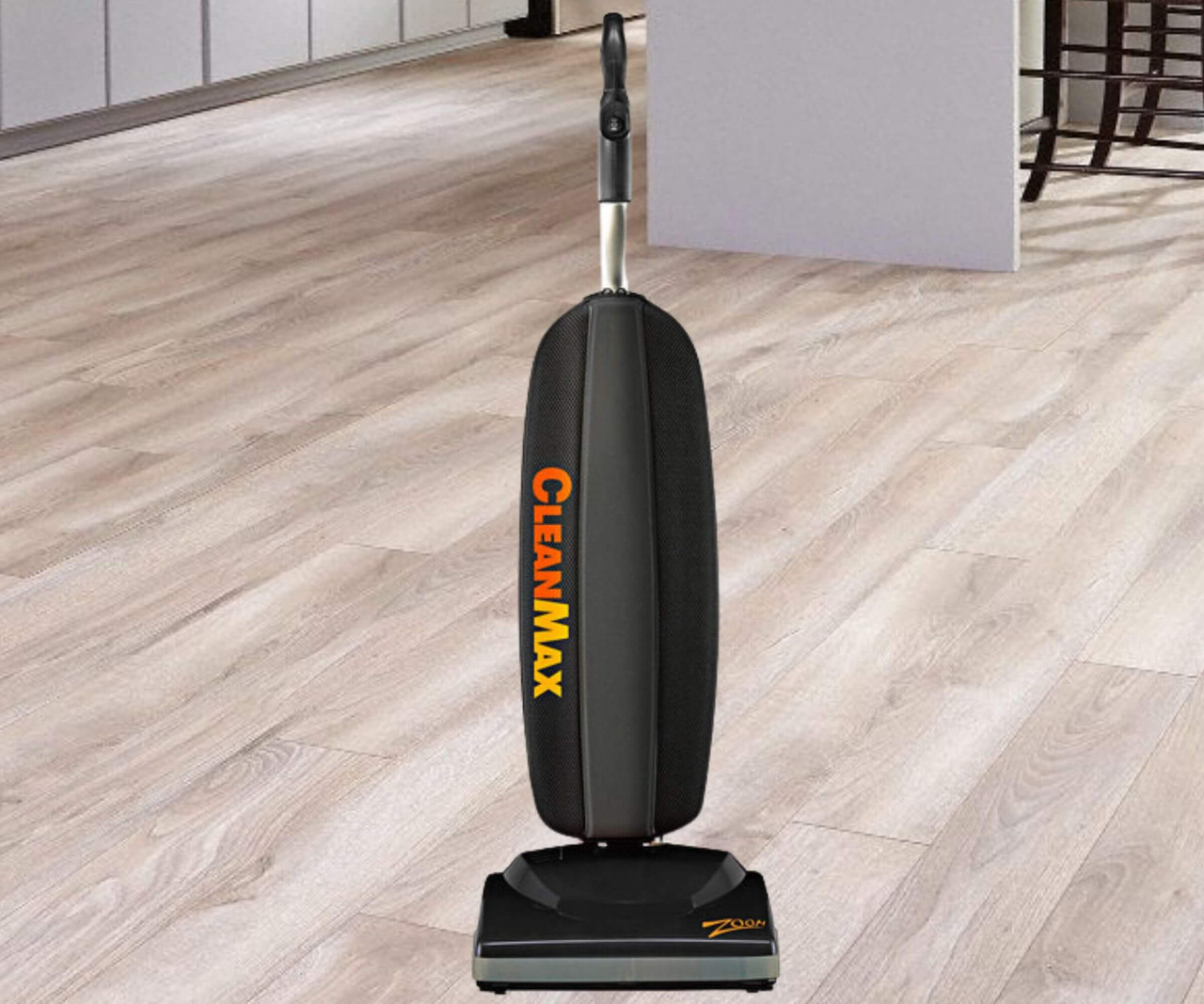
Commercial Vacuums for Calgary Properties
Backpack, upright, and canister models selected for turnover cleaning demands.



People Also Ask
Real questions buyers search before they order — answered straight.
What is the difference between a commercial vacuum and a regular household vacuum?
Commercial vacuums are built for hours of daily use, with tougher motors, larger capacity, and stronger housings than a typical home model that expects a weekly clean. They are designed to be serviced and to keep running through heavy, repeated shifts rather than being replaced after a season or two. For a busy facility, that durability is usually what justifies the step up from a consumer machine.
What are the main types of commercial vacuum, and what is each best for?
The common types are uprights (fast on open carpet), canisters (good for stairs, edges, and mixed surfaces), backpacks (best for large floor areas and speed), and wet/dry units (for spills and coarse debris). Each suits a different layout and cleaning routine, so the right pick depends on your floor types and how much ground one person must cover. Matching the type to the space matters more than choosing the most powerful-looking model.
How long does a commercial vacuum typically last?
A well-chosen commercial vacuum used within its rated duty is generally built to last several years of daily service, far longer than a consumer unit under the same load. Lifespan depends heavily on routine care — emptying, clearing blockages, and servicing wear parts on schedule. Buying a machine rated for your actual daily hours, rather than under-specifying, is the simplest way to get full value from it.
Is a bagged or bagless commercial vacuum better for a facility?
Bagged units tend to trap fine dust more cleanly and are tidier to empty, which suits sites where air quality and hygiene matter. Bagless models save on consumables and let you see what has been picked up, but emptying can release dust and needs care. For many facilities the cleaner, lower-mess emptying of a bagged system wins, though it depends on your dust levels and how often you empty.
Can I use a commercial vacuum in a home or small rental?
Yes — many hosts and small operators use commercial vacuums precisely because they last longer and clean faster between guests or shifts. The trade-offs are that they can be heavier, louder, and bulkier to store than a home model, so weight and storage space are worth checking first. For a rental with frequent turnovers, the extra durability often outweighs those downsides.
What's the difference between a wet/dry (shop) vacuum and a standard commercial vacuum?
A wet/dry vacuum is built to pick up liquids and coarse debris safely, which a standard dry commercial vacuum is not — using a dry machine on spills can damage the motor. Standard commercial vacuums, in turn, are better for everyday floor and carpet cleaning with finer filtration. Many facilities keep both: one for routine cleaning and a wet/dry unit for spills and heavier messes.
What Canadian property operators say
What property operators across three provinces report after switching equipment.
We replaced our old uprights with 14-inch backpacks for the forty-unit building. The head cleaner finishes three units before noon now instead of two, and she stopped asking for Advil at shift end.
The HEPA filter on our new canister actually shows loading colour change, so my staff swap it on schedule instead of guessing. Guest allergy complaints dropped to zero last quarter.
I bought the lifetime belt upright because my last machine sat in a repair queue for two weeks. Six months in, no downtime, and the tool set handles couch crevices without me bending.
Vacuum Selection: Frequently Asked Questions
How do I know if a filter is true HEPA or just HEPA-type?
Check the printed micron rating on the filter frame. True HEPA specifies 0.3 microns; HEPA-type or media filters often list three to five microns with a lower capture percentage.
Why does tool width matter more than motor wattage?
A wider tool covers more carpet per stroke, reducing passes and total job time. Motor wattage only helps if the airflow design moves that power to the floor head effectively.
Can one vacuum handle both hardwood and carpeted units?
Many uprights and canisters include height adjustment or brush-roll shutoff for hard floors. Verify the specific model has these features before buying for mixed-surface properties.
How often should commercial vacuum filters be replaced?
Inspect external HEPA media monthly; replace when colour change indicates loading. Internal filters need checking quarterly, with replacement every six months under heavy commercial use.
What storage space does a backpack vacuum need?
The framed harness requires a wall hook or shelf depth of roughly 30 centimetres. Uprights store more compactly in narrow closets but need floor footprint instead.
Are lifetime belts actually maintenance-free?
Lifetime belts resist breakage but still stretch and slip if the brush roll jams. Check tension monthly by hand-rotating the roll; replace the belt if resistance feels uneven.
Why do cordless vacuums struggle in larger units?
Battery runtime under 35 minutes and small canister capacity create mid-job interruptions. Corded machines avoid these limits for properties above 1,000 square feet.
What ergonomic features reduce back strain for cleaning staff?
Backpack hip-weight distribution, erect posture, and side-to-side wand motion reduce lower-back flexion. Adjustable handle heights on uprights prevent stooping for tall operators.
How do I verify suction power is reaching the floor head?
Place a standard sheet of paper against a flat hard floor; the head should hold it firmly at normal operating height. Weak hold indicates airflow blockage or worn brush-roll agitation.
How do you calculate shipping on bulk orders?
We calculate shipping on live carrier rates at checkout, not on flat or subsidized tiers. Every order is priced against real LTL, parcel, or pallet-freight quotes from our Calgary warehouse to your dock. That means you never absorb hidden shipping costs into product margins — what we charge is what the carrier charges us, plus a small handling pass-through. For bulk and pallet orders this typically runs 15–25% lower than competitors who bake shipping into their unit prices, because the rate is transparent and tied to the actual shipment weight and distance.
Related guides from ChickenPieces
Why Calgary Property Teams Source from ChickenPieces
We stock commercial-grade machines sized for multi-unit cleaning routes, not household occasional use.
Alberta-based support
Our team answers product questions in Mountain Time, understands Calgary rental bylaws, and stocks replacement parts for every model we carry.
No speed promises
Shipping rates and timelines come from live carrier calculations at checkout. We do not guess delivery windows that carriers control.
Bulk configuration help
Buying five or more units for a portfolio? We review your floor plans and turnover frequency to recommend the right mix of upright and backpack models.
Compliance documentation
All HEPA filtration models ship with capture-efficiency specifications for your records, supporting Health Canada indoor air quality guidelines and CFIA-aligned cleanliness protocols for guest accommodation operators.
Request a Quote for Your Property Fleet
Tell us your unit count, average size, and surface types. We will recommend a vacuum configuration that matches your cleaning schedule and staff ergonomics. No minimum order required.
Request a Quote